REVIEW · MALMO
Malmo Walking Tour, 3 hours (small group)
Book on Viator →Operated by Dinturia Tours · Bookable on Viator
Malmö surprises you fast. In just three hours, this walk strings together old-city landmarks and modern Malmö without feeling like a checklist. It’s a good way to get your bearings, especially if you’re arriving from Copenhagen or just getting started in southern Sweden.
I especially like how the guide turns place names into stories. You’ll hear why St. Petri matters, what the squares were used for, and how Malmö’s architecture blends different eras. And I like that the tour doesn’t only cover buildings; it also includes parks and viewpoints, including a stop at the beach with a major city skyline sight.
One consideration: this is a highlights-and-context style walk. If you want lots of time for museum-style looking, or you already know Malmö’s history, you may feel you could cover much of it on your own at a quicker pace.
In This Review
- Key things you should notice before you go
- Entering Malmö’s story at St. Petri (St. Peter’s Church)
- Storgatan and the Denmark–Sweden rivalry in real street form
- Lilla Torg: one of Malmö’s prettiest squares, explained like a scene
- Gustav Adolfs Torg: the “important square” with a reason behind the name
- Gamla Kyrkogården: park time with a second purpose
- Malmö City Library: three buildings and the Calendar of Light
- Kungsparken to Malmohus Castle: Swedish culture through kings and use
- Ribersborgsstranden: sea views and how Swedes do beach life
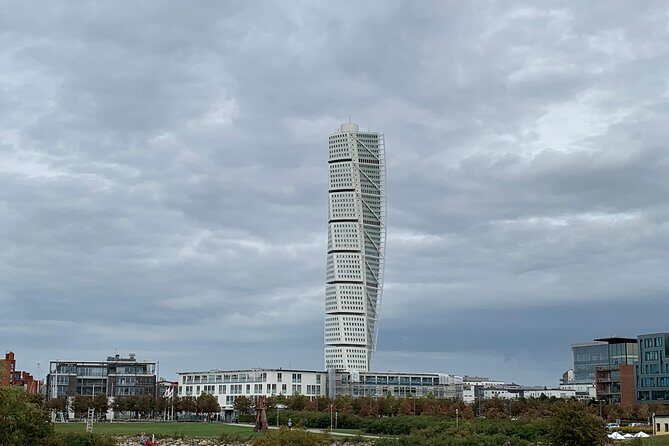
- Västra hamnen and El Torso: modern Malmö with a skyline that means something
- Price and value: what you’re really paying $72.76 for
- Who this tour suits best (and who might skip it)
- Booking tips and what to do during the walk
- FAQ
- Is this Malmö walking tour in English?
- How long is the tour?
- Where does the tour start?
- Is it a small group?
- Are there admission fees at the stops?
- What kind of walking is involved?
- Can I bring a service animal?
- What’s the cancellation window?
- Should I book this Malmö walking tour or go solo?
Key things you should notice before you go
- Small-group, 3-hour pace that mixes walking city center with calmer park and sea-view moments
- Spotlight on Malmö’s “old vs. new” through squares, the library’s modern design, and Västra hamnen architecture
- A guide who handles questions well (I saw multiple mentions of guides like Lesley, Tilley, Laura, Thena, Stuart, Tina, Svend, and Papito)
- Iconic stops plus quick local context so you understand what you’re seeing without needing a textbook
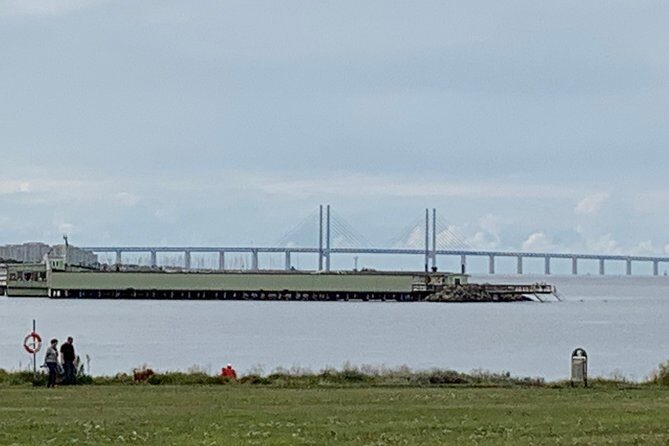
- Beach and skyline views at Ribersborgsstranden, including the Malmö Bridge in the distance
- Mobile ticket in English for straightforward check-in and easy communication
Entering Malmö’s story at St. Petri (St. Peter’s Church)
You start near Malmö Centralstation, then it’s straight into the older bones of the city. The first big moment is St. Petri (St. Peter’s Church). Even without going into every detail, you get a sense of why Malmö’s earliest landmarks still shape the center today.
This stop is built around explanation, not long lingering. You’ll get about 10 minutes here, and the admission is free. Expect the guide to frame St. Petri as one of the oldest buildings in Malmö, then connect it to the bigger theme of how the city grew over time.
Practical tip: if church interiors are part of your travel goal, wear shoes you can walk in comfortably. The time is short, so you’ll want to be ready to look quickly, ask one or two questions, and keep moving.
You can also read our reviews of more walking tours in Malmo



Storgatan and the Denmark–Sweden rivalry in real street form
Next comes Storgatan. This is one of those central streets where the past feels close, because you can see how the city arranged itself. The guide’s job here is to connect the physical space to the historical context—especially the long-running wars and tension between Denmark and Sweden.
You’ll hear about King Karl X Gustav and how the city’s public spaces and street grid played a role in those eras. It’s not just name-dropping. The point is to make the city feel less abstract.
Why this works: instead of studying history at arm’s length, you’re watching it unfold in street scale. After this, squares later on feel less random. They feel like places built for real events.
If you’re sensitive to “heavy history talk” in a walking tour format, here’s your heads-up: this is one of the more explicitly historical stops. Still, the best part is that it’s brief and tied to where you are.
Lilla Torg: one of Malmö’s prettiest squares, explained like a scene
Lilla Torg is where the tour shifts from political history to city-life charm. You’ll spend around 10 minutes here, and the focus is on why it’s considered one of Malmö’s most beautiful squares.
Expect the guide to help you read the square—what the setting is like, how it functions, and how the character of the area supports Malmö’s reputation for blending eras. The guide will also likely point out details that you’d miss if you just walked through on your own.
In my experience with city-square tours, this is where you start to relax. You’ve got the background now, so you can enjoy the mood. If you’re traveling with someone who cares more about photos than dates, this stop usually satisfies both.
Gustav Adolfs Torg: the “important square” with a reason behind the name
Then you move to Gustav Adolfs Torg, another major square, and another chance to understand the naming. This isn’t just a look-at-the-statues kind of stop. You’re there to learn why it’s called what it’s called and why that square matters in Malmö’s layout and identity.
From the way guides are described in past tours, the best performances here focus on the stories behind statues and square names. That means you’re not just seeing the square—you’re learning how to interpret it.
Practical tip: if you want better photos, pause for one minute at each “corner view.” Squares often look best from the edges rather than straight-on. You’ll have the time to do that because the stop is short and focused.
Gamla Kyrkogården: park time with a second purpose
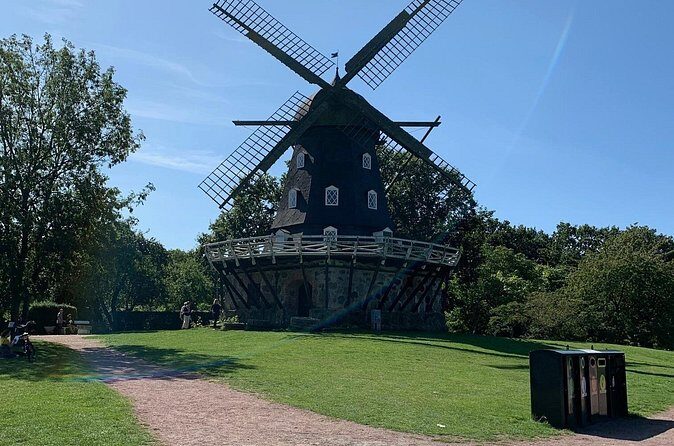
At Gamla Kyrkogården, the tour goes green. You’ll pass by one of Malmö’s larger parks, and you’ll also hear how the space has another use.
This is one of the smartest parts of the route because it slows the pace without making the tour feel like a detour. You get a breath of air, a chance to reset, and a clearer mental map of where the city’s calm zones sit.
The guide will tie it to Swedish culture and the way Malmö uses space—how “peaceful” areas often carry layered meaning. It’s the kind of stop that feels simple on paper, but it’s usually where the history-vs-life mix clicks for people.



Malmö City Library: three buildings and the Calendar of Light
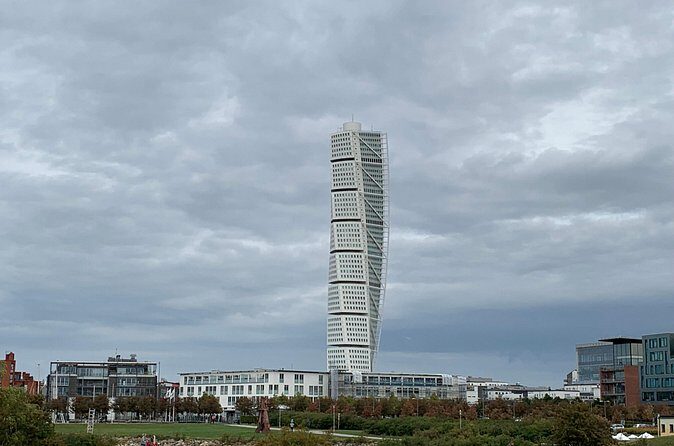
This is the most modern-feeling stop on the walk. Malmö City Library is one of the most beautiful modern buildings in the city, and it’s made up of three different buildings. One of them is known as the Calendar of Light.
You’ll have about 10 minutes here. Again, it’s not an all-day sit-and-read moment. It’s enough time for the guide to explain the design concept and show you what to look for—especially how the architecture connects to everyday life in Malmö.
Why I think this matters: a lot of visitors think Malmö is only about one era or one vibe. This stop helps you see it as a city actively designing for the future while respecting its past. It’s a visual “proof” of what the tour keeps saying in words.
If modern architecture is a big part of your trip, you’ll probably enjoy this stop more than the purely historic ones. Just keep in mind you’ll move on quickly.
Kungsparken to Malmohus Castle: Swedish culture through kings and use
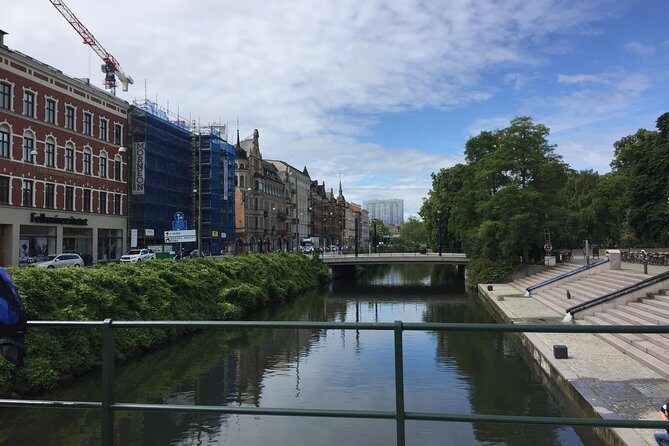
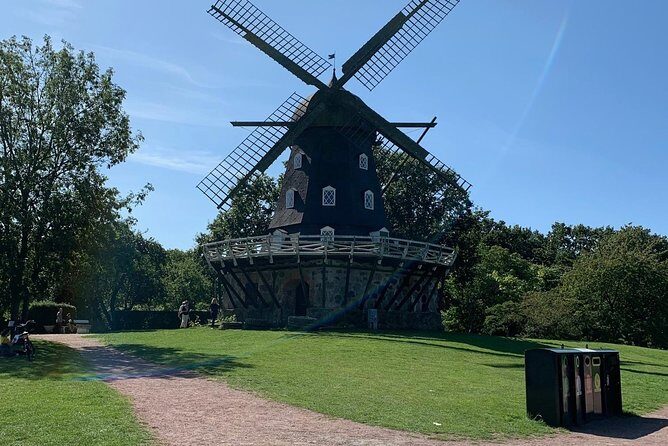
After the library, you walk through Kungsparken, the park of the King and the Castle. This is a transition zone—green space leading you toward one of Malmö’s most important historic structures.
The guide uses this walk to talk about Swedish culture in a practical way. Think of it as the human “why” behind what you’re seeing: how people relate to power, public space, and daily routines.
Then comes Malmohus castle. You’ll learn what the castle was used for historically and what it’s used for now. You get about 10 minutes at the castle itself, so the emphasis is on quick context rather than long exploration.
Why this stop is a strong payoff: you’re not just learning what a castle did once. You’re also learning how Malmö is keeping that presence active today. That’s one of the tour’s recurring strengths—old things are treated as part of living city life, not museum leftovers.
Ribersborgsstranden: sea views and how Swedes do beach life
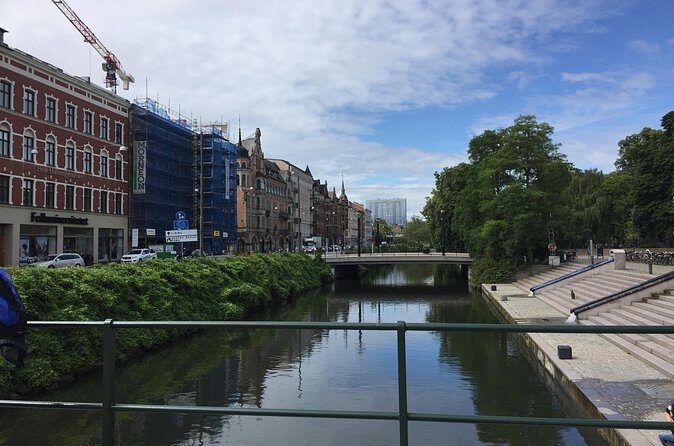
Now for the payoff many people remember most: Ribersborgsstranden. You’ll get about 10 minutes here, with a view toward the Malmö Bridge. It’s one of those “wait, this is Malmö?” moments—because the city feels both Scandinavian-urban and ocean-connected.
The guide also talks about customs on the beach. That’s the kind of detail that helps you stop guessing. If you plan to relax by the water later, you’ll have a better sense of what to expect and how locals tend to treat the space.
Practical tip: bring a layer even in milder weather. Coastal wind can cut faster than you expect. And if you’re photographing the bridge, check your angle early. The view can change depending on where you stand along the shoreline edge.
Västra hamnen and El Torso: modern Malmö with a skyline that means something
The final portion takes you to Västra hamnen, described as one of the greenest neighborhoods in Malmö, with modern architecture right in the mix. You’ll also admire El Torso, one of the tallest buildings in Scandinavia.
This section is about 20 minutes, longer than many stops, because the point isn’t just history facts. It’s visual appreciation plus context: how the area feels today and what the city is choosing to highlight through design.
From a visitor perspective, this is the “bookend” stop. You started with an old church and central street. Now you end with a neighborhood that looks like Malmö is planning the next chapter. It helps the whole tour feel coherent.
Tip for timing: if you want the best overall views of El Torso, don’t rush the first photo. Take one from where the group pauses, then take a second from a slightly different angle. The building reads differently at different distances.
Price and value: what you’re really paying $72.76 for
At $72.76 per person for about three hours, this isn’t a bargain like a free self-guided walk. You’re paying for two things:
1) Interpretation in real time
You’re not just seeing landmarks; you’re getting the stories behind them—names, squares, and how old and new fit together. That’s hard to recreate on your own quickly unless you already know exactly what to search.
2) A guide who keeps the walk moving
Multiple guides are described as friendly, warm, and willing to answer lots of questions. That matters because you can steer the tour a little toward what you care about, from photo spots to what to do after the walk.
Is it worth it if you’re the type who likes to wander without a plan? Maybe not. One concern raised with this kind of tour is that Malmö is easy to get around. But if you want a structured introduction that helps you avoid “I saw it but I didn’t understand it” moments, the value is there.
Who this tour suits best (and who might skip it)
This walk is a good fit if you:
- want a fast introduction to Malmö’s center and a feel for Swedish city culture
- enjoy mixing old churches, squares, and parks with modern architecture
- like asking questions and getting practical recommendations for what to do next
- have moderate walking ability and want a structured 3-hour route
It might be less ideal if you:
- prefer long stops, museums, or deep reading time
- already know a lot about Malmö’s history and just want to explore independently
- dislike any historical storytelling and would rather focus only on viewpoints
One more note: the tour is designed as a walking experience with a moderate physical fitness level requirement. Bring comfortable shoes. Malmö weather can shift, and even when it rains, the walking doesn’t stop.
Booking tips and what to do during the walk
A small group format helps, but keep expectations realistic: you’ll cover a lot of ground and each stop is timed. Here’s how to get the most out of it:
- Start with curiosity. Ask your guide one question at the first or second stop, then follow up as you go.
- Save your most important question for later. By the time you reach the beach or El Torso area, you’ll understand the themes better and get more meaningful answers.
- If you plan a meal after, ask before you finish. Past tours are described as giving solid site and restaurant recommendations.
The experience uses a mobile ticket in English, so you can spend less time figuring out logistics and more time actually looking at the city.
FAQ
Is this Malmö walking tour in English?
Yes. The tour is offered in English, and you’ll receive a mobile ticket.
How long is the tour?
It’s about 3 hours.
Where does the tour start?
The meeting point is Malmö Centralstation, Skeppsbron 1, 211 20 Malmö, Sweden. The tour starts at 10:00 am and ends back at the meeting point.
Is it a small group?
It’s described as a small group, with a maximum of 50 travelers.
Are there admission fees at the stops?
Admission is free for the stops listed (including St. Petri). The tour includes tickets marked as free for the relevant stops.
What kind of walking is involved?
It’s suitable for travelers with a moderate physical fitness level. You’ll be on foot through multiple central areas, plus parks and the sea-view section.
Can I bring a service animal?
Yes. Service animals are allowed.
What’s the cancellation window?
You can cancel for a full refund up to 24 hours before the start time.
Should I book this Malmö walking tour or go solo?
If you want an efficient, story-led introduction to Malmö, I’d book it. For $72.76, the cost buys you a guided framework that connects churches, squares, parks, modern design, castle history, and the sea viewpoint into one understandable route.
If you already love reading on your own, and you prefer total freedom, you can absolutely wander Malmö without help. But you’ll likely miss the “why this name, why this spot” context that turns a quick walk into real understanding.
My call: book it if you’re starting your Malmö trip and want a confident first day. Skip it only if you’re mainly chasing unstructured time and you already know what you want to learn.