REVIEW · ABISKO
From Abisko: Kärkevagge Valley & Trollsjön Lake Guided Tour
Book on GetYourGuide →Operated by Abisko Adventure · Bookable on GetYourGuide
Crystal water awaits after a boulder maze on this guided walk to Trollsjön, a sterile mountain lake fed by glacial melt. I love the clarity—the sight depth is reported around 37 meters—and I love how the Kärkevagge terrain turns geology into an up-close, walkable experience.
The only catch is simple: you’re on your feet for roughly 6–8 hours, and the lake water runs cold enough to test your willpower, so bring solid traction and plan for a steady pace; it’s not made for children under 12.
In This Review
- Key things I’d circle on your trip planner
- Trollsjön at 815 meters: why the water stays glass-clear
- Kärkevagge Valley’s boulder maze and the 3000-cave vibe
- The full day rhythm: Abisko pickups, transport to Låkta, and the return
- Wildlife and alpine plants: what you might see along the boulder route
- Cold-water option at Trollsjön: when it’s worth it
- What to pack for this 6–8 hour hike from Abisko
- Price and value: what $176 per person really buys
- Who should book this Kärkevagge & Trollsjön hike (and who should skip it)
- Should you book this tour?
- FAQ
- FAQ
- What time does the tour start?
- How long is the hike?
- Where is pickup and drop-off?
- How do you get to the start of the hike?
- Is there a guide, and what languages are offered?
- What should I bring?
- Can I take a dip in Trollsjön?
- Is the tour suitable for children?
- How much does it cost and what’s included?
Key things I’d circle on your trip planner
- Trollsjön’s extreme clarity: reported visibility down to the bottom areas, with an estimated sight depth around 70 meters
- Kärkevagge Valley’s boulder labyrinth: a ~5.5 km stretch where caves are counted in the thousands (over 3000)
- 815 meters above sea level: high-altitude walking that can feel brisk even in summer
- Wildlife may show up: reindeer are possible, plus small mammals and birds like lemmings and grouse
- Optional cold-water dip: for the daring, Trollsjön is crystal clear and painfully cold
Trollsjön at 815 meters: why the water stays glass-clear
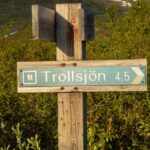
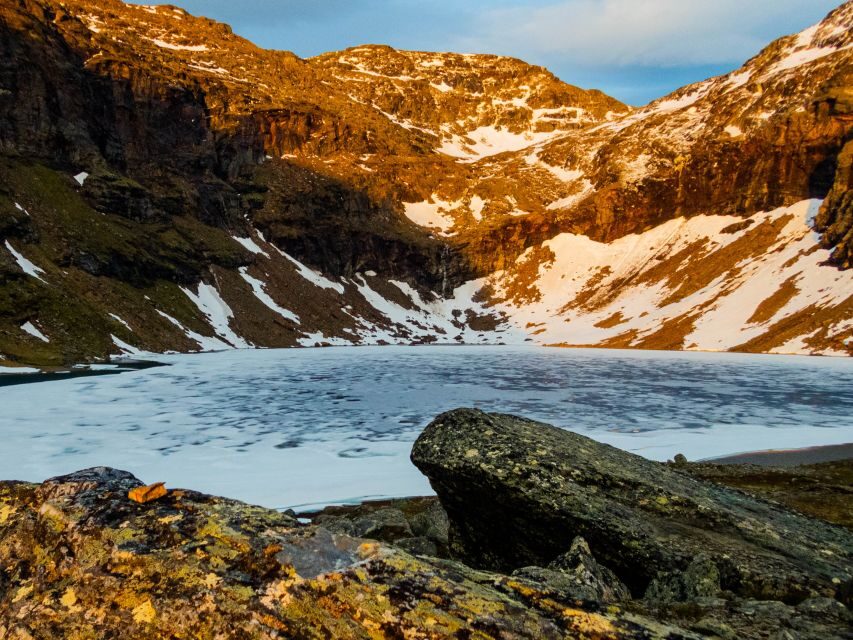
Trollsjön is one of those places that makes you understand why people stop talking mid-sentence. The lake sits about 815 meters (2673 ft) above sea level, at the end of the Kärkevagge Valley, right near the foot of Gearggecorru and Vassejietnja. Its water is described as meltwater from nearby glaciers, which helps explain why it stays so clean and clear.
What really matters for your experience is the visibility. The lake’s sight depth is reported at 37 meters all the way to the bottom of the deepest part, with the broader estimate of sight reaching around 70 meters if the lake had been deeper. That means you’re not just looking at a pretty lake—you’re seeing an almost unnervingly crisp view of what’s beneath you.
There’s also a nice cultural layer to the name. Trollsjön literally means Trolls lake in Swedish, and the Sami name Rissajaure is described as meaning the lake that glimmers like fire. Even if you’re not hunting for meaning, that glimmer shows up once the light hits the smooth surface and the water does its best impression of glass.
You can also read our reviews of more tours and experiences in Abisko.
Kärkevagge Valley’s boulder maze and the 3000-cave vibe
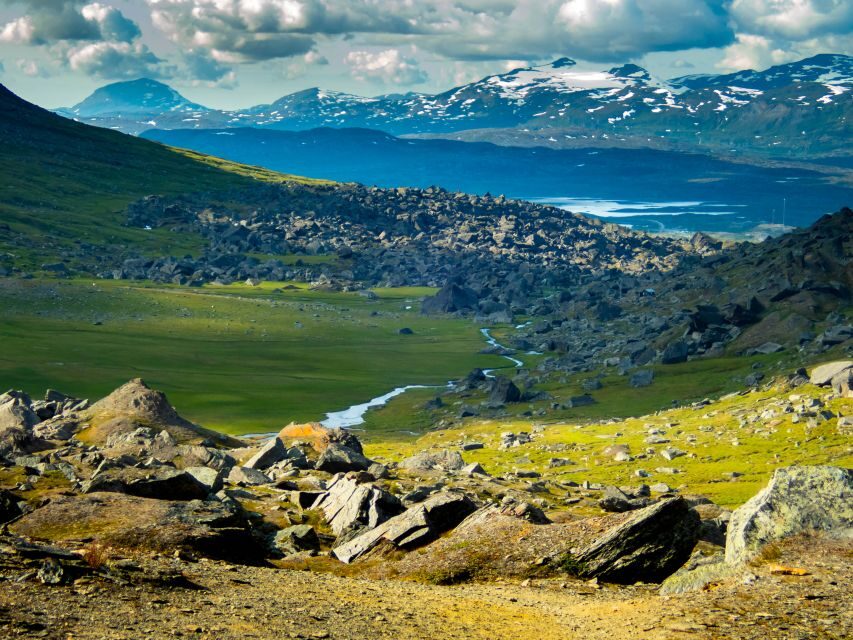
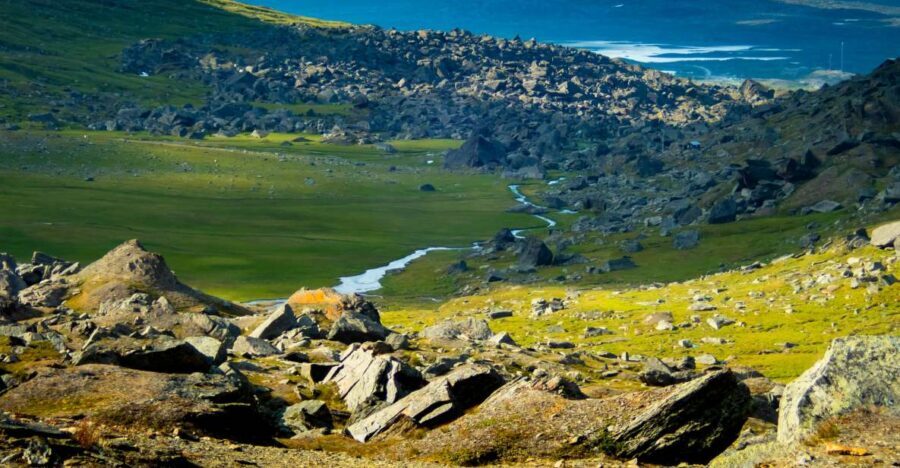
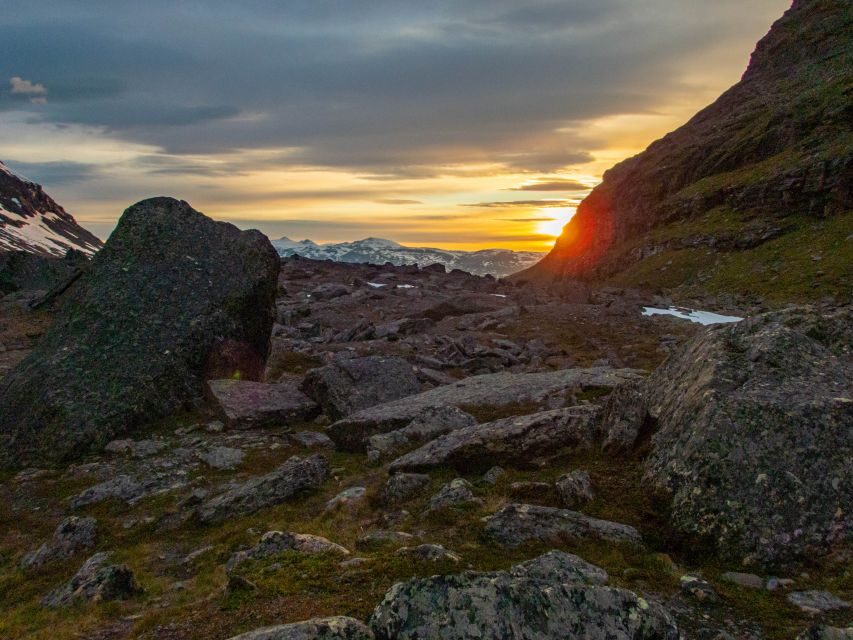
The hike’s “wow” starts before you reach the lake. Kärkevagge Valley is about 5.5 km long, and it’s basically a natural puzzle made of massive boulders. It’s called a rocky valley (the name Kärkevagge points right at that), and the walk feels like moving through a labyrinth rather than a simple trail cut through open ground.
The guide-led part is key here. You’re not just passing scenery; you’re moving through a place where the terrain has shaped itself in layers—boulders, valleys, and low cavities that collect snowmelt and water. One fascinating detail you’ll hear along the way: it’s estimated there are over 3000 caves on the valley floor. Even if you don’t see all of them in a day, knowing they exist changes how you read the rocks as you go.
And yes, there’s a practical side. Boulders can mean uneven footing. So you’ll want to treat traction and balance as part of your plan, not an afterthought. The reward is the feeling that you’re walking inside a giant outdoor sculpture—one where every bend can reveal something new.
The full day rhythm: Abisko pickups, transport to Låkta, and the return
This is a structured day that still feels like a real hike, not a rush-through. The start is 9:00, with pickup options across the Abisko area (including Abisko Guesthouse, STF Abisko Turiststation, Abisko Mountain Lodge, Gammelgården Ski Lodge, and more). Expect to meet your guide in the lobby about 5 minutes before pickup.
From there, you ride by van for about 30 minutes to Låkta, where the hike begins. This transfer matters more than you might think. It gets you into the right starting zone without you needing to coordinate local transport and timing on your own.
Once you’re moving on foot, the guided hiking portion is around 5 hours, depending on conditions and how the trail looks on the day. You hike from Låkta through Kärkevagge toward Trollsjön. When you reach the lake, there’s a break for lunch before you head back. The overall trip is estimated 6–8 hours, so you’re in “full morning to afternoon” territory, especially if weather adds extra minutes.
The return ride is again about 30 minutes by van, bringing you back to drop-off points around Abisko. That “in, hike, eat, hike back, out” flow is good value because it keeps you from spending time on logistics. It also means you can focus on the terrain and the lake instead of figuring out the route yourself while carrying your daypack.
Wildlife and alpine plants: what you might see along the boulder route
This is a nature walk where animals can show up, but you’re not meant to chase them. Along the way, it’s possible to see reindeer. Smaller wildlife sightings can include lemmings, hares, and birds like buzzards, grouse, and mountain pipits. Sea eagles are mentioned as a possibility too, though that’s never something you can schedule.
What makes the animal potential feel real is that the route passes through varied ground—boulder fields, small pockets where plants survive, and open sightlines when the rocks shift. Your guide also has a chance to point out signs, not just sightings. That can help you feel like you’re “reading” the area rather than waiting for luck.
Plant lovers get their own win. There are typical mountain plants associated with this area, including kvanne and stormhatt, plus glacier crowfoot, rose root, polar wool, polar willow, and dwarf birch. If you’ve got them, bring binoculars—one practical reason is that plant spotting can be way easier when you don’t have to squint at small details. Even if you don’t identify everything, you’ll notice the patterns of survival that make this region look the way it does.
Cold-water option at Trollsjön: when it’s worth it
Trollsjön is described as “sterile” and crystal clear, and for many people that combination leads to the big question: will you want to take a dip? The tour highlights it as an option for the more daring, and it’s hard to imagine why you wouldn’t at least consider it once you see the water.
But keep your expectations grounded. You’re at altitude, the lake is fed by glacier melt, and conditions can change fast in northern Sweden. So if you do go in, treat it as a quick experience, not a swim session. Your comfort plan should include timing, warmth afterward, and the ability to get back out safely on your own.
If you don’t dip, you still get plenty. The best “lake moment” here is simply being at water level and seeing how far down the bottom disappears. That’s the experience that fits almost any comfort level.
What to pack for this 6–8 hour hike from Abisko
This tour asks you to show up ready for weather and rough footing. Bring:
- Hiking shoes (non-negotiable on uneven boulder terrain)
- A jacket plus rain gear (weather can turn quickly)
- Gloves and a hat
- A daypack and reusable water bottle
- Your packed lunch for the break at Trollsjön
It also helps to think in layers. Even if it’s sunny at the start, altitude and time on rock can make things feel sharper later.
One more practical note: you’ll likely spend hours outdoors, including stops and walking on uneven ground. If you’re the type who hates soggy socks or wet sleeves, this is the day to be the planner in your friend group and prep for that.
Price and value: what $176 per person really buys
At $176 per person for a 7-hour experience, you’re paying for more than a view. You’re buying guidance through a specific terrain and water destination, plus transportation that places you at the right start point without extra searching.
Here’s what you actually get value from:
- Hotel pickup and drop-off around Abisko, including multiple accommodation options
- A live guide who can explain the landscape and nature, in English and Swedish
- A full day that includes the guided hike and time at Trollsjön for lunch and a proper look
- A private group setup, which typically makes it easier to move at a pace that fits your group and ask questions
If you were to DIY it, you’d need to solve transport, route understanding, and interpretation. The guide doesn’t just point directions—they help you understand what you’re walking through, including how the terrain formed and what to look for in animals and plants.
Is it pricey? For northern nature hikes, it’s very much in the “pay for organization and expertise” category. If you want a straightforward day with minimal friction, it looks like solid value.
Who should book this Kärkevagge & Trollsjön hike (and who should skip it)
This works best if you want:
- A guided hike that mixes boulder terrain with a memorable lake payoff
- The chance to learn while you walk—especially about plants, wildlife, and how the area works
- A full outdoor day that feels like you’re actually in the Swedish north, not just passing through
It may not be ideal if:
- You want a short outing. This is a 6–8 hour day once conditions are factored in.
- You’re traveling with a child under 12, since it’s not suitable for that age group.
- You’re not comfortable on uneven rock and long walking stretches.
The people most likely to love it are hikers who enjoy real outdoors walking and value a guide who can explain what you’re seeing rather than just ticking off a destination.
Should you book this tour?
If your dream day in Swedish Lapland is simple: walk through Kärkevagge’s boulder labyrinth, reach Trollsjön’s impossibly clear glacial lake, and come away with a better story than just photos, then yes—this is a strong pick.
I’d book it if you want structure without feeling rushed, and if you’re happy doing a serious hike for a big nature payoff. Pass if you’re looking for an easy stroll, need guaranteed warm water (you won’t), or can’t handle a full half-day of walking outdoors.
FAQ
FAQ
What time does the tour start?
The tour starts at 9:00 from the listed pickup locations in the Abisko area.
How long is the hike?
The hike is estimated to take 6–8 hours depending on weather and trail conditions.
Where is pickup and drop-off?
Pickup and drop-off are available at multiple locations in Abisko, including Abisko Guesthouse, STF Abisko Turiststation, Abisko Mountain Lodge, Gammelgården Ski Lodge, and Hotell Fjället (plus Abisko Fjällturer AB and Abisko.net/Hostel and Huskies on some options).
How do you get to the start of the hike?
A van transfer takes you about 30 minutes to Låkta, where the hike to Trollsjön starts.
Is there a guide, and what languages are offered?
Yes, there is a live guide, and the tour is offered in English and Swedish.
What should I bring?
Bring hiking shoes, a jacket, rain gear, gloves, a hat, a daypack, a reusable water bottle, and a packed lunch.
Can I take a dip in Trollsjön?
The highlights mention that the more daring can take a dip in Trollsjön’s cold, crystal-clear water.
Is the tour suitable for children?
No, it isn’t suitable for children under 12.
How much does it cost and what’s included?
The price is $176 per person, and hotel pickup and drop-off are included.