REVIEW · ABISKO
Abisko National Park: Scenic Morning Hike with Transfer
Book on GetYourGuide →Operated by Lights Over Lapland · Bookable on GetYourGuide
Snow hush plus real local insight. This guided morning hike in Abisko National Park pairs an easy Arctic walk with hotel transfer, so you spend less time planning and more time soaking up river-canyon views and the Lake Torneträsk area. I especially love the small-group vibe and the way your guide helps you read the trail like a wildlife detective.
The trip is built around a short, scenic route (about 3–4 km) and a guide who slows down for photos and context. In practice, the experience really depends on who’s leading: I’ve seen guides like Cecilia, Felix, and Sara mentioned for being friendly, patient with pace, and quick to point out the little things you’d miss alone.
One possible drawback: this is a short outing, not a long, rugged expedition. If you want a full-day workout—or if you’re traveling with someone who struggles with cold, snow, or walking—this may feel limited, even though it’s designed to be manageable for most guests.
In This Review
- Key things to know before you go
- Why Abisko’s morning hike feels like the right kind of “Arctic”
- Hotel pickup in Abisko: less hassle, more time outside
- The guide makes the hike: pace, safety, and stories
- What you’ll actually see: river canyon, birch forest, and open delta views
- Lake Torneträsk moments: where the cold makes the photos better
- Wildlife: spotting animals is bonus, reading tracks is the skill
- What to wear so the cold doesn’t steal your attention
- Price and value: does $88 make sense?
- Who should book this hike, and who should skip it
- Should you book this Abisko morning hike?
- FAQ
- What’s the duration of the Abisko National Park morning hike?
- How far is the hike?
- Is the guide English-speaking, and is it a small group?
- Where does hotel pickup happen, and do you pick up from Kiruna?
- What should I bring for the hike?
- Are animals guaranteed to be seen?
Key things to know before you go
- Hotel pickup with multiple options: You’re collected from several Abisko-area locations, with no pickup from Kiruna.
- A guided 3–4 km walk: Expect a morning stroll with stops, photo moments, and interpretation—not a marathon hike.
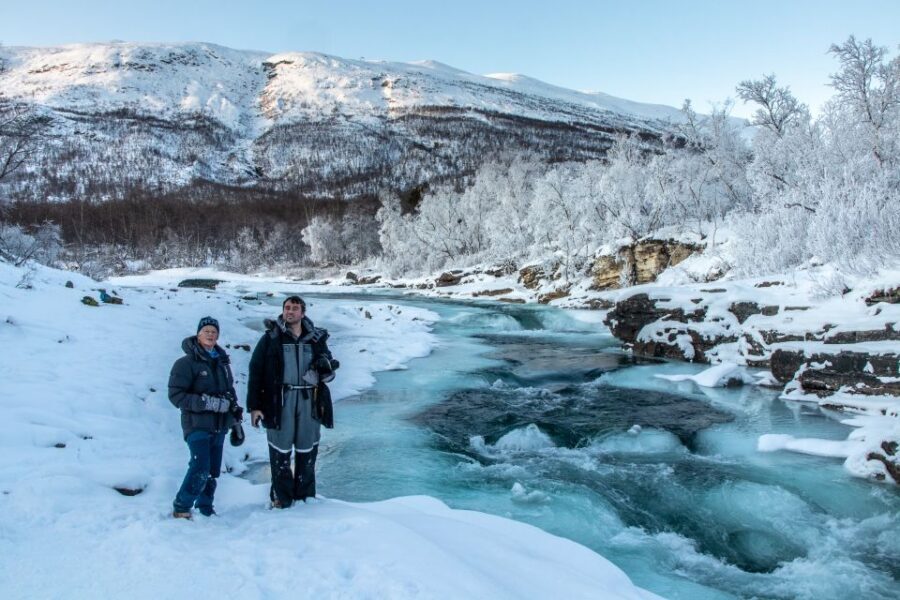
- River canyon to delta views: The route commonly includes the Abisko river canyon and open views toward the river delta.
- Wildlife tracking, not just spotting: You’ll learn to look for signs left behind by local animals.
- Sami culture comes into the story: Guides share context about indigenous life in the region alongside nature facts.
- Small group capped at 10: That limit helps keep the pace calm in cold, snowy conditions.
Why Abisko’s morning hike feels like the right kind of “Arctic”
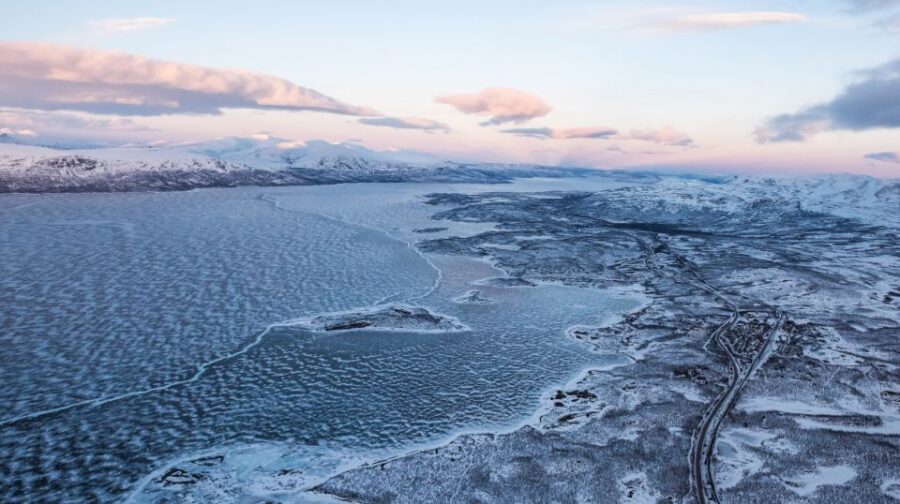
Abisko National Park is one of those places where the scale is obvious even on a short walk. You’re surrounded by the feeling of the far north: crisp air, winter light (when conditions cooperate), and huge open sightlines that make the day feel bigger than the distance you’re walking. The “morning” timing matters too. You get earlier views with less crowd pressure and a calmer pace for photos and pauses.
This experience is built as a compact Arctic sampler. You’ll walk a trail your guide knows well, and you’ll be redirected from the usual photo spots to the places that teach you something—like what the plants are doing, how animals use the area, and why the local geography looks the way it does.
Also, I like that this isn’t sold as a hardcore adventure. At about 3–4 km with a total duration listed as around 2 hours, it works for people who want the Abisko feeling without needing to train for a full-day trek.
You can also read our reviews of more hiking tours in Abisko

Hotel pickup in Abisko: less hassle, more time outside
The transfer part is genuinely useful here. Your start isn’t “meet at a random trailhead.” Instead, you get hotel pickup and drop-off with five pickup locations in the Abisko area (including places like Hotell Fjället, Abisko Guesthouse, STF Abisko Turiststation, and Abisko Mountain Lodge). That means you can show up dressed, check in, and go.
The pickup window times vary slightly by location, so you’ll want to be ready a bit early. The practical benefit: you’ll spend fewer minutes sorting logistics and more minutes walking while the air still feels sharp and clean.
And there’s one important line item to respect: no pickup from Kiruna. If you’re coming from outside Abisko, plan your day so you’re in the right area for your assigned pickup spot. It’s a small detail, but it avoids the classic northern Sweden problem of wasting time on transfers.
The guide makes the hike: pace, safety, and stories
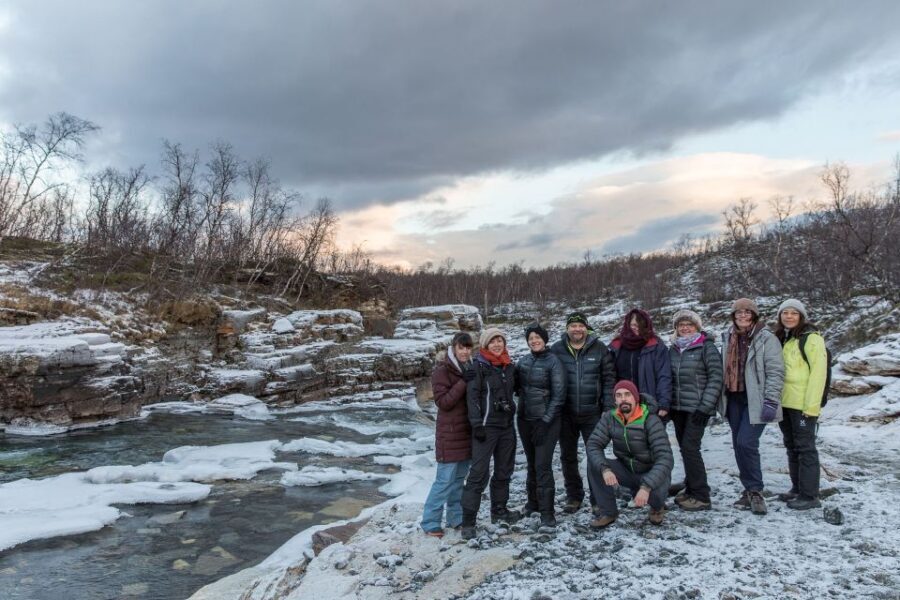
This is a small-group tour limited to 10 participants, and you feel that. In winter, the margin for error is smaller. Slippery snow, uneven ground, and cold hands all add up. A good guide keeps the group together, makes sure everyone can participate comfortably, and stops often enough that you don’t just “survive the walk.”
In the feedback, names like Miquelon, Marco, Matteo, and Cecilia come up repeatedly—and the common thread is that the guides don’t just narrate. They actively manage pace and footing, and they help people who may be less used to snowy trails. Some guides also help with photos, making sure you get a clean angle without everyone scrambling.
You’ll also hear a lot about the park beyond scenery. Guides talk about tracks left behind by wildlife and what those signs mean. They also share history and information about Abisko—plus cultural context about local indigenous people in the region. That blend is why the hike can feel more than “a walk with views.”
What you’ll actually see: river canyon, birch forest, and open delta views
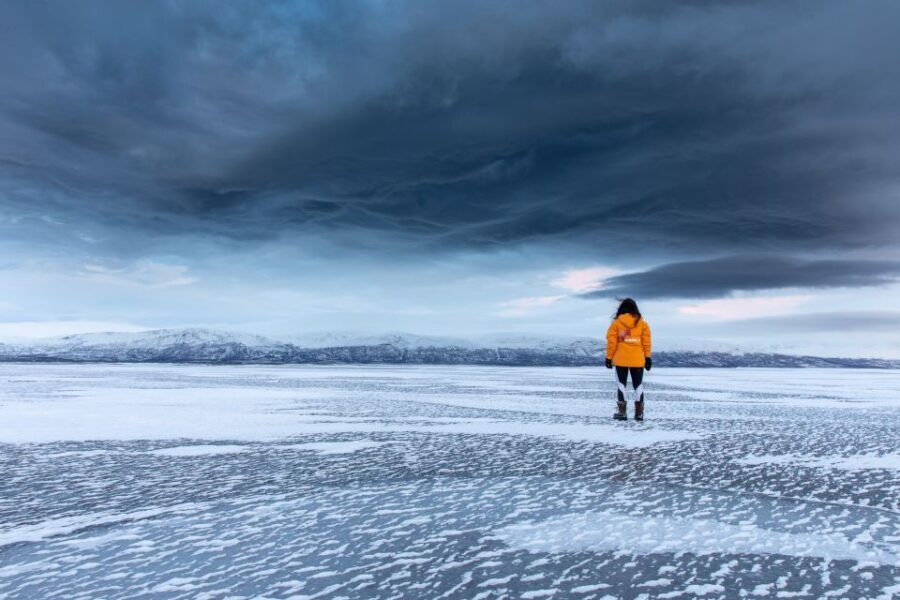
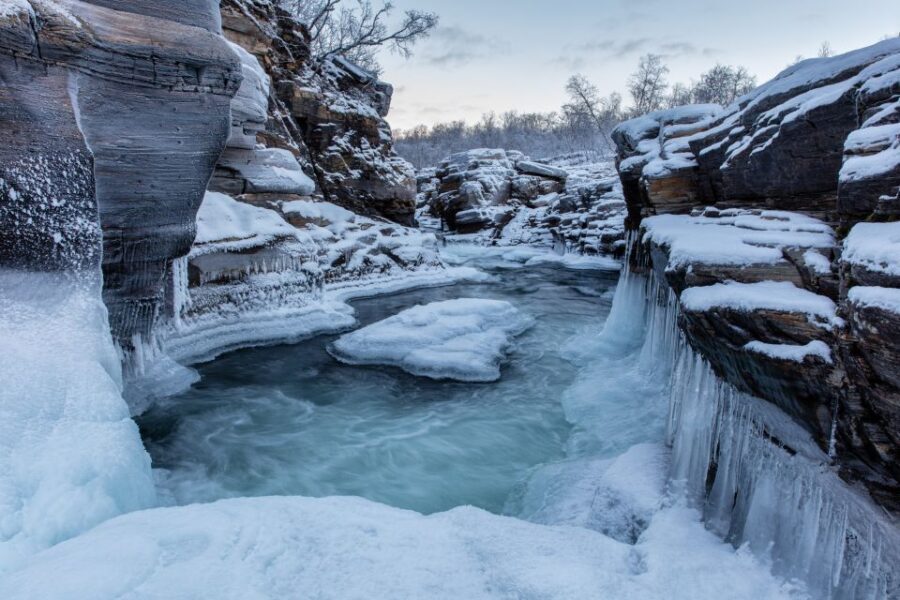
Most of the value in this hike is that you’re not just walking in a straight line to a single viewpoint. Your guide leads you down one of the local trails, and a common example is the path along the Abisko river canyon.
Along that kind of route, you get multiple “mood shifts” in a short time:
- You move through forest areas, including ancient mountain birch forest.
- You step into open views toward the Abisko river delta.
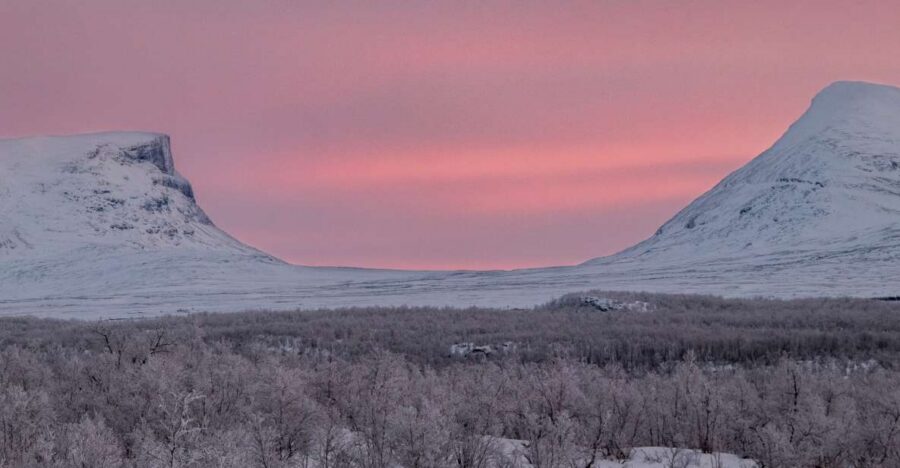
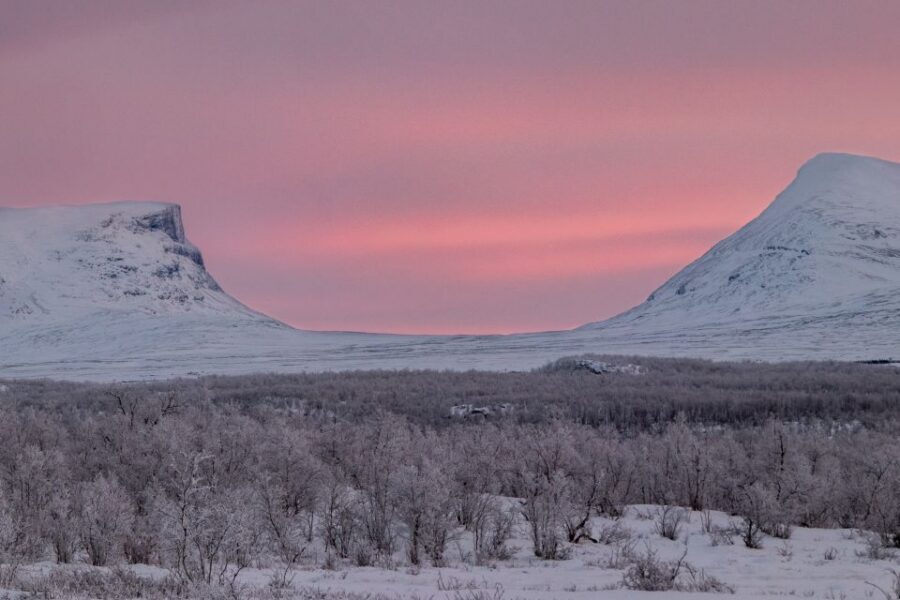
- You look outward toward soaring mountain peaks and larger-scale scenery tied to Lake Torneträsk.
Even if you’re not a long-distance hiker, this kind of route gives your brain something to work with. The stops aren’t random. Your guide uses the scenery as an excuse to explain how animals move through the area, where you’re likely to find tracks, and how the local waterways shape what lives here.
Lake Torneträsk moments: where the cold makes the photos better
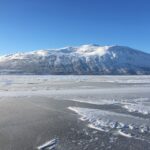
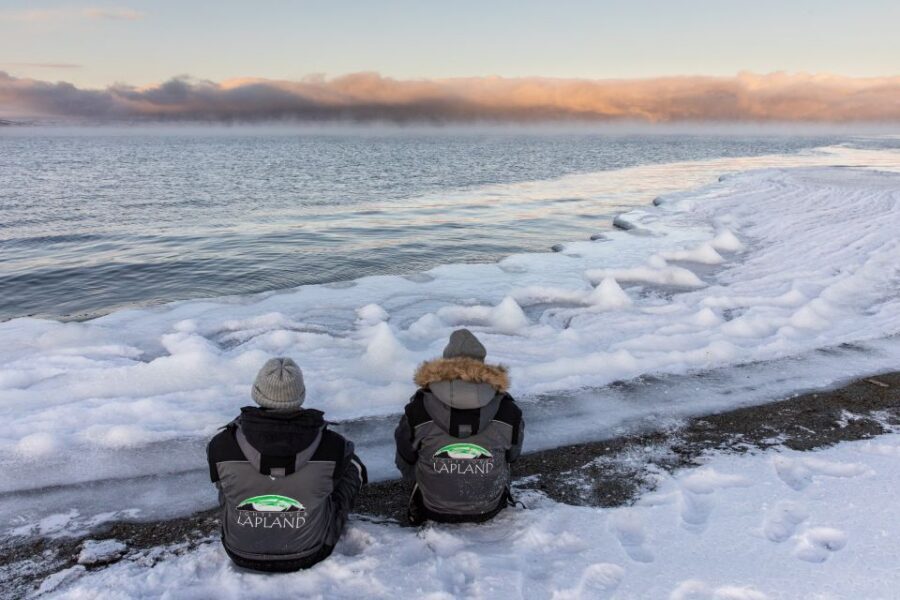
Lake Torneträsk shows up as a big character in this experience, and it’s not just because it’s famous. The description emphasizes beautiful views around the lake area, and in real-world conditions you can get that “frozen stillness” effect people remember.
One reason I’d plan your camera usage carefully: in snowy, cold air, you won’t want to keep fumbling with gloves off and on. Guides tend to build in photo stops, so you can warm up your hands, switch settings, and grab images during the moments that matter.
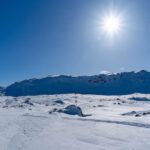
Also, the lake/delta area is where the hike can feel quietly dramatic. The geography gives you wide sightlines, and winter light can turn short pauses into real “stop-and-watch” time. If the group conditions allow, you might even get a calm moment where you’re encouraged to just experience the silence before moving on.
Wildlife: spotting animals is bonus, reading tracks is the skill
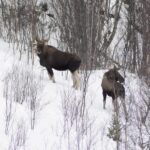
Wildlife spotting is the fun part, but it shouldn’t be your only hope. The activity is clear that seeing animals is not guaranteed. Still, you may get a chance to spot Arctic species such as reindeer, mountain hare, foxes, a full range of birds, and—if you’re lucky—moose.
What makes the guided portion worth it is that you’ll also learn to look for evidence. Your guide focuses on tracks left behind by local wildlife, so even when animals are staying out of sight, you’re still “seeing” what’s happening in the park. That turns the experience from luck-based into skill-based.
I also like that guides bring in indigenous context. When your guide explains how people have lived with these seasons and this terrain, it changes your interpretation of what you’re walking through. It’s no longer just a snowy walk; it’s an Arctic place with patterns.
What to wear so the cold doesn’t steal your attention
This is a winter hike, and your gear matters more than your hiking shoes. You’re advised to bring:
- Comfortable shoes
- Warm clothing (layering helps)
- Comfortable clothes
- Warm shoes
That’s not boilerplate. In Abisko, you’ll likely be dealing with deep snow at times and uneven footing. In the feedback, people mention balancing challenges and the help guides provided during tricky sections. So don’t show up with flimsy footwear and hope for the best.
Practical tip: wear layers you can manage while moving. If you overdress before the first stop, you’ll sweat early and then chill later. Aim for warm even when you stop, but not so hot you can’t move comfortably between photo points.
If you tend to get cold quickly, treat this as a “warmth first” hike. You’ll enjoy the stories more if you’re not focused on frozen fingers.
Price and value: does $88 make sense?
At $88 per person for about 2 hours, this is not a bargain hike. But it isn’t overpriced in a “paying for nothing” way either. Here’s what you’re funding:
- A trained, English-speaking guide leading the route
- Hotel pickup and drop-off (so you’re not DIY’ing the logistics)
- A small group cap (10 participants), which helps safety and pacing
- The interpretive part: wildlife tracks, local history, and Sami cultural context
If you were to walk Abisko on your own, you could technically reach areas nearby and enjoy views. But the difference is you’d miss the “why.” The guide helps you notice animal signs, understand why certain plants and terrain matter, and connect what you’re seeing to human stories in the region. That’s where the money becomes value.
If your goal is purely to get outdoors for a quick scenic walk, you might feel the cost more keenly. If your goal is to understand Abisko while you’re there, it’s a pretty smart spend.
Who should book this hike, and who should skip it
This trip fits best if you want:
- An easy-to-moderate winter hike (short distance, guided stops)
- Wildlife learning through tracks, not just animal luck
- A morning outing with hotel transfer in Abisko
- Stories that combine nature, park history, and cultural context
It’s not suitable for children under 7, and it’s not recommended for people with mobility impairments based on the activity’s requirements. Also, if you’re seeking a long, strenuous trek, the 3–4 km format may feel too short for your expectations.
On the flip side, many people who aren’t regular hikers still find this kind of guided walk doable because the pace is managed and the route is chosen for scenic variety rather than endurance testing.
Should you book this Abisko morning hike?
If you’re coming to Abisko and you want the best “first feel” of the park without overplanning, I’d book it. The combination of hotel pickup, a short guided hike, and interpretation (wildlife tracks plus local history and Sami context) gives you something you can’t easily replicate by wandering alone.
Book it especially if you:
- Want a calm Arctic experience with a small group
- Like learning about how animals use a place
- Prefer guided photo stops and a paced route in winter conditions
Skip it if you:
- Need a longer, more physically demanding hike
- Cannot handle cold-weather walking for any reason
- Only care about guaranteed animal sightings (because seeing wildlife is a bonus, not a promise)
FAQ
What’s the duration of the Abisko National Park morning hike?
The activity is listed as 2 hours total.
How far is the hike?
You’ll be taken on a short guided hike of about 3–4 km.
Is the guide English-speaking, and is it a small group?
Yes. The tour includes a live guide in English, and it’s limited to a small group of up to 10 participants.
Where does hotel pickup happen, and do you pick up from Kiruna?
Hotel pickup is available from several Abisko-area locations (including Hotell Fjället, Abisko Guesthouse, Abisko Fjällturer AB/Abisko.net, Abisko Mountain Lodge, and STF Abisko Turiststation). There is no pickup from Kiruna.
What should I bring for the hike?
Bring comfortable shoes and warm shoes, plus warm clothing and comfortable clothes suited to cold weather.
Are animals guaranteed to be seen?
No. Wildlife sightings like reindeer, mountain hare, foxes, birds, and moose are possible, but not guaranteed. The guides also focus on learning from animal tracks.