REVIEW · STOCKHOLM
Millesgården Museum: sculpture park and art galllery
Book on GetYourGuide →Operated by Millesgården Museum · Bookable on GetYourGuide
Scandinavian calm, with sculptures at every turn. Just 20 minutes from central Stockholm in Lidingö, Millesgården blends a sculpture park, an artist’s home, and art spaces with fountains and big views over the water. I love the Millesgården sculpture park with its terraces and fountain groups, and I love how close you get to Carl Milles’ work inside the Artist’s Home.
One thing to plan for: the included audio guide can feel slightly awkward to start, since some key links only show up once you’re in the studios—so give yourself a bit of time to wander before rushing through.
In This Review
- Key things to know before you go
- A 20-Minute Escape from Central Stockholm to Lidingö
- The Sculpture Park: Fountain Groups and the Terraced Stockholm Views
- Artist’s Home: Seeing How Carl Milles Worked
- Breakfast Tiles, Classical Objects, and the Pompeii-Inspired Gallery
- Anne’s House by Estrid Ericson and Josef Frank from Svenskt Tenn
- Art Gallery Time: Exhibitions Plus a Smooth Rhythm
- Audio Guide Tips: How to Avoid the Common Start-Glitch
- Price and Value: Why $19 Can Make Sense for a Full-Day Culture Stop
- Getting There, What to Bring, and the Little Rules That Matter
- Should You Book Millesgården Museum?
- FAQ
- How long does the Millesgården experience take?
- What’s included with the ticket?
- When is Millesgården open?
- How do I get to Millesgården from central Stockholm?
- Is the museum cash-free?
- Is Millesgården wheelchair accessible?
Key things to know before you go

- About 100 Carl Milles sculptures spread through the grounds, including around ten major fountain groups
- Terraced garden paths that make the sculpture viewing feel like walking through a designed stage
- Large Studio and working spaces tied directly to how Milles created his large sculptures
- Breakfast room with blue Dutch tiles that adds a surprisingly intimate, lived-in tone
- Anne’s House decorated by Estrid Ericson and Josef Frank from Svenskt Tenn
- Art Gallery exhibitions that give you context beyond the sculpture park
A 20-Minute Escape from Central Stockholm to Lidingö
Millesgården is an easy day plan, not a production. From T-Centralen, you’re looking at roughly 20 minutes travel time depending on connections, then it’s a short walk from the stop to the entrance.
You’ll get there fast by public transit: take the subway to Ropsten, then hop on a bus (201, 202, 204, 206, 211, 212, or 221) to Torsviks Torg, followed by about a 7-minute walk with signs to guide you. If buses aren’t your thing, the Lidingöbanan tram from Ropsten to Torsvik or Baggeby also works, and Millesgården sits between those two stations with another 7-minute walk.
If you’re driving, there’s free parking at Herserudsvägen 32 just outside the main entrance. And if you’re feeling active, there’s a bicycle cycle path over the Lidingö bridge, which can be a great way to arrive in a calm, unhurried mood.
You can also read our reviews of more museum experiences in Stockholm



The Sculpture Park: Fountain Groups and the Terraced Stockholm Views

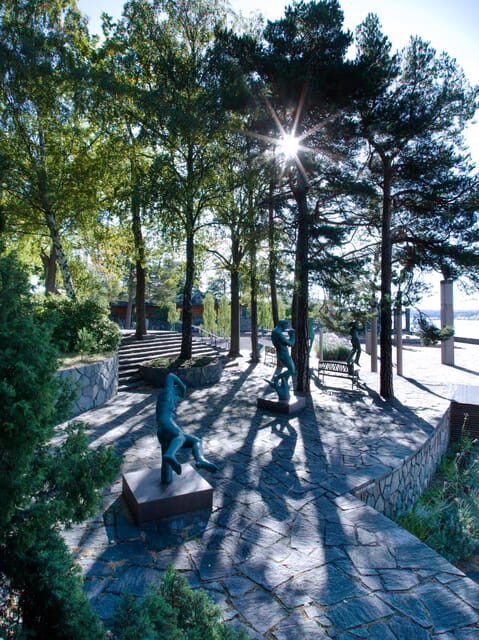
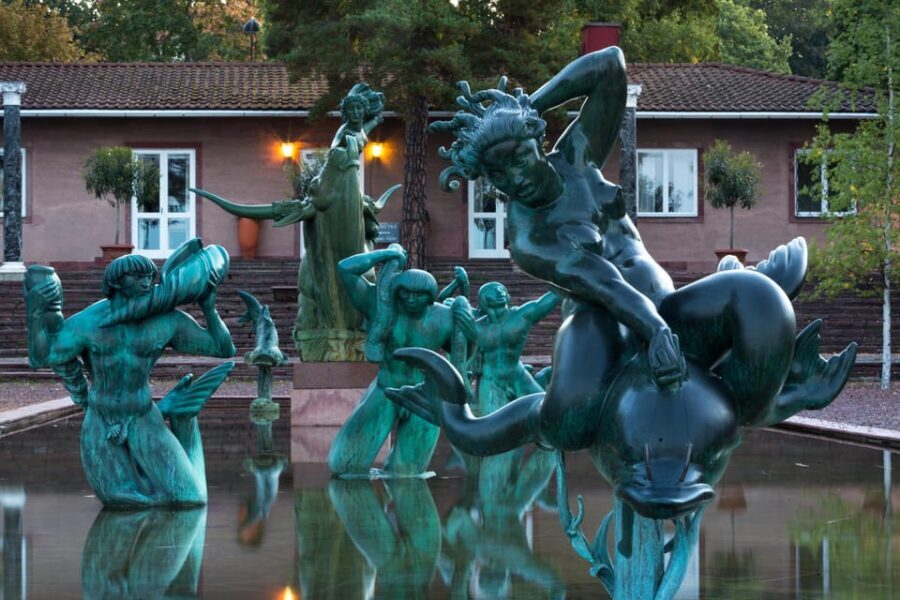
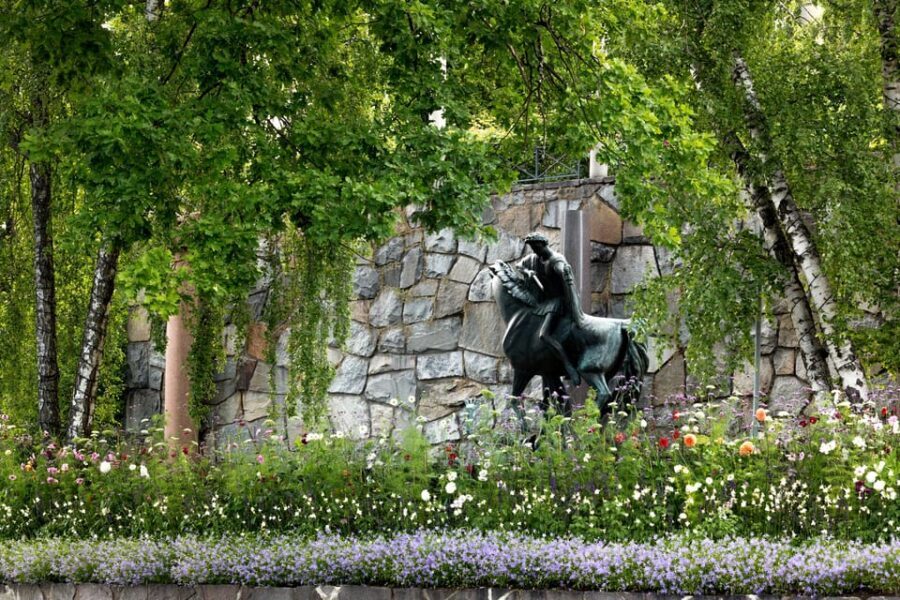
This is the reason many people fall for Millesgården. You stroll through a thriving garden filled with flowers, sculptures, and fountains, all shaped around the works of Carl Milles. Expect around one hundred sculptures, with roughly ten larger fountain groups, so it’s not just “a few statues on the lawn.”
What I like most is how the paths encourage repeated viewpoints. You don’t just find one great photo spot—you keep turning corners and getting new angles. A local favorite is the garden terrace with sculptures, and you can see why: it turns a walk into a sequence, with the sculptures and water effects landing in different frames as you move.
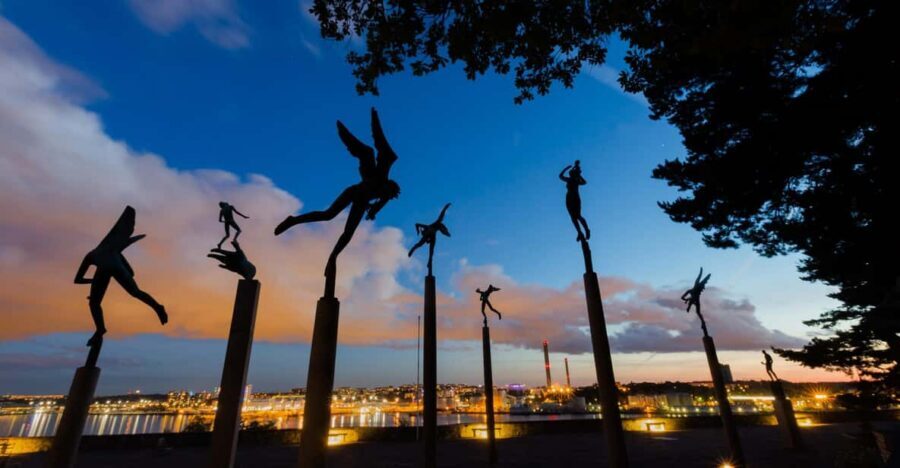
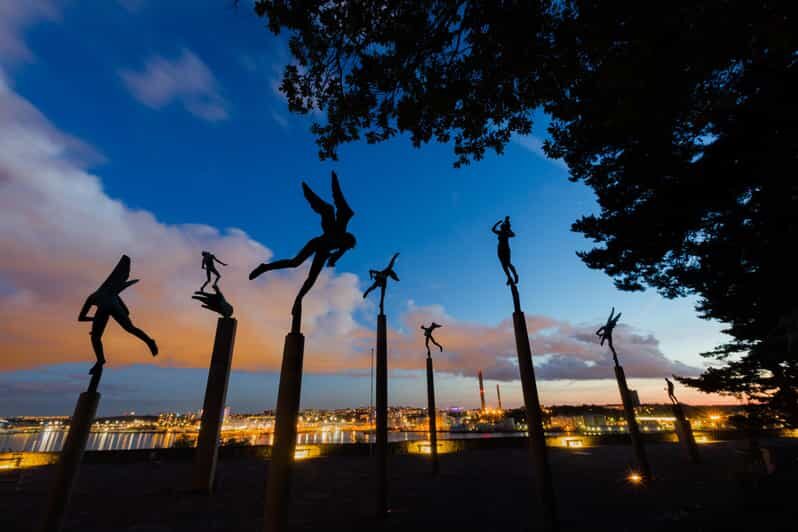
Also, don’t rush past the “in-between” areas. The grounds are where Milles’ style makes sense—movement, scale, and that dramatic way sculpture can feel like architecture. And with the park’s vantage points, you get a view of Stockholm, which is a nice payoff after all that close looking.
Practical tip: wear shoes you don’t mind getting a little dusty. You’ll spend real time walking on outdoor paths, and the whole experience flows better when you’re not thinking about blisters.
Artist’s Home: Seeing How Carl Milles Worked
After the park, the energy shifts from outdoors to inside the Artist’s Home. This is where the visit stops being only pretty and becomes more about process. The home belongs to Carl Milles and his artist wife Olga Milles, and the rooms are arranged so you can see the spaces connected to his practice.
Start with the Large Studio, which is tied to how Carl created his larger sculptures. You’re not just viewing finished pieces—you’re seeing the scale of the workspace and how it fits the kind of work he did. Even if you’re not an art-nerd, this room helps you understand why the sculptures feel so physical and bold.
Then look at the house details, because they matter here. The breakfast room is clad in blue Dutch tiles, and that’s one of those small surprises that makes the place feel lived-in rather than museum-still. The Pompeii-inspired Gallery adds another layer, with a setting that makes the sculpture collection feel like it belongs to a broader artistic world, not only one man’s outdoor project.
And yes, there’s plenty to see beyond rooms. You’ll also get Carl Milles’ grand collection of classical sculptures and objects, which gives you a sense of what he was thinking about and absorbing. If you like art that has roots, this collection is the kind of quiet companion to the big outdoor fountains.
Breakfast Tiles, Classical Objects, and the Pompeii-Inspired Gallery
It’s easy to treat the house as a quick stop after the sculptures. I don’t recommend that. The rooms are where you slow down and notice how the curving lines of sculpture match the architecture and decorative choices.
The blue Dutch tiles do more than decorate a wall. They create a specific mood—cool, graphic, and slightly old-world—so when you look at nearby objects, it feels like everything has been arranged to sit together. This is the kind of interior detail you’ll remember later, even if you forget which sculpture you saw first.
Next, the Pompeii-inspired Gallery is a visual change of pace. You can think of it as the house’s “art in context” room: the sculptures and objects feel like part of a larger conversation about classical form and storytelling.
The best way to handle these rooms is simple: give yourself time to look at what you might otherwise ignore. One minute you’ll be staring at the art; the next you’ll notice a tile edge, a room proportion, or how the objects are displayed. That’s where Millesgården turns into a satisfying, full-day experience.
Anne’s House by Estrid Ericson and Josef Frank from Svenskt Tenn

One of the more interesting contrasts at Millesgården is Anne’s House. It’s decorated by Estrid Ericson and Josef Frank from Svenskt Tenn, and that design voice feels different from the sculpture-focused sections of the visit.
This is a place to step back and think about how art and taste can show up in everyday rooms. The house-decoration approach adds warmth to the day, and it helps balance the sometimes dramatic feel of sculpture and fountains.
If you love design, interior detail, or Swedish modern style, Anne’s House is a great “switch gears” stop. Even if you’re mostly there for Carl Milles, this section helps round out the story of how the artistic world around him extended beyond the garden.




Art Gallery Time: Exhibitions Plus a Smooth Rhythm
After the house, you’ll find the Art Gallery, where you can see current exhibitions. The gallery is a helpful bridge: it expands the day beyond one artist’s work in the outdoors and indoors.
There’s also Millesgården Lanthandel, which is where you can grab lunch or an afternoon coffee. I like this placement because it breaks up the day into two steady halves: park and home, then gallery and design.
If you’re sensitive to timing, plan for the gallery space to follow its own schedule. Sometimes exhibition rooms can be in a transition phase, which may make the experience feel a little less complete than you hoped. Still, you’ll get the overall flow: garden, artist’s home, Anne’s House, and then gallery viewing.
Finish with a look through the museum shop if you want a small memory to take home. It’s also a good place to reset your brain after outdoor walking.
Audio Guide Tips: How to Avoid the Common Start-Glitch

The visit includes an audio guide in Swedish and English. This is a big value point because Millesgården is packed with details—sculptures, room functions, collections—so having commentary helps you connect the dots instead of just photographing everything.
Here’s the practical catch: in at least one experience, the audio link was discovered only later, when reaching atelier/studio walls. So don’t treat the audio as something you’ll definitely set up instantly at the first door. Keep your phone or player ready, scan for where the guide connects, and be patient if it takes a little time to get rolling.
My advice: start the audio during your first indoor stretch, not at the very beginning of the day outdoors. That way, even if you hit a small hiccup, you’ll still get meaningful use in the studio rooms where the information probably matters most.
Price and Value: Why $19 Can Make Sense for a Full-Day Culture Stop

At about $19 per person, Millesgården isn’t trying to be the cheapest option in Stockholm. But it also isn’t charging you for one room and calling it done.
You’re paying for a bundle of experiences that all feed each other: sculpture park, artist’s home, antiques collection, Anne’s House, and the art gallery. That means you’re not just buying entry—you’re buying time. And time is what turns a pretty garden visit into something satisfying.
If you’re short on days in Stockholm, this is a strong value because it’s concentrated. You get outdoors, interiors, design, and exhibitions on one property, and you can do it in a single 1-day outing.
Who will feel the best value:
- art lovers who enjoy sculpture but also want context inside working rooms
- people who like design history and Swedish modern style via Svenskt Tenn
- anyone who wants a slower, calmer pace without leaving the city far behind
Who might hesitate:
- if you only want high-energy, guided-every-minute tours, Millesgården is more self-directed, with the audio guide doing the heavy lifting
Getting There, What to Bring, and the Little Rules That Matter
Millesgården runs 11:00 to 17:00, Tuesday to Sunday, all year round. Plan to arrive with enough daylight and energy so you can enjoy the garden pace instead of sprinting through the property.
You should also pack light. Oversize luggage and large bags aren’t allowed, so keep your load small. If you’re coming from a longer Stockholm day with a lot of shopping or a big backpack, consider doing this as its own lighter outing.
The museum is cash-free, so you’ll pay with credit or debit card in the shop and restaurant. That’s usually easy, but it’s worth knowing before you arrive.
And yes, it’s wheelchair accessible, which is a key practical plus if you need step-free paths and easier navigation.
Should You Book Millesgården Museum?
I’d book Millesgården if you want a day in Stockholm that feels cultured but not stressful. It has a standout sculpture park with fountain groups and terrace views, and the Artist’s Home gives you the most meaningful link between Carl Milles and the work you see outside.
You might skip it or wait for a different day if you’re very time-strapped or you hate “audio-first” experiences that rely on you finding the right audio link spots. But for most people, the mix of outdoor sculpture, interiors, and Anne’s House design stop makes it a good use of a single day.
If you’re deciding between a quick park visit and a deeper arts afternoon, this one wins because it keeps expanding. You start with fountains and sculptures, then you step into the rooms where that same world comes from.
FAQ
How long does the Millesgården experience take?
It’s designed as a 1-day visit.
What’s included with the ticket?
The ticket includes the Art Gallery, Artist’s home, the Antiques collection, the Sculpture park, and Anne’s House.
When is Millesgården open?
It’s open Tuesday to Sunday, 11:00–17:00, all year round.
How do I get to Millesgården from central Stockholm?
Take the subway to Ropsten, then use a bus to Torsviks Torg and walk about 7 minutes, or take the Lidingöbanan tram to Torsvik or Baggeby and walk about 7 minutes. Travel time from T-Centralen is about 20 minutes.
Is the museum cash-free?
Yes. It’s cash-free, and you can pay by credit or debit card in the museum shop and restaurant.
Is Millesgården wheelchair accessible?
Yes, it’s wheelchair accessible.