REVIEW · STOCKHOLM
Stockholm Must Sees
Book on Viator →Operated by OURWAY Tours - Stockholm · Bookable on Viator
Gamla Stan pairs well with a sunken warship.
I love how this tour links the Old Town maze to big national stories, from medieval street legends to royal symbolism. I also like that the Vasa Museum part includes admission and guided entry, so you understand what you’re looking at instead of just staring at wood. The main drawback is simple: the tour is about 3 hours, so you’ll only get a guided taste of a museum that’s huge.
This is the kind of tour that helps you start your Stockholm trip with momentum. You’ll cover major stops in Gamla Stan, then switch gears with a short public ferry ride to Djurgården. And the group stays small—up to 16 people—which usually helps with questions and not feeling like a human sardine.
Yes, you’ll do some walking on cobblestones, and the weather can change fast in Sweden. Bring comfortable shoes and expect to move—your payoff is leaving with a clearer map of where everything is, and why it matters.
In This Review
- Key things I’d watch for on this tour
- Why this Stockholm combo works in about three hours
- Stortorget and Prästgatan: Old Town’s center, before it gets complicated
- Royal Palace area and Storkyrkan: where Stockholm shows its power
- The Iron Boy, St George, and Mårten Trotzig: small details with big meaning
- The ferry from Skeppsbron to Djurgården: a quick break with real payoff
- Vasa Museum: what you get with skip-the-line and a guided look
- Price and logistics: what $113.48 buys you (and why it’s fair)
- Who this tour suits best (and who should think twice)
- Should you book Stockholm Must Sees?
- FAQ
- How long is the Stockholm Must Sees tour?
- What is the price per person?
- Is Vasa Museum admission included?
- Do I need to pay for transportation to reach the Vasa Museum?
- Where does the tour start?
- What time does the tour start?
- Where does the tour end?
- Is the tour suitable for people with only moderate physical fitness?
- Will I walk on cobblestones?
- Is there free cancellation?
Key things I’d watch for on this tour
- Gamla Stan hits the big landmarks fast: Stortorget, Storkyrkan, and the Royal Palace area in one walk
- A public ferry ride that’s actually useful: you’re going to Djurgården anyway, and the views help it feel like a break
- Vasa Museum entry is built in: ticket included, plus guided time so the ship’s story makes sense
- Skip-the-line helps here: you avoid a common museum headache and get moving with less waiting
- Cobblestones are part of the deal: plan for uneven ground, especially in wet weather
- The tour ends inside the museum: you can keep exploring on your own after the guide leaves
Why this Stockholm combo works in about three hours

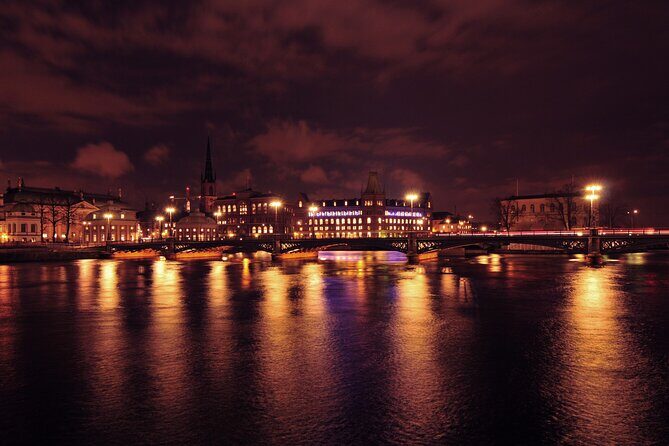
Stockholm’s Old Town can feel like a puzzle at first. This tour gives you the key pieces in the right order: start at the oldest town square, walk through the medieval streets, then glide to the island where the Vasa sits waiting.
The smartest part is the pairing. Gamla Stan helps you understand how the city formed and what power looked like—church, monarchy, and symbols carved into everyday streets. Then the Vasa Museum hands you the other side of Sweden’s 1600s story: ambition, money, shipbuilding, and a disaster that still grabs you.
You’re paying $113.48 per person, but the value is not just “you get a guide.” The cost includes the Vasa Museum entrance fee and the public transport ticket to reach it, plus ferry time. That matters when you’d otherwise buy tickets on the fly and waste part of your day figuring it out.
You can also read our reviews of more tours and experiences in Stockholm.



Stortorget and Prästgatan: Old Town’s center, before it gets complicated

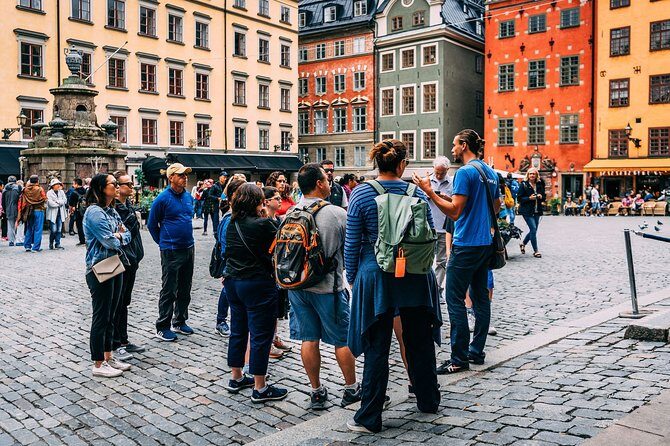
You’ll meet at Stortorget, the heart of Gamla Stan’s public life. Even if you don’t step inside anything special, you get the geography right away. Stortorget is described as Stockholm’s oldest town square, and it’s also where the Nobel Museum is located—so the area has layers: modern fame sitting on old cobbles.
From there, the walk shifts into the spooky-but-fun medieval mindset of Prästgatan (Priest Street). A section of this street once had the nickname Helvetsgränd, or Hell’s Alley. The idea in the Middle Ages was that part of the area served as a desecrated resting place for the dead.
This is exactly the kind of detail a self-guided walk often misses. You see the street shape and you get the story behind why it was named the way it was. It’s also a good warm-up for the rest of Gamla Stan, because you start reading the city like it’s a text.
Royal Palace area and Storkyrkan: where Stockholm shows its power

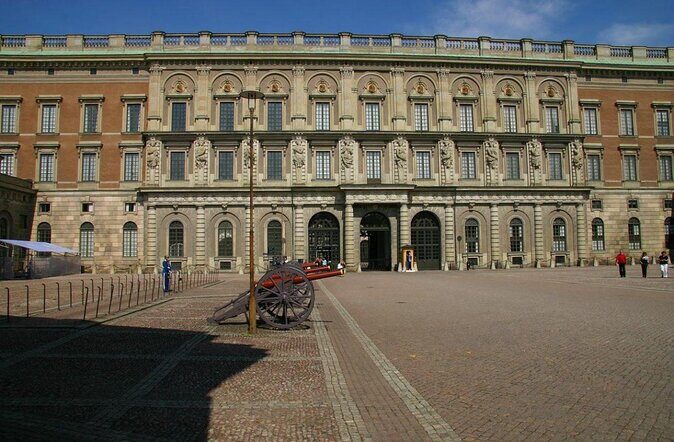
Next comes the Royal Palace area. The Royal Palace is the official residence of Sweden’s king, and it’s also where major parts of the monarchy’s public representation happen. It’s described as one of Europe’s largest royal residences, and the unique twist here is that key royal life happens there in everyday terms too—so it’s not just a museum shell.
Then you move to Storkyrkan, the Stockholm Cathedral. This is one of the oldest buildings in the area, and it’s tied to royal weddings. The data provided mentions that King Carl XVI Gustaf and Queen Silvia married there, and then later Crown Princess Victoria and Prince Daniel also said I do in 2010.
What I like about this section is that it’s not only “look at the church.” The guide context helps you connect monarchy and architecture. Even if you’re not the type to care about royal dates, you’ll still walk away understanding how symbols and authority were physically placed in the city.
One practical note: Storkyrkan is an interior stop, and you’ll be moving between photo-friendly exteriors and indoor viewing. Wear something easy that doesn’t slow you down.
The Iron Boy, St George, and Mårten Trotzig: small details with big meaning

Now the tour turns playful, and that’s a win. You’ll stop for Järnpojken, the Iron Boy statue—described as the smallest statue in Sweden. It’s also known as the Boy looking at the Moon. It’s the kind of stop that feels silly for ten seconds, and then you realize it’s the exact sort of symbol that gives a city personality.
Then comes the Statue of St. George. This one’s not random decoration. It symbolizes the battle between Sweden (St. George) and Denmark (the Dragon) in the late 1400s. The bronze statue is a copy; the original is inside Storkyrkan and is made of wood.
And just when your brain is full of medieval politics, you walk to Mårten Trotzigs grand (Mårten Trotzig’s narrow alley). At its narrowest point, it’s only about 90 cm wide. Some guidebooks claim it’s the narrowest alley in Europe, but the tour context also notes that claim isn’t true, because there’s an alley in Prague that’s even narrower.
This is one of those moments where Stockholm shows you its sense of humor and its preference for details. You’ll take photos, yes—but you’ll also notice how street design, power, and everyday life blend together in the Old Town.
The ferry from Skeppsbron to Djurgården: a quick break with real payoff

After the Old Town walking, you hop on a public ferry for a short ride. The ferry leaves from the Skeppsbron 26 area, and it’s positioned as both transport and a chance for scenic photos.
I like this part because it resets your pace. You’re not just “walking to another stop.” You’re crossing water in the middle of the city, which is very Stockholm. Also, it’s a practical way to get from Gamla Stan into the Djurgården direction without turning the day into a transit puzzle.
It’s also a confidence-builder for newcomers. When you see how the water connects districts, your later self-guided exploring becomes easier.



Vasa Museum: what you get with skip-the-line and a guided look

The Vasa Museum is the reason a lot of people build their Stockholm days around this area, and this tour makes sure you don’t just arrive hungry for information. The museum includes an entry ticket, and the guide helps you skip the line to get in faster.
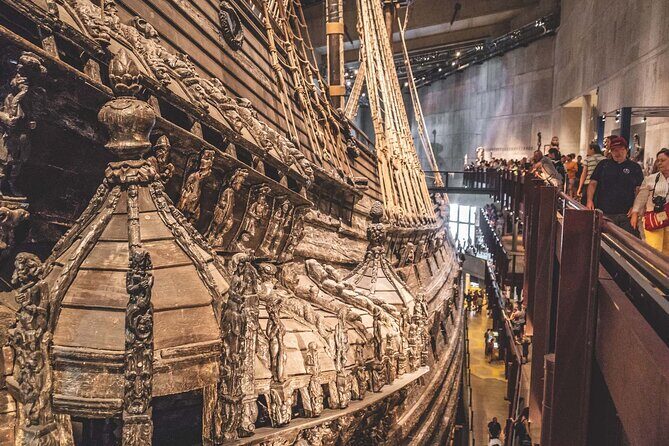
Inside, you get a guided visit focused on the 17th-century warship Vasa. The ship sank on its maiden voyage and was recovered and painstakingly restored. The description provided says the ship is 98% intact, which is hard to absorb until you stand in front of it and see how much detail survived.
You’ll also hear the story of why it mattered. The Vasa is described as Sweden’s most expensive and richly ornamented naval vessel in the 1600s. That’s a reminder that this wasn’t a small project—it was national ambition poured into wood, metal, and decoration. The data also notes that people along the shoreline were eyewitnesses when it capsized and sank inside Stockholm Harbour.
Then, here’s the smartest scheduling trick: your guided time ends at the museum, not at some random meeting point. After your guided portion (about 1 hour is listed), you can continue exploring on your own.
That’s important because the Vasa Museum is big. A guide won’t save you from the museum’s size, but they will give you the right starting questions. You’ll know what to look for after they point the key parts out.
Price and logistics: what $113.48 buys you (and why it’s fair)
Let’s talk value in plain terms. You’re paying $113.48 per person, and the experience includes:
- a professional guide
- Vasa Museum entrance
- a public transport ticket to reach the museum
That’s not “free” in real life. Museum admission costs money, ferry/public transport costs money, and a guided introduction costs time and effort. This package also compresses the work of planning: you start in the center of Old Town and end at the Vasa Museum, which is a major attraction you’d likely buy separately.
Duration is listed as about 3 hours, so you’re not spending half your day. If you have only one full day in Stockholm, this tour can be the backbone. If you have two or more days, it still helps you because you’ll learn the street logic of Gamla Stan and how to reach Djurgården efficiently.
Two practical cautions:
- You’ll be on cobblestones for much of the Old Town portion. Wet cobbles can be slippery, so shoes with grip matter.
- The day is “weather operating in all conditions.” Dress for comfort, not just looks. Layers beat one heavy coat.
Group size max is 16, which is usually a good balance: big enough for a lively guide conversation, small enough to keep things moving.
Who this tour suits best (and who should think twice)
This works great if you want an intro that gives you a working mental map. If it’s your first time in Stockholm, the Old Town stops plus the Vasa Museum help you understand what makes the city different—medieval streets beside royal symbolism, then a world-class shipwreck story on an island.
It’s also a solid fit for adults who like history with human-sized explanations. The stops are varied: royal spaces, church interiors, small statues, and one of Europe’s famous narrow alleys. You’re not trapped in one theme.
Think twice if you’re the type who wants to linger for long stretches. The tour is timed tightly, and the museum portion gives you a guided start rather than a full independent deep exploration. You’ll have time to continue after, but if your goal is “slow and unhurried at every step,” you might prefer a longer Old Town walk plus a separate museum day.
Should you book Stockholm Must Sees?
I’d book it if you want a smart first-day hit list with real context. You get the big Gamla Stan highlights, then you land at the Vasa Museum with admission included and a guide to translate what you’re seeing. The skip-the-line element matters here because waiting in a line can drain the energy you came to spend.
I would hesitate only if you hate walking on cobblestones or you need a long, free-form museum experience with no time pressure. If you’re okay with a few guided segments and comfortable footwear, this is a strong use of your limited time in Stockholm.
If you do book, pick this as one of your earlier activities. It makes the rest of your days easier because you’ll know how to move through the city and what to prioritize.
FAQ
How long is the Stockholm Must Sees tour?
It runs for about 3 hours.
What is the price per person?
The price is listed as $113.48 per person.
Is Vasa Museum admission included?
Yes. Vasa Museum entrance tickets are included in the cost.
Do I need to pay for transportation to reach the Vasa Museum?
You receive a public transport ticket included with the tour, and the transfer includes a public ferry ride.
Where does the tour start?
The meeting point is Stortorget 2, 114 44 Stockholm, Sweden.
What time does the tour start?
The start time is 10:00 am.
Where does the tour end?
The tour ends at the Vasa Museum (Galärvarvsvägen 14, 115 21 Stockholm, Sweden).
Is the tour suitable for people with only moderate physical fitness?
The tour notes that travelers should have a moderate physical fitness level.
Will I walk on cobblestones?
Yes. The tour says that the majority takes place where you’ll walk on cobblestones.
Is there free cancellation?
Yes. Free cancellation is available up to 24 hours in advance for a full refund.