REVIEW · STOCKHOLM
Beautiful Stockholm Small Group Walking Tour
Book on Viator →Operated by Stockholm DriveAndGuide · Bookable on Viator
Royal Stockholm looks best on foot. This small-group walking tour turns famous buildings into a readable story, from royal squares to Old Town lanes.
I especially like the way the guide connects what you see—opera facades, parliament history, and bridge views—to what it meant for Sweden. I also like the pacing: about 1 hour 45 minutes, with time to stop at the best viewpoints like Lejonbacken and Stortorget rather than rushing past them.
One thing to plan for: the route is outdoors and you’ll be walking between several stops around the center, so on a cold or windy day you’ll want warm layers and shoes with good grip.
In This Review
- Key highlights you’ll feel right away
- Getting oriented at Gustav Adolfs torg and the Royal Opera
- Riksdagshuset: seeing how Sweden organized power (and changed it)
- Riksbron bridge views: power, nobility, and where Nobel festivities happen
- Lejonbacken: the photo spot north of the Royal Palace
- Slottsbacken and the Palace Chapel: Carl XIV Johan and the Bernadotte line
- Stortorget: the Bloodbath square and why Nobel ties in here
- Gamla stan lanes: Köpmangatan, Österlånggatan, and Skeppsbron
- Price and what you’re actually paying for (about $106.42)
- Practical tips that make the walk feel easy
- Who should choose this tour?
- Should you book this walking tour?
- FAQ
- FAQ
- How long is the Stockholm walking tour?
- What language is the tour offered in?
- How many people are in the group?
- Where does the tour start and end?
- Are there tickets or entry fees for the stops?
- What’s included for check-in?
- What should my fitness level be?
- Can I cancel for a full refund?
Key highlights you’ll feel right away
- Small group size (up to 10): you get more back-and-forth and less crowd pressure near the best photo spots
- Royal-to-republic storyline: the walk moves from royal symbolism to real politics, not just pretty buildings
- Photo-first viewpoint stops: Lejonbacken and the Riksbron area give big sightlines with minimal effort
- Old Town streets with medieval texture: Köpmangatan, Österlånggatan, and Skeppsbron help you picture daily life centuries ago
- Architecture explained with visual help: the guide uses clear references when Neo-Renaissance and royal Baroque get technical
Getting oriented at Gustav Adolfs torg and the Royal Opera
Most Stockholm walks start with a vague “welcome to the city.” This one starts with an anchor: Gustav Adolfs torg, right in the flow of central monuments. From the first minute, you get context for how Stockholm grew—especially how much of what you see still points to power, diplomacy, and state identity.
Stop one is the Royal Swedish Opera area, where the guide frames Sweden as a kingdom with real architectural “signals.” You’ll hear how the formal name is the Kingdom of Sweden, and you’ll start spotting royal connections in the buildings around you. That matters because later stops start to feel less random. You’re not just collecting sights; you’re learning how the city “talks.”
One detail I’d watch for here is the contrast between styles and purposes. The square includes the Royal Palace across the way, described as Baroque in character and dating to the early 18th century. Even if you don’t go inside at this moment, you’re learning how Stockholm presents monarchy as something grand, planned, and permanent.
You’ll also get a pop-culture bridge: the Opera is mentioned in connection to The Masked Ball, an opera by Giuseppe Verdi about King Gustav III. It’s a quick way to connect Swedish history to European art without turning the whole walk into a textbook.
If you’re the type who likes your tours to start strong with story and structure, this opening does it. And since the stop is listed as free to enter, it’s a no-stress way to reset your bearings before the walking gets more “center of government” focused.
You can also read our reviews of more walking tours in Stockholm

Riksdagshuset: seeing how Sweden organized power (and changed it)
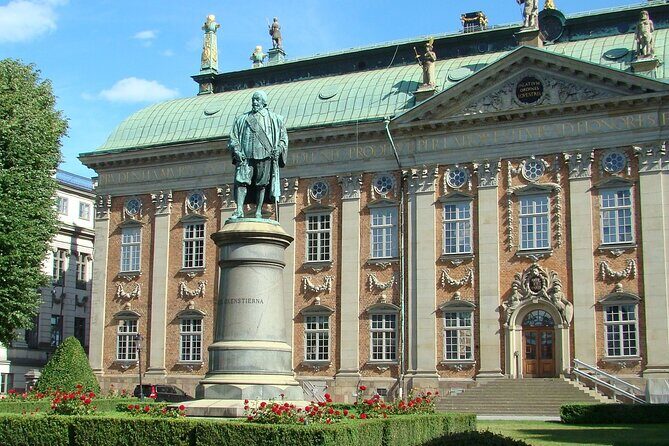
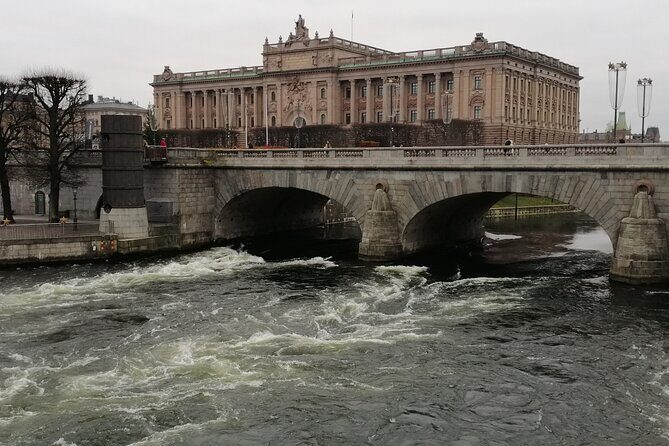
Next you head to the Parliament Building (Riksdagshuset), and this is where the walk sharpens. Sweden’s government story isn’t just “old versus new.” It’s a timeline of who had voice, how voting changed, and what the constitution later confirmed about the king’s role.
Here’s what makes this stop useful: you don’t just get dates. You get the logic. You’ll learn the building’s Neo-Renaissance design, with a Neo-Baroque section on the facade. That design detail matters because architecture in this area is meant to signal authority and legitimacy—an official look to match an evolving political system.
You’ll also hear how the earlier assembly, the Riksdag of the Estates, worked. Nobility, clergy, burghers, and peasants met separately before meeting the king in the palace. Then comes the big shift: the predecessor institution was dissolved in 1866, and a two-chamber parliament was introduced. Still, voting rights weren’t equal for all citizens at first.
The tour connects that struggle to the push for general suffrage, with the first elections held in 1921 after political pressure led by liberals and socialists. Later, the constitution changed in 1975, when the two chambers merged into one. Finally, you’ll get the key takeaway: the king has a representative role and no real governing power.
This is the type of stop that rewards people who like clarity. Even if you’re not a politics person, you’ll likely leave understanding one central idea: Stockholm’s “grand buildings” don’t just look impressive—they reflect real changes in how decisions get made.
And again, you’re not paying extra here; the stop is listed as free.
Riksbron bridge views: power, nobility, and where Nobel festivities happen
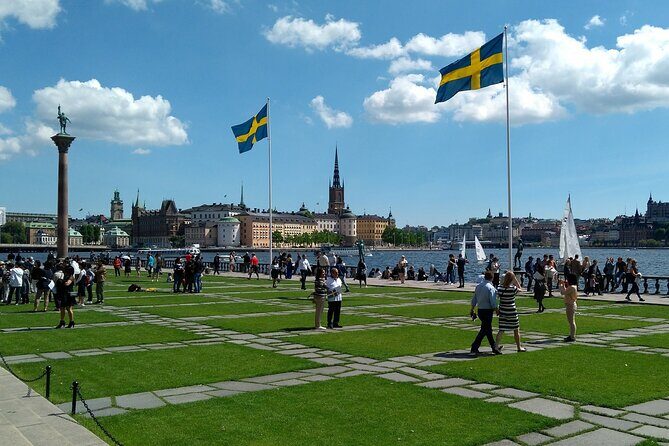
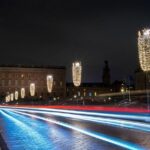
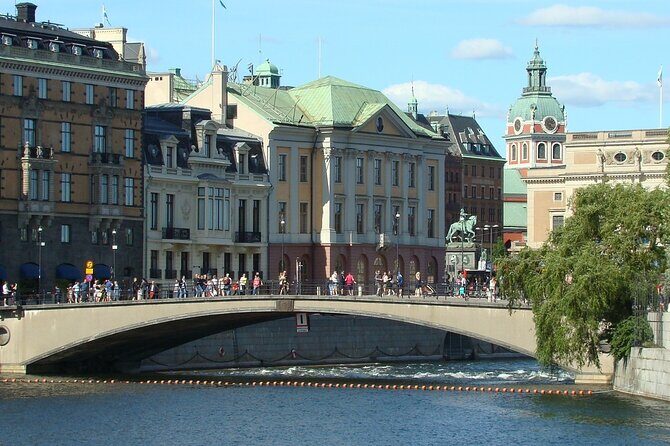
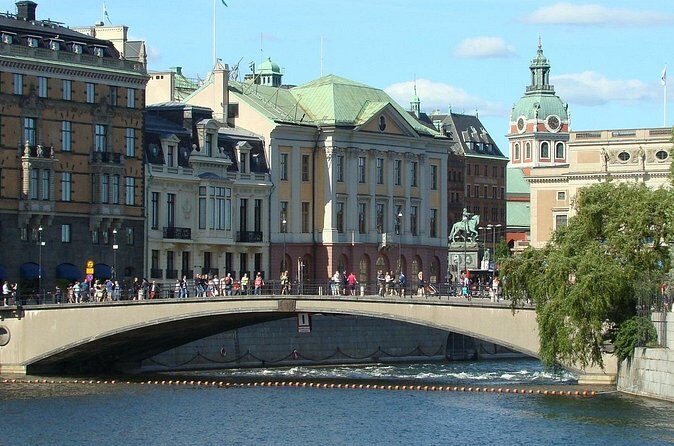
Then you move to Riksbron, and the guide shifts gears from government mechanics to a skyline that you can actually see. From the bridge, you get a set-piece view where key institutions sit close together—like the city is showing you its power map all at once.
From here, you can admire Knights Island, along with the Prime Minister’s residence and government buildings. You’ll also spot the House of Nobility, and those names alone make the view feel like a timeline rather than a random stretch of water.
One of the most interesting details is how the view connects to a global cultural event. The City Hall, which hosts the Nobel Prize banquet each year, is part of what you can see from this angle. That gives you a nice “why should I care?” reason to look up and around. You’re not just taking in buildings—you’re also seeing how Stockholm stages international prestige.
I love bridge-view stops because you can take them slowly without worrying about stairs or crowds. You can pause, check the angles, and still feel like you’re part of the story. Plus, there’s no admission cost noted for this section.
If you’re the kind of traveler who likes a moment to breathe and take photos, Riksbron works well. It’s scenic enough to reset your eyes before you go toward the Royal Palace area again.
Lejonbacken: the photo spot north of the Royal Palace
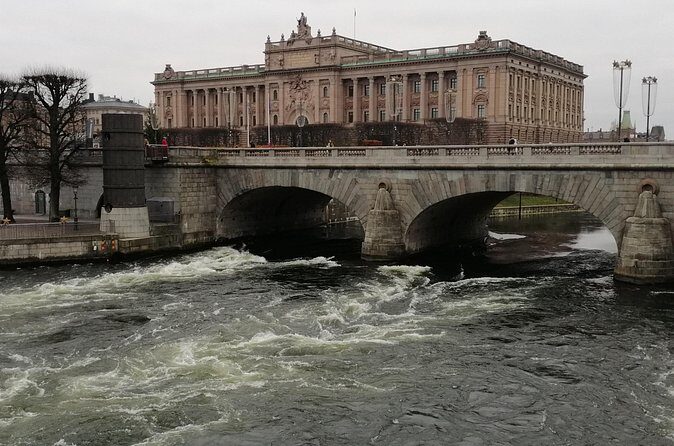
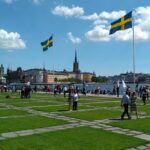
After government-focused views, you head to Lejonbacken, a popular photo area on the north side of the Royal Palace. This is one of those stops where you’ll understand why it’s famous as soon as you’re there.
The name comes with a ready-made theme for the walk: Sweden’s time as a major power in Northern Europe during the 17th and 18th centuries. You’ll see the Royal Garden and a statue of Karl XII, described as the last of the Swedish warrior kings. Even without going into heavy detail about his military career, the statue and location communicate something: Sweden’s royal past isn’t hidden—it’s displayed.
To the right of the park, you’ll notice the Financial District, built around the turn of the 20th century, when architectural styles were flowering. That’s a neat way to see Stockholm wasn’t only building royal identity; it also built modern institutions and economic strength.
A practical photo tip: if you want clean palace-and-city framing, Lejonbacken is a good place to slow down. The view is structured, and you’re close to the action but not right in the heaviest crowd flow.
There’s also a connection to the Nobel story again: you’ll see the Grand Hotel, described as Stockholm’s most prestigious hotel where Nobel laureates stay during the ceremonies. It’s a small detail, but it ties the money, ceremony, and city image together.
As with earlier stops, this segment is listed as free, and the time here feels right—enough to take pictures and absorb the setting without dragging on.
Slottsbacken and the Palace Chapel: Carl XIV Johan and the Bernadotte line
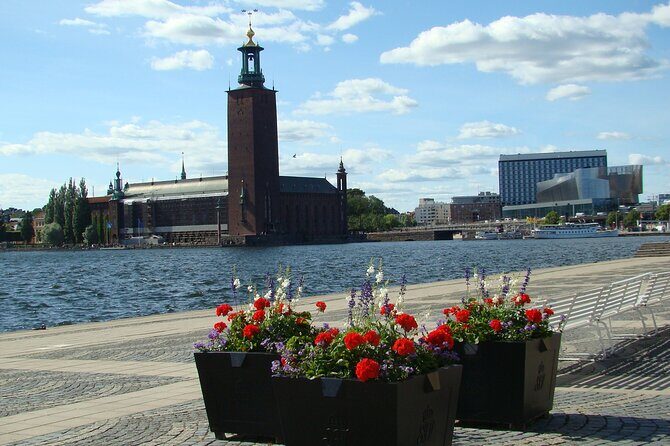
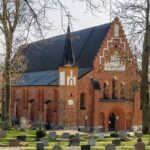
Now you move back into the Royal Palace orbit. At Slottsbacken, you’ll pass through the inner courtyard area and make a short visit to the Palace Chapel, where the royal family baptizes children.
This is one of the quieter stops on the walk, but it also gives you something valuable: you see the royal complex not as one monument, but as a living place with rituals. The chapel mention makes monarchy feel less like museum glass and more like tradition practiced.
Outside the palace, you’ll also stop near the statue of Carl XIV Johan. The guide explains his path—rising through Napoleon’s era, later being adopted into the Swedish royal family, and becoming the first from the Bernadotte dynasty (still ruling). For many visitors, this is the moment where the royal story becomes less vague and more specific.
The tour also connects Carl XIV Johan to broader historical shifts. He’s described as being brought in from France to help Sweden regain what had been lost to the Russians during the Napoleonic wars. Then comes an important angle: instead of only focusing on war, he invested in diplomacy, infrastructure, and education. That’s a helpful reframing for a monarchy story that can otherwise feel like endless battle and titles.
One more context point you’ll get: a reference to 2014 celebrating 200 years of peace in Sweden, alongside industrial progress, natural resources, and Swedish inventions as a foundation for a welfare state.
This stop works best if you like your landmarks to come with names and cause-and-effect. It’s the kind of place where the guide’s explanation makes the statues stop being “random bronze” and start being political history you can stand beside.



Stortorget: the Bloodbath square and why Nobel ties in here
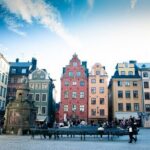
Next is Stortorget, the central square in Old Town and one of the most photographed places in Stockholm. The square is surrounded by buildings in 17th-century Scandinavian Renaissance and 18th-century Classicism styles. Even if you’ve been to Old Town squares in other cities, this one has a distinct “stone-and-story” feel.
The stop becomes immediately memorable when the guide tells the story of the Bloodbath of Stockholm in November 1530, where around 100 noblemen and priests were beheaded by Danish king Christian II. In Sweden, he’s known as Christian the tyrant. This is heavy material, but it’s also part of how Stockholm got shaped. Squares like this were stages for power in all its forms—civil, religious, and violent.
Then the Nobel element returns in a way that feels practical rather than touristy. The Nobel Prize Museum is located at Stortorget, and you’ll hear how Swedish royal academies and committees select winners across science and art. It ties the tour’s earlier government and state-building theme to the present-day idea of national prestige.
I like this pairing: you walk through a square that held brutality, and then you see how the city now handles global recognition through Nobel. That contrast makes you pay attention rather than just taking photos.
And since Stortorget is listed as free, you can linger without thinking about ticket lines.
Gamla stan lanes: Köpmangatan, Österlånggatan, and Skeppsbron
From Stortorget, you transition into the streets of Stockholm Old Town (Gamla stan). This section feels like the tour earns its “walking” part. You head along Köpmangatan (Merchant Street), which is mentioned in written material since 1350. That one detail gives you a sense of time without needing a lecture.
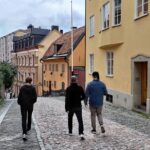
Next you walk through narrow alleyways that help you picture medieval atmosphere. Then you continue along Österlånggatan and down toward Skeppsbron, where ships have loaded cargo since the 17th century. That sequence—merchant lanes, alleys, then a waterfront cargo street—helps you understand how people and goods moved through the city.
This is where I think many people get the best value from a small group. You’re not just looking at facades. You’re seeing how a city organizes movement: where trade happens, where people squeeze between buildings, and where the water becomes the working edge.
The tour ends at the southern end of Kungsträdgården, a park area in central Stockholm. From there, you get a helpful option: you can take the tram to Djurgården, known as the island of museums, with places like the Vasa Museum, Viking Museum, ABBA museum, and outdoor museum Skansen.
Even if you don’t immediately go to Djurgården, ending here gives you breathing space before your next plan. The walk doesn’t dump you in some random corner with nowhere to go.
Price and what you’re actually paying for (about $106.42)
At $106.42 per person for about 1 hour 45 minutes, this isn’t the cheapest thing in Stockholm. But it also doesn’t feel overpriced if you value guided structure.
You’re paying for three things that usually cost more when you try to DIY:
- A guided timeline that links royal buildings to government changes, not just isolated photo stops
- A small group experience capped at 10, which helps you get attention and understand details at close range
- Walkable routing across central Stockholm, so you don’t waste time figuring out the best order of sights
Also, many of the stops are listed as free to enter, which matters. If you’d otherwise spend extra on multiple paid entries, the per-person cost can make more sense.
One more detail that hints at value: it’s often booked around 11 days in advance on average. That’s not a guarantee it will sell out, but it’s a hint that time slots and guide availability do move quickly for popular central walks.
Practical tips that make the walk feel easy
This is an English tour, and you’ll receive a mobile ticket. So if you’re traveling light with your phone already full of maps and tickets, this fits your workflow.
You’ll also be on a route suited to moderate physical fitness. That usually means normal sightseeing walking, not hiking. Still, you should expect steady movement between stops in central areas and some uneven sidewalks.
A few “bring it” ideas that help:
- Dress for wind and weather. Lejonbacken and the bridge areas can feel exposed.
- Wear shoes you trust. This is a walking tour; your feet do the judging.
- Bring a phone camera or small camera. The itinerary has multiple photo-focused moments, and they’re easiest when you can pause calmly.
If you like public transport, you’re in luck: the tour is noted as near public transportation, and the ending area connects well to the tram network toward Djurgården.
Who should choose this tour?
This walk is a great fit if you:
- Want a clear storyline through Stockholm instead of a list of landmarks
- Like architecture explanations that connect style to politics and time periods
- Prefer a small group format where you’re not fighting for space at each stop
- Want Old Town atmosphere plus royal and governmental context in under two hours
It’s also a strong option for first-time visitors who want to get oriented quickly. You’ll leave knowing how the city’s power centers connect: palace areas, parliament, waterfront views, and medieval streets.
If your travel style is purely museum-and-indoor, you might find the outdoor timing limiting. But for most people, the mix of open-air views and short stop moments hits a nice balance.
Should you book this walking tour?
Yes—if you want your Stockholm to feel organized. For the money, the small group, the tight timeline, and the way the guide explains what you’re looking at make it a smart value choice. It’s also a good use of time early in your trip because it teaches you what to notice later on your own.
Skip it only if you dislike walking in open weather or you’re looking for a tour that mainly covers museums you enter at length. This one is built around seeing, understanding, and moving—fast enough to keep momentum, slow enough to actually look.
FAQ
FAQ
How long is the Stockholm walking tour?
The tour lasts about 1 hour 45 minutes.
What language is the tour offered in?
It’s offered in English.
How many people are in the group?
The group size is maximum 10 travelers.
Where does the tour start and end?
It starts at Gustav Adolfs torg, 111 52 Stockholm, Sweden and ends at the Karl XII statue area (Karl XII:s torg 9, 111 47 Stockholm, Sweden) near the southern end of Kungsträdgården.
Are there tickets or entry fees for the stops?
For the listed stops, admission is shown as ticket free, meaning you won’t need separate paid entry for those points in the itinerary.
What’s included for check-in?
You’ll have a mobile ticket.
What should my fitness level be?
You should have moderate physical fitness, since it’s a walking tour with multiple stops.
Can I cancel for a full refund?
Yes. You can cancel up to 24 hours in advance for a full refund, but cancellation within 24 hours of the start time isn’t refundable.