REVIEW · STOCKHOLM
Walking Tour of Stockholm’s City Center
Book on Viator →Operated by NORDIC FREEDOM TOURS · Bookable on Viator
Two hours, and suddenly Stockholm makes sense. This Stockholm city-center walking tour strings together the main government, culture, and shopping streets in a simple outdoor route, with stops you can spot fast and understand fast. It’s a practical way to learn how modern Stockholm works without getting stuck in museum lines, and you get it via a mobile ticket.
What I like most is the small group feel (max 27) and the fact that the guide keeps the walk moving while still making room for questions. In different versions I’ve seen, guides like Stefan, Amon, Sophia, Karl, and Cim bring the stories in a way that feels like city orientation, not a scripted lecture.
One caution: street noise and guide-mic volume can make it hard to catch everything, especially on busy stretches, and the walk can be tiring if you’re dealing with physical limits. If you’re sensitive to sound, you’ll want to position yourself where you can hear.
In This Review
- Key highlights you’ll feel right away
- A cheap, focused intro to Stockholm’s city center
- Meeting at Centralplan 15 and ending near Dramaten
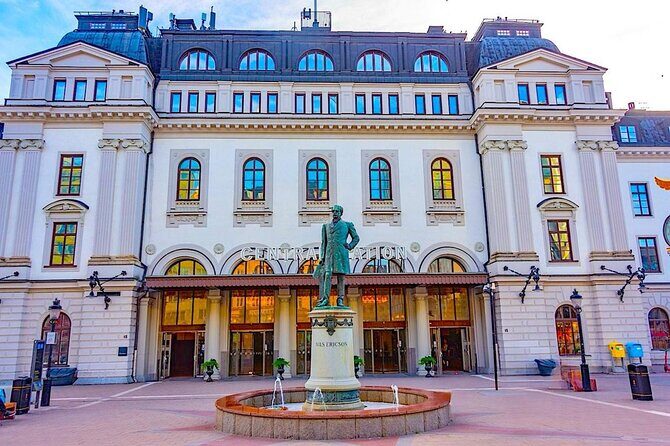
- Nils Ericson outside Stockholm Central Station: progress you can see
- City Hall in minutes: Nobel glamour without the indoor detour
- Drottninggatan and the pedestrian pulse: shopping street, explained
- Parliament area and the power of neo-Gothic
- Gustav II Adolf, opera landmarks, and S:t Jacobs Kyrka
- Berzelii Park, the Royal Stables, and quiet-green breaks
- Kungsträdgården and Karl XII: monuments at street level
- Finishing at Royal Dramatic Theatre (Dramaten): your next steps
- Price and value: what you’re really paying for
- The guide experience: what to expect from real-world pacing
- Should you book Stockholm City? My practical take
- FAQ
- How long is the walking tour?
- Where does the tour start and end?
- Is this a private tour?
- Are there any admission tickets included?
- What’s included in the price?
- Can I cancel for a full refund?
Key highlights you’ll feel right away
- Big landmarks in a short loop: city hall, Parliament area, major opera-adjacent sites, and historic churches, all in a compact plan
- Outdoor-only format: you stay outside and keep moving through the real streets
- Mobile ticket convenience: no paper scrambling before the tour starts
- English-speaking guide focused on your group: Q&A is built into the experience
- Strong value at $3.55: you’re paying mainly for interpretation and route guidance, not entry tickets
- Weather matters: sunny days can make devices used by the guide (like an iPad) harder to see
A cheap, focused intro to Stockholm’s city center
For first-timers, the best Stockholm tours do one job well: they help you get your bearings fast. This one covers the central spine of the city—transport connections, political buildings, and major culture venues—so after the walk, you’ll understand where things are and why they matter.
At $3.55 per person, it’s priced like an entry-level orientation. That’s not a complaint; it’s the point. You’re paying for an English-speaking guide, a timed route, and explanations—while many sights are free from the street.
The “outside only” approach is also a win. You avoid timing problems tied to indoor closures and entry lines, and you get to watch the city’s everyday rhythm: pedestrians, queues for coffee, and the constant motion around historic-and-modern landmarks.
You can also read our reviews of more walking tours in Stockholm

Meeting at Centralplan 15 and ending near Dramaten
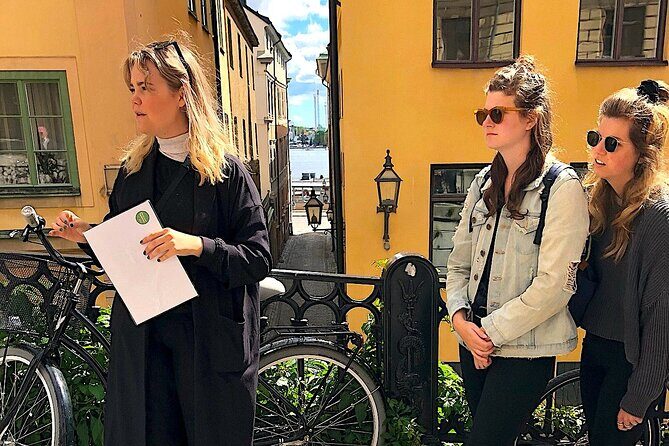
You start at Centralplan 15, 111 20 Stockholm, right by the central station area, and you finish near the Royal Dramatic Theatre (Dramaten) at Nybroplan, 111 47 Stockholm. For planning your day, that’s a smart flow: you don’t end deep in the residential grid—you end in a lively cultural zone where it’s easy to keep exploring.
Tours run for about 2 hours, starting at 11:00 am. Since it’s a public tour, expect other people in the group and a guide who manages the pace for everyone.
If you’re the kind of person who likes photos, arrive ready to move. The route is designed to be continuous, and the more you’re standing still, the more you miss the rhythm.
Nils Ericson outside Stockholm Central Station: progress you can see

The tour opens with the Statue of Nils Ericson, positioned outside Stockholm Central Station. It honors the Swedish engineer tied to modernizing railways and canals, and the bronze figure is meant to symbolize progress and innovation.
This is a good start because it frames Stockholm’s story with infrastructure—how movement and industry shaped the city. If you’re the type who enjoys knowing why a place looks the way it does, this stop helps set that tone early.
Also, it’s convenient. You don’t need a transit puzzle to begin; you’re already at the main hub. It’s a great way to translate the station experience into a bigger city narrative.
City Hall in minutes: Nobel glamour without the indoor detour
Next up is Stockholm City Hall, famous for its red-brick look and the golden Three Crowns spire. Completed in 1923, it’s known worldwide for hosting the Nobel Prize banquet, and it’s also where official events happen.
Even though the tour does not include indoor visits, you still get key context: the building’s identity, what goes on there, and what makes it recognizable from the outside. You also get the sense of scale—this is one of those Stockholm landmarks you’ll keep seeing in your mind later.
A practical note: Stockholm City Hall sits in a very camera-friendly part of the center. If it’s sunny, it can be bright and reflective, so keep an eye on where you stand so you can see the guide clearly.
Drottninggatan and the pedestrian pulse: shopping street, explained
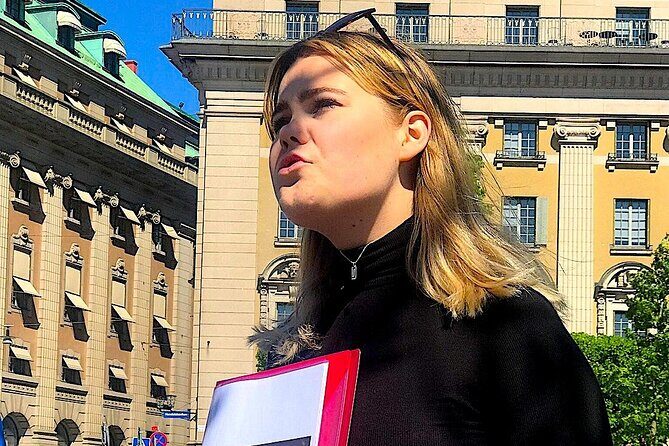
Then you head to Drottninggatan, the main pedestrian shopping street running from the old-town direction toward the Observatorielunden area. It mixes boutiques, cafes, and restaurants with historic architecture and modern storefronts.
This stop works best if you pay attention to the streetscape, not just the shops. The guide’s job here is interpretation: you learn what kind of city-life pattern you’re seeing and how central streets connect to neighborhoods and landmarks.
One practical drawback to watch: parts of the route can feel like a long walk between major anchor points. There’s a review-style pattern here—some people want more “spot-to-spot” efficiency. If you’re sensitive to pacing, bring water and expect that street-walking is a core part of the experience.
You can also read our reviews of more city tours in Stockholm





Parliament area and the power of neo-Gothic
At Riksdagshuset, the Parliament building (neo-Gothic, built 1897–1905), you’ll see the seat of the Swedish Parliament on Helgeandsholmen Island. The structure was designed by Aron Johansson, and the façade and interior decoration are tied to Sweden’s democratic values.
Here’s the important practical point: entry tickets aren’t included for Parliament, and the format stays outside. That means you’ll get exterior views and explanation, but you shouldn’t expect an interior tour.
If you want to go deeper inside, plan to do that separately on another day. For the walking tour itself, think of this as architecture context: you learn what you’re looking at and how the building’s style connects to the country’s political story.
Gustav II Adolf, opera landmarks, and S:t Jacobs Kyrka
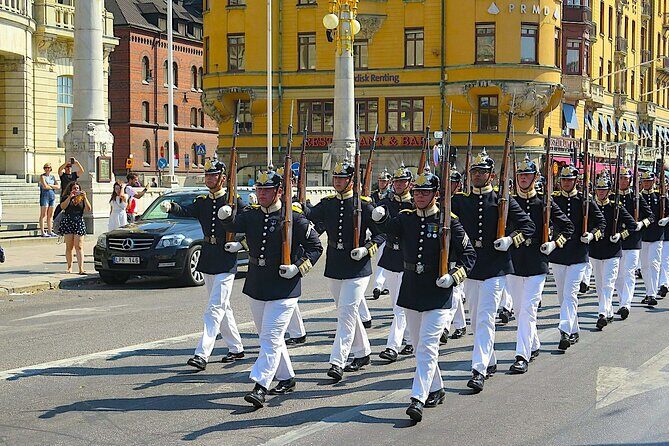
After Parliament, the tour shifts into a cluster of cultural and symbolic stops.
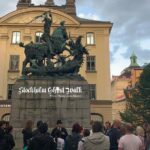
First is the Gustav II Adolf Statue in Gustav Adolfs Torg. Unveiled in 1796, it commemorates the “Lion of the North,” a key Thirty Years’ War figure. You’ll likely hear how war leadership gets turned into public memory through statues and public squares.
Then comes the Royal Swedish Opera area. The Royal Opera is the country’s premier opera stage, founded in 1773, with the current building inaugurated in 1898. The note for your planning: admission tickets aren’t included here, and the tour doesn’t do indoor visits.
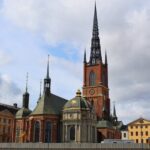
Next is S:t Jacobs Kyrka (Saint James’s Church) near Kungsträdgården. Dating back to the 1600s, it’s known for a red façade and a mix of Gothic and Renaissance architecture. If you like churches as wayfinding landmarks in big cities, this one is easy to recognize and worth the pause.
Practical tip for this section: keep your expectations grounded. You’re not going inside, but you are learning how Sweden’s public culture shows up in architecture—from government to opera to church design.
Berzelii Park, the Royal Stables, and quiet-green breaks
The walk continues into Berzelii Park, an urban green space established in 1853. It’s named after chemist Jöns Jacob Berzelius, and you’ll learn about the Berzelius monument unveiled in 1858.
This stop matters because Stockholm can be all stone and ceremony until you hit a pocket of trees. Even if the park is short on time, it gives you a breathing moment and a visual break from buildings.
Near Östermalm, you also visit The Royal Stables (H.M. Konungens Hovstall), a place preserving Sweden’s royal equestrian traditions. The tour explains what’s kept there—royal carriages and ceremonial harnesses, plus horses used for state occasions.
That’s the kind of stop that makes the tour feel “local-history” rather than just sightseeing. You’re learning what the city preserves, not only what it builds.
Kungsträdgården and Karl XII: monuments at street level
Then the tour reaches Kungsträdgården, an area tied to the opera scene. The space is associated with the opera venue and Sweden’s long musical tradition, including the idea that this is a cornerstone of cultural life.
You also stop near Karl XII’s statue in Kungsträdgården’s square. Charles XII’s central statue (erected in 1868) symbolizes Sweden’s military legacy and becomes a natural meeting point in the center of the action.
This segment is great for understanding how Stockholm uses outdoor public space. Squares aren’t just decoration—they’re where people gather, talk, and reposition themselves in the city flow.
Finishing at Royal Dramatic Theatre (Dramaten): your next steps
The tour ends near the Royal Dramatic Theatre (Kungliga Dramatiska Teatern), established in 1788 and housed in an Art Nouveau building completed in 1908. It’s Sweden’s premier stage for spoken drama, and the tour highlights the theatre’s role in launching notable acting careers.
Even without an interior visit, you’ll leave with a clear sense of why this part of town matters for culture. Ending here is smart: you can keep going with theatre, dinner, or just a slower wander.
If you want to extend the day, use what you learned on the walk. Look back at the landmarks you passed—City Hall, Parliament-area views, the opera scene, and the church. You’ll notice how they line up and how the central city “threads” through them.
Price and value: what you’re really paying for
At $3.55, this is a bargain by Scandinavian standards. But it’s not priced like a museum ticket tour. You’re paying for:
- an English-speaking guide who explains what you’re seeing
- a tight route that covers the center efficiently
- a structured way to learn the city’s layout and identity
What you’re not paying for: interiors and separate attractions. Parliament and the Royal Swedish Opera note that ticketed admission isn’t included, and the tour doesn’t do indoor visits anyway.
So if you’re hoping to pair this with a bunch of paid museum stops during the same afternoon, you’ll want to budget time and ticket costs separately.
The guide experience: what to expect from real-world pacing
This tour seems to live and die by guide style. In the best versions, guides like Stefan, Amon, Karl, Sophia, and Cim are professional, on time, and good at answering questions without making the walk feel forced.
The tour also uses visual aids at times. One practical complaint is that an iPad can be hard to see in strong sunlight, so if you’re at the front, you may have an easier time catching details.
Also watch for sound. Some people report difficulty hearing at moments, possibly tied to mic volume. That means your best move is simple: stand where you can clearly hear instructions and group regrouping cues.
Finally, the tone can be focused. One review noted the guide not tolerating idle conversation during explanations. If you like to chat while learning, this might feel less flexible. If you prefer the guide to steer the show, you’ll probably like it.
Should you book Stockholm City? My practical take
Book it if you want a quick, low-cost orientation to central Stockholm with a real guide and a route that hits the major identity spots. I especially like it for your first or second day, because it gives you an easy map of what’s where and why it’s there.
Skip it or plan differently if:
- you have trouble with walking for about 2 hours
- you really need quiet, low-noise narration
- you’re expecting mostly interior visits and paid attractions (those aren’t the point here)
If you’re flexible and go in with the right mindset—outdoor walk, interpretation, orientation—you’ll get strong value for the money. And you’ll finish near Dramaten, which is a handy launching pad for the rest of your Stockholm day.
FAQ
How long is the walking tour?
The tour lasts about 2 hours.
Where does the tour start and end?
It starts at Centralplan 15, 111 20 Stockholm, Sweden and ends near the Royal Dramatic Theatre (Dramaten), Nybroplan, 111 47 Stockholm.
Is this a private tour?
No, it’s a public tour with other participants. The group size is limited, with a maximum of 27 travelers.
Are there any admission tickets included?
Most stops list admission as free, but Parliament Building (Riksdagshuset) and The Royal Swedish Opera note that admission tickets are not included.
What’s included in the price?
You get an English-speaking guide tailored for your group and a mobile ticket. Tips aren’t included.
Can I cancel for a full refund?
Yes. You can cancel up to 24 hours in advance for a full refund. If you cancel less than 24 hours before the start time, the amount paid isn’t refunded.