REVIEW · STOCKHOLM
Best of Stockholm Walking Tour-3 Hours, Small Group max 10 people
Book on Viator →Operated by Amitylux · Bookable on Viator
Stockholm clicks in just three hours. This small-group walk strings together Stortorget’s colorful Old Town, the Royal Palace area, City Hall, and the Nobel Prize Museum district, with an English local guide explaining what you’re actually looking at. It’s a fast way to get your bearings without feeling rushed.
One of my favorite parts is how the tour is guided. Names like August, Berna, Michael, Zenid, and Lise come up often, and the common thread is clear storytelling plus lots of time for questions. I also like the practical care—on icy days, guides have helped people stay steady on uneven surfaces, which matters more than you’d think.
The main thing to consider is that this is a walk for sights only: you do not enter the attractions. If you want to go inside places like the Royal Palace or Nobel Prize Museum, you’ll need to plan that separately.
In This Review
- Key highlights at a glance
- Stockholm in 3 hours: what this walking tour is really for
- Price and value: why $49.10 can make sense
- Route overview: Old Town to Royal landmarks to Nobel Prize Museum context
- Stortorget Square: the colorful start that sets the tone
- The Royal Palace area: quick context, big visuals
- St George and the dragon: a tiny stop with a strong story
- Stockholm City Hall: the crowns and what they represent
- Mårten Trotzigs gränd: Stockholm’s narrowest alley moment
- Riddarholmen: the Knights Islet and Gamla Stan’s founding story
- Storkyrkan (St. Nicholas Cathedral): a church stop with a legend
- Nobel Prize Museum district: literature prize context in real life
- Royal Swedish Opera area: a finish near the performing-arts side of Stockholm
- Meeting point and pacing: how to make the 3 hours feel easy
- Who should book this tour, and who should skip it
- Should you book Best of Stockholm Walking Tour?
- FAQ
- How long is the walking tour?
- What is the group size?
- How much does it cost?
- Is the tour offered in English?
- Are the attractions included inside visits?
- What are some of the main stops?
- Where does the tour start and end?
- Is there free cancellation?
- Is it suitable for people with limited mobility?
Key highlights at a glance
- Stortorget first: start in the most photo-friendly heart of Gamla Stan, then build outward
- Small group size (max 10): easier questions and a pace that won’t leave people behind
- Royal + civic Stockholm in one loop: Royal Palace area and Stockholm City Hall back-to-back
- Narrow alley moment: Mårten Trotzigs gränd gives you a fun “how is this even possible” stop
- Nobel Prize context: you’ll understand why the Nobel Museum matters, especially for literature
- English-speaking local guide: the explanation is the real ticket, since there’s no entry included
Stockholm in 3 hours: what this walking tour is really for
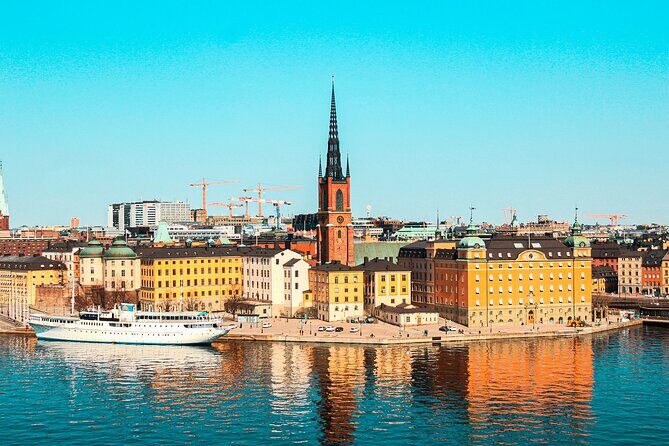
This tour works best as your early Stockholm “map in your head.” You get a concentrated hit of the city’s most recognizable landmarks, but you also get the meaning behind them—why Stortorget feels like the center of gravity, why City Hall is such a national symbol, and how the Nobel story fits into modern Swedish life.
The small-group format (up to 10 people) is not just a comfort perk. It changes how the tour feels. You’re more likely to get answers to your specific questions, and the guide can slow down when a stop needs extra attention.
You should also know what kind of tour it is. This is not a museum-ticket tour. It’s an outside-walk highlights tour, timed for 3 hours and built around viewpoints, facades, and landmarks you can connect to the rest of your trip.
You can also read our reviews of more walking tours in Stockholm

Price and value: why $49.10 can make sense
At $49.10 per person for about 3 hours, the value depends on what you want from the day. You are paying for a local guide, small-group energy, and a structured route that hits major sights efficiently.
Because attraction entry is not included, you’re not paying for museum tickets or timed-entry hassles. That can be a big win if you want to sample the city first, then decide later which interiors you actually care to see. It also helps if your trip time is tight and you’d rather spend your limited hours walking than standing in lines.
On the other hand, if you were hoping to tour the Royal Palace or step inside the Nobel Prize Museum as part of this same ticket, you’ll need to budget extra. This tour’s “ticket” is interpretation and orientation, not admission.
Route overview: Old Town to Royal landmarks to Nobel Prize Museum context
The route is basically a loop that starts in Gamla Stan and moves through a mix of:
- Old Town squares and narrow lanes
- Royal Palace area (mostly exterior viewing)
- Stockholm City Hall (exterior with its famous crowns)
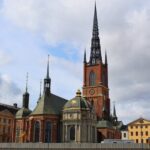
- Islands and historic churches in the Riddarholmen/Storkyrkan area
- The Nobel Prize Museum district
- The Royal Swedish Opera area
One practical advantage of this route is that you won’t spend the whole time backtracking. It’s designed so each stop naturally leads to the next, letting you build a mental map as you go.
Stortorget Square: the colorful start that sets the tone
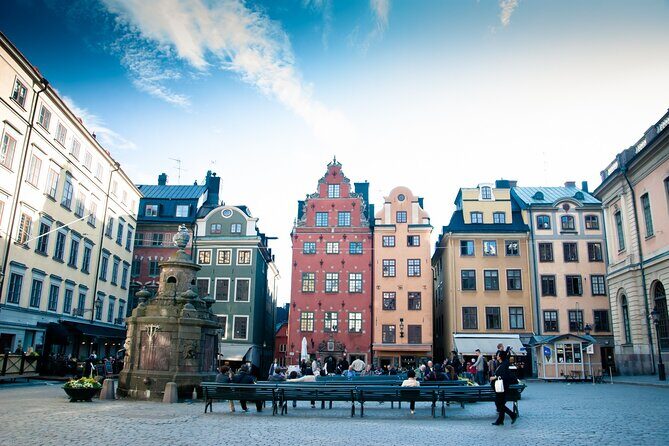
Stop here first, and Stockholm feels instantly specific. Stortorget is the main square in Old Town, and the point of the stop is to show you how the city’s story is built in layers: civic life, old buildings, and the dense geography that makes Gamla Stan so distinctive.
You’ll have about an hour here. That longer chunk of time is telling: it’s the anchor stop. You’re not just grabbing quick photos—you’re getting the background that helps everything else make sense.
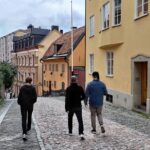
Practical tip: Old Town streets can be uneven, especially in cold months. If you want good pictures, bring shoes with grip and keep your phone ready, because the tour does move on after you’ve absorbed the square.
The Royal Palace area: quick context, big visuals
You’ll spend roughly 30 minutes at the Royal Palace stop outside the main entrance area. Even without entering, you’ll get the key framing: this is the official residence of Sweden’s king.
Because the tour is timed, the stop is about orientation—what to notice from outside and how the Palace fits into the broader Stockholm scene. Think of it as setting the stage so that later, if you do decide to buy a ticket for an interior visit, you’ll recognize what you’re seeing.
You’ll also pass near the Royal Palace again later for a shorter moment, which works well if you want a second look from a different angle. This “second pass” can be useful, since some sights are more understandable after you’ve walked a bit further.
A few more Stockholm tours and experiences worth a look


St George and the dragon: a tiny stop with a strong story
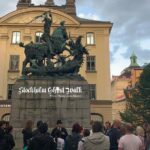
At the Statue of St. George, you get a quick, almost legend-like interlude—St. George and the dragon. It’s only a short stop (about 5 minutes), but it adds personality to the tour because it shifts from architecture to story symbols.
Why this matters: Stockholm’s historic areas are full of repeated themes, coats of arms, and figures that show up in art and buildings. Stops like this help you read the city as more than just pretty streets.
If you like symbolic details, don’t rush this one. It’s small, but it adds meaning.
Stockholm City Hall: the crowns and what they represent
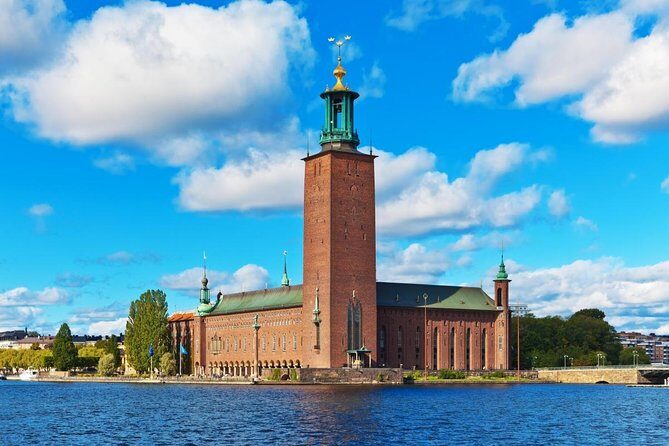
The Stockholm City Hall stop is brief (around 15 minutes), but it’s built for impact. The building is crowned with three golden crowns, and it’s also described as a major Swedish symbol.
This stop is your “civic Stockholm” moment: the tour goes from old-town foundations to something that feels official and national. Even without entering, you can often spot how the building dominates the nearby area and how it functions visually as a landmark.
Possible drawback: if you’re the type who wants long pauses for photos and multiple angles, 15 minutes might feel tight. A 3-hour tour is a trade-off—coverage and pacing in exchange for depth inside venues.
Mårten Trotzigs gränd: Stockholm’s narrowest alley moment
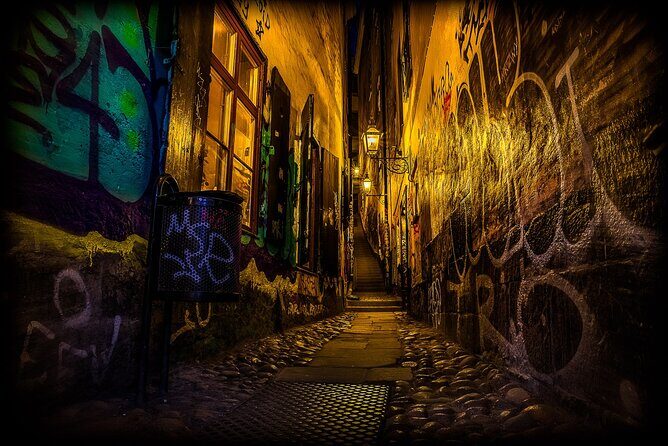
Next comes Mårten Trotzigs gränd, noted as Stockholm’s narrowest alley. You’ll only have about 5 minutes here, but it’s the kind of stop that makes the Old Town feel real.
This is where you’ll notice how the city’s geography shaped movement and architecture. The narrowness creates a mini-world: a short corridor of history, perspective, and photo opportunities that feel different from the open squares.
If you’re visiting in winter or spring with slick conditions, watch your step here too. The surface may be uneven, and the alley effect can make people slow down and accidentally drift into slippery spots.
Riddarholmen: the Knights Islet and Gamla Stan’s founding story
The stop at Riddarholmen is short (about 5 minutes), but it’s packed with context. You’ll be looking at the Knights Islet area connected to how Gamla Stan was founded, plus the idea that this island includes its own Palace—described as the first one in Stockholm.
This is one of those stops that works best if you pause for a minute and really listen to how the guide connects the island to the broader history of the city. Without going inside, you’re still absorbing a “why this place exists” explanation.
For many people, Riddarholmen is also where the city feels scenic and layered, since it’s not just one building or one street. It’s an island viewpoint moment.
Storkyrkan (St. Nicholas Cathedral): a church stop with a legend
At Storkyrkan, the tour connects the architecture to story again. You’ll see it described as the main church of Gamla Stan and you’ll hear about the Saint George and the dragon sculpture housed there.
This stop is about 5 minutes. That short timing can be perfect if you see it as a “checklist moment” tied to the statue stop earlier. The payoff is noticing the repetition: St. George shows up across Stockholm in ways that tell you the symbolism mattered.
If you want more time in churches, consider adding a separate visit later. This tour is designed for orientation, not deep interior time.
Nobel Prize Museum district: literature prize context in real life
Now for the stop people often remember after the tour ends: the Nobel Prize Museum area. You’ll spend about 10 minutes around the museum setting, with the key explanation that the Swedish Academy is where the literature prize is decided.
This part adds a modern layer to an otherwise medieval and royal-heavy walk. You’re not just seeing old stones; you’re learning how Swedish culture is recognized internationally through literature.
Even if you don’t enter the museum on this day, you’ll come away with enough context to make a future visit feel purposeful. It’s easier to appreciate what you’re seeing when you know the “why” first.
Practical note: 10 minutes goes fast when you want photos and also want the story. If the weather is bad, you might appreciate that you still get the Nobel context without paying for a full indoor block of time.
Royal Swedish Opera area: a finish near the performing-arts side of Stockholm
The final major landmark area is the Royal Swedish Opera (about 15 minutes). The focus here is exterior viewing and getting a sense of how this cultural institution fits into the city.
This is a nice closing beat because it shifts the mood from palace-and-church history toward contemporary public life. For many first-time visitors, it also helps them decide what kinds of evenings they want in Stockholm—performances, galleries, or just strolling with culture in the background.
If you’re planning another museum day later, you can use this stop as a clue about what you might want to explore next.
Meeting point and pacing: how to make the 3 hours feel easy
You’ll start at Centralplan 15, 111 20 Stockholm. From there, you’ll be walking between compact neighborhoods, with short stops (some as quick as 5 minutes) and a couple of longer ones (notably Stortorget and the Royal Palace area).
Two pacing tips that matter:
- Wear shoes built for uneven surfaces, and bring a light layer for wind. Guides have had to manage icy conditions in the past.
- Reconfirm the meeting point before you go. Some people have reported that it can change, and the difference between arriving on time and being stressed is worth the 30 seconds.
The tour ends somewhere listed as Stockholm. That means your route back to dinner or your hotel is on you, so think about transit options before you start.
Who should book this tour, and who should skip it
This tour is a strong fit if you want:
- A first-time overview of Stockholm’s top sights in a 3-hour window
- A small-group experience where you can ask questions often
- A guide who connects sights to stories, and who can handle real weather issues with care
- A route that mixes Old Town, royal symbolism, civic identity, and the Nobel angle
You might choose something else if you specifically want:
- Inside access as part of the ticket (this tour does not include entries)
- Lots of long photo sessions or long stops at each monument
It’s also a good match for solo travelers, since the small group size keeps the walk from feeling like a lecture and makes it easier to interact with the guide.
Should you book Best of Stockholm Walking Tour?
Yes, if you’re building your Stockholm plan and want a guided route that makes the city feel understandable fast. The tour is priced reasonably for what you get: an English guide, a max-10 group, and a tight route that hits major landmarks plus the Nobel Prize literature context.
I’d book it especially if you like history, symbolism, and those “wait, that matters” moments—St. George’s dragon, City Hall’s crowns, and the Nobel Museum district’s role in the literature prize. Just go in knowing it’s outside touring. If you want interiors, plan those as add-ons on a different time slot.
FAQ
How long is the walking tour?
The tour lasts about 3 hours.
What is the group size?
It is a small-group tour with a maximum of 10 travelers.
How much does it cost?
The price is $49.10 per person.
Is the tour offered in English?
Yes, the tour is offered in English.
Are the attractions included inside visits?
No. The attractions are not being entered, and ticketed admission is not included.
What are some of the main stops?
Key stops include Stortorget, the Royal Palace area, the Statue of St. George, Stockholm City Hall, Mårten Trotzigs gränd, Riddarholmen, Storkyrkan, the Nobel Prize Museum area, and the Royal Swedish Opera.
Where does the tour start and end?
It starts at Centralplan 15, 111 20 Stockholm, Sweden, and ends in Stockholm (end location is listed as Stockholm).
Is there free cancellation?
Yes. You can cancel for a full refund up to 24 hours in advance of the experience start time.
Is it suitable for people with limited mobility?
The info says most people can participate, and service animals are allowed. The tour is still a walking tour, so you’ll want to consider your comfort walking outdoors.