REVIEW · STOCKHOLM
Stockholm Walking Tour – Gamla Stan Highlights
Book on Viator →Operated by Amiketours · Bookable on Viator
Old Town stories start at the palace gates. This 2-hour Gamla Stan walking tour strings together Sweden’s biggest symbols of power and culture, from parliament to royal halls to world-changing Nobel ideas. I like that it moves at a human pace while still giving you the feel of Stockholm’s center.
Two things I really like: you get a tight loop that covers major landmarks (not just one small corner), and the stops are designed to be practical with short, focused time at each place. You’ll also appreciate the free admission format for the listed sights, so your money goes to the guide instead of adding ticket costs at every turn.
One consideration: the group can be up to 30 people, and some stops are brief. If you prefer slow looking and lots of time inside, this may feel a bit quick—especially since the House of Nobility stop is only from the exterior.
In This Review
- Key highlights you’ll feel on this walk
- Entering Gamla Stan with a plan that fits real days
- The walk’s vibe: short stops, strong context
- Riksdagshuset: Parliament building with real civic meaning
- Royal Palace time: grandeur, ceremony, and what’s still official
- Riddarholmen Church: Gothic calm and royal resting places
- Prästgatan cobblestones: where Old Town looks like itself
- Riddarhuset exterior: nobility’s story in plain view
- Nobel Prize Museum: ideas you can actually walk through
- Storkyrkan (Stockholm Cathedral): 13th-century architecture and royal footsteps
- Finishing in Old Town: Stortorget, churches, and the perfect fika route
- Price and value: why $24.03 can make sense
- Who should book this Gamla Stan highlights walk
- Should you book this Stockholm Walking Tour?
- FAQ
- How long is the Stockholm Walking Tour – Gamla Stan Highlights?
- How much does the tour cost?
- Is the tour offered in English?
- Where does the tour start and where does it end?
- What’s included in the tour?
- Can I cancel for a full refund?
- What happens if the weather is bad?
Key highlights you’ll feel on this walk
- A smart 2-hour loop through the Old Town’s most important “must-see” corners
- Free entry for most named sights, including Nobel Museum, Royal Palace area time, and key churches
- Guide energy that keeps it human, with named guides like Cristian, Christian, and Jorge showing up in positive feedback
- Short stop format (about five minutes each) that keeps momentum without dragging
- A Nobel-to-stones connection, linking ideas about peace and science to the city around you
- A small local bonus: 10% off at a partner restaurant in Gamla Stan
Entering Gamla Stan with a plan that fits real days
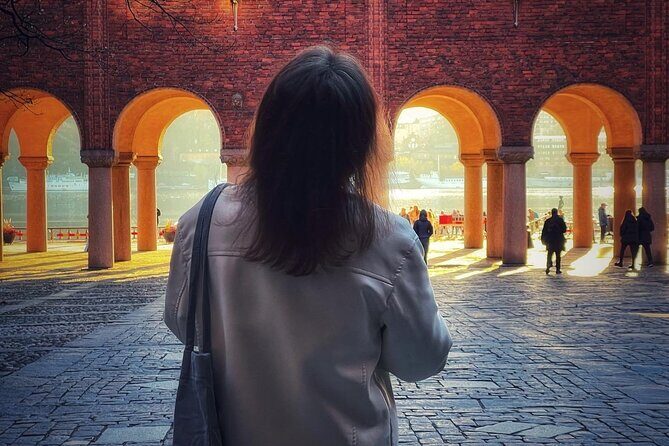
Stockholm can feel big and expensive fast. This tour helps you avoid that. In about two hours, you get a guided path through Gamla Stan that hits the landmarks you’d otherwise try to cram into one stressful afternoon.
You start at Drottninggatan 2 and then walk into the Old Town area, finishing in Gamla stan, Södermalm. That matters because you’re not wandering in circles trying to line up sights. The route is also built for people who want structure: you’re given the key context as you go, instead of reading it later with sore feet.
I also like that it’s offered in English and uses a mobile ticket. It’s one less thing to manage when you’re already dealing with transit, weather, and time limits. And since it runs as a small group (max 30), it’s usually easier to hear your guide than on the huge bus-style tours.
One more practical detail: the stops are short. The tour’s design is “see, learn, move.” That’s great for first-timers who want bearings, and it’s less great if you’re the type who could stand in one church for an hour and still feel like you haven’t looked closely enough.
You can also read our reviews of more walking tours in Stockholm

The walk’s vibe: short stops, strong context
Expect a rhythm of brief visits, roughly five minutes per main stop. That time is not meant for deep museum study. It’s meant for orientation: what you’re looking at, why it matters, and what to notice before you move on.
This is where a good guide makes the biggest difference. The feedback points to guides who keep history clear and conversational, not heavy. Names that came up include Cristian, Christian, and Jorge—and the common thread is that they make the walking part feel easy: warm welcome, calm pacing, and stories tied to Swedish culture.
So your job as the visitor is simple: keep your eyes up, listen for the “why,” and use the rest of your day afterward for deeper self-guided exploring.
Riksdagshuset: Parliament building with real civic meaning
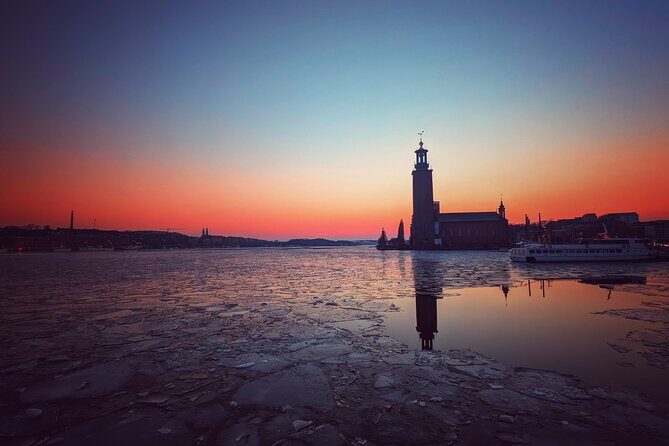
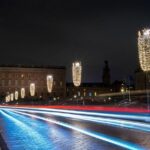
Your first big stop is the Parliament Building (Riksdagshuset). Even if you don’t go inside, the exterior sets the tone for Swedish governance: this is a place tied to how laws are debated and decisions are made.
What makes it interesting on foot is contrast. Right away, you’re moving from modern democracy into a medieval-feeling Old Town. The guide’s job here is to explain what the building symbolizes and how that role shows up in everyday Swedish life—so it doesn’t feel like random architecture you’ll forget five minutes later.
Admission is listed as free for this stop. That’s a strong value move: you’re paying for interpretation, not for access. If you’re the type who likes understanding institutions—how countries organize themselves—this part will likely click.
Possible drawback: if you’re hoping for a long interior visit, you won’t get that here. The tour is built for quick, meaningful introductions rather than extended time in official chambers.
Royal Palace time: grandeur, ceremony, and what’s still official
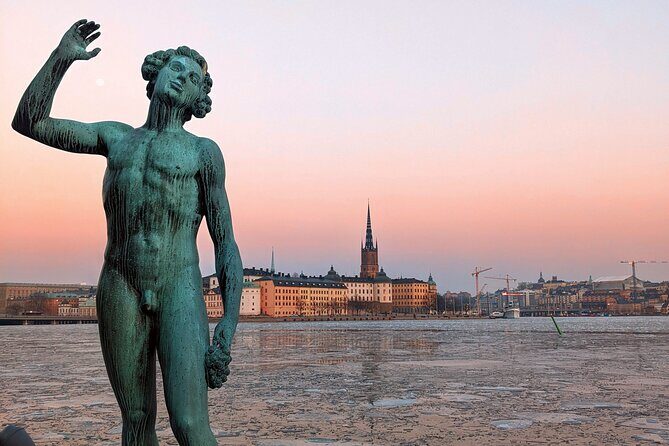
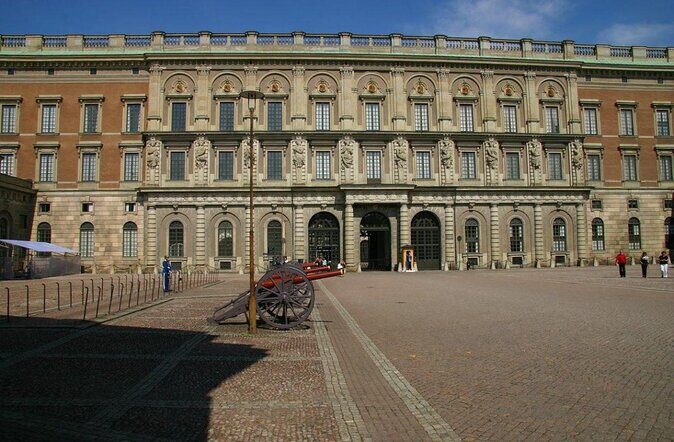
Next comes the Royal Palace. This is the kind of building you can’t really ignore: dramatic, ceremonial, and clearly designed to make authority visible.
Here’s how the tour keeps it practical: you don’t just get told it’s important. You’re oriented to what you’re seeing—opulent ceremonial halls, decorations, and the sense that the monarchy isn’t just a “past thing.” It’s part of Sweden’s public identity.
Admission is also listed as free for this stop. That’s part of why the price feels fair. Even if your personal style is more “wander and observe” than “tour details,” you’re still getting access to major landmarks without adding cost at the door.
A note for expectations: this is still a walking tour with short stops. You’ll get the palace’s big picture and a few standout details, then keep moving. If you want to spend hours inside, you’ll do that on your own later—but as a first taste, this works.
Riddarholmen Church: Gothic calm and royal resting places
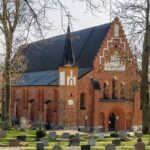
Then you shift gears to Riddarholmen Church, on Riddarholmen island. This is where the Old Town becomes quietly haunting in the best way. The church is tied to Swedish monarchs and nobles, so it carries that “final resting place” weight even before you look for details.
What I like about this stop is the atmosphere. It’s described as serene, and that matters because it changes the tempo from civic power (parliament) to ceremonial power (palace) to long memory (burials). The guide points out Gothic architecture, intricate details, and preserved medieval elements like frescoes and burial chapels.
Admission is again listed as free. So you’re getting a meaningful spiritual and historical space without needing to budget for extra entry.
Possible drawback: since the time is short, you’ll want to come ready to choose. Look at architecture first, then pick one or two features to remember (a chapel detail, a fresco area, a sculpture). If you try to capture everything in five minutes, you’ll miss the feeling.





Prästgatan cobblestones: where Old Town looks like itself

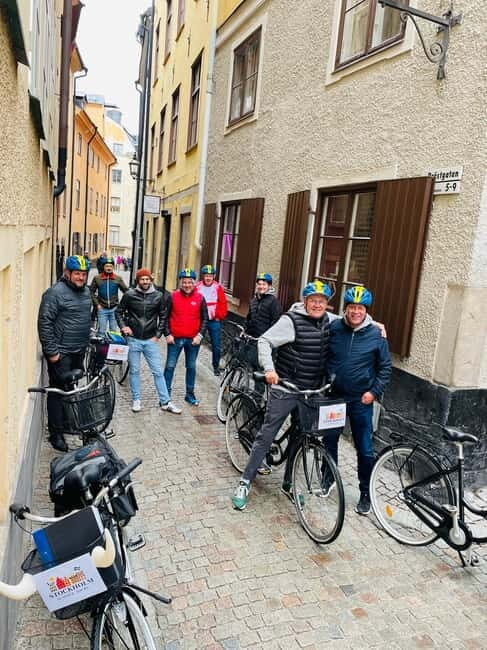
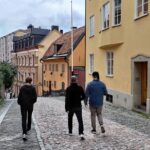
After the churches and monumental institutions, the tour brings you to Prästgatan, a narrow, cobblestone street lined with colorful buildings dating back centuries.
This is one of my favorite types of stop on any city walk: the street-level view. You’re not just learning; you’re seeing how the city actually feels when you slow your pace and look down. The guide also connects the street to medieval architecture and nearby landmarks, including the Church of St. Gertrude mentioned as part of the area.
Why this works: it gives you texture. You’ll remember Stockholm not only as buildings, but as narrow lanes, old facades, and the way Gamla Stan packs history into everyday walking.
There’s also a practical payoff. Prästgatan is near shops and cafes, which makes it a natural “reset” moment. If you want a fika break later, you’ll know where you are and why the street is worth returning to.
Riddarhuset exterior: nobility’s story in plain view
Next is Riddarhuset (The House of Nobility), and importantly, this stop is exterior only. That means you won’t get an inside visit through the tour.
But you do get something valuable: explanation of Sweden’s aristocratic history and the role noble families played in politics and society, along with symbolism tied to the building’s architecture.
Admission is listed as not included here. Practically, that means you should treat this as a “look and learn from outside” moment, not as another entrance ticket.
If you’re curious about how systems of power evolved—who held influence before modern democracy—this is a strong counterpoint to the parliament stop. It adds context: Swedish governance didn’t appear out of nowhere.
Nobel Prize Museum: ideas you can actually walk through
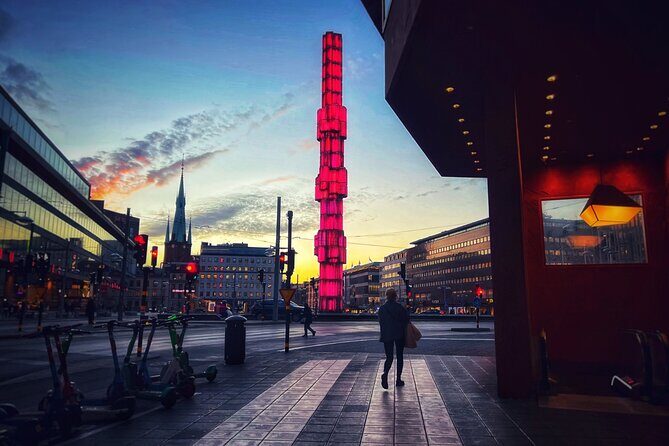
Then you hit something different: the Nobel Prize Museum. This is a rare treat in a walking tour because it’s not just about old stone. It’s about innovation, creativity, and global problem-solving.
You’ll learn about Alfred Nobel and explore Nobel categories such as Physics, Chemistry, Medicine, Literature, Peace, and Economic Sciences. The museum is described as interactive with multimedia elements, which is a good fit for a short guided visit—you’ll still get a sense of the themes even if you don’t plan to spend hours inside.
The tour lists admission as free for this stop, which is a big value win. If you’ve ever paid for a museum visit in a major European city, you know that part alone can eat a budget. Here, it’s built into the experience.
Possible drawback: if you’re a museum person who likes reading every panel, five minutes won’t satisfy you. But as an orientation to Nobel stories, it’s a smart way to make the rest of the day more interesting. You’ll likely leave remembering specific ideas instead of just place names.
Storkyrkan (Stockholm Cathedral): 13th-century architecture and royal footsteps
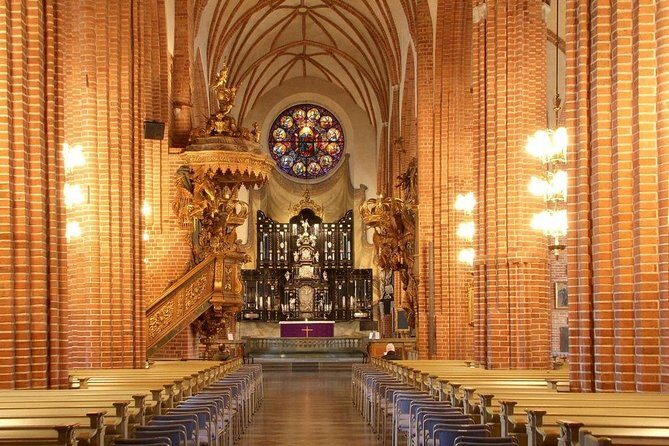
Your next key stop is Storkyrkan, also called Stockholm Cathedral. This dates back to the 13th century, and it’s tied to major royal events such as coronations.
On a walking tour, cathedrals can become a quick photo moment. This one feels more intentional because the guide brings your attention to what’s inside: grand interiors, artwork, woodwork, and impressive sculptures. You also learn about chapels and the role the cathedral has played in Swedish ceremonial life.
Admission is listed as free. So again, you’re not paying ticket-by-ticket to see the best parts of the city.
Practical tip for the short time here: decide ahead of time what you want most. Architecture person? Focus on the structure and woodwork. Royal history person? Listen for coronation and royal event references. Either way, you’ll get a better payoff than just standing and snapping pictures.
Finishing in Old Town: Stortorget, churches, and the perfect fika route
The final part focuses on Stockholm Old Town itself—those cobbled streets and iconic squares where the city’s medieval shape is still visible.
You’ll get a guided sense of where things are: Stortorget Square with its colorful facades, plus landmarks such as the Royal Palace area, Stockholm Cathedral, and the German Church beauty. There’s also mention of the Nobel Museum area within Old Town, which makes the whole loop feel connected instead of random.
What I love about this finish is that it shifts from “tour mode” to “explore mode.” You’re left with mental directions: where to head next for museums, where to shop, and where to take a break. A guide giving quick practical suggestions is a big deal in a place like Gamla Stan where the options multiply fast.
Also, fika is part of the rhythm here. If you want a sweet pause after the last church stop, you’ll be positioned right where you can choose from cafes and easy-walking routes.
Price and value: why $24.03 can make sense
At $24.03 per person for about two hours, the best value is how many major stops you cover without extra admission fees.
The tour data marks admission as free for key places: the Parliament Building, Royal Palace, Riddarholmen Church, Prästgatan-related area time, Nobel Prize Museum, and Stockholm Cathedral. The one spot that isn’t included is the House of Nobility (exterior only), which keeps things transparent.
You also get two practical extras: a local guide and a 10% discount at a partner restaurant in Gamla Stan. That discount isn’t huge, but it’s a real nudge toward eating where you don’t feel lost.
Group size maxes at 30, which is another value element. Large enough to run smoothly, small enough that the guide can usually keep the group moving without chaos.
My bottom-line take: this price feels fair if you want orientation and stories more than you want long independent time at each stop. If you’re the type who wants to sit inside museums for an hour, you might feel like you’re skimming. But for “first day in Stockholm” energy, it’s strong.
Who should book this Gamla Stan highlights walk
This tour is a good match if:
- You want a first-timer map of Gamla Stan’s big landmarks.
- You like cultural context tied to places, not just dates and names.
- You want an English guide and a simple start point at Drottninggatan 2.
- You value a compact time plan that doesn’t eat your whole day.
It may be less ideal if:
- You prefer very small groups and lots of quiet time.
- You plan to use a tour as your main museum experience (this one is short-stop by design).
- You want a lot of interior time at every location, especially where the House of Nobility is exterior only.
Should you book this Stockholm Walking Tour?
If you’re spending limited time in Stockholm and you want your Old Town day to feel organized, I’d book it. The mix of Riksdagshuset, Royal Palace, Riddarholmen Church, Nobel Prize Museum, and Storkyrkan is a smart cross-section of what makes Stockholm feel distinct: civic life, ceremony, memory, and ideas.
The guide experience looks like the real engine here, with positive mentions of guides such as Cristian, Christian, and Jorge for warmth and practical cultural storytelling. Add in the free admission design for most stops and the 10% Gamla Stan restaurant discount, and you’re getting solid value for a first pass through Gamla Stan.
If you hate crowds or you need long interior visits, consider doing one landmark deeply on your own right after this tour. Treat this walk as your “set the stage” day, then go back for the one or two places that grabbed you.
FAQ
How long is the Stockholm Walking Tour – Gamla Stan Highlights?
It lasts about 2 hours.
How much does the tour cost?
The price is $24.03 per person.
Is the tour offered in English?
Yes, it’s offered in English.
Where does the tour start and where does it end?
The start is at Drottninggatan 2, 111 51 Stockholm. The tour ends in Gamla stan, Södermalm, Stockholm.
What’s included in the tour?
A local guide is included, and there’s also a 10% discount at a partner restaurant in Gamla Stan. A mobile ticket is used for the experience.
Can I cancel for a full refund?
Yes. You can cancel for a full refund up to 24 hours before the experience starts. If you cancel less than 24 hours before, the amount paid isn’t refunded.
What happens if the weather is bad?
The experience requires good weather. If it’s canceled due to poor weather, you’ll be offered a different date or a full refund.