REVIEW · STOCKHOLM
CityQuest in Stockholm – To See Stockholm and Die
Book on Viator →Operated by ARDI · Bookable on Viator
A murder mystery turns Stockholm into a puzzle. You play detective for about 2.5 hours, following a story route through central sights while your phone becomes the evidence desk and question sheet. I like the mix of outdoor wandering and puzzle-solving that keeps your eyes moving, and I like that the case wraps up with a summary so you can check your own conclusions. The main drawback is practical: you’ll need your own phone and working internet connection, and this is a weather-dependent walk.
This kind of quest works best when you want more than photo stops. You’ll start with evidence and simple instructions, then use a web app called a criminal journal to read details as the mystery unfolds. The experience is priced like an entry ticket to a show, but it lasts long enough to feel like an active afternoon.
In This Review
- Key things I’d bank on before you go
- How the case works when you’re holding a phone
- Centralplan 15 and Centralstation: your starting groove
- Royal Swedish Opera: the story opens in the middle of it
- Royal Academy of Fine Arts and Kungstradgarden: puzzle + people watching
- Karl XII statue in Kungstradgarden: when spotting becomes strategy
- Statue of Nils Ericson: a quieter clue with big payoff
- Sergels Torg and the finishing stretch near the Opera zone
- Price and value: why $20ish can feel like more than a ticket
- Practical tips that make or break the experience
- Who this CityQuest suits best (and who might skip it)
- Should you book CityQuest in Stockholm?
- FAQ
- How long is the CityQuest Stockholm experience?
- Where does the CityQuest start, and where does it end?
- What do I receive when the game starts?
- Do I need my own phone and internet connection?
- Is this activity private for my group?
- Can I cancel for a refund?
Key things I’d bank on before you go

- Instant start feel: you get evidence and instructions at the beginning, so you’re not waiting around wondering what to do.
- Phone-led investigation: a web app plus a cellphone task flow keeps the story moving street by street.
- Central Stockholm route: the chase starts at Centralstation and leads you toward the Royal Opera area.
- You’re on a clock: you’ll answer as many questions as possible before time runs out, which makes the pacing fun.
- Team-friendly format: it’s easy to split roles in your group as clues get tricky.
- A reality check at the end: you receive a wrap-up summary to compare with what you thought happened.
How the case works when you’re holding a phone
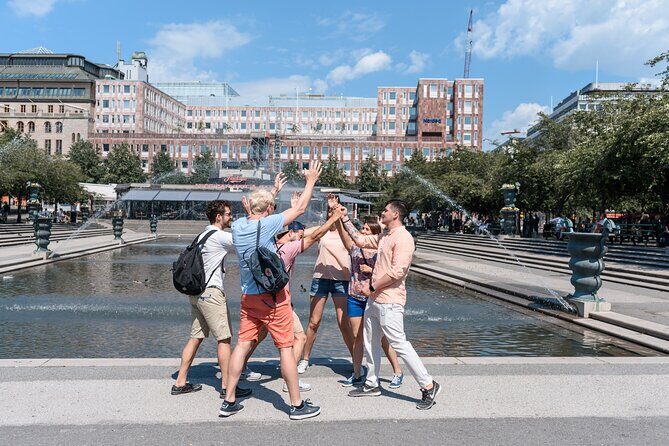
CityQuest turns classic sightseeing into a structured game. You’ll be given a set of evidence at the start, which helps you figure out where to go next and how to interpret what you find. Think of it as a detective briefing, not a lecture.
While you walk, your phone is the key tool. You use a web application linked to the case’s criminal journal, then answer questions based on what you uncover along the way. The goal is clear: get through the questions before the time runs out. That clock matters, because it pushes you to look closely and decide quickly instead of wandering aimlessly.
One other thing I really like about this setup is that it doesn’t require you to be a Stockholm expert. You’re not being tested on obscure dates. You’re being tested on attention, logic, and teamwork—very doable even if you only know the city from postcards.
You can also read our reviews of more tours and experiences in Stockholm.



Centralplan 15 and Centralstation: your starting groove

You begin at Centralplan 15, 111 20 Stockholm, right in the Centralstation area. This is a smart meeting point for a quest: it’s easy to reach via public transportation and it’s the kind of place you’ll see again and again during a Stockholm trip.
When the game starts, you should expect a quick setup moment where you receive evidence plus simple instructions. That matters because a city quest lives or dies on early momentum. If you’re behind in the first 10–15 minutes, you’ll feel it later when the time pressure ramps up.
Practical note: you can’t rely on staff handing you a phone or data. The experience doesn’t include a mobile phone or internet connection, so I’d treat this like any other app-based activity in a European city. If your battery is low, charge it before you step off.
Royal Swedish Opera: the story opens in the middle of it
One of the first major stops is the Royal Swedish Opera area. This is a strong choice for a kickoff because it’s unmistakably central Stockholm—architecture you can recognize even if you haven’t memorized names.
For the quest, the Opera zone isn’t just a pretty backdrop. It’s an early place where clues and questions start shaping your story. Early questions are usually about getting you oriented: helping you understand how the case expects you to read the city and how evidence connects to what you’ll see next.
A good way to play smarter here is to assign roles immediately. For example, one person can be the map/route holder, one can manage the phone app and evidence, and one can do close-up spotting. That keeps you from all crowding around the screen while other clues pass by.
Royal Academy of Fine Arts and Kungstradgarden: puzzle + people watching
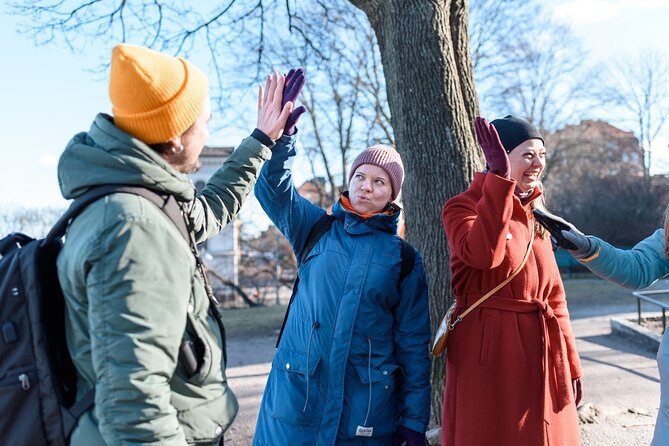
Next comes the Royal Academy of Fine Arts, followed by Kungstradgarden. This section of the route feels like a classic Stockholm stroll, but the quest turns the walk into a checklist of observations.
Kungstradgarden is especially useful for a game because it’s open and readable. You can step back, orient yourself, and still solve the kind of small-detail questions quests tend to ask. It’s the sort of place where you can slow down without feeling like you’re stuck.
The downside: open areas can also be distracting. If your group tends to stop for photos every few steps, the time pressure will bite. I’d keep photos for after you’ve answered the active questions in that zone, not during.
Karl XII statue in Kungstradgarden: when spotting becomes strategy

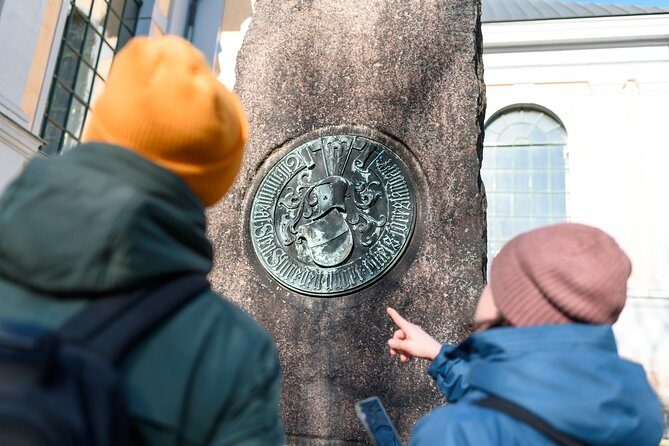
Then the route points you toward the Karl XII statue in Kungstradgarden. Statues are made for clues like this. They’re fixed, visible, and full of details you can use as “evidence” when a game asks you to connect visuals to the criminal journal story.
What I like about including a statue like this is that it forces you to look up and around. You stop treating monuments as background decoration and start treating them like information. For a puzzle lover, that shift is half the fun.
If you want to play efficiently: take one quick look, then read the evidence again. Often your first scan is too broad. Your second scan—based on what the case is asking—gets you the answers faster.



Statue of Nils Ericson: a quieter clue with big payoff
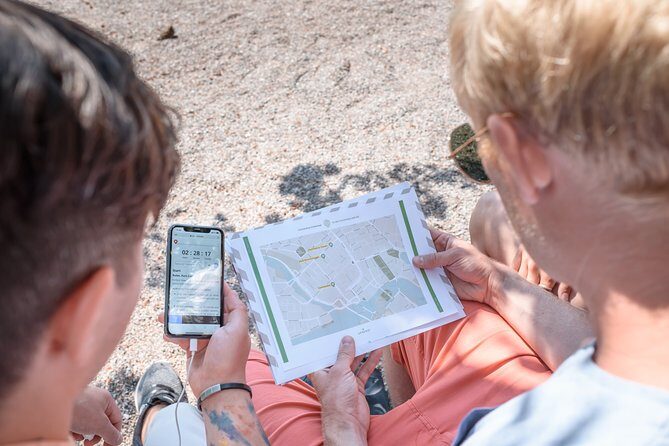
Another named stop is the statue of Nils Ericson. This is one of those Stockholm landmarks where, if you’re rushing through the city normally, you might walk right past it. In a quest, you slow down and it becomes a checkpoint.
This part of the game tends to reward the people in your group who notice patterns. The statue and its surroundings can be used like a reference point while you interpret journal entries and piece together logic for the questions.
If your group hits a wall here, don’t panic. Use the teamwork approach again: one person reads the current question out loud while someone else checks the evidence set. Then compare. The game isn’t trying to stump you for hours. It’s trying to keep you engaged long enough to make you feel clever.
Sergels Torg and the finishing stretch near the Opera zone
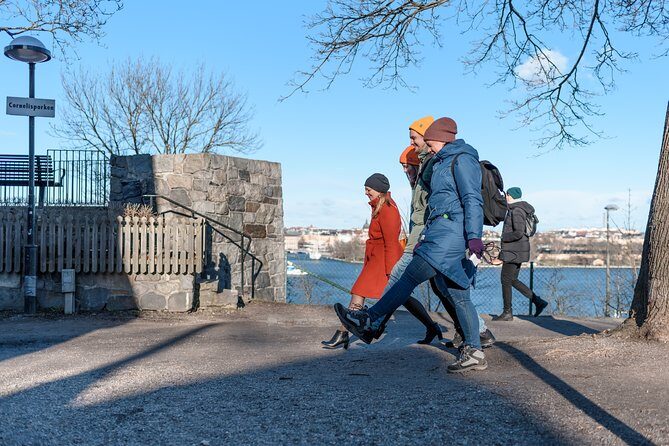
The final stages move toward Sergels Torg. This area feels more urban and modern than the earlier garden-and-monument stretch, which creates a nice rhythm in the story. You’re moving through different “types” of Stockholm, so the quest feels like you’re seeing more than one neighborhood personality.
The case is built to end after you’ve answered as many questions as possible before time runs out. The route is designed to start at Centralstation and finish in the central area near the Royal Opera zone. In other words, you’re likely wrapping up close enough to keep your day flowing with food or a second activity.
One small mindset tip: don’t treat the last minutes like a frantic emergency. If you’ve solved most of the questions already, the wrap-up summary at the end is still worth it. It lets you compare your answers to the story’s resolution, which is where the experience becomes satisfying rather than just stressful.
Price and value: why $20ish can feel like more than a ticket
At $20.31 per person for about 2.5 hours, this is priced like an entry activity, not a private driver or museum tour. The value comes from the “active time” you get. Instead of spending those 2.5 hours deciding where to go next, you get a route and a reason to stop.
It also helps that the game includes the core materials you need to play: the evidence set at the start and access to the investigation web application. You’re not paying extra for a guide to explain every location. The app and questions do that job, while you focus on looking and thinking.
The trade-off is you’re responsible for your own phone and data. If your mobile internet is unreliable or your battery is low, the value drops fast. For many people, that’s manageable with a bit of prep.
Practical tips that make or break the experience
Here’s what I’d do to make this quest feel smooth, not frustrating:
- Charge your phone fully before you start. You’re using it continuously for the clue flow.
- Bring a plan for internet. The experience doesn’t include it, so rely on your own cellular data or whatever you already have set up.
- Wear walking shoes. This is a city-walk game across central areas.
- Assign roles early so you don’t lose time arguing about who’s holding the phone.
- Stay weather-aware. The experience requires good weather, and poor weather can mean date changes or a refund option.
One more thing: tech hiccups do happen with app-based games. There was at least one outlier situation where a group reported no instructions arriving and contact info not working at first, which created delays. I wouldn’t assume it will happen to you, but it’s smart to screenshot your confirmation and keep any contact details you receive at booking. If something feels off at the start, act quickly.
Who this CityQuest suits best (and who might skip it)
This is ideal if you like detective stories, puzzles, and city walks that keep you busy. It’s also a good team activity. The pace encourages cooperation, because different people can handle the phone, the clues, and the scanning for details.
You’ll likely enjoy it even if you’re not a history buff. The game structure helps you look at Stockholm through a set of questions, which turns everyday streets and monuments into part of the plot. One group even described the difficulty as challenging but not exhausting, the kind of balance people associate with the Swedish word lagom—enough brainwork to feel fun, not so much that you want to throw the phone in the fountain.
I’d be a bit more cautious if your travel style is mostly relax-and-people-watch with minimal effort. This quest asks you to solve and move. If you want total freedom with no pressure, a normal self-guided walking route might feel better.
Should you book CityQuest in Stockholm?
If you want a fun way to see central Stockholm while staying active, this is an easy yes. For the price, you get a clear route from Centralstation toward the Royal Opera area, a story-driven mission, and a phone-based criminal journal that gives you something to do at each stop.
Book it if:
- you like puzzle-solving and team dynamics
- you’re comfortable using your phone for tasks outdoors
- you can spare about 2.5 hours and don’t mind a time limit
Skip it if:
- you don’t want to rely on mobile internet or your phone battery
- bad weather and walking games ruin your day
If you’re prepared with a charged phone and working data, you’ll likely come away thinking you saw Stockholm in a way most casual walks never make you notice.
FAQ
How long is the CityQuest Stockholm experience?
It lasts about 2 hours 30 minutes.
Where does the CityQuest start, and where does it end?
It starts at Centralplan 15, 111 20 Stockholm, Sweden. The story route finishes in the central area near the Royal Opera zone.
What do I receive when the game starts?
You get a set of evidence and simple instructions to help you navigate, find clues, and solve the mystery.
Do I need my own phone and internet connection?
Yes. A mobile phone and internet connection are not included.
Is this activity private for my group?
Yes. It’s a private tour/activity, and only your group participates.
Can I cancel for a refund?
Yes. You can cancel for free up to 24 hours in advance for a full refund, and weather-related cancellations may offer a different date or a full refund.