REVIEW · STOCKHOLM
Snowshoe Winter Hike from Stockholm
Book on Viator →Operated by The Green Trails · Bookable on Viator
One snow day can change your whole week, fast. This Stockholm snowshoe hike gives you a calm, woodsy break from city life, with small-group pacing and a guide who knows how to make winter feel doable. I especially like the chance to spot native wildlife in its real habitat, and the hands-on feel of snowshoe/ice-cleat basics right at the start. The main thing to weigh is the cold and the fact that snow isn’t guaranteed, so you’ll need to dress for winter no matter what the trails look like.
Because the group stays small (up to 8), the day feels more like going with a capable local than following a checklist. You’ll get gear included—snowshoes or ice cleats, poles, and a backpack—plus lunch, fika snacks, and minibus transport to and from the meeting area. It’s also an active excursion, so if you want a gentle, mostly-flat walk, this may feel like work, especially in deep cold.
In This Review
- The setup: Stockholm pickup at Tideliusgatan, then straight into the woods
- Snowshoes or ice cleats: how the tour adapts to real winter conditions
- The tutorial part that saves your energy later
- Into a national park or nature reserve: why the exact spot matters
- Wildlife spotting with binoculars: seeing more than just snow
- Frozen lakes crossing: the part to take seriously (and trust the guide)
- Campfire lunch and Swedish fika: the warm pause that makes it stick
- The return to base: why a small-group day ends feeling lighter
- Price and value: what $191.34 buys in winter (and why it’s fair)
- Who should book this snowshoe winter hike
- What to wear so the cold doesn’t win
- FAQ
- FAQ
- Where does the tour start?
- What time does the hike begin?
- How long is the experience?
- Is the tour offered in English?
- How many people are in the group?
- What is included in the price?
- What should I bring for clothing?
- Do I need snowshoes?
- Is there snow guaranteed?
- Is free cancellation available?
- Should you book this winter hike?
The setup: Stockholm pickup at Tideliusgatan, then straight into the woods
You start at Tideliusgatan 62 (118 69 Stockholm) at 9:00 am, then the operator handles getting you to the trail area by minibus. That matters more than it sounds. In winter, time can disappear fast when roads and daylight are short, so having transport sorted helps you spend your energy where it counts: on the snow.
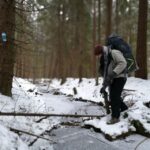
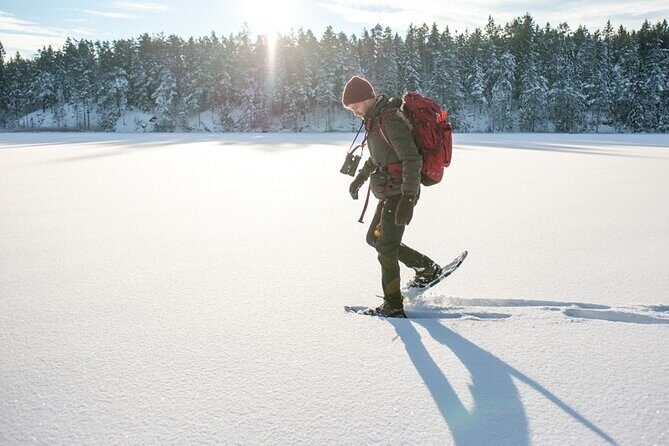
Your guide then gears up the group at base camp. This is where the hike becomes beginner-friendly. If you’ve never worn snowshoes or traction cleats, you’ll learn how to use them safely and comfortably before you commit to the pace of the day. You’ll also get short practical tips on forest etiquette and how to move through the woods without stressing wildlife or stepping where you shouldn’t.
Snowshoes or ice cleats: how the tour adapts to real winter conditions
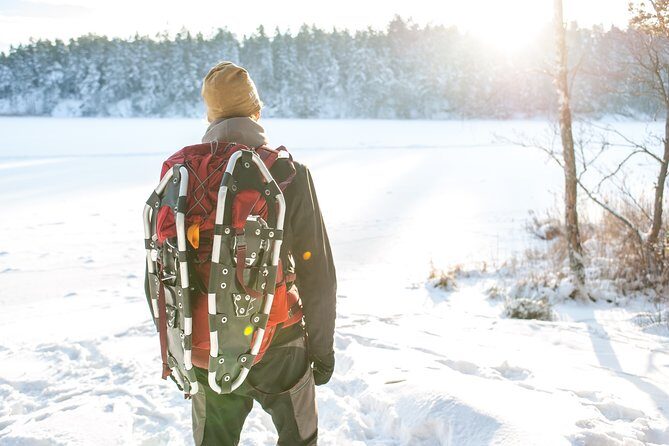
This hike works in two modes, depending on conditions: snowshoes if the snow level calls for it, or ice grip cleats worn over your boots if there isn’t enough snow. That adaptability is a big reason this tour stays worth it even when weather shifts.
Here’s what that means for you:
- If you get snowshoes, expect a steady effort level. Snowshoes spread your weight, but you still use more energy than on bare ground.
- If you get ice cleats, it’s more about stability and foot placement. You’ll want to walk with control, not speed.
Either way, you’re not guessing. The guide adjusts on-site, and you follow the group. The winter reality is simple: you came to walk in cold conditions, so the best outcome is staying steady, not forcing a fast stride.
You can also read our reviews of more hiking tours in Stockholm
The tutorial part that saves your energy later
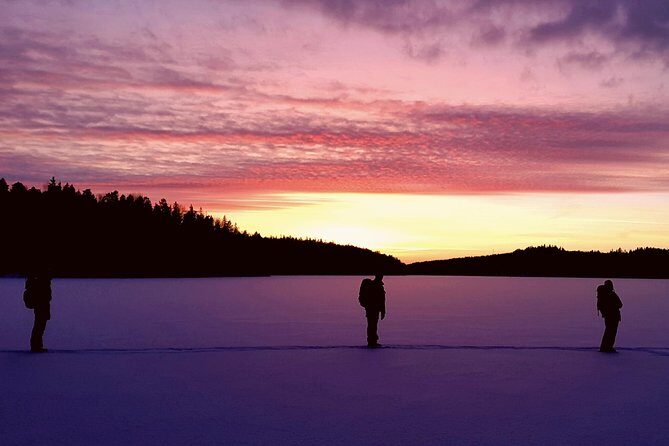
The first session on the day isn’t just gear show-and-tell. You’ll get a quick tutorial on:
- how to use snowshoes or ice cleats,
- how to use binoculars,
- basic forest etiquette.
It’s smart because binoculars change how you experience the trail. Instead of just looking at trees, you start scanning for movement, signs, and the kinds of wildlife that are easiest to spot when you slow down. Forest etiquette also matters in winter—tracks and disturbance can affect animals even when everything looks quiet.
You’ll also pick up small bushcrafting and navigation techniques along the way. You don’t need a survival background. The goal is that you leave with a better sense of how people read a winter forest and stay oriented while the world turns white.
Into a national park or nature reserve: why the exact spot matters
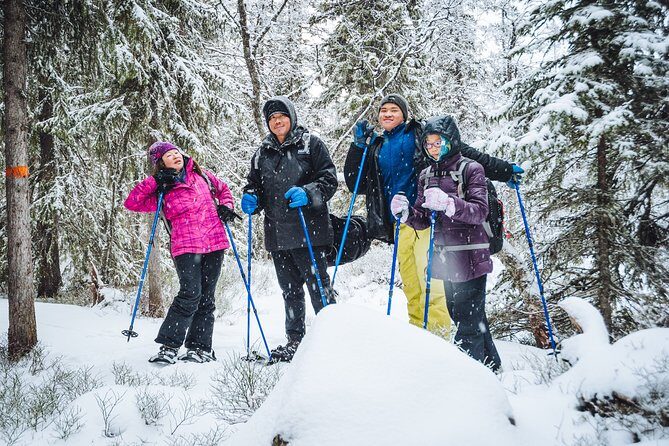
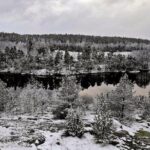
After the base camp prep, you head to one of Stockholm’s beautiful hiking areas—either a national park or a nature reserve, depending on snow and weather. That choice is practical. The best trail in winter isn’t always the closest one. It’s the one with the snow cover or safer footing that day.
Once you’re out there, the day follows a comfortable pace. The guide shares insights about local flora and fauna as you walk, plus advice that helps you understand what you’re seeing. Winter isn’t a blank version of summer; it has different “signals.” Tracks, tree structure, and the way sound carries are all part of the experience.
From a value standpoint, this is where the tour earns its price. You’re not just paying to be outdoors. You’re paying to understand what you’re outdoors for.
Wildlife spotting with binoculars: seeing more than just snow

One of the strongest parts of this hike is the wildlife focus in a natural setting. In winter, animals often reveal themselves through movement, tracks, or the brief moments they decide to show themselves.
Binoculars help because you can actually locate and watch without crowding or chasing. Your guide leads the spotting in a way that keeps the group calm and controlled. If you’ve never done wildlife watching, this is a friendly start: you learn where to look and how to watch patiently.
And it’s not just about scoring a sighting. You’ll also hear about how the forest works—plants and animals adapted to cold, and what the season changes.
Frozen lakes crossing: the part to take seriously (and trust the guide)
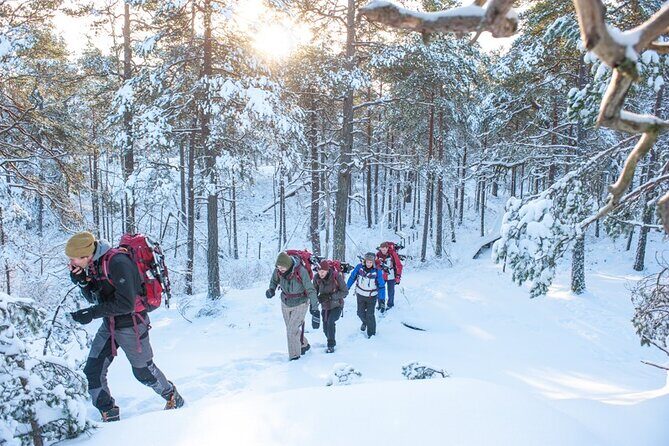
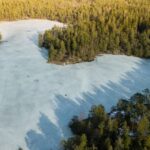
If the lakes are frozen, you may cross them under the guide’s supervision. This is one of those moments that makes the day feel like a real winter adventure. It can also feel intimidating, especially if you’re thinking about safety and thickness you can’t measure yourself.
Here’s the practical takeaway:
- Listen closely during the briefing.
- Walk where the guide tells you to walk.
- Keep your attention on footing and spacing.
In the standout moments shared by recent hikers, the lake crossing didn’t turn into panic because the guide managed the group carefully, including helping people handle it calmly and even capturing photos and videos during the crossing. That’s exactly what you want from an experienced local in a situation that could feel scary.
A few more Stockholm tours and experiences worth a look
Campfire lunch and Swedish fika: the warm pause that makes it stick
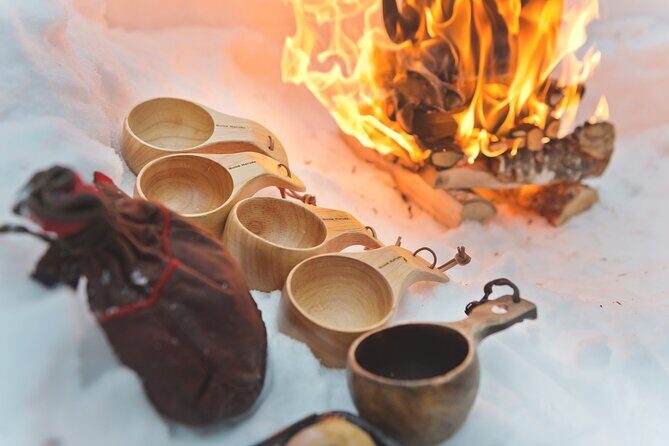
By the time you build and light a campfire, you’ve likely worked up enough cold-soaked hunger to appreciate real warmth. Lunch is included, served as a warm meal after the hike, plus snacks during the day.
One of the most praised parts is the lunch itself—especially the soup, described as delicious. That matters more than you’d think. In winter, food is comfort, but it’s also fuel for staying warm and feeling good for the return hike.
You’ll also get Swedish-style fika snacks. It’s a small touch, but it turns the day from exercise into a full experience. You’re outside, you’re moving, and then you’re given a reason to slow down, warm up, and enjoy the quiet.
The return to base: why a small-group day ends feeling lighter
After lunch and a final bit of enjoying the fire, you head back to the base camp and return to the meeting point. The day structure is built around comfort: you don’t spend the whole time pushing uphill or rushing between viewpoints.
With a group capped at 8 travelers, you tend to get more attention if you’re struggling with cold feet or balance. And because the guide is local to the forest area, they can adjust how the day plays out as conditions change.
By the end, you should feel recharged, not drained. That’s the point of choosing a winter hike that’s planned, instructed, and paced.
Price and value: what $191.34 buys in winter (and why it’s fair)
At $191.34 per person for about 8 hours, this is not a bargain-basement activity. But in winter, the price makes sense when you look at what’s included.
You get:
- All core equipment: snowshoes (when needed), ice/traction support, hiking poles, and a backpack
- A local guide
- Lunch plus snacks (fika)
- Transport to and from the meeting point by minibus
Winter gear rentals plus a guide plus transport can add up quickly if you try to piece it together yourself. Also, the guide’s role isn’t only instruction—it’s safety judgment on footing, adapting the route when snow conditions change, and deciding whether a lake crossing is possible.
So the value here is less about “you paid for a hike” and more about “you bought a guided winter day with the right tools.”
Who should book this snowshoe winter hike
This is a strong fit if you want:
- a winter day outdoors without needing to figure out gear or routing yourself,
- a learning-first experience (snowshoe/cleat basics and using binoculars),
- a group size that stays personal.
It’s described as ideal for families and suitable for all ages and skill levels, and most travelers can participate. That doesn’t mean it’s easy—cold turns everything into a workout—but it’s designed so beginners can join and not feel lost.
If you hate getting cold, or you want a totally effortless walk with no traction work, you may find it challenging. Also, if you’re extremely sensitive to outdoor temperatures, plan carefully and dress smart.
What to wear so the cold doesn’t win
The tour is clear: dress for winter. Footwear should be appropriate—boots or waterproof sneakers are the right direction. If you take one thing from this: waterproof matters. Snow and melt splash can soak through lighter shoes fast.
I’d pack around these priorities:
- Waterproof outer layer and warm insulation
- Gloves you can keep on while adjusting gear
- Socks that stay warm and dry-ish
- A hat and layer for your head (winter hikes steal heat up top)
Remember: the biggest variable is weather. Snow level can change, so you must be ready for snowshoes or traction cleats in whatever conditions show up.
FAQ
FAQ
Where does the tour start?
It starts at Tideliusgatan 62, 118 69 Stockholm, Sweden.
What time does the hike begin?
The start time is 9:00 am.
How long is the experience?
It runs for about 8 hours.
Is the tour offered in English?
Yes, it’s offered in English.
How many people are in the group?
The maximum group size is 8 travelers.
What is included in the price?
Equipment (snowshoes, hiking poles, backpack), a local guide, lunch, Swedish fika snacks, and transport to/from the meeting point by minibus.
What should I bring for clothing?
You bring your own clothes. The activity is active and you should dress accordingly for winter.
Do I need snowshoes?
You don’t need to bring your own. The tour uses snowshoes if snow conditions require them, and ice grip cleats if the snow level doesn’t.
Is there snow guaranteed?
No. Weather and snow conditions are out of the control of the tour operator, though last winter (January–March 2024) only one excursion reportedly had no snow.
Is free cancellation available?
Yes. You can cancel for a full refund if you cancel at least 24 hours before the experience start time.
Should you book this winter hike?
If you want an actual winter day in the woods—complete with guidance, gear, and a warm ending—this is an easy yes. The small group size, professional local guide, included wildlife tools, and the chance of frozen-lake crossing are the ingredients that turn a hike into a story you’ll remember.
Book it if you’re willing to dress for cold and you like learning while you walk. Skip it if you’re looking for a gentle stroll with no traction work or you don’t want to be outside in winter conditions. If you do book, go in prepared, follow instructions, and you’ll get a rare mix of nature, skills, and comfort in the snow.