REVIEW · STOCKHOLM
Stockholm Hop-On Hop-Off Bus & Boat Options
Book on Viator →Operated by Red Sightseeing · Bookable on Viator
Stockholm works best when you see it from a couple angles. This bus-and-boat hop-on hop-off combo lets you mix street views with harbor water scenes. You’ll pass major sights on land, then switch to a canal/harbor loop when you want calmer, prettier light from the water.
I like that the ticket gives you real freedom for 24 or 72 hours, so you can ride once to get oriented or hop on again the next day. I also like the audio guide in 15 languages, which makes the whole route feel like more than a sightseeing loop.
One thing to plan for: stop-finding and the red-bus mix-up can slow you down. Some stops are hard to spot at first, and there are other hop-on hop-off operators running with similar-looking red buses.
In This Review
- Key highlights worth clocking
- Stockholm by Bus and Boat: the smart way to get your bearings
- Price and value: what $24.03 really buys you
- Land route stops: what you’ll see and how to use each one
- Gustav Adolfs torg and Gamla stan: start with orientation
- Fjällgatan and Medborgarplatsen: neighborhoods with momentum
- The Royal Palace: worth it even if you just look
- Kungsträdgården and Nybroplan: classic central Stockholm vibes
- Vasa Museum and Skansen: museum day, but with timing
- Nordiska museet/Vasamuseet: pick a focus
- Karlaplan, Stureplan, Hötorget: good for walking connections
- Cityterminalen, Rådhuset, Stockholm City Hall: end with civic views
- Water route stops: boat timing, views, and the best hop-off targets
- Royal Palace and Nybroplan from the water: photos get easier
- Vasa Museum and Skeppsholmen: museum access with a calmer pace
- Gröna Lund and Fotografiska Museum Stockholm: “do something” stops
- Slussen: a practical connector point
- Audio guide and earbuds: how to actually get the full benefit
- The app and real-time tracking: worth it, even when it feels imperfect
- Where confusion happens: red buses, hard-to-find stops, and ticket friction
- Two red-bus operators can look identical
- Stops can be poorly marked
- Barcode/ticket readiness matters
- Is a hop-on hop-off loop the right fit for you?
- Should you book Stockholm Hop-On Hop-Off Bus & Boat?
- FAQ
- How much does the Stockholm Hop-On Hop-Off Bus & Boat cost?
- How long is the tour?
- Is there an audio guide, and what languages are available?
- How long is my ticket valid?
- What’s included in the experience?
- What isn’t included?
- Do children travel for free?
- What is the cancellation policy?
Key highlights worth clocking

- 24 or 72 hours ticket time means you can pace your day, not fight it
- Bus plus boat coverage helps you hit both waterfront and landmark streets
- 15-language audio keeps you moving without needing a guidebook
- App-based real-time tracking helps you avoid waiting around
- Frequent hop-on stops make short trips between sights realistic
- Mobile/barcode ticket use matters at boarding, so have it ready
Stockholm by Bus and Boat: the smart way to get your bearings
If it’s your first time in Stockholm, this kind of route is a practical shortcut. Stockholm is beautiful, but it’s also spread out across islands and waterfronts. A hop-on hop-off loop helps you build a mental map fast—where the big sights cluster, which directions to walk, and what’s worth a focused visit.
The pairing is the key. You get the best of land views from the bus route, then switch to water for harbor and canal perspectives. Even if you don’t hop off every stop, the boat segment gives you a calmer, more scenic look at the city edges—often the part first-time photos miss when you stay on streets.
You’re also not locked into one “ride-by” style. With a 24 or 72-hour ticket option, you can do a loop, hop off to visit a museum, and still use the same ticket later to connect back across town.
You can also read our reviews of more boat tours in Stockholm



Price and value: what $24.03 really buys you
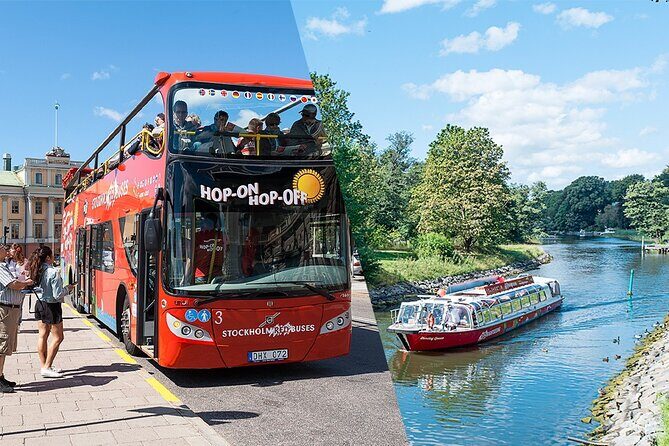
At about $24.03 per person, this is priced like a “get-around” ticket, not just an attraction ticket. The value comes from what you can do with the time window.
Here’s the real cost math for Stockholm:
- Taxis can get pricey fast, and you’ll burn time if you rely on them to jump between areas.
- Stockholm is walkable, but walking everywhere all at once can also wear you out.
This ticket sits in the middle. You can ride when weather or energy drops, and you can walk when you want to explore on foot. One strong theme from real use is that people treat it as a transportation tool that also happens to be informative.
The other value lever is options. The service is designed so you can:
- Stay onboard and listen to the commentary
- Hop off at select stops for museums, viewpoints, or nearby sightseeing
- Use the same ticket over 24 or 72 hours, depending on what you choose
If you plan to do a couple museum stops or want to cover multiple neighborhoods, this is often the sweet spot.
Land route stops: what you’ll see and how to use each one

The land side is built around major “anchor” areas, so you can hop off with purpose and then reconnect later.
Below is how I’d use the stops, including what’s great and what can be annoying.
Gustav Adolfs torg and Gamla stan: start with orientation
Gustav Adolfs torg is a useful launch point because it’s central enough to help you understand where the city centers sit. From there, Gamla stan (Old Town) is the obvious next move. Old Town is often where you’ll want more time than a quick photo, so if you hop off here, plan to wander a bit rather than sprint.
How it can feel: if you’re unsure where the correct stop is at first, the first hop-on can be the most stressful part of the day.
Fjällgatan and Medborgarplatsen: neighborhoods with momentum
Fjällgatan and Medborgarplatsen help you understand the city’s mix beyond the biggest tourist icons. This is where you can get a sense of everyday Stockholm rhythm—streets, local blocks, and connections between sights.
How to use them: these stops are best for shorter “reposition” rides. Hop off, walk a small loop, then get back on to continue.



The Royal Palace: worth it even if you just look
The Royal Palace is one of the top landmark stops. Even if you don’t go inside, it’s a major focal point for photos and a natural place to pause. This is also a stop where you might want to check the audio and follow along so you know what you’re looking at.
Possible drawback: if you’re hopping off at the same time as many other people, you might feel a mild crowd at the curb.
Kungsträdgården and Nybroplan: classic central Stockholm vibes
Kungsträdgården and Nybroplan are strong for strolling. They sit in a part of town that makes it easy to stitch together the rest of your day—museum stops, waterfront access, and quick walking routes.
If you want less museum time and more “see and wander” time, this is where you’ll likely be happiest.
Vasa Museum and Skansen: museum day, but with timing
Vasa Museum is one of the big-name museum stops, and it’s a clear “hop-off target” if museums are your thing. Skansen is another major stop, and it’s the kind of place you typically don’t want to rush.
How to pace it: if you’re doing both, consider doing one first and one later (or take a long lunch break). If you try to hit both back-to-back without a break, you’ll feel rushed.
Nordiska museet/Vasamuseet: pick a focus
The route includes Nordiska museet/Vasamuseet (the naming suggests the area includes major museum coverage). This is a good stop when you want options—either you go in, or you use the location to orient and then move on.
A practical note: museum areas can be dense with foot traffic. It helps to hop off, check your direction fast, and then commit.
Karlaplan, Stureplan, Hötorget: good for walking connections
These stops—Karlaplan, Stureplan, and Hötorget—are helpful because they’re more about city connections than one single “final boss” site. You can use them to reposition to where you want to walk next.
If you’re tired, staying onboard to reposition instead of walking across multiple blocks can save energy.
Cityterminalen, Rådhuset, Stockholm City Hall: end with civic views
Cityterminalen is handy for transport connections. Rådhuset and Stockholm City Hall are where the city’s civic center energy shows up.
This is also a smart place to end your first loop. If you’re comfortable with the route layout by then, you’ll be less likely to lose time later.
Water route stops: boat timing, views, and the best hop-off targets

The boat portion is the one people tend to remember because the views come without constant street navigation. The water route is also a nice break from waiting in traffic or climbing between neighborhoods.
The boat route includes these stops:
- Royal Palace
- Nybroplan
- Vasa Museum
- Skeppsholmen
- Gröna Lund
- Masthamnen Cruise Terminal
- Fotografiska Museum Stockholm
- Slussen
Royal Palace and Nybroplan from the water: photos get easier
Starting at or near Royal Palace and moving through Nybroplan from water can feel like a different Stockholm entirely. The angles change, and buildings look less like background and more like part of the scene.
Hop-off idea: if you want maximum photo time, you can stay onboard for the best views, then hop off where your timing allows.
Vasa Museum and Skeppsholmen: museum access with a calmer pace
With Vasa Museum and Skeppsholmen on the water list, you get museum access without the stress of walking every link. This is a good strategy if weather is warm enough for strolling but you don’t want to carry your day in your feet.
Gröna Lund and Fotografiska Museum Stockholm: “do something” stops
Gröna Lund and Fotografiska Museum Stockholm give you entertainment and museum options on the water loop. If you’re deciding between two kinds of stops, these are convenient because they fit into the boat rhythm.
How to use it: if you’re trying to keep your day simple, you can hop off at one of these, explore, then catch the next boat segment rather than building a complicated route.
Slussen: a practical connector point
Slussen works like a city connector. It’s often the kind of stop where you can switch from “water sightseeing” back to “land movement.”
Audio guide and earbuds: how to actually get the full benefit

The experience includes an audio guide available in 15 languages, and that can turn the route into a lesson instead of a slow bus ride. But audio quality is only useful if you can hear it.
One real-world detail to watch for: you may need earbuds to hear the commentary. Don’t wait until you’re settled at the top level to hunt for them—grab what you need when you board.
Also pay attention to how the audio marks your position. Some people felt the commentary didn’t clearly label which stop number was coming up. That’s fixable on your end: use the route map and stop list on your phone so you can follow along even when the audio is vague.
The app and real-time tracking: worth it, even when it feels imperfect
You’ll get the best results using the app for tracking. Multiple people liked that it helps you see where buses and boats are so you’re not guessing.
One caution: a few folks describe the app as annoying to work with. That doesn’t mean it’s useless; it means you might want to test it early in the day and have a backup plan (like using the stop list and just boarding at the next reasonable departure).
If you’re easily flustered by technology, bring patience. Once you’re set, the payoff is big: you can plan hop-offs without wasting time.
Where confusion happens: red buses, hard-to-find stops, and ticket friction

This is the part you should treat like an action item, not a surprise.
Two red-bus operators can look identical
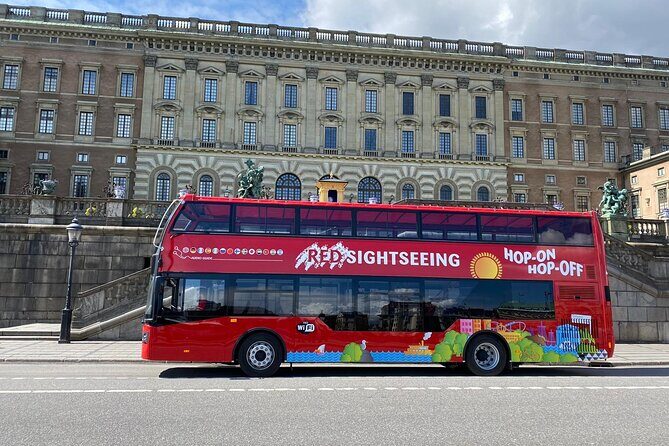
One repeated issue is that more than one hop-on hop-off company runs red buses, sometimes on similar routes. If you board the wrong operator, you could lose time—or even have trouble boarding depending on how tickets are validated.
Your move:
- Check you’re at the correct stop for this specific operator.
- Use the app to confirm you’re waiting for the correct bus/boat.
Stops can be poorly marked
Some stops aren’t easy to spot, and a few people struggled at specific areas. If you arrive late or distracted, you’ll likely miss your spot.
Your move:
- Give yourself extra buffer at the first stop of the day.
- Use your phone to confirm the stop name and location before you step away.
Barcode/ticket readiness matters
Mobile tickets are part of the experience, but multiple people emphasized having a barcode ready and legible. If you rely on a confirmation screen that doesn’t contain what the driver needs, you could get stuck.
Your move:
- Make sure your ticket barcode is accessible and working on your phone before you arrive at the stop.
- If you’re the “print it just in case” type, that can save an argument at the curb.
Is a hop-on hop-off loop the right fit for you?

This setup works best when you want a flexible day.
You’ll like it if:
- You’re visiting multiple landmark zones and want an easy way to connect them
- You enjoy learning through narration while you travel
- You want a low-stress plan for days with changing weather or energy
You might not love it if:
- You’re allergic to schedule tweaks and want a fully reliable, point-to-point system
- You’re hoping for only one short ride with no walking at all
- You get overwhelmed by stop-finding and tech steps
One useful mindset: treat the bus and boat as your city transport “skeleton,” then use hop-offs as your bones.
Should you book Stockholm Hop-On Hop-Off Bus & Boat?
Yes—if you’re smart about the logistics.
Book it when you want:
- Land + water coverage
- A 24/72-hour ticket that lets you return for a second loop
- Audio in 15 languages so the route feels worth your time, not just transit
Skip it or consider a different plan when:
- You’re certain you’ll only do one tight block of sightseeing and you already know you can walk everywhere easily
- You don’t want to deal with stop-finding or double-checking which red bus you’re boarding
If you’re flexible, patient at the first stop, and you keep your ticket barcode ready, this is a solid way to see Stockholm without spending your day calculating routes.
FAQ
How much does the Stockholm Hop-On Hop-Off Bus & Boat cost?
It costs $24.03 per person.
How long is the tour?
The duration is approximately 1 hour 30 minutes.
Is there an audio guide, and what languages are available?
Yes. An audio guide is available in 15 languages.
How long is my ticket valid?
Your ticket is valid for either 24 hours or 72 hours, depending on the option you choose.
What’s included in the experience?
It includes the hop-on hop-off tour and an audio guide available in 15 languages.
What isn’t included?
Food and drinks are not included, and there is no hotel pickup or drop-off.
Do children travel for free?
Children up to the age of 7 travel for free when accompanied by an adult.
What is the cancellation policy?
You can cancel for a full refund up to 24 hours in advance. If it’s canceled due to poor weather, you’ll be offered a different date or a full refund.