REVIEW · UPPSALA
Uppsala’s biggest attractions – 1h city walk in Uppsala city.
Book on Viator →Operated by Sweden History Tours · Bookable on Viator
Uppsala reads like a real-life time machine. In just 1 hour, this guided city walk connects the cathedral and university sites with stories that run from the 12th century to around 1900, plus a quick look out over the Botanical Garden. The trade-off is that it’s not a long “walk till you drop” tour—it’s more stop, look, and learn.
You’ll meet at Riddartorget and follow an authorized local guide around central Uppsala. The group is capped at 20, you get a mobile ticket, and the route is designed to be doable even with only moderate stamina—mostly standing, with short transitions.
In This Review
- Key things to know before you go
- A 1-Hour City Walk That Covers Uppsala From Medieval Stone to 1900
- Meeting at Riddartorget and Managing the Pace
- Stop 1: Uppsala University Main Building, Decorations, and Rune Stones
- Stop 2: Gustavianum Museum and the Anatomical Theater Story
- Stop 3: Uppsala Domkyrka, Nordic’s Largest Cathedral, and Build-Day Drama
- Stop 4: St. Erik’s Square, the Consistory House, and University Life During Plague Years
- Stop 5: Uppsala Castle Courtyard, a Murder, and a View Over the Botanical Garden
- Why the Time-Travel Theme Works (and When It Might Feel Jumpy)
- Price and Value: What You Get for $91.75
- What You Learn From the People Behind Uppsala’s Famous Names
- Who This Tour Is For
- Should You Book This Uppsala City Walk?
- FAQ
- How long is the Uppsala city walk?
- Where do I meet for the tour?
- What’s the price per person?
- Is a mobile ticket included?
- Are admission tickets included for all stops?
- How many people are in each group?
- Is the tour suitable for someone with moderate physical fitness?
- Is near public transportation?
- Are service animals allowed?
- Can I cancel for a full refund?
Key things to know before you go
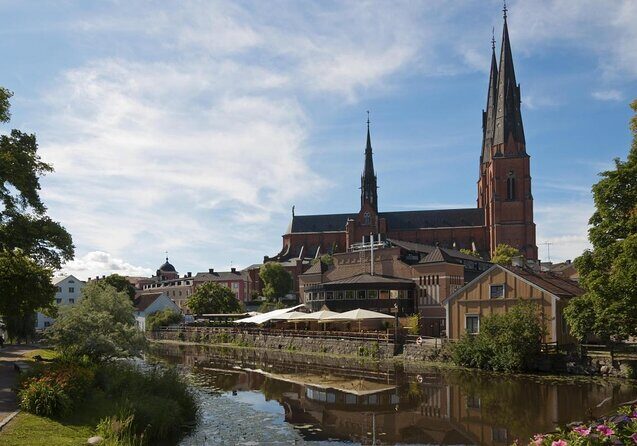
- 12th-century to ~1900 in one loop: you’ll jump across eras on purpose, tied together by themes the guide keeps returning to
- Big Uppsala anchors close together: university buildings, the cathedral area, key squares, and the castle courtyard view
- Museum and castle aren’t included: some stops are free, but Gustavianum and Uppsala Castle require extra entry
- The guide really drives the experience: expect lots of names, side stories, and Q&A, not just a list of dates
- Pace is mostly standing: plan for a “city briefing” rhythm more than a walking workout
A 1-Hour City Walk That Covers Uppsala From Medieval Stone to 1900
This is the kind of tour that helps your brain get organized fast. Uppsala can feel spread out—university buildings, historic church structures, squares with their own past, and then the castle area. Here, your guide builds a thread through it all, using major landmarks as reference points while hopping across centuries.
What I like most about this format is that you’re not asked to memorize a timeline. You’re shown how themes repeat: education, power, big personalities, disease and social order, and the way buildings get used (and reused) as society changes. In about an hour, you get a working map of what matters.
You can also read our reviews of more walking tours in Uppsala



Meeting at Riddartorget and Managing the Pace
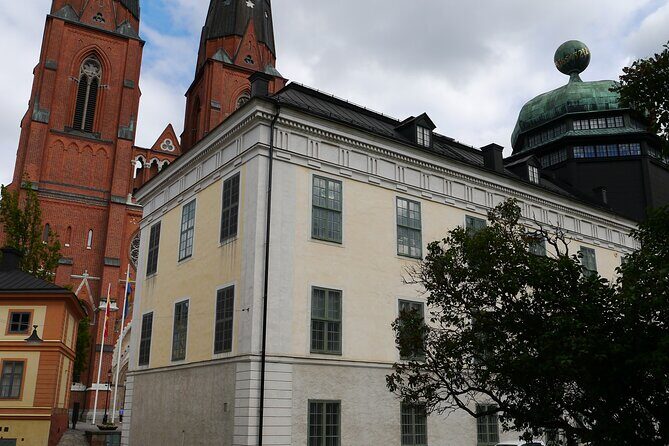
You start and end back at Riddartorget, in central Uppsala. That matters because you don’t waste energy figuring out transfers or chasing a route across town. The tour runs about 1 hour, and the group stays small enough to ask questions without the guide yelling over everyone.
Comfort tip: because the pace is built for short stops, not long walking, you’ll want to be ready to stand for explanations. One review noted that it didn’t feel like much walking; that’s consistent with the structure: several stops are short, and the guide does the heavy lifting while you mainly look, listen, and move a few steps at a time.
Stop 1: Uppsala University Main Building, Decorations, and Rune Stones
The first stop is the Uppsala University Main Building area. It sets the tone right away: education and architecture, not just “pretty buildings.”
You’ll hear about the University House—including the story that the builder went bankrupt because of the decorations on the house. That’s a small detail, but it tells you a bigger truth: in Uppsala, art and status weren’t separate from money and politics. Things looked grand because someone paid (or overspent), and the consequences showed up fast.
From here, the tour also connects to Uppsala Cathedral, built from the 1270s to 1430s, and you’ll get a sense of how the university’s world sits next to medieval religious power. You’ll also visit the university park’s rune stones. Rune stones are easy to miss when you’re passing through on your own, so having them pointed out is a real time-saver.
One thing to watch: this stop bundles multiple highlights into a short window. If you like to linger for photos, plan to do a quick snap, then come back later on your own with extra time.
Stop 2: Gustavianum Museum and the Anatomical Theater Story
Next comes Gustavianum, the Uppsala University museum. This is where the tour leans hard into the “people made this happen” side of history.
You’ll hear about Olof Rudbeck and the anatomical theater—a place built for learning and public demonstration. The tour also includes a correction about a common myth: it’s not that ventilation function did what people sometimes claim. Even if you don’t geek out on engineering, that kind of clarification is exactly why a guided story works. It separates what we repeat from what we can actually support.
You’ll also get a sense of how the university evolved as a collection-holding institution. There’s a story about a party hall that had to move on to more houses before the university got the space it needed for collections. And you’ll hear about Academia Carolina, linking Uppsala’s university ambitions to broader European academic trends.
Practical note: admission to Gustavianum isn’t included. The itinerary gives you a short visit here, so if you want to linger in the museum rooms, you may feel slightly time-pressed. But even without extra time, this stop helps you understand why Uppsala became famous for study.
Stop 3: Uppsala Domkyrka, Nordic’s Largest Cathedral, and Build-Day Drama
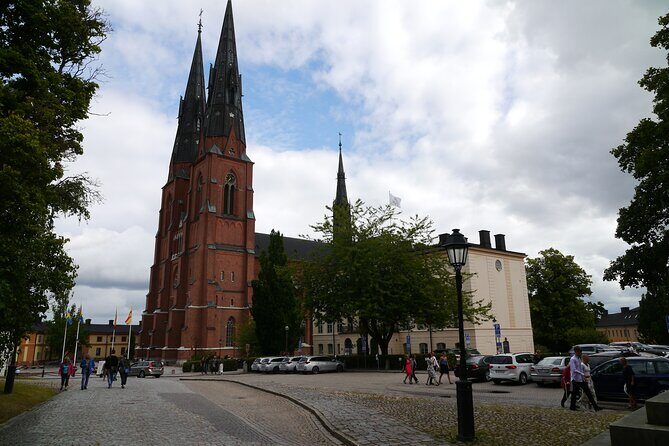
Then you’re at Uppsala Domkyrka—the cathedral, built between the 1270s and 1430s and described as the largest in the Nordic countries.
You’ll get more than postcard-level facts. The tour focuses on how the cathedral fits into the cathedral-area medieval world around it, including kanikhus (the buildings connected to the clergy community). That surrounding built environment matters because it shows you the cathedral wasn’t a lone monument. It was a whole working neighborhood.
This stop is also full of the kind of scandal detail that makes history feel human. You’ll hear about construction gossip tied to limestone pipes being paid more than the soldiers. The result? Strikes. That’s not just trivia; it’s a reminder that big building projects run on labor, bargaining, and conflict. People argued about money and fairness even when everyone was still trying to complete something awe-inspiring.
Admission here is marked as free, so you’re not paying extra for the main cathedral experience. If you’re choosing between a quick photo and a calm read of the area, go for the calm read—you’ll get more out of it with the guide’s context.



Stop 4: St. Erik’s Square, the Consistory House, and University Life During Plague Years
Stop 4 moves from the cathedral zone into the city’s civic backbone: St. Erik’s Square and the surrounding area, including Oxblodstorget and the Consistory House.
This is where you learn how the university lived inside the city—literally. The tour includes:
- the plague’s entry into Uppsala (1709–1711)
- Oxblodstorget and meat sales
- cathedral sheds in the wall that surrounded it
- the Consistory House, which housed prison, police, and administration during the 1750s for students
- the idea of a city within the city because student life needed its own rules and systems
That mix might sound odd until you realize it’s how universities actually functioned. Students weren’t traveling scholars in a bubble. They were young adults in a city with law enforcement, schedules, housing pressures, and major public health risks.
If you like social history, this stop is a highlight. If you mostly came for architecture, it can still help because it explains why buildings had the roles they did.
Stop 5: Uppsala Castle Courtyard, a Murder, and a View Over the Botanical Garden
The last stop is Uppsala Castle (Uppsala Slott), ending with a moment that’s both dramatic and scenic.
You’ll hear about a murder at Uppsala Castle, then stand in the courtyard and look out over the Botanical Garden, described as one of the oldest botanical gardens in Europe. Even if you don’t pay for a deeper castle visit (and note that castle entry is listed as not included), the courtyard view gives you a satisfying final “anchor image.” It helps your brain file Uppsala as more than one institution—it’s church, school, and royal power in the same geography.
If you want more time at the castle or the garden, you’ll probably want to plan a return visit later. This tour keeps it focused, so you don’t lose the thread of the 1-hour loop.
Why the Time-Travel Theme Works (and When It Might Feel Jumpy)
This tour’s strength is that it uses landmarks like bookmarks. You’re not following a single straight timeline; instead, your guide ties themes across eras—construction money, university ambitions, public crises, and how people shaped institutions.
That can be great for first-timers because you walk away with a usable mental map. It’s also helpful if you’re traveling with mixed interests: the cathedral and university museum satisfy architecture and culture fans, while the plague years and student administration bring in a social-history angle.
The main drawback is pacing and narrative structure. One concern you might have is that the tour can feel more like a sequence of important points than a continuous walk, so you’ll do plenty of stopping. Another possible issue is that the guide may jump between centuries without a strict chronological ordering. If you prefer everything laid out in perfect order, you may find the flow a bit “stop-start.” The fix is simple: take it as a guided orientation, then come back to your favorite era on your own.
Price and Value: What You Get for $91.75
At $91.75 per person for roughly 1 hour, you’re paying for:
- an authorized guide (with the storytelling and structure)
- a compact route that hits the biggest Uppsala anchors
- a mobile ticket
- small group size (maximum 20)
- all fees and taxes
Money math matters here because not every stop includes entry. From the itinerary, you have several stops marked as free (like the university park area/rune stones stop, the cathedral area, and the county/square area). But Gustavianum is not included, and Uppsala Castle is not included.
So the value depends on whether you’re planning to pay for those entrances anyway. If you want the museum content and the castle courtyard is enough for you, this tour can still be cost-effective because the guide helps you get meaning out of what you’re seeing. If you don’t care about museums/castle entry, then you’re mostly paying for narration at free sites—which can still be worth it, but it’s a different decision.
My advice: treat it like “guided orientation with optional paid depth.” It’s a good deal when you want context fast.
What You Learn From the People Behind Uppsala’s Famous Names
This tour explicitly ties places to people—so you don’t just hear about buildings, you hear about the minds connected to them. You’ll cover major Uppsala figures like Celsius, Linné, and Rudbeck.
That’s more than name-dropping. When your guide links famous scientific and academic figures to real physical spaces—university buildings, the museum, and the cathedral-area academic environment—you start to understand why Uppsala became important. It’s easier to remember names when you associate them with a location and a story.
And you’ll likely get plenty of time for questions. The vibe from strong guides in this kind of format is that they answer follow-ups without rushing you.
Who This Tour Is For
This city walk fits best if you want:
- a quick orientation in central Uppsala
- a mix of architecture and story (not just one or the other)
- a guide who can handle questions and add color to the facts
- a manageable route with only moderate physical fitness demands
It also works well for people who already live in the area. Learning how university buildings link to plague-era civic life, or hearing construction labor stories tied to the cathedral, can surprise even locals—especially when the guide connects the dots across different centuries.
Should You Book This Uppsala City Walk?
Book it if you want a guided shortcut through Uppsala’s most meaningful places—university, cathedral area, civic squares, and the castle viewpoint—in only one hour. It’s a strong choice for first visits, bad weather days, and anyone who likes history that includes conflict, rumors, and real human trade-offs (money, labor, rules).
Skip it (or expect less) if you’re looking for a long walking route or a very strict chronological tour with lots of wandering time. This one is tighter and more standing-and-listening than you might assume.
FAQ
How long is the Uppsala city walk?
It’s about 1 hour.
Where do I meet for the tour?
The meeting point is Riddartorget, Uppsala, Sweden, and the tour ends back there.
What’s the price per person?
The price is $91.75 per person.
Is a mobile ticket included?
Yes, the tour uses a mobile ticket.
Are admission tickets included for all stops?
Not all of them. The tour notes free admission for some stops (including the Uppsala University main building area and the cathedral area), but admission is listed as not included for Gustavianum and Uppsala Castle.
How many people are in each group?
The tour has a maximum of 20 travelers.
Is the tour suitable for someone with moderate physical fitness?
Yes. The tour is listed as suitable for travelers with moderate physical fitness.
Is near public transportation?
Yes, it’s near public transportation.
Are service animals allowed?
Yes, service animals are allowed.
Can I cancel for a full refund?
Yes. You can cancel up to 24 hours in advance for a full refund. If you cancel less than 24 hours before the start time, you don’t get the refund.