REVIEW · STOCKHOLM
Viking History and Swedish Countryside Tour to Sigtuna & Uppsala
Book on Viator →Operated by STOEX · Bookable on Viator
If you want Vikings without cramming museum hours, this day tour is a smart fix: you move through real places where the stories began. I especially like how the route links the Viking Age to medieval Sweden in a clean storyline, and I also love the small-group feel (max 17) that makes questions actually land. The main catch is that it’s a long, packed day with lots of outside time and steady driving, so bring realistic expectations for a 9-hour schedule.
For me, the best part is the pacing: you get stop-by-stop context, then short moments to look around on your own—Sigtuna and Uppsala Cathedral are where you feel that breathing room. Another big plus is the way the day is built around Scandinavia’s “text” you can read in the landscape: bridges, assembly sites, runestones, mounds. One consideration: a few people find the heavy rune/stone focus a bit repetitive, and if you’re sensitive to pacing or standing outdoors, plan for that upfront.
This is a great fit if you like history that has footprints you can still see—stone settings, carved words, church towers, and royal graves. If you want a super-relaxing countryside cruise with long meals and no standing, you might prefer a lighter day trip.
In This Review
- Key highlights at a glance
- A Viking-by-day plan outside Stockholm
- Jarlabanke Bridge and the runes of Täby
- Arkils tingstad: Viking governance in a square of stones
- Granby and the Granbyhällen runestone
- Hökeriet and the farmhouse fika break
- Sigtuna: Sweden’s oldest town, with time to wander
- Uppsala Cathedral: medieval spires and the Gustav Vasa connection
- Gamla Uppsala royal mounds and Viking kingship
- How the 9 hours feel: comfort, breaks, and pacing
- Price and value: what you get for $274.19
- Who this tour fits best (and who should skip it)
- Should you book this Viking History and Swedish Countryside Tour?
- FAQ
- How long is the Viking History and Swedish Countryside Tour to Sigtuna & Uppsala?
- What does the tour price include?
- Is lunch or fika included?
- Is hotel pickup guaranteed at my exact address?
- Is the tour offered in English?
- How many people are in the group?
- Do I need to pay entrance fees at the stops?
- Is this tour suitable for children?
- Can I cancel for a full refund?
- How do I get my tickets?
Key highlights at a glance
- Runic power in the Täby area, from Jarlabanke’s Bridge to the assembly and inscriptions
- Arkils tingstad, where Vikings held meetings and handled disputes
- Granbyhällen and house foundations, one of the best-preserved snapshots of Viking daily life
- Old Uppsala mounds, burial sites tied to kingship legends and grave goods
- Sigtuna’s oldest-town stroll, plus time to browse and reset by Lake Mälaren
- Uppsala Cathedral, a major medieval church stop with the Reformation connection
A Viking-by-day plan outside Stockholm
This trip works because it’s not just “more sites.” It’s a sequence. You start in the Täby-Vallentuna area, move into Viking governance and everyday life, then shift into Christian-era Sweden with Sigtuna and Uppsala. By the time you reach Old Uppsala and Uppsala Cathedral, the day feels like one long explanation rather than disconnected photo stops.
I like that the itinerary mixes high-impact outdoor archaeology with indoor church architecture. It keeps you from getting numb from standing in the same type of setting. And because it’s built for a small group, the guide can slow down when questions pop up (which matters when you’re staring at runes).
The big practical truth: the day is long (about 9 hours). You’re on and off a minibus all day, and several stops are walk-and-stand style. If you’re prone to cold or you hate tight schedules, wear layers and plan to keep moving.
You can also read our reviews of more historical tours in Stockholm


Jarlabanke Bridge and the runes of Täby
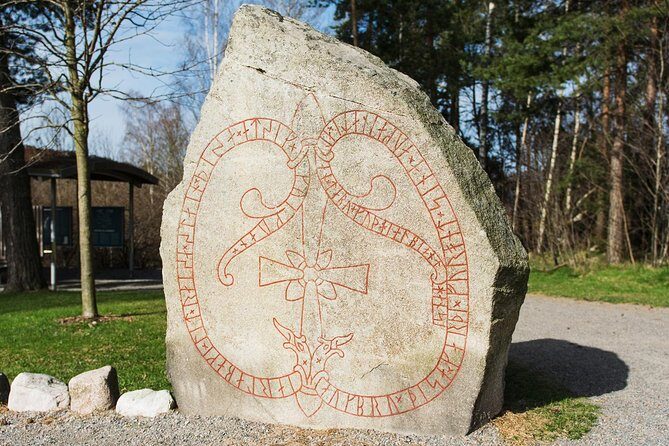
The first “wow” moment is near the Viking bridge area—Jarlabanke’s Bridge in Täby. This is one of those places where you can feel how old infrastructure shapes modern maps. The bridge is tied to Jarlabanke, and the runestones connected to the site mention his family. That means the site isn’t just stone for stone’s sake; it’s a specific story about power, memory, and status.
From a traveler’s angle, this stop is valuable because it gives you a theme before you hit the deeper assembly sites: Vikings built things and left messages about who they were. If you pay attention here, the later runestones will make more sense.
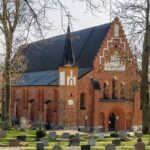
There’s also a quick drive-by at Täby Church. It’s brief, but it hints at the shift from Viking Age to medieval Christian Sweden—useful context so the day doesn’t jump eras too abruptly.
Arkils tingstad: Viking governance in a square of stones
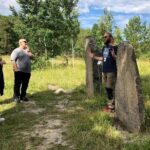
Arkils tingstad (Arkils Assembly Site) is the stop that turns your idea of Vikings from warriors into decision-makers. This is described as a gathering place where communities resolved disputes and made laws during the Viking Age. The site includes stones arranged in a square pattern, which is believed to relate to how people gathered and sat.
I like this stop because it’s not all spectacle. It’s about systems—how communities ran themselves. When you look at the stones here, you’re basically looking at an outdoor “meeting room” from a thousand-plus years ago. That’s a rare kind of history stop: political rather than purely military.
Right after, the tour also includes a short pause at Lake Vallentuna. Even if you don’t stay long, it’s a welcome reset. You go from carved meaning (tingstad and law) to the calm physical setting Vikings lived around. It also breaks up the day so your brain doesn’t stay in history-mode for every minute.
Granby and the Granbyhällen runestone
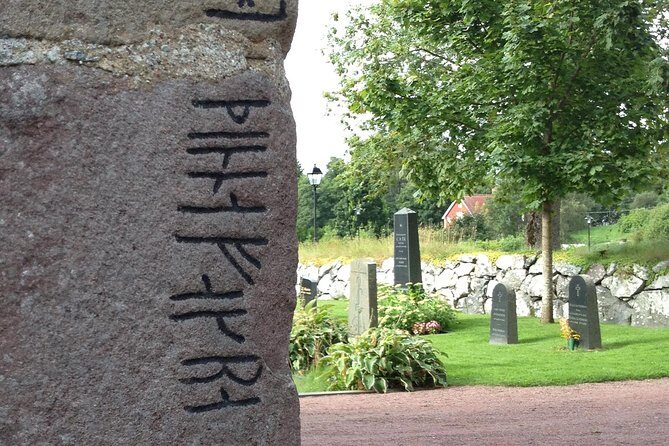
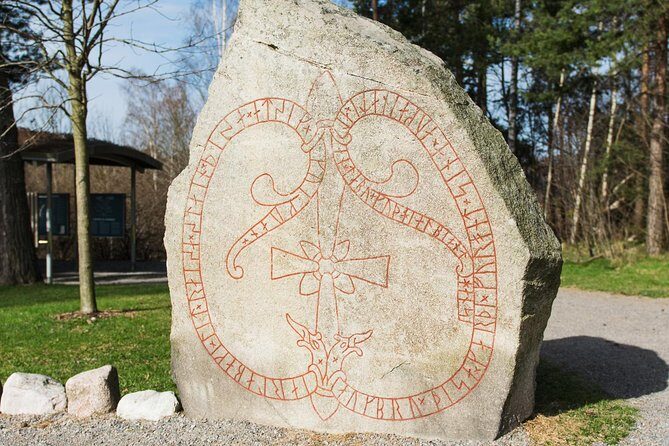
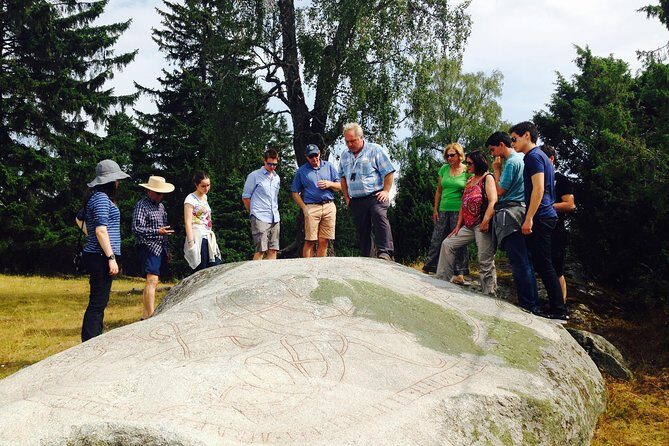
Granby is where the tour shifts from public life to family life. The centerpiece is Granbyhällen, also called the Granby Stone—famous for carrying one of the longest and most informative Swedish Viking Age texts. The story told in runes can come across like an inheritance message, tied to the Granby family.
Then you step into the reconstructed longhouse area. The tour description points out that the Viking house foundations here are among the best-preserved in the world, which is exactly why this stop matters. When you can stand inside the outline of daily living spaces, Viking history becomes less abstract.
What to do here: slow down and look at the space like you’re imagining chores, sleep, and social life. The goal is to shift from reading runes as “fun facts” to understanding them as records of real people.
A small drawback you should expect: this segment is runestone-heavy. After a few carved-stone stops, the novelty can fade if you’re not fully in the mindset. If that’s you, focus on comparison—how each message or structure has a different purpose.
Hökeriet and the farmhouse fika break
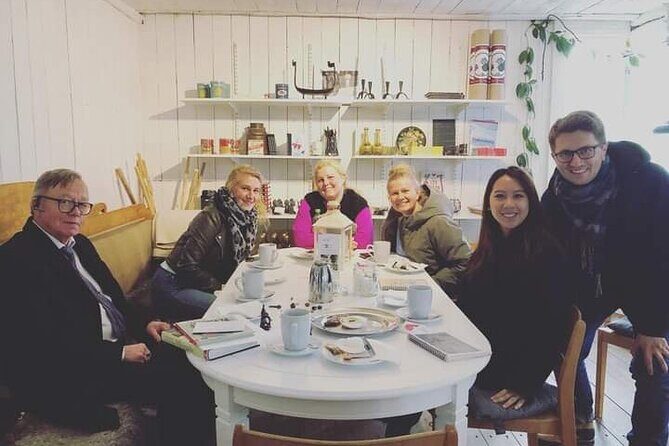
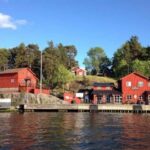
At Granby, the tour includes the Hökeriet stop, described as a small provision shop setup near the farm. This is where the day becomes less academic and more Swedish-in-the-moment.
If your specific tour version includes it, you can get Swedish fika in a farmhouse setting, served by the co-owner or someone connected to the family running the farm. You can also browse regional crafts and Viking-themed souvenirs.
This is one of those travel moments I value because it gives you a break that doesn’t feel random. It’s not a stop just to sell you something—it’s tied to how people lived and ate in a local, practical way.
Quick note: fika availability can vary by tour. Lunch itself is not included, but you’ll have a planned lunch break where you can buy food on your own.


Sigtuna: Sweden’s oldest town, with time to wander
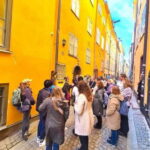
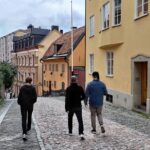
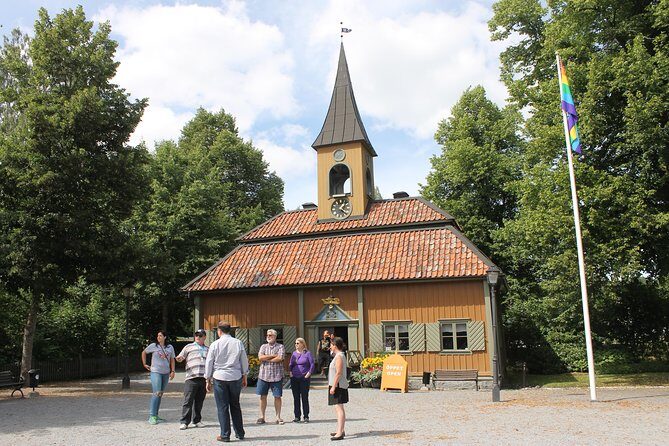
Sigtuna is the part of the day that feels most like travel and less like site-hopping. The town dates to around AD 980, and you’re along Lake Mälaren. You get about an hour to stroll through cobblestone streets with older wooden and stone buildings, plus a classic “old town” mix of gardens and waterfront calm.
This is also where you can tailor your energy. If you’re rune-spirited, you can keep your brain on history mode. If not, you can just enjoy the pace: take photos, browse small shops, and let the guide’s earlier explanation echo while you look around.
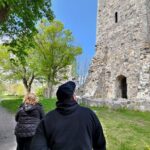
One highlight is St. Mary’s Church, which is mentioned as an impressive presence in the town. Even if you don’t go inside, the architecture helps you connect Sigtuna’s early urban life to the larger Christian-era story you’ll complete later in Uppsala.
I do wish people planned for the fact that the lunch stop and Sigtuna time overlap. You get a solid hour in town, but it’s not a half-day. If you want more time here, treat this tour as a launch point, not the final word on Sigtuna.
Uppsala Cathedral: medieval spires and the Gustav Vasa connection
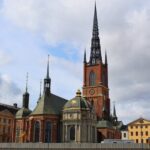
Once you reach Uppsala, the atmosphere shifts. Uppsala Cathedral (Uppsala Domkyrka) is presented as major Scandinavian Gothic architecture—so expect height, stained glass, and a vaulted-feeling interior when you step in.
The tour also points out something important for context: the cathedral holds historical and religious significance for the Lutheran church and houses the tomb of Gustav Vasa. That detail matters because it ties Uppsala to the big political-religious changes in Sweden, not just the aesthetic side.
You also get an included stop at the cathedral area museum and treasury (described as adjacent), plus time to do independent exploration in “new Uppsala,” where the cathedral is located. The itinerary lists a short time here—about 20 minutes—so this is not a slow deep visit. You’ll see the essentials and then move on.
If you’re the type who likes to read inscriptions and sit quietly, you might want to prioritize one or two spots inside rather than trying to “do everything” in the short window.
Gamla Uppsala royal mounds and Viking kingship
Old Uppsala (Gamla Uppsala) is where the tour leans into legend made physical. You see three prominent burial mounds dating back to the 6th and 7th centuries. They’re traditionally linked to legendary Swedish kings—named mounds include Aun, Egil, and Adils.
The tour description also mentions excavations that found grave goods like weapons and jewelry. That detail turns the mounds from “pretty hills” into clues. You’re looking at how wealth and status were displayed in death.
I like this stop because it connects material evidence to story language. Kingship in Scandinavia wasn’t just a title—it was expressed through burial, objects, and community memory.
Practical tip: this is still an outdoor stop. Wear shoes that handle uneven ground, and bring a layer if it’s windy. You’ll spend time standing and looking.
How the 9 hours feel: comfort, breaks, and pacing
This tour is built around a steady rhythm:
- short orientation drive-bys
- 10–30 minute history stops
- one Sigtuna walk window
- one cathedral stop
- one mound stop
- and then the long ride back
That’s great for coverage. But it does explain why some people describe it as long. It’s not a museum-only day; it’s a “get outside, keep moving” day.
Comfort upgrades you’ll want to lean on:
- Wear comfortable shoes and consider rain gear. The day includes several outdoor stops.
- Bring water. Not every stop is a guaranteed café.
- Keep your phone charged. One review specifically flagged the lack of charging ports on the van, and it’s a real-world issue when you’re taking rune/architecture photos.
On the plus side, several reviews mention guides who handle bathroom and break needs well. Also, some reviews mention in-ear devices for clearer narration. If you have trouble hearing in vehicles, ask early about how sound is handled so you don’t miss the guide’s key points.
Price and value: what you get for $274.19
At $274.19 per person, you’re paying mainly for three things: the guide, the minibus transport (with hotel pickup within the central area), and the concentrated schedule that links multiple historical sites in one day.
Food isn’t included, which is normal for this kind of day tour. But there is a built-in structure for you to buy lunch and use fika opportunities if offered.
Is it good value? For the right traveler, yes. If you tried to replicate this on your own, you’d spend real time planning routes, timing public transport or rides, and finding the exact archaeology stops efficiently. Here, the tour does that work and hands you context as you go.
Where value depends on your preferences: if you’re very rune-and-stone focused, you’ll likely feel satisfied. If you’re looking for more time to hang out in Uppsala itself or prefer a lighter history load, the pacing might feel heavy.
Who this tour fits best (and who should skip it)
This works best if:
- you like Viking history that includes governance and everyday life, not only battles
- you enjoy runic stones and physical archaeology stops
- you want a guided day with structured stops that also includes time to wander in Sigtuna
- you’re okay with a long day and outdoor standing
It’s less ideal if:
- you want lots of free time in one place (this is spread across multiple towns and sites)
- you dislike repeating similar types of stops (stones, ruins, churches)
- you hate cold or wind during outdoor segments and can’t dress for it
One more match point: the guide is often a big reason people love this tour. Reviews praise guides like Urban, Olof, and Carl for being engaging and organized, and for handling the group with care. If you prefer a lively storyteller who keeps the day moving, you’re in the right category.
Should you book this Viking History and Swedish Countryside Tour?
Book it if you want one day that connects Viking-era power, assembly culture, family runic messages, and medieval Sweden—without spending your whole trip logistics-planning. The combination of Arkils tingstad, Granbyhällen and longhouse foundations, Sigtuna’s walkable old-town feel, and Old Uppsala’s royal mounds is a strong mix that most people can’t recreate efficiently on their own.
Consider skipping or choosing a different style if you’re easily tired by long driving, you hate standing outside in changing weather, or you’re not especially into runestones and church stops. In that case, you’ll likely want either a more relaxed itinerary or a deeper, slower plan in fewer locations.
If you do book, go in prepared: charged phone, comfortable shoes, a layer for wind, and the mindset that this is an all-in-one history circuit. Then you’ll get far more out of the runes and mounds than you might expect from a quick look.
FAQ
How long is the Viking History and Swedish Countryside Tour to Sigtuna & Uppsala?
It runs about 9 hours.
What does the tour price include?
The price includes hotel pickup and drop-off within the general central Stockholm pickup area, transport by air-conditioned minibus, and a professional guide. Food and drinks are not included.
Is lunch or fika included?
Lunch is not included (you buy it on your own). Fika may be available at the Hökeriet stop on most but not all tours.
Is hotel pickup guaranteed at my exact address?
Pickup is offered within a general pick-up area in Central Stockholm, but it is not guaranteed if you’re outside the specified pickup zone. In high season, the operator may direct you to another central meeting point even if your hotel is within the pickup area.
Is the tour offered in English?
Yes. The tour is offered in English.
How many people are in the group?
The maximum group size is 17 travelers.
Do I need to pay entrance fees at the stops?
The tour listing shows admission ticket free for several stops. Food and drinks are the main additional costs you should plan for.
Is this tour suitable for children?
It is not recommended for children under 8 years old.
Can I cancel for a full refund?
Yes. You can cancel up to 24 hours in advance for a full refund.
How do I get my tickets?
You’ll receive a mobile ticket.