REVIEW · STOCKHOLM
3-4h Viking History Short Day Tour from Stockholm
Book on Viator →Operated by Sweden History Tours · Bookable on Viator
Runes outside the city can be a surprise. This short Viking-focused day trip turns Stockholm’s myth into real places you can actually stand on—runestones, a Viking assembly site, and a church that marks the shift from pagan rites to Christianity. I especially like the small-group feel and the way the guide connects each stop to everyday life, from law to travel by ship. One heads-up: in a 3–4 hour window, you’ll spend some time in the van, so it’s best if you’re happy with a “see a lot, learn fast” format.
The tour is set up for convenience, too—pickup from central hotels or cruise ports (with a few pier-specific instructions) and then a relaxed return to town when you’re done. The stops are short but intentional, with time to read the stories on the stones and get a feel for the countryside. If you’re sensitive to heat or weather, you’ll want to dress for the season and keep an eye on conditions.
In This Review
- Key highlights worth planning for
- Why this short Viking trip works even if your time is tight
- Getting picked up in Stockholm and from cruise piers
- Cruise port tip: follow the color-coded guidance
- Stop 1: Jarlabanke Runestones and the Viking causeway
- Stop 2: Såstaholms allé runestones, burial ground, and Estrid
- Stop 3: Arkils tingstad—where law met daily life
- Stop 4: Vallentuna church and the shift from pagan to Christian
- Guide style, pacing, and what to bring
- Practical packing ideas
- Price and value: what you get for $143.91
- Who should book—and who might skip it
- FAQ
- How long is the Viking history short day tour from Stockholm?
- What time does the tour start?
- Is pickup included from hotels and cruise ports?
- Where will the guide pick me up if I’m not close to Stockholm central station?
- What if I’m staying in Old Town?
- Is lunch included?
- What language is the tour in?
- How big is the group?
- Are admission tickets required for the stops?
- What about Nynäshamn cruise port?
- Can I cancel for a full refund?
Key highlights worth planning for
- Short stops, strong payoff: plan on about 20–30 minutes at each main site.
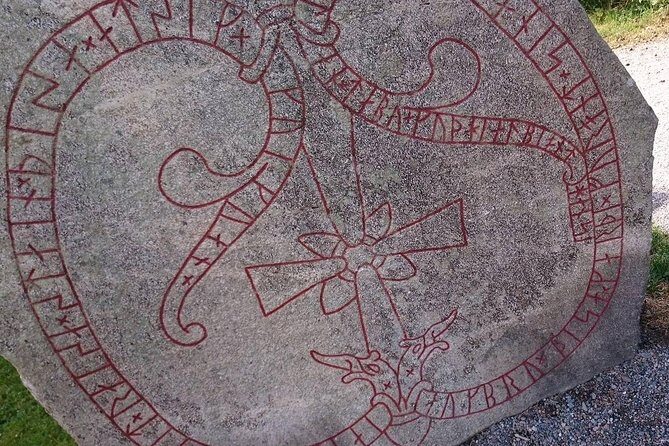
- Runestones in context: you’re not just looking at carvings—you’re hearing how people lived around them.
- A “ting” where law mattered: Arkils tingstad connects Viking social order to the landscape.
- Estrid gets a spotlight: Såstaholms allé ties an influential Viking woman to a real burial-and-stone area.
- A 1190 church with runic clues: Vallentuna helps you track the cultural shift over time.
- Pickup that works for cruises: multiple port meeting points, plus clear guidance for where the guide waits.
Why this short Viking trip works even if your time is tight
This is the kind of tour that fits real travel days. You’re not signing up for an all-day production. You’re stepping out of central Stockholm for a focused slice of Viking-era life and then back to town by the end of the morning/early afternoon window. The format is simple: ride out together, stop at several meaningful sites, then ride back.
I like that the tour is built around places that feel hard to reach on your own. The countryside stops aren’t just “nice views.” They’re specific historic locations that connect to Vikings through artifacts (runestones) and the settings those artifacts were set in. If you’re a history fan, you’ll appreciate that the guide doesn’t treat the sites like museum objects. They’re part of a landscape where people made decisions, buried loved ones, and traveled by water.
The other reason it works is the group size. With a small-group cap (reported up to 16, with an overall maximum of 18), the guide can actually answer questions without turning into a classroom. That matters when you’re standing next to a stone and trying to make sense of what you’re seeing.
You can also read our reviews of more historical tours in Stockholm

Getting picked up in Stockholm and from cruise piers
This tour has real logistics built in. Hotel pickup and drop-off are included for central Stockholm locations and cruise ports (with one notable exception: Nynäshamn). If you’re staying within about 3 km of Stockholm Central Station, pickup is usually from your hotel or a nearby spot.
If you’re in the Old Town, don’t assume the vehicle can pull right up. The tour may ask you to walk a few minutes to a car-accessible meeting location. That’s normal in Stockholm’s tighter streets.
Pickup generally starts 30–60 minutes before the 9:30 am departure. They confirm your exact start time close to departure, and they’ll reach out ahead of the day. If you’re using a cruise ship, timing is extra important, since you don’t want to wait around at the pier while everyone else boards the bus.
Cruise port tip: follow the color-coded guidance
Where the guide meets you can vary by pier, and the tour provides specific directions. For example:
- For STADSGÅRDEN (S165 and S167), you’re directed to follow the BLUE/GREEN lines, then go past fences and guards to where the guide waits with a Viking Tours sign.
- For FRIHAMNEN (F638), the guide waits just outside the sliding doors after you pass through the terminal.
- For VÄRTAHAMNEN (V523), look near the tourist bus area with the Viking Tours sign.
And then there’s the one exception that changes the plan:
- Nynäshamn: no pickup is included because it’s about 50 km away. You’ll need to meet in central Stockholm instead, using train or cruise buses into the city.
If you’re worried about missing the meeting point, plan to have your phone available during pickup so you can coordinate quickly if anything runs behind schedule.
Stop 1: Jarlabanke Runestones and the Viking causeway
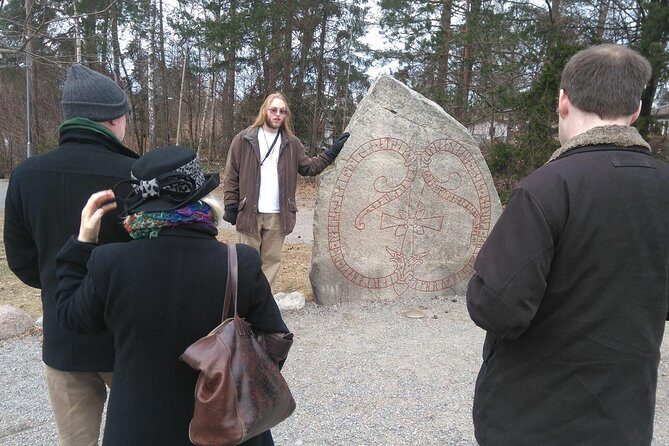
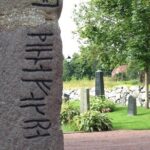
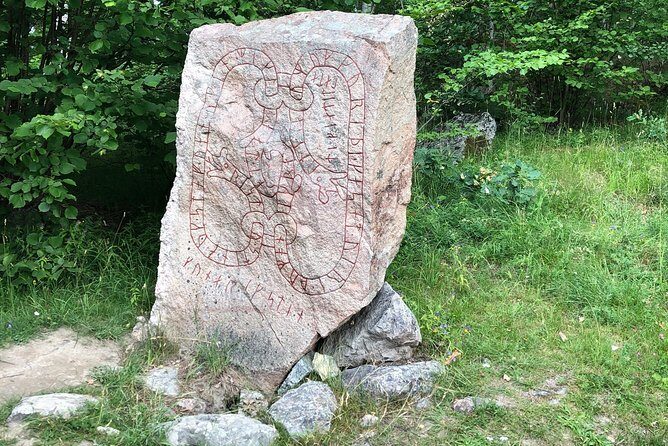
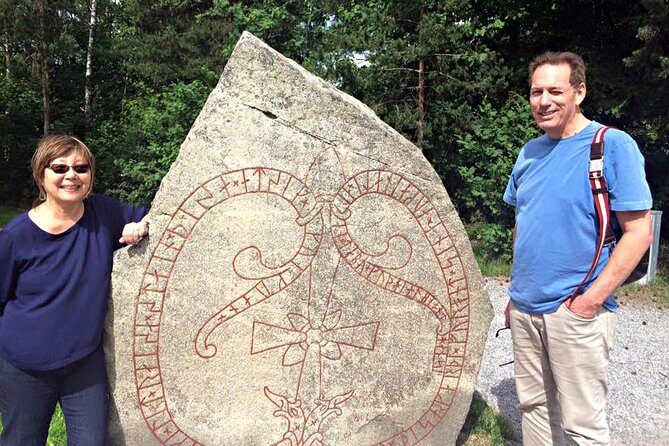
The tour kicks off with Jarlabanke’s runestones area, including a walk along the Viking causeway. Even if you’ve seen runestones in photos, standing near them changes the feeling. These carvings weren’t made for Instagram—they were made for people who lived and traveled here. The guide explains who the stone relates to and what it meant for Viking power and identity.
This stop is also where you start hearing big-picture connections. The tour includes crossing Jarlabanke’s bridge and picking up stories tied to the landscape and a special runestone associated with this area. In practice, that means you’re not just looking at a single object—you’re getting the Viking “system”: leaders, messages in stone, and routes through the countryside.
Time here is short (about 20 minutes), so the best approach is to stay present. Don’t try to read every line yourself in one go. Let the guide do the heavy lifting, then use your remaining moments to look closely at the carvings and spot the differences in how the messages are presented.
Possible drawback: if you want a long, quiet study time at runestones, this won’t fully scratch that itch. But for most people, the time is enough to understand what you’re looking at and why it mattered.
Stop 2: Såstaholms allé runestones, burial ground, and Estrid
Next comes Såstaholms allé, a stop built around more than one runestone and a Viking burial site. This is where the tour gets more human. Instead of focusing only on public statements by leaders, you get reminders that Vikings also dealt with family, loss, and memory.
One detail I love in this stop is the sense of place. You walk on ground connected to the area where Vikings lived. The guide frames it as daily life rather than archaeology from afar, and that helps the whole region feel less like a “theme park” and more like a real community that once existed.
The highlight here is learning about Estrid, described as an influential Viking woman connected to the site. When a tour brings a specific person into the story, it stops being abstract. You can picture names, influence, and legacy—things Vikings obviously cared about, not just kings and warriors.
Time here is about 30 minutes, which gives you enough breathing room to:
- see the runestones and listen to how they’re interpreted,
- hear how burial practices connect to social status and remembrance,
- and ask questions while you’re still standing there.
If it’s raining or muddy, this is the stop where good shoes matter most. You don’t need hiking boots, but you do want comfortable traction.



Stop 3: Arkils tingstad—where law met daily life
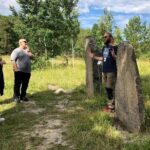
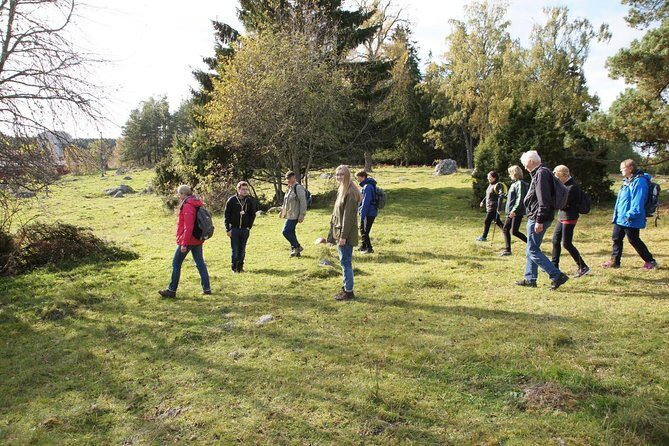
At Arkils tingstad, the tour shifts from monuments to systems. This is a Viking assembly place, tied to the idea of law and order—a setting where important decisions would have been made. That’s a bigger idea than it sounds, because Vikings weren’t only raiders and traders. They were also organizers of community life.
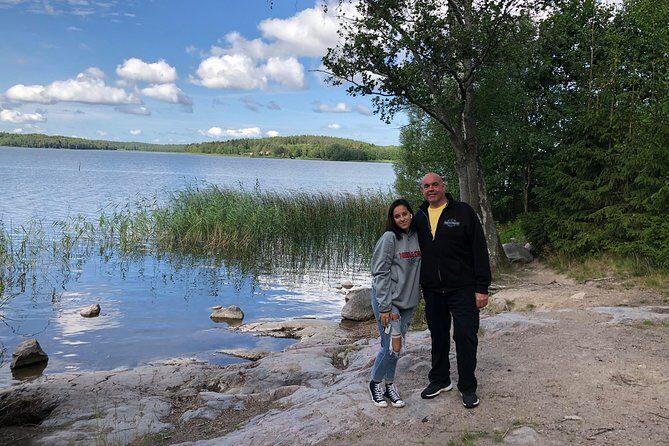
The guide talks about Viking social culture and law, then moves you toward the shoreline of a lake. This is a smart pairing: a place where people gathered for decisions, followed by the reality that travel and communication depended heavily on water. It’s one of those “your brain finally clicks” moments—law happens on land, but Viking mobility depended on ships.
Time here is about 30 minutes. You won’t walk for hours. Instead, you’ll get enough context to understand why this specific kind of site mattered. If you’re the type who likes “how did society work?” questions, this is probably the stop you’ll remember most.
Minor consideration: because the tour is short, you may feel the stop is a quick tour of a bigger concept. Still, it’s hard to argue with the value of getting this perspective in only a few hours outside Stockholm.
Stop 4: Vallentuna church and the shift from pagan to Christian
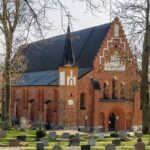
The last major stop is Vallentuna, featuring a medieval church dating to 1190 AD. This is where the tour naturally covers change over time, not just Vikings as a single snapshot.
You’ll visit the church interior and see what a Swedish church looks like from this period, then spend time looking at a runic inscription on the wall. That combination is exactly what makes the stop work: you’re standing in a later building that still contains runic traces, so the story becomes layered rather than a clean before-and-after.
The guide explains how Vikings changed from paganism to Christianity, and you can connect that to what you saw earlier. The runestones and burial spaces represent one worldview. The church represents another. The transition isn’t just a religious switch—it’s a social and cultural shift that affects language, art, and what people choose to carve or preserve.
Time here is about 30 minutes. It’s enough to understand the setting and take in the runic element without feeling rushed through the entire church. If you’re hoping to spend longer with the inscription, plan to be a little patient with the group pace.
Guide style, pacing, and what to bring
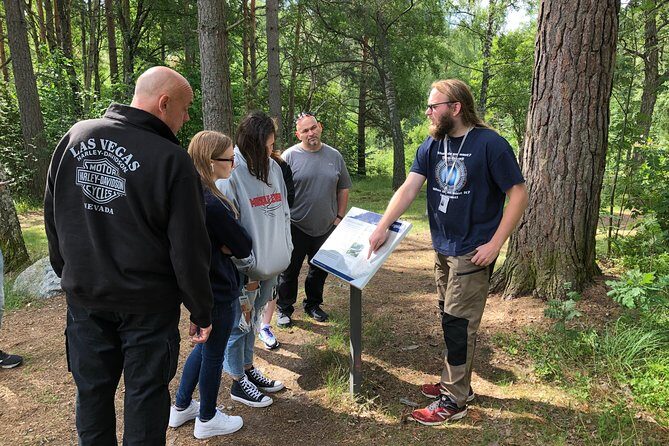
This tour’s reviews point to one consistent theme: guides who answer questions and bring the runestones to life. Names that have shown up with strong feedback include Jonathan, Olof/Olaf, Angus, Erik, Gustav, Karl, Gabriel, Calle, and Eric. You can expect a guide who will connect what you’re seeing to Viking-era daily living, and in some cases, even discuss the Old Norse language tied to the inscriptions.
In terms of pacing, it’s efficient. Each stop is short, and the day is designed to fit the drive out to the countryside and back. If you love slow museum-style wandering, this might feel brisk. If you like learning quickly and moving on before you get bored, it’s a good match.
Practical packing ideas
- Wear comfortable shoes for walkable but sometimes uneven ground.
- Bring a light layer. Weather can change fast around Stockholm.
- Since lunch isn’t included, pack a snack or plan to eat after you’re back in the city.
One more real-world note from experience on tours like this: vans can run warm during hot stretches. Even when the itinerary is set, weather outside changes the comfort inside. Dress for temperature swings.
Price and value: what you get for $143.91
At $143.91 per person for a 3–4 hour outing, the value comes from what’s bundled rather than what’s paid separately. You get:
- round-trip transportation from central areas (and included cruise pickup, with the Nynäshamn exception),
- a local guide/driver,
- a small-group tour (capped around the mid-to-high teens),
- a mobile ticket,
- and stops where admission is listed as ticket-free.
So you’re mostly paying for time, access, and interpretation. The actual sites aren’t expensive in themselves. The “cost” here is the guide’s ability to explain what you’re seeing and the logistics that get you to multiple relevant locations in one morning.
If you’re on a cruise, this kind of short day trip is often where the money makes sense. You don’t have to solve transport in a new city. You also don’t have to guess which rural Viking sites are worth your time.
The only clear value trade-off is time at each stop. This isn’t a “linger and read everything slowly” tour. It’s an “understand the essentials fast” tour.
Who should book—and who might skip it
Book this if:
- you’re a Viking fan or a history buff who wants several anchor points outside Stockholm,
- you want a tour that gets you into the countryside without handling transport yourself,
- you like guided interpretation—especially of runestones and what they signal about Viking society,
- you’re short on time (including cruise days) but still want more than a city-only experience.
You might skip this if:
- you prefer long visits at a single site over quick stop-and-ask questions,
- you get frustrated when a tour includes lots of driving time,
- you’re not comfortable walking short distances on changing surfaces.
This tour is best for travelers who want context and movement, not long-stay photo marathons.
FAQ
How long is the Viking history short day tour from Stockholm?
The tour runs about 3 to 4 hours.
What time does the tour start?
The start time is 9:30 am.
Is pickup included from hotels and cruise ports?
Yes, hotel pickup and drop-off are included in Central Stockholm and from cruise ports (with all ports except Nynäshamn).
Where will the guide pick me up if I’m not close to Stockholm central station?
Pickup is offered within about 3 km from Stockholm central station. If you’re farther away, you’ll be given a simple meeting point accessible by public transit.
What if I’m staying in Old Town?
If your hotel is in an area where the vehicle can’t enter, you may need to walk a few minutes to a nearby pickup location.
Is lunch included?
No, lunch is not included.
What language is the tour in?
The tour is offered in English.
How big is the group?
It’s a small-group tour with a maximum of 16 guests listed, and a maximum of 18 travelers noted.
Are admission tickets required for the stops?
The stops listed show admission ticket free.
What about Nynäshamn cruise port?
No pickup is included there because it is about 50 km from Stockholm central station. You’ll need to arrange a meeting place in Central Stockholm.
Can I cancel for a full refund?
Yes. You can cancel up to 24 hours in advance for a full refund.