REVIEW · STOCKHOLM
Bloody Stockholm 2h – ghosts, horror and Dark Folklore Tour
Book on Viator →Operated by Sweden History Tours · Bookable on Viator
Blood-soaked stories in Old Town.
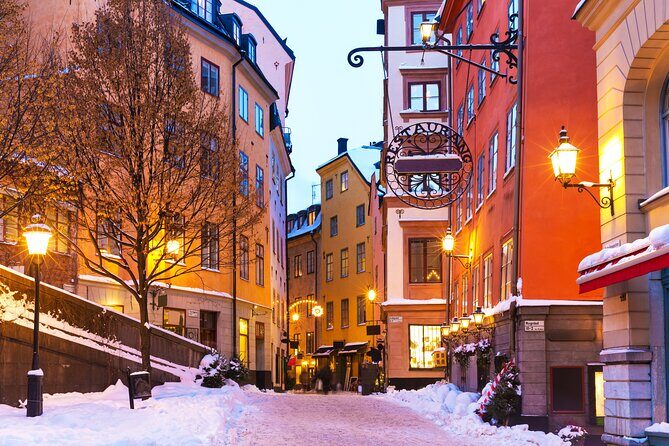
This tour turns Gamla Stan into a living folklore map, where crime, executions, and superstitions sit side-by-side on the same cobblestones. I love how the guide links street corners to real details like the executions after Danish King Kristian took Stockholm, plus the gruesome folklore beliefs about blood and curses.
Another thing I really like is the mix of fear and everyday practicality. You’ll hear about protections against vaesen using iron, why doorways matter, and what people supposedly did for newborns and baptism-related vulnerability—dark, yes, but never random. One possible drawback: it’s more of a story-led walk than a jump-scare ghost hunt, so if you want pure spookiness over folklore context, you might find it more informative than scary.
In This Review
- Key Highlights to Watch For
- Dark Folklore in Gamla Stan: What the Tour Really Feels Like
- Meeting at Nobel Prize Museum and Finishing Near S:t Jacobs: How the Route Moves
- Stop 1: Stortorget and the Dark Logic of Executions, Blood, and Body Parts
- Stop 2: Prästgatan and the Street That Used to Feel Like Hell
- Stop 3: Old Town Doorways, Iron Protection, Elves in Mist, and the Tomte
- Stop 4: Logårdstrappan and Water Vaesen That Lure You Down
- Stop 5: Kungsträdgården and the Skogsrået, Myrling, and Other Threats
- Stop 6: S:t Jacobs Kyrka Outside—Church Doors, Exorcism, and Revenge
- Guides and Group Size: The Personal Difference You’ll Feel
- Price and Value: A Guide-Only Experience Without Extra Stop Costs
- When to Go, What to Wear, and How to Prepare for a Story Walk
- Should You Book Bloody Stockholm’s Dark Folklore Tour?
- FAQ
- FAQ
- How long is the Bloody Stockholm dark folklore tour?
- Where does the tour start and end?
- Is the tour offered in English?
- Do you need to buy admission tickets at each stop?
- What group size should I expect?
- Can I cancel for a full refund?
Key Highlights to Watch For
- Stortorget’s execution stories tied to Danish King Kristian and grim uses of the dead
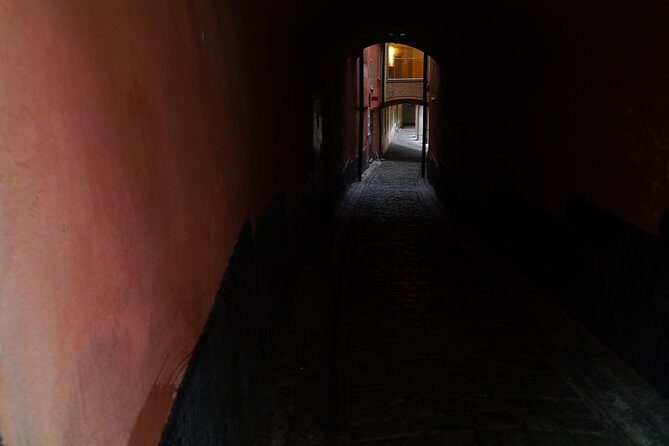
- Prästgatan, including the street name association with Hell
- Door protection beliefs, from iron wards to why trolls and the Devil enter where they can
- Vaesen of water at Logårdstrappan, including Näcken and sea-related rå creatures
- Kungsträdgården creatures, like Skogsrået and the undead child Myrling
- S:t Jacobs Kyrka exterior themes, including church doors and exorcism at baptism
Dark Folklore in Gamla Stan: What the Tour Really Feels Like
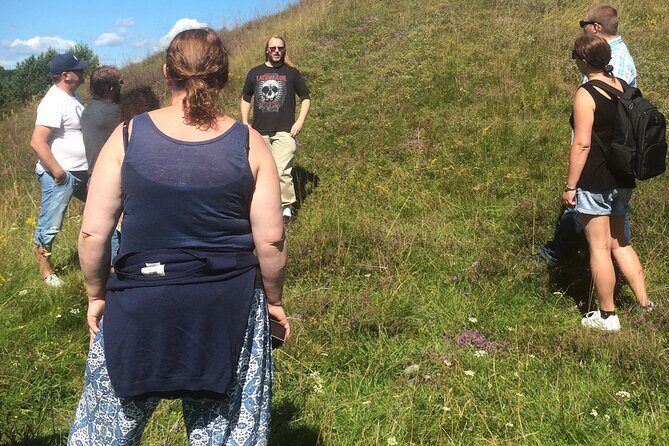
This experience walks a line between history and myth. You’re not just hearing spooky names—each one gets tied to a place and a belief about how danger was supposed to work. Think iron against elves, mist-souls that don’t rest, and water spirits that lure people toward deep places. That approach makes the tour more satisfying than generic ghost stories, especially in a city like Stockholm where the Old Town streets really do look like they’ve been waiting for legends.
I also like the tone: it’s dark, but it’s delivered in a way that keeps you moving. One review described the stroll as entertaining and pointed out it wasn’t really a ghost tour, more like an informative walk through darker parts of Stockholm. That matches what you can expect: a guide who explains the logic of the folklore, then points to the exact street or doorway where it connects.
If you’re a fan of Swedish folklore terms like vaesen, Tomte, and the water-linked spirits, you’ll get extra enjoyment. If you’re new to the topic, you still won’t feel lost because the guide frames each creature as part of a bigger belief system: protections, weak points, and what people thought could go wrong.
A few more Stockholm tours and experiences worth a look


Meeting at Nobel Prize Museum and Finishing Near S:t Jacobs: How the Route Moves
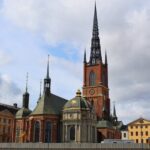
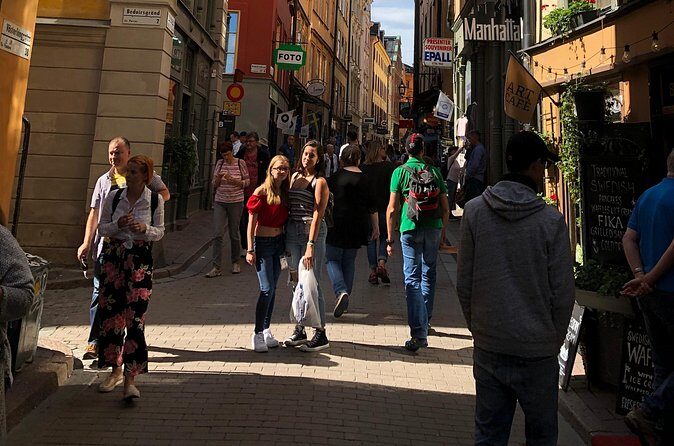
The tour starts at Nobel Prize Museum, Stortorget 2 and ends by S:t Jacobs Church (Västra Trädgårdsgatan 2A). Even though the walking is mainly through Old Town, you’re not stuck in one single block. The route is designed as a forward-moving loop: you begin near Stortorget and work your way through the Old Town streets toward the church area, then the walk continues around so you finish just outside Old Town on the north side, near Kungsträdgården.
Time-wise, the advertised duration is around 1 hour 30 minutes (though the tour title says 2h). In real life, a story-driven walk can run long if the guide is answering questions and staying with the group’s pace. I’d treat it as roughly 90 minutes, with the understanding that conversations can stretch it.
Practical note: you’ll be outside most of the time. One review specifically called out that weather wasn’t ideal, but the tour still worked. Dress for the streets, not for a museum chair.
Stop 1: Stortorget and the Dark Logic of Executions, Blood, and Body Parts
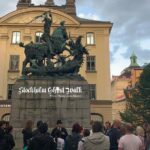
You start at Stortorget, and the theme goes straight for the throat—in a historically grounded way. Here, the guide talks about death in folklore and how people used body parts in old beliefs. You’ll hear about executions of around 90 souls tied to the period when Danish King Kristian took Stockholm. That’s the anchor: real violence and political power, followed by folklore explanations that try to give meaning to what was done.
This stop is one of the most interesting for a simple reason: it shows how stories grow around trauma. The tour talks about folklore beliefs in the blood of the dead being used for curses, and also how different parts of the executed were supposedly used in creating tales or spells. Even if you don’t buy the supernatural side, you can see the human need to explain loss, fear, and public punishment.
What to expect here:
- A mix of death-and-history storytelling
- A focus on folklore logic (how people thought harmful magic worked)
- A clear connection between the setting and the ideas
A small consideration: this is a heavy subject. If you’re sensitive to execution-related stories, you may want to go in with your expectations set.
Stop 2: Prästgatan and the Street That Used to Feel Like Hell
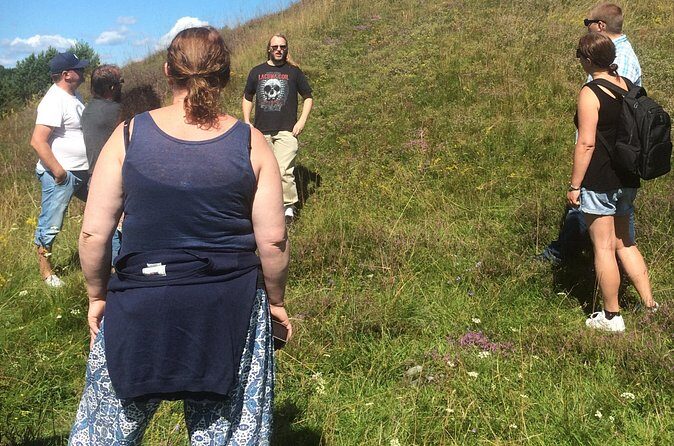
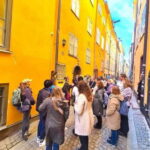
Next you move to Prästgatan, including the detail that the street was formerly named in a way associated with Hell. This is a short stop, but it matters. It changes the mood from Stortorget’s public punishment energy to something closer to everyday life—people walking and living in the shadow of what the street names implied.
This is where you start to notice how the tour treats place as a character. It’s not only about what happened centuries ago. It’s also about how fear and superstition could attach themselves to routes people used every day.
Stop 3: Old Town Doorways, Iron Protection, Elves in Mist, and the Tomte
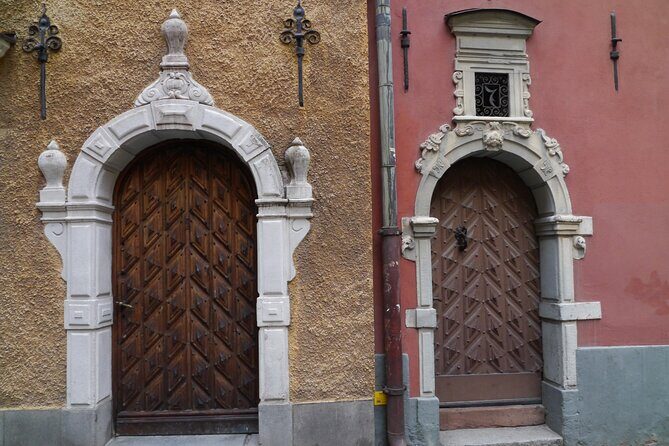
In Stockholm Old Town, the tour shifts to something that feels eerily practical: protection at the door. The guide discusses using iron to guard against vaesen—especially the idea of elves that come with mist, when souls supposedly don’t rest.
You also learn about the Swedish Tomte, which adds a contrasting note. Instead of only focusing on threats, this stop shows how Scandinavian folklore includes both danger and the protective household world.
Then comes one of the most specific themes: newborns and baptism. The tour explains that before baptism, a newborn lacked protection against trolls and the Devil, and it covers what protection measures people were said to use. That’s dark folklore, but it’s also oddly human—fear around vulnerable moments, and the belief that you could reduce risk with the right rituals and wards.
What I’d take from this stop if you’re deciding whether to book:
- You’ll learn folklore terms in context, not as random trivia
- You’ll see how superstition linked to real life events like baptism
- Doorways and thresholds get explained as “weak points,” not just scenery




Stop 4: Logårdstrappan and Water Vaesen That Lure You Down
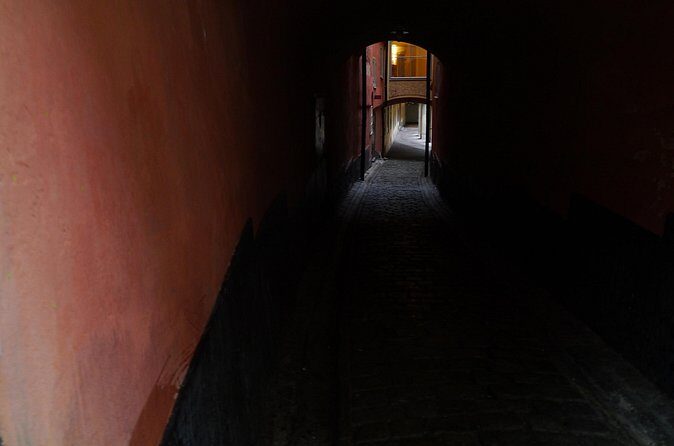
At Logårdstrappan, the mood gets colder and wetter. This part of the tour focuses on water-connected vaesen, including Näcken, bäckahästen (the Swedish version of Kelpie), Sjörå, and skepps-rå. The theme is consistent: these spirits try to drown people and lure them into deep water.
This stop works especially well in Stockholm because the city’s relationship with water is constant. Even if you don’t feel the water nearby, the beliefs make sense as warnings people carried in a region where rivers and coastlines shaped daily life.
Expect:
- Stories built around drowning and entrapment
- Creature names that you’ll remember because they’re tied to a clear threat
- A “stay alert, don’t trust the water” kind of folklore message
If you’re traveling with kids, this part can be a highlight, but gauge your group’s comfort level.
Stop 5: Kungsträdgården and the Skogsrået, Myrling, and Other Threats
At Kungsträdgården, the tour widens into other vaesen and darker creatures. The guide discusses Skogsrået (also described as huldran), the undead child Myrling, and other folklore beings. This stop is longer than the earlier ones, so you’ll get more storytelling time and more creature comparisons.
Why this stop is valuable: it shows that Swedish folklore wasn’t one single monster. It was a whole category of beings connected to mist, forests, water, doors, and life stages. You’re building a mental map of fear—where it was supposed to live and how it was supposed to hunt.
A nice bonus: the stories can also help you read the city. Even without any plaque outside, once you’ve heard how folklore attaches to particular places, you start noticing patterns in the way Old Town looks and feels.
Stop 6: S:t Jacobs Kyrka Outside—Church Doors, Exorcism, and Revenge
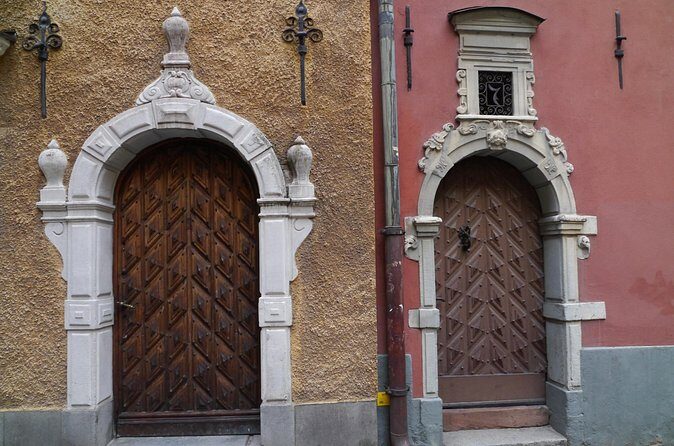
The tour ends outside S:t Jacobs Kyrka, where the guide talks about the church door and what was believed to be weak points of a church. You’ll also hear about an exorcism of a kid at baptism and what people were said to do when someone had a worst enemy they wanted to punish.
This is the final tonal hit. It connects the earlier door-protection theme back to religion and public life. The tour doesn’t treat churches as magic-proof just because they’re churches. Instead, it frames them as places where protections were used—and sometimes where people believed protection could fail.
If you like folklore that mixes theology, fear, and everyday rituals, this ending lands well. It also gives you a final “so what” feeling: these stories weren’t only entertainment; they were explanations for vulnerability, conflict, and the need for control.
Guides and Group Size: The Personal Difference You’ll Feel
One of the standout details from the reviews is how much the guide matters. Some guides are described as funny, openly welcoming questions, and sharply informed. I also saw specific names connected to great experiences, including Jonathan and Åsa. That tells me the guiding style is a big part of what you’re buying.
Group size is capped at 30 travelers. That’s large enough to keep it social, but small enough that the guide can still speak clearly on narrow streets. In one review, the group was only three people, and the experience felt better because it was more personal. You can’t count on that size, but you can take the hint: if you book at a time with fewer people, you’re more likely to get more direct conversation.
If you like to ask questions, this is a good match. The tour doesn’t sound like a monologue-only performance.
Price and Value: A Guide-Only Experience Without Extra Stop Costs
Each stop is listed as admission ticket free, and the included part is the guide (plus a mobile ticket). That’s a value point. You’re paying for interpretation and storytelling, not juggling separate ticket lines or timed entry tickets.
I like experiences like this in a city where you can spend a whole day inside museums already. This tour is a different kind of Stockholm: it uses the street layout, doorways, and old names to give the buildings a second life.
Also, because it’s roughly 90 minutes, it fits into a normal day. You can do this in the evening when Old Town is calmer, or earlier if you want daylight clarity on where the guide sends you.
When to Go, What to Wear, and How to Prepare for a Story Walk
This tour is outside and on foot. Plan for:
- Comfortable shoes (Old Town cobblestones are not forgiving)
- Weather layers (one review mentioned less-than-ideal weather and the walk still worked)
- A phone charged enough for your mobile ticket
If you’re hoping for spooky atmosphere, going at a time when the light is lower can help. Just don’t expect props, costumes, or a scripted scare. This is folklore and dark history storytelling, with real place references.
If you’re traveling as a family, it can work for kids—at least one review mentioned a 10-year-old thought it was exciting, interesting, and educational. Use your judgment on what your child can handle, since there are execution-related themes and creatures associated with drowning.
Should You Book Bloody Stockholm’s Dark Folklore Tour?
Book it if you want Stockholm Old Town to feel strange in a good way—like the streets have a second layer beneath the postcards. You’ll get a tight walk with strong storytelling themes: executions and curses at Stortorget, Hell-flavored street lore on Prästgatan, iron door protection lore, water spirits at Logårdstrappan, and creature sightings-by-story at Kungsträdgården, ending with church-door beliefs at S:t Jacobs.
Skip (or adjust expectations) if you want a typical ghost tour with modern haunt setups. This reads more like an informed stroll through darker folklore and history than a jump-scare chase.
FAQ
FAQ
How long is the Bloody Stockholm dark folklore tour?
It runs for about 1 hour 30 minutes (approx.).
Where does the tour start and end?
It starts at Nobel Prize Museum, Stortorget 2, 103 16 Stockholm, Sweden, and ends just outside Old Town near Kungsträdgården, outside Saint Jacob’s Church (Västra Trädgårdsgatan 2A, 111 53 Stockholm, Sweden).
Is the tour offered in English?
Yes, it is offered in English.
Do you need to buy admission tickets at each stop?
No. The listed stops have admission ticket free.
What group size should I expect?
The tour has a maximum of 30 travelers.
Can I cancel for a full refund?
Yes. Free cancellation is offered up to 24 hours in advance for a full refund. If you cancel less than 24 hours before the start time, you won’t get your money back.