REVIEW · STOCKHOLM
Stockholm Old Town and the Viking Museum, a Small Group Walking Tour
Book on Viator →Operated by Stockholm DriveAndGuide · Bookable on Viator
Gamla Stan tells its story fast, on foot. This small-group tour threads Stockholm’s timeline from early settlements to the modern welfare state, then caps it with included entry to the Viking Museum. The guide’s job is to connect the dots for you, so each landmark feels like it belongs to the same movie, not a pile of monuments.
I especially like the pacing: you cover major Old Town sights in about three hours without sprinting, and you get a built-in museum visit so you are not scrambling for ticket plans. I also like the guide format, which is led in English by friendly host Bengt (and in at least one case, Bengt Nykvist), so you get background that makes the statues and buildings make sense. One consideration: this is a walking tour with a moderate pace, so if your legs are sensitive, plan to take it easy and wear comfortable shoes.
In This Review
- Key takeaways before you go
- Why this Old Town walk and Viking Museum pairing works
- Starting under the Gamla Stan metro: getting your bearings fast
- Riddarholmen and the written birth of Stockholm
- Riddarhuset, Gustav Vasa, and the power shift that changed everything
- Vasabron and the Vasa ship: why kings mattered on the Baltic
- Riksdagshuset and the long road to voting rights
- The Royal Palace area: Karl XII points east
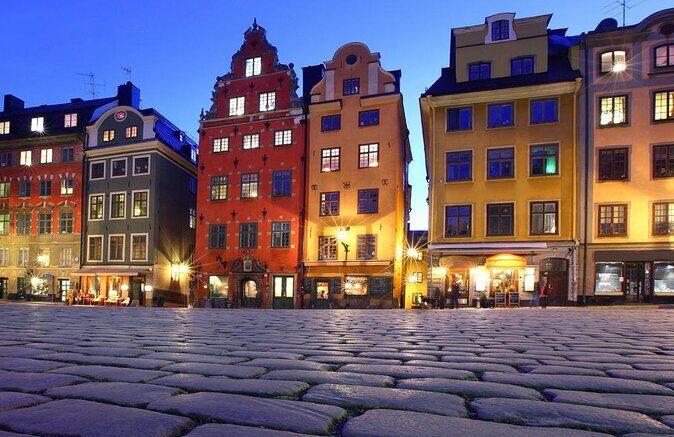
- Jarnpojken and Stortorget: small statues and big prizes
- From Carl XIV Johan down to Old Town streets: peace, education, and the welfare state
- The included ferry to Djurgården: a break with real views
- Inside the Viking Museum: what included entry gets you
- Price and logistics: is $118.96 a smart value?
- Who this tour suits best
- Should you book this Stockholm Old Town and Viking Museum tour?
- FAQ
- How long is the Stockholm Old Town and Viking Museum walking tour?
- What’s included in the tour price?
- How big is the group?
- What language is the tour offered in?
- Where does the tour start and end?
- What time does the tour begin?
- Is a mobile ticket used?
- Can I get a full refund if I cancel?
Key takeaways before you go
- No ticket lines at the Viking Museum, since entry is included as part of the tour
- A maximum of 10 people, which usually means more questions and less time waiting
- Gamla Stan + Djurgården in one go, with a ferry ride included
- Statues and buildings with specific backstories, not just names and dates
- A guide who explains in clear, fluent English, including history and how it connects across centuries
Why this Old Town walk and Viking Museum pairing works
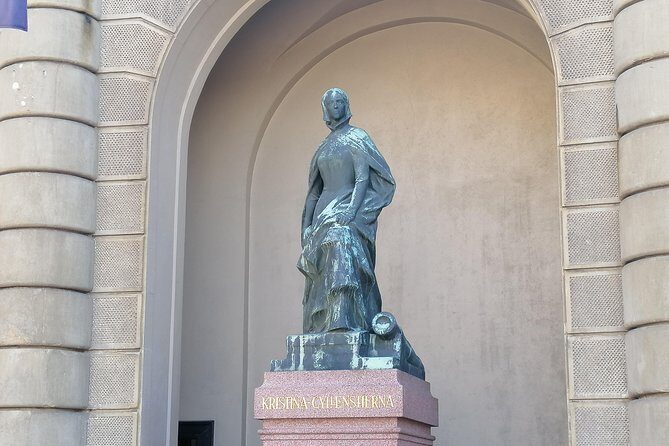
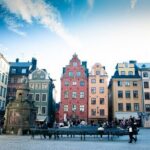
Stockholm can feel like two cities: the dramatic postcard core of Gamla Stan and the museum-heavy Djurgården island. This tour stitches them together in a smart way. You walk through Old Town with a guide who keeps pulling history forward, then you shift to the Viking Museum without needing to plan extra logistics.
The value is in the pairing. You are not paying just for a walk past pretty streets. You are paying for guided context at multiple stops, plus included Viking Museum entry and an included ferry hop to Djurgården. For a first-time visitor, it’s a neat way to get orientation and credibility fast: you leave with bearings, and with a clearer sense of why Stockholm looks and feels the way it does.
And because the group is capped at 10, the guide can actually tailor explanations to what you seem curious about. In one reported case, the tour even ran with a group consisting entirely of one person, which is the best-case scenario for attention.
You can also read our reviews of more walking tours in Stockholm

Starting under the Gamla Stan metro: getting your bearings fast
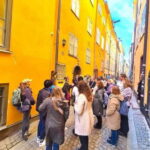
You start at Gamla Stan Metro station, in the underground area by the Pressbyrån kiosk. It’s a good start point because it sets the tone: you are not marching away from transit like a tourist herd. You are getting oriented in the very area the city grew around.
From there, the tour begins with the deep-time foundation of Stockholm: how the area formed from the ice age until early settlements on the islands. That matters more than it sounds. When you later look at water, stone, and street-level layout, you start understanding Stockholm not just as scenery, but as geography that shaped history.
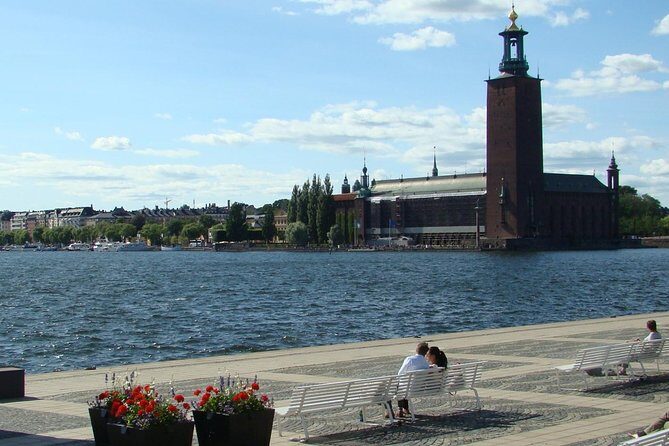
Then you move toward Riddarholmen, where you get a classic view across lake Mälaren toward Stockholm City Hall. Even if you know the skyline already, this kind of guided framing helps you connect the skyline to the stories you are about to hear.
Riddarholmen and the written birth of Stockholm
Riddarholmen is where the atmosphere shifts from overview into specific origin stories. Outside the church, you’ll meet the presumed founder figure—Birger Jarl—or at least a statue representing him and his role in shaping early Stockholm.
The tour zeroes in on a key moment: the year 1252, when Stockholm first appears in a written text that has survived to today. That is the kind of detail that turns a name from a label into a timeline anchor. You stop long enough to let it land, but not so long that you feel stuck.
One practical tip for you: this is the sort of stop where photos look best if you step slightly away from the tight crowd area. If you can, pause for a photo, then rotate back to your guide to catch the point you might miss while looking at the view.
Riddarhuset, Gustav Vasa, and the power shift that changed everything
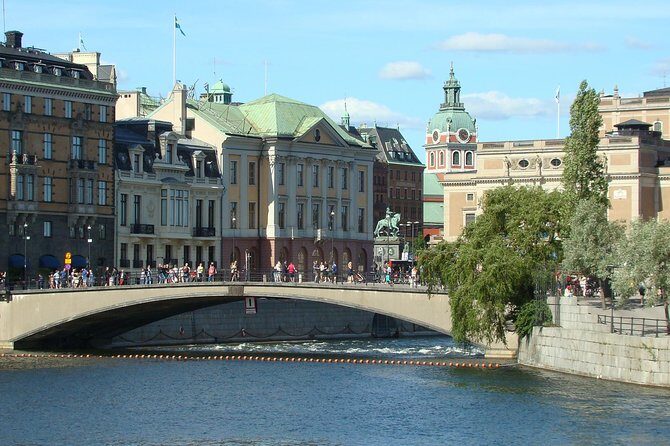
Next you head toward Riddarhuset, the House of Nobility. Here you look at the statue of Gustav Vasa, often called the father of Sweden. The tour uses him as a turning point, because his story connects politics, religion, and violence all in one arc.
You hear about Gustav Vasa’s march into Stockholm in 1523 and how Sweden then became sovereign in a way the country had not experienced under foreign control. The guide also brings in The bloodbath of Stockholm, the uprising context, and the grim reality that power moves fast when it involves noble factions.
Then comes the religious shift, which is a detail I think many people gloss over in Sweden: Gustav Vasa’s era is tied to changing Sweden from Catholicism to Lutheran Protestantism. When you connect that to later Swedish governance, the country’s identity starts to feel less like a slogan and more like a long-term outcome.
If you are a history fan, you’ll appreciate that this is not taught as a single man’s biography. It’s used as a bridge to explain how the state formed.
Vasabron and the Vasa ship: why kings mattered on the Baltic
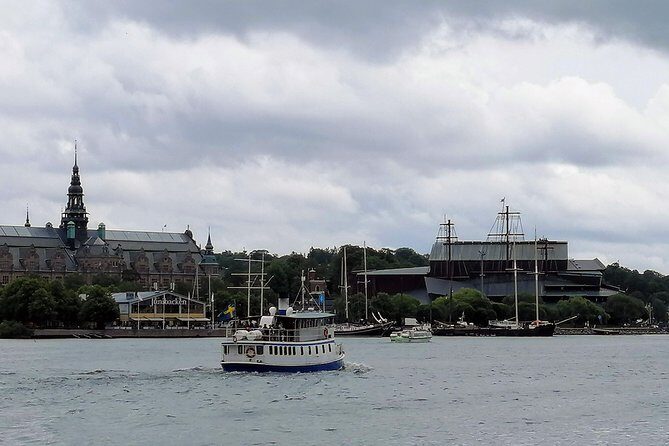
The walk continues toward Vasabron, and the guide carries the storyline forward through Gustav Vasa’s heirs and the kingdom’s ambitions. You get the spotlight on Gustav II Adolf, described as one of the most significant warrior kings.
A great thing about this stop is that it ties architecture and ships to geography. During his reign, the Baltic Sea becomes almost like an inland sea, surrounded by Swedish possessions. That sets up why Swedish power mattered so much here, not just in textbooks.
Then the tour connects this period to the Vasa ship being built—an item that will likely spark your curiosity for later museums, because Stockholm is loaded with material from maritime history. Even if you don’t plan a separate museum, you leave the walking loop already primed to understand why the city museums exist in the first place.
You can also read our reviews of more museum experiences in Stockholm




Riksdagshuset and the long road to voting rights
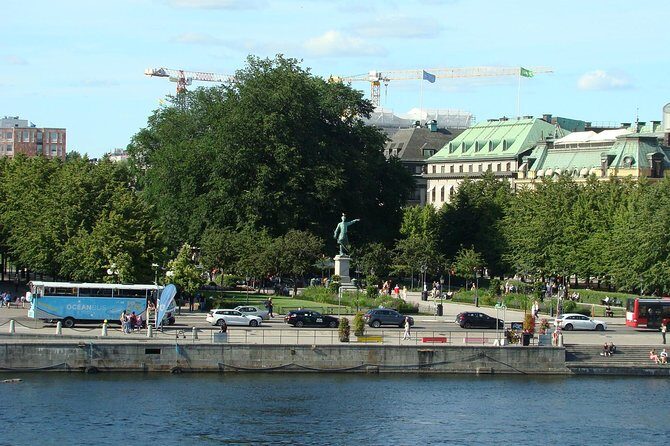
At the Parliament building area, the tour doesn’t treat modern democracy as something that appeared out of nowhere. It explains the predecessor system: the Riksdag of the Estates (Ståndsriksdagen), where nobles, clergy, burghers, and peasants discussed matters separately before meeting the king.
You get the timeline through major milestones: the institution remains high authority until it is dissolved in 1866, and then a parliament with two chambers is introduced. The big focus is on voting rights, since full general suffrage only arrives later, with elections in 1921 after a long political struggle involving liberals and socialists.
What I like here is how it gives context to the building you are standing near. Without this sort of storyline, Parliament buildings can feel like just another government façade. With it, you can look up at the structure and understand it as a physical marker of change—step by step.
The Royal Palace area: Karl XII points east
You next reach the Royal Palace area, stepping to Lejonbacken on the north side. The guide uses the statues to explain Sweden’s geopolitical swings.
The story pivots to Peter the Great of Russia ending Sweden’s Northern European great-power dreams. Then the focus lands on Karl XII, still pointing to the east. He’s connected to the Caroleans and early victories, followed by the turning point defeat at Poltava in 1709.
After that, the tour shifts from war to ideas. The age of enlightenment influences Sweden, with Gustav III called an enlightened despot, tied to interests in theater and contributions to arts and science. That turn matters because it stops the tour from feeling like only swords and battles.
If you like European history that connects politics and culture, this is one of the more satisfying stops. You leave with a sense that Sweden’s identity formed from many forces, not one.
Jarnpojken and Stortorget: small statues and big prizes
You pause at Jarnpojken, described as the smallest and nicest statue in Sweden. Even if you’re not a statue person, that line sets up the stop as a chance to notice scale. Big monuments can make you tune out. Tiny ones often make you look closer.
Then you head to Stortorget, where the Nobel Prize Museum is located. You learn how the Swedish Royal Academies designate winners for major prizes in science and art. This is a neat contrast to the earlier political content. You move from kings, wars, and parliaments into a system that celebrates achievement and scholarship.
For you, it can be a good mental reset: you stop fighting the calendar, and you start understanding the modern Swedish emphasis on institutions and ideas.
From Carl XIV Johan down to Old Town streets: peace, education, and the welfare state
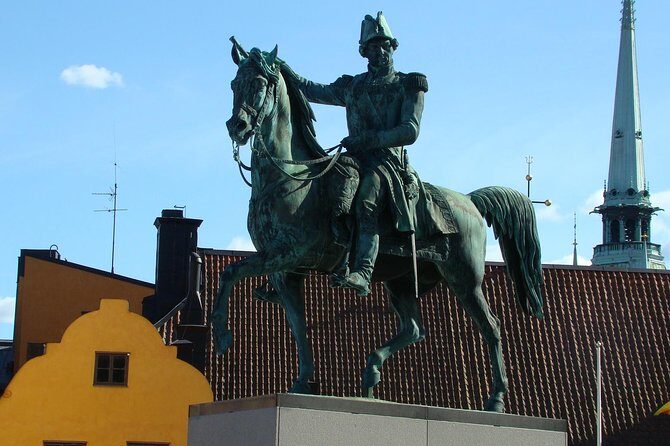
You continue through Stockholm Old Town below the statue of Carl XIV Johan, the first Bernadotte king. The guide frames him as someone imported from France early in the 19th century to help win back what Sweden lost to the Russians.
But the story goes beyond restoration. The tour highlights diplomacy, infrastructure development, and education—choices that matter for what comes next. You also hear about the celebration of 200 years of peace in 2014, which the guide uses to connect to a larger arc: industrial revolution, natural resources, Swedish inventions, and the foundation for the welfare state.
For me, this is where the tour starts feeling useful for future days. Once you understand the logic behind a welfare state and why infrastructure and education are repeated themes, you can read the city differently. Streets, buildings, and social systems stop being random facts.
The included ferry to Djurgården: a break with real views
At Skeppsbron 26, you take the ferry Djurgårdsfärjan to Djurgården. It’s included, and I think it’s an underrated part of the tour because it gives you a short reset without breaking the schedule.
Ferry time is also a visual history lesson. Stockholm’s geography is water-first. When you move across it, you naturally start seeing why islands mattered in the early settlement story and why later maritime power mattered politically.
You’ll feel the shift from the dense Old Town to the museum island vibe. Even if you’re not the type to enjoy boat rides, the included ferry keeps the day moving and reduces the stress of coordinating your own transit.
Inside the Viking Museum: what included entry gets you
The tour ends at the Viking Museum with entry included. The guide introduces the museum and points you toward attractions inside, and then you are free to stay after the guided portion finishes.
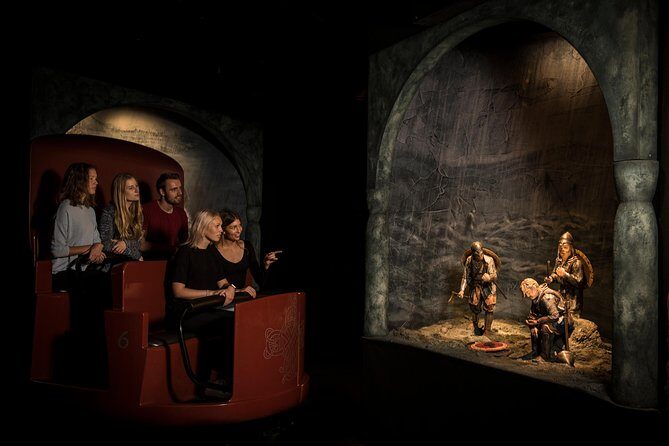
What I like about this museum format is the mix of approaches. It is described as a small-scale museum that offers a unique combination of thrilling experiences and historical facts. It is also tied to cooperation between professionals in performing arts and Sweden’s most respected historical scientists.
That blend is practical for different interests. If you like stories, you’ll appreciate the historical scientists component. If you like feeling the past rather than just reading about it, the performing arts angle tends to make you more engaged.
One smart way to use your time: after the guided intro, don’t rush. Spend your attention where the museum shows Viking life in ways you can visualize—then circle back to any areas you want to study more. You’ll get more from staying than from hopping through quickly.
And if you still have energy afterward, Djurgården offers several other big attractions you can pair with your Viking Museum visit, like ABBA Museum, Vasa Museum, Gröna Lund, and Skansen. (They are not included, but they are close enough to plan next.)
Price and logistics: is $118.96 a smart value?
At about $118.96 per person for roughly three hours, this is not a budget street-walk. But the price makes more sense when you treat it as three things bundled together:
- Guided Old Town storytelling across multiple landmarks, including history that connects the dots.
- Included Viking Museum entry, so you avoid ticket-line friction and add real value to the day.
- Included ferry ride, which reduces both hassle and cost.
The small group size (max 10) also matters. It’s the kind of tour where you can ask follow-up questions and not feel invisible.
You should also know the tour is offered in English and uses a mobile ticket. If you prefer paper tickets or you hate phone-based passes, you’ll want to make sure your device battery is charged before you start.
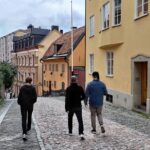
Finally, the activity is listed for moderate physical fitness. The route sounds walk-friendly for most people, but you still want proper shoes, especially on cobblestones and around standing stops.
Who this tour suits best
I think this tour is a strong fit if:
- You want a guided Old Town history loop that actually connects events across centuries.
- You prefer small groups and appreciate English explanations with names, dates, and cause-and-effect.
- You like museums but don’t want the burden of planning what to see and in what order.
It’s also a good choice for solo travelers. If the group ends up smaller, you get a guide who can respond to your questions instead of reading a script to a crowd.
And if you are with kids, it depends on their attention span. This is history with lots of narrative, and while there are memorable moments (like statues and the ferry), it may work best for older teens or history-curious younger kids.
Should you book this Stockholm Old Town and Viking Museum tour?
If your goal is a first-rate mix of Old Town grounding plus a high-value museum finish, I’d book it. The included Viking Museum entry and ferry make it feel like a complete half-day plan instead of a random collection of stops. The big win is the guide approach: named figures, political turns, and cultural shifts tied to the exact spots you’re standing near, with Bengt’s English delivery noted as a highlight.
One extra reason to book sooner rather than later: the tour is commonly reserved well in advance (on average 104 days), which is a sign it can fill up.
If you already have a separate Viking Museum plan and you only want light sightseeing, you might decide to skip this and do things on your own. But if you want one day that makes Stockholm history feel coherent, this tour does the job.
FAQ
How long is the Stockholm Old Town and Viking Museum walking tour?
It runs for about 3 hours.
What’s included in the tour price?
Viking Museum entrance is included, and the ferry ride to Djurgården (Djurgårdsfärjan) is also included.
How big is the group?
The tour has a maximum of 10 travelers.
What language is the tour offered in?
It is offered in English.
Where does the tour start and end?
It starts at Munkbrogatan 8, 111 27 Stockholm, Sweden, and ends at the Viking Museum, Djurgårdsstrand 15, 115 21 Stockholm, Sweden.
What time does the tour begin?
The start time is 10:00 am.
Is a mobile ticket used?
Yes, the tour uses a mobile ticket.
Can I get a full refund if I cancel?
Yes, free cancellation is offered. You can cancel up to 24 hours in advance for a full refund.