REVIEW · STOCKHOLM
Stockholm: Modern City Walking Tour with Local Guide
Book on GetYourGuide →Operated by NORDIC FREEDOM TOURS · Bookable on GetYourGuide
Stockholm can be understood fast. This 2-hour walk from Central Station to the Royal Dramatic Theatre connects big-city modern life with classic landmarks, and it’s all led by a local English guide.
I like the way the route pairs architectural scale with human stories: Stockholm City Hall and the government zone sit next to quieter pauses in King’s Garden. I also like the operator’s focus on smaller groups and local expertise, which makes it easier to ask questions without feeling swept along.
One heads-up: it’s a public tour, and group size can get too big for one guide—especially if no microphone is available. One review mentioned a larger group (around 20 to 30) when everything doesn’t run perfectly.
In This Review
- Key things I’d watch for on this Stockholm city walking tour
- Why this 2-hour Stockholm route is a smart use of your time
- Getting to the meeting point: Central Station by Nils Ericson
- Stockholm City Hall to the Parliament area: progress you can see
- Queen Street, government offices at Rosenbad, and the feel of daily city life
- Gustav Adolfs Square and the Royal Swedish Opera
- King’s Garden and St. James’s Church: a break from the big streets
- New Bridge Square and the Royal Swedish Academy of Music legacy
- Raoul Wallenberg Square and Shore Road: memory meets city movement
- Berzelii Park and China Theatre: arts in a public setting
- King’s Royal Stable and the Royal Dramatic Theatre finish near Stureplan
- Price and value: what $14 buys you in real terms
- Who should book this tour
- Should you book it? My quick decision guide
- FAQ
- FAQ
- Where does the tour start?
- How long is the walking tour?
- How much does it cost?
- Is the tour offered in English?
- Is this a private tour?
- What sights are included along the way?
- Where does the tour end?
- What’s included in the ticket price?
- Is tipping required or expected?
- Are there restrictions on alcohol or party groups?
Key things I’d watch for on this Stockholm city walking tour
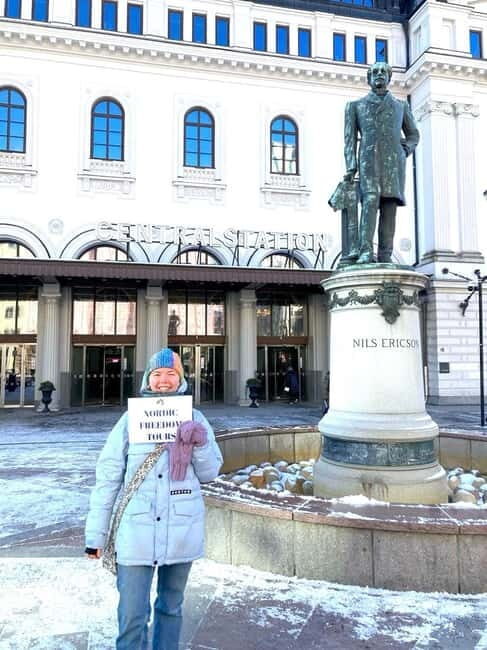
- Meeting at Central Station near the Nils Ericson statue, with a guide holding the Nordic Freedom Tours sign
- Modern + historical blend, linking City Hall and government streets with parks and performing-arts venues
- Photo-stop pacing, with frequent short stops that keep the walk moving but not rushed
- Royal sights by the end, finishing near the Royal Dramatic Theatre close to Stureplan
- Local English guiding, praised for clear speaking (one guide named Carl was specifically noted)
- Possible group-size hiccup, if the group grows and microphone support isn’t there
Why this 2-hour Stockholm route is a smart use of your time
If you only have a short window in Stockholm, this kind of walking tour gives you a quick “map in your head.” You’re not just seeing pretty buildings—you’re walking through the city’s idea of itself: governance, culture, and everyday life in the same corridor.
I like that the tour keeps a steady rhythm: short photo stops, a logical flow between landmarks, and enough time at key places to actually look up from your phone. You’ll finish with a solid sense of where the big institutions sit, how the neighborhoods connect, and why certain squares matter.
The best fit is first-timers and return visitors alike. First-timers get orientation fast. Return visitors can enjoy the architectural and cultural angle—especially the modern architecture thread running alongside the historic sites.
You can also read our reviews of more walking tours in Stockholm

Getting to the meeting point: Central Station by Nils Ericson
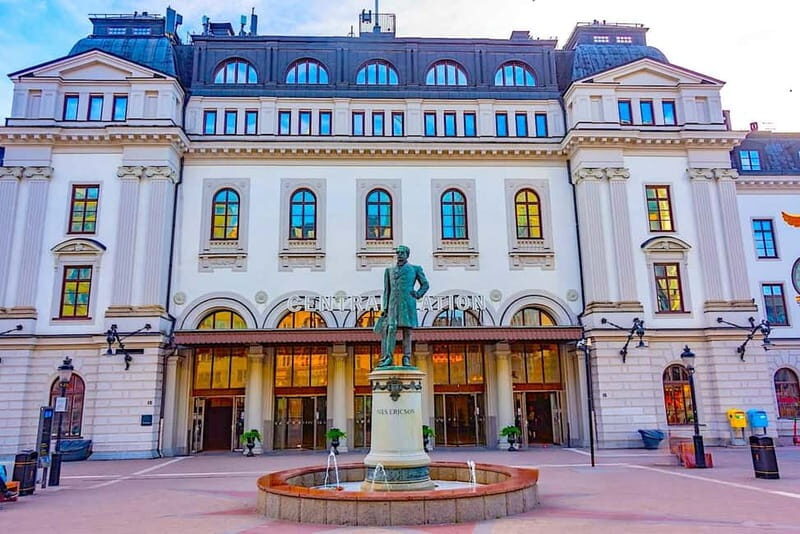
The tour starts at Stockholms Centralstation, near the statue of Nils Ericson. The meeting point is directly opposite the entrance to the rear of Central Station in Stockholm.
This matters more than it sounds. Central Station is huge, and underground directions can confuse you—one reviewer called out that there weren’t clear signs for Old Town directions on the metro side. My practical advice: use the street-level landmark (Nils Ericson statue) and look for the guide holding the official Nordic Freedom Tours sign.
Wear walking shoes you can rely on. The route is paced for around 2 hours, so you’ll be on your feet for most of it, with stops built in for photos and stories.
Stockholm City Hall to the Parliament area: progress you can see
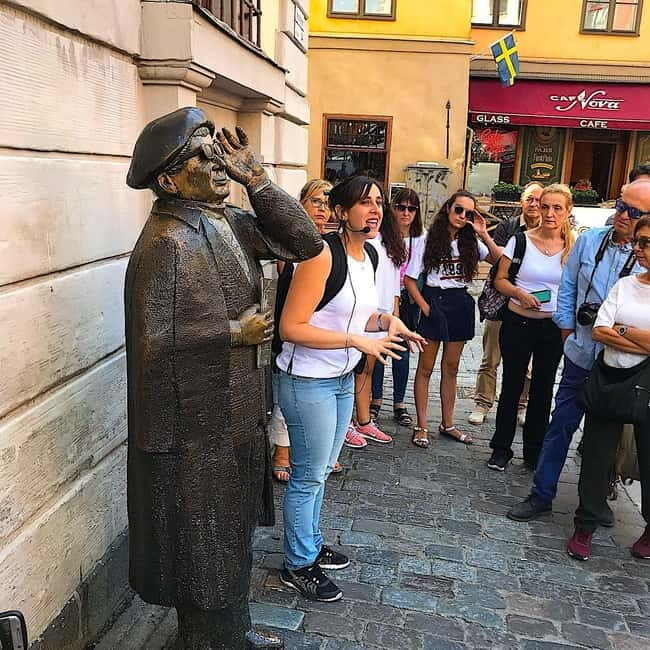
Your walk begins at Central Station and heads toward Stockholm City Hall. This is where the tour’s modern-and-historical idea really gets going: you’re looking at the kind of landmark that signals civic pride and a city thinking in the long term.
From City Hall, you move into the government area—your itinerary includes a photo stop by the Parliament House. Expect the guide to connect the buildings to the way Stockholm runs: who makes decisions, how the city organizes public space, and how these institutions shape the streets around them.
This section is also a good “photo zone,” but don’t treat it like a drive-by. Use the stop time to look at angles and details—especially the relationship between plazas and the buildings that frame them. If you only glance once, you’ll miss the layout that gives this part of the city its strong visual structure.
Queen Street, government offices at Rosenbad, and the feel of daily city life
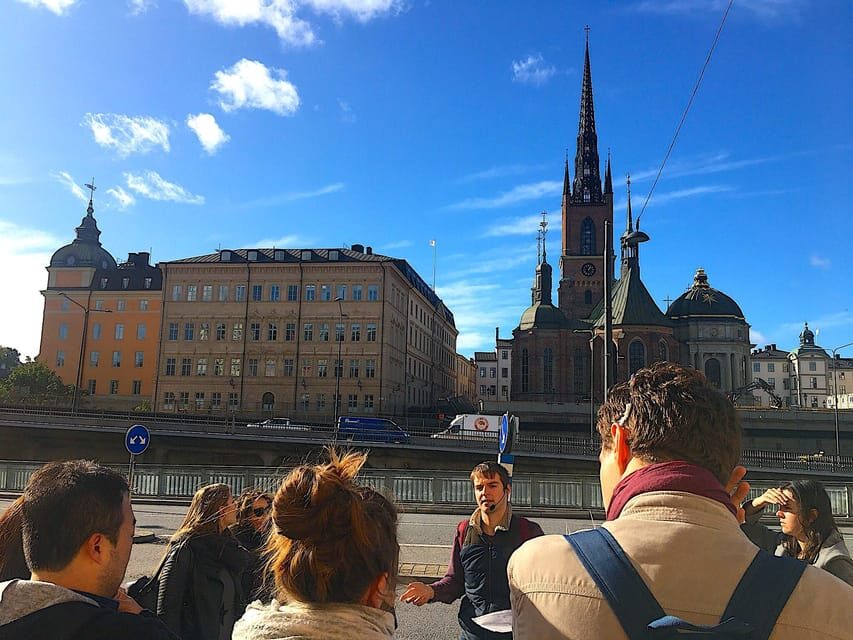
After the major civic stops, the tour shifts into the everyday power-walk zone. You’ll pass the government offices at Rosenbad and stroll along Queen Street, which is one of those central arteries where commerce and city life mix in plain sight.
Why I think this segment is valuable: it teaches you how Stockholm layers functions. You’re not walking from “attraction to attraction” only—you’re crossing the zone where residents work, pass through, and make the city run.
A practical note: Queen Street can be busy. The tour is designed to keep moving, but you might want to keep your camera ready during stop points rather than while walking. You’ll enjoy the route more if you save your slow looking for the guide-led stops.
Gustav Adolfs Square and the Royal Swedish Opera
Next up is Gustav Adolfs torg (Gustav Adolfs Square) and then the Royal Swedish Opera. This is classic Stockholm staging: grand public space and a major cultural institution right next to it.
This stop is great for two reasons:
1) You see how Stockholm uses squares as gathering rooms.
2) You get the cultural context—why the opera sits where it does, and how that influences the street energy around it.
If you’re the type who likes understanding what you’re looking at, this is a sweet spot on the route. You’ll likely get more meaning than just architecture photos. And if you’re more of a “show me the highlights” person, it still works because these are genuinely iconic landmarks.
You can also read our reviews of more guided tours in Stockholm





King’s Garden and St. James’s Church: a break from the big streets
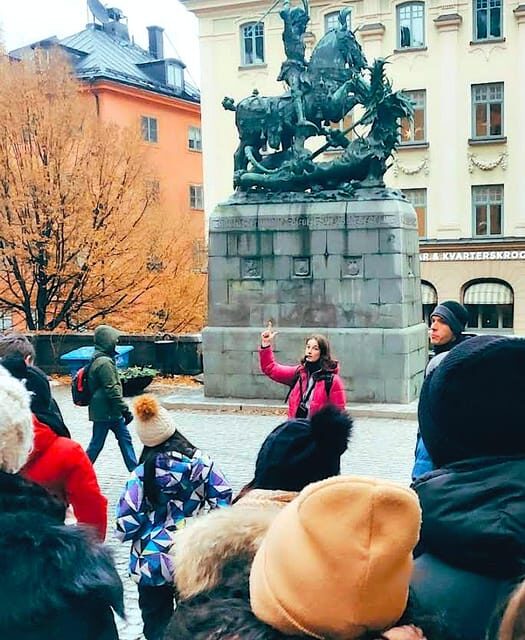
After the opera area, the tour shifts to a calmer rhythm with King’s Garden. This is the kind of city oasis that makes walking tours worth it. Instead of marching through only formal buildings, you get a breath of green space and open-air calm.
Then you reach Saint James’s Church. Even if you’re not a church-detail person, I’d recommend you pause here. Churches in central Stockholm help explain how old forms of community and ceremony fit into a modern city center.
This part of the tour helps you balance the whole experience. City Hall and government buildings can feel heavy. Parks and churches add texture—quiet, personal scale, and a different pace of attention.
New Bridge Square and the Royal Swedish Academy of Music legacy
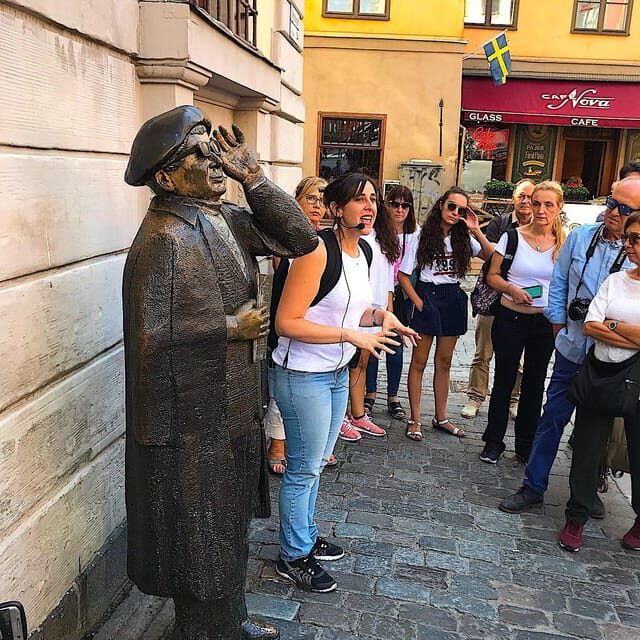
The itinerary includes New Bridge Square and then the Royal Swedish Academy of Music. This is where the tour’s cultural thread becomes more specific.
I like this segment because it shows that Stockholm’s identity isn’t only about royalty or politics. It’s also about institutions for arts education and performance, and about how the city supports them in physical space.
If you enjoy hearing how organizations develop over time, this is a strong stop. Even without stepping inside (the tour is a walking format), the guide’s framing helps you look at the buildings as part of a living system.
Raoul Wallenberg Square and Shore Road: memory meets city movement
One of the more reflective portions is Raoul Wallenberg Square. The route frames it as a place where history meets reflection, which gives this walk an emotional depth.
From there you head toward Shore Road, where the tour stays connected to the city’s geography. Stockholm’s central water-and-streets relationship is part of what makes the city feel distinct, and a walking tour is one of the best ways to sense that connection.
This section is a good reminder that “city highlights” aren’t always only pretty. You’re also walking through places that carry meaning, and it helps you read the city beyond its skyline.
Berzelii Park and China Theatre: arts in a public setting
Next you’ll pass Berzelii Park and the China Theatre. This is an attractive stretch because it combines public space and performance culture.
Parks in this kind of central walk are more than decoration. They’re social rooms. They help you see how the city gives people places to gather, rest, and watch the world pass.
The China Theatre adds a cultural landmark twist. If you care about the arts scene, you’ll likely appreciate how the tour positions this venue as part of Stockholm’s everyday entertainment fabric, not just a photo backdrop.
King’s Royal Stable and the Royal Dramatic Theatre finish near Stureplan
The tour culminates near King’s Royal Stable and then ends at the Royal Dramatic Theatre by Stureplan. This finish makes sense for a few reasons.
First, it’s a major cultural anchor you can recognize on a map. Second, the theatre area is easy to connect with the rest of your day—dinner plans, museums, or an evening performance if you’re in that mood.
One detail to note: the activity information says it ends back at the meeting point, even though the itinerary says the finish is at the Royal Dramatic Theatre. Either way, your key takeaway is simple: plan to wrap your walking tour around Stureplan’s cultural hub area, and follow the guide’s final instructions for where to regroup.
Price and value: what $14 buys you in real terms
At $14 per person, this is priced like a practical city-orientation option rather than a premium, long-format experience. You’re paying for an English-speaking local guide, a structured 2-hour route, and a set sequence of stops you can’t easily recreate on your own without planning.
The best value point is that the operator states the full price up front and does not require or expect additional payments from you personally. That removes one layer of stress that can spoil a walking tour.
For me, the value equation works best if:
- You want a guided logic for where things are, not just random sightseeing.
- You like architecture and city planning angles.
- You’re okay with a public group format, with short photo stops built in.
The main value risk is only the same one you’d watch on any public walking tour: group size. If it swells too large, you might lose some conversational time and benefit from a louder guide. One review even praised a guide named Carl for speaking loudly, which is exactly what helps in bigger groups.
Who should book this tour
I’d steer you toward this one if you:
- Want a 2-hour Stockholm introduction with a clear route.
- Prefer walking over buses and want to see the city’s structure up close.
- Enjoy modern architecture paired with historic landmarks (not one or the other).
- Appreciate a guided English commentary and want it organized around major institutions.
It’s less ideal if you strongly dislike public-group dynamics. The tour is limited in participants for intimacy, but reviews show that group size can sometimes run larger than you’d hope.
Also, this is not a party setup. Alcohol and drugs are not allowed, and party groups like bachelor and bachelorette groups aren’t allowed. The vibe is meant to stay calm and respectful.
Should you book it? My quick decision guide
Yes—this is a solid booking if you’re using Stockholm as a short-stay city and you want fast orientation with cultural and architectural context. The route is built around landmarks most people actually want to see: City Hall, major civic buildings, opera and church stops, and a finishing point near the Royal Dramatic Theatre.
Book it especially if you care about how Stockholm blends modern city life with heritage spaces. At $14, you’re buying structure and local explanation, not just walking distance.
Before you go, do one simple thing: confirm where you’ll meet at Central Station by Nils Ericson and aim to arrive a few minutes early. That small move keeps the whole start smooth.
FAQ
FAQ
Where does the tour start?
It starts near the statue of Nils Ericson, directly opposite the entrance to the rear of Stockholm Central Station (Stockholms Centralstation).
How long is the walking tour?
The duration is 2 hours.
How much does it cost?
The price is $14 per person.
Is the tour offered in English?
Yes, it’s an English live tour guide.
Is this a private tour?
No, it’s a public walking tour, and other participants will also join.
What sights are included along the way?
You’ll visit or pass major landmarks such as Stockholm City Hall, the Parliament House area, Gustav Adolfs Square, the Royal Swedish Opera, King’s Garden, St. James’s Church, Berzelii Park, the China Theatre, King’s Royal Stable, and the Royal Dramatic Theatre.
Where does the tour end?
It ends at the Royal Dramatic Theatre area. The activity information also notes the end returns back to the meeting point.
What’s included in the ticket price?
A friendly English-speaking tour guide is included, and the price you pay covers your participation.
Is tipping required or expected?
No. The tour states the full price in advance and does not require or expect additional payments from you personally.
Are there restrictions on alcohol or party groups?
Yes. Alcohol and drugs are not allowed, and party groups including bachelor and bachelorette groups aren’t allowed.