REVIEW · STOCKHOLM
2-Day Small-Group Basic Skills Survival Course in Södermanland
Book on Viator →Operated by True Nature Sweden · Bookable on Viator
Södermanland teaches you fast. This 2-day small-group survival course turns the Swedish forest into a classroom, with hands-on practice in fire, shelter, food, water, and navigation. I love that it is structured around real basics you can use under stress, and I also love the small-group limit of up to 8 people, which makes it easier to get individual coaching from William. One drawback to consider: you’ll be spending the whole time outdoors, so expect cold, damp, and physical effort to be part of the deal.
You start in Stockholm at 9:00am, then the training moves into the wilderness for full immersion in practical skills. The vibe from the reviews is consistent: it is fun, step-by-step, and not treated like a tough-guy boot camp.
If you want a confidence boost before you ever have to rely on yourself outdoors, this is a good place to start.
In This Review
- Key things you’ll notice
- Getting to Södermanland from Stockholm (and into survival mode)
- What survival basics really mean here: priorities, not panic
- Day 1 in the Swedish forest: fire, shelter, and staying functional
- Fire
- Shelter
- The pacing
- Foraging and water: edible plants, toxic warnings, and safe choices
- Food: what you can find and how to prepare it
- Water: where it is and how to collect it
- Plants: edible, toxic, and medicinal basics
- Navigation and orientation: keep your bearings when the forest blurs
- Wildlife tracking and dangers: learn patterns, not fear
- Trapping, fishing, and encampment tricks that save energy
- Survival in a group: leadership you can actually use
- Price and value: what $480.71 gets you (and what it doesn’t)
- Who this course suits best
- What to bring into your head before you go
- Should you book the 2-day survival course in Södermanland?
- FAQ
- Where does the 2-day course start?
- What time does the course begin?
- How big is the group?
- What’s included with the ticket?
- Is any camping or backpack gear included?
- What survival topics are covered?
- What happens if the minimum number of participants is not met?
- What is the cancellation policy?
Key things you’ll notice
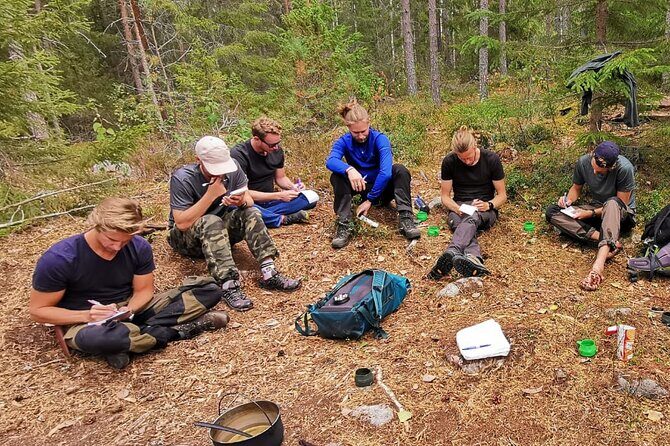
- A small group of max 8 means you get more time to practice and ask questions
- William leads the course with patience and a mix of practical and theory
- Full wilderness training covers fire, shelter, food, water, plants, and tracking
- Real survival priorities: basics first, then orientation and group leadership
- You actually sleep outdoors, so the shelter skills are not just talk
- Meals are included (breakfast, lunch, dinner), so you can focus on learning
Getting to Södermanland from Stockholm (and into survival mode)
The course is based in the Stockholm area and starts at 9:00am at True Nature Sweden AB, Tideliusgatan 62, 118 69 Stockholm. You meet, get organized, and then head out with private transportation (included). That part matters more than it sounds. When you arrive already thinking about logistics, you miss the first key survival lesson: keep your mind on what you can control.
Once you’re in the forest, the “lesson plan” shifts. This is not a classroom course. The entire experience is in the wilderness, so you’ll be learning in the same conditions where your skills will matter. Sweden’s forests can be dramatic on short notice, and practicing in that setting helps your brain stop treating survival like a movie scene.
The group setup also helps. With a maximum of 8 participants, you’re more likely to get direct feedback while you work. That shows up again and again in the reviews, especially around William explaining steps and making sure beginners feel comfortable.
A few more Stockholm tours and experiences worth a look
What survival basics really mean here: priorities, not panic
The course is built around three survival fundamentals and the idea that you have to know which needs to prioritize when things go sideways. That framing is practical and calm. Instead of trying to memorize everything at once, you learn to sequence your actions, like a checklist your body can follow even when you’re anxious.
The core priorities are your basic needs:
- Fire to create warmth and cook
- Shelter to protect you from wind and weather
- Food and water to keep energy and hydration stable
In survival situations, confusion wastes the same resource you can’t replace easily: time. By focusing on the fundamentals first, the course gives you a way to think. That is where confidence comes from. It is not magic. It is repeatable process.
And the structure goes beyond the big three. You also cover orientation/map reading, wildlife tracking and dangers, and encampment tricks to make life easier. You even learn the survival basics for doing things with other people through survival in a group and leadership.
That blend matters because real life doesn’t happen in neat modules. If you can set a fire, find safe water, and keep your bearings, you can handle a lot. Then you build from there.
Day 1 in the Swedish forest: fire, shelter, and staying functional
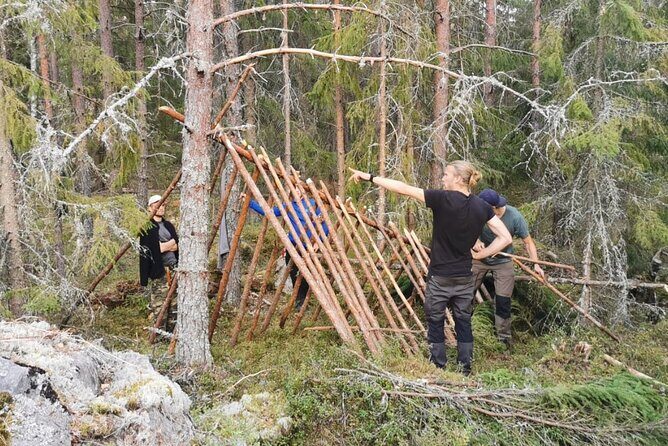
On the first day, expect the training to revolve around learning the techniques that let you stabilize your situation quickly. The course explicitly focuses on fire making and shelter building with the question you actually care about: with what, and how.
Fire
Fire is not just comfort. It is heat, safety, and cooking power. You learn how to build it, and you’ll practice enough that it stops being theoretical. Reviews mention fire making and fire cooking specifically, which is exactly what I’d want from a short course. If you only hear about fire, it stays fragile in your mind. If you practice it, it becomes a skill you can repeat.
Shelter
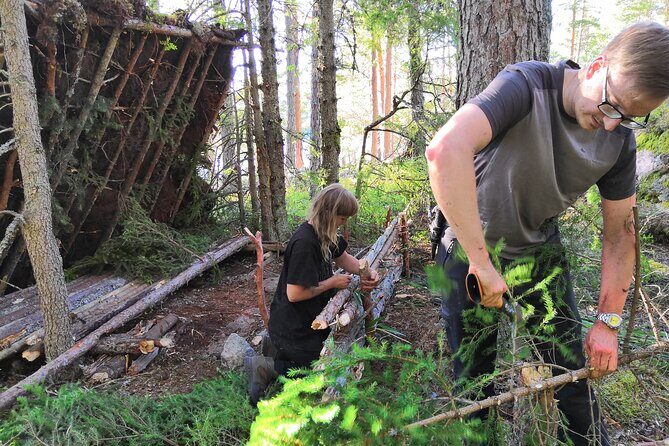
Shelter instruction covers how to build protection and what to do in a way that fits the forest setting. A big part of confidence is learning what a “good enough” shelter looks like when you are cold and tired. You’ll also learn shelter-related ideas for encampment, including simple tricks to make life easier.
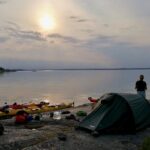
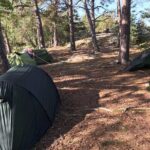
The reviews include that people spent the night outdoors and used what they learned. That overnight piece is huge for beginners because it forces your brain to translate instructions into reality: shelter isn’t just “constructed,” it’s “lived in.”


The pacing
Even in a survival course, it is easy to feel overwhelmed. The good news from the feedback is that William explains and shows each step, blending theory with hands-on practice. That approach helps you move from confusion to competence fast, without making you feel behind.
Foraging and water: edible plants, toxic warnings, and safe choices
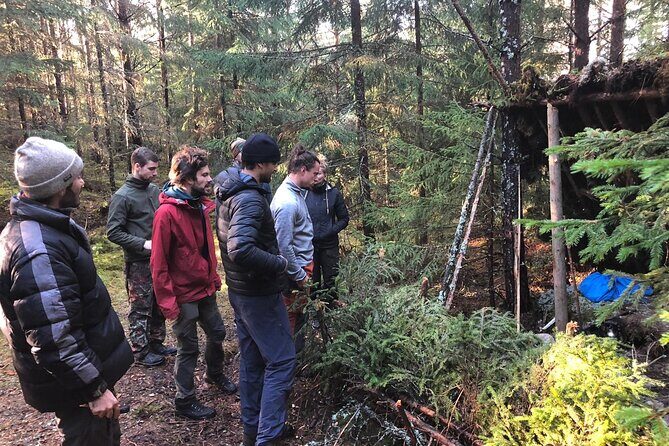
If there is one topic that can either make or break a survival course, it is food and water. This program tackles both, and it does it in a way that respects real risk.
Food: what you can find and how to prepare it
You learn where to find food, how to think about edible options, and how to prepare dishes. You also learn tracking and foraging approaches that connect to the Swedish forest environment.
From the reviews, the food aspect stands out positively. People appreciated that the meals provided were good, and there’s also clear enthusiasm around cooking over fire. That matters because it reinforces the loop: find, prepare, cook, eat, recover.
Water: where it is and how to collect it
You learn how to find water and how to collect it. In a real survival scenario, dehydration can become your limiting factor fast. The course treats water as a priority item, not an afterthought.
Plants: edible, toxic, and medicinal basics
You get an introduction to plants, including how to identify what may be edible, toxic, or medicinal. This is where I’d expect extra caution, and the way the course frames it is the right direction. Even a short course that only gives you basics should still teach you to respect risk and not assume you know what you’re eating.
Because plant identification is serious, I recommend you treat what you learn as groundwork, not final authority. Use it to guide questions and decision-making, not to “wing it” later.
Navigation and orientation: keep your bearings when the forest blurs
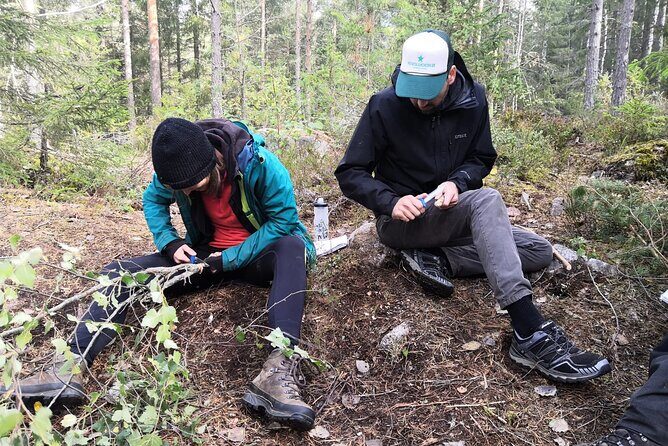
Survival isn’t only about fire and food. It’s also about not getting lost, or at least knowing what to do if you are.
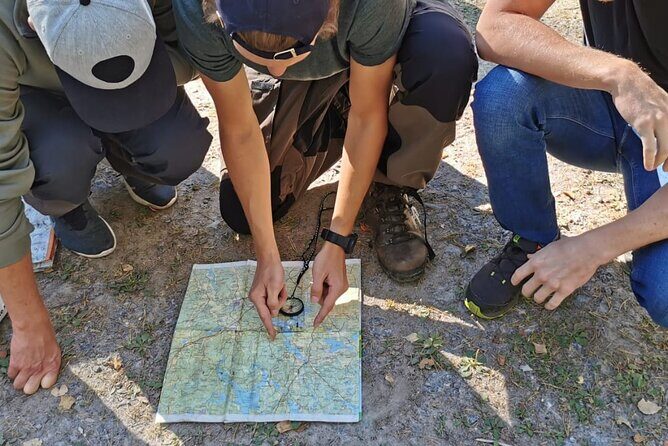
This course includes orientation and map reading, with practical training so you can use tools under stress. Even beginners can leave with something concrete, including learning how to use a compass, which came up in the feedback.
What I like about including navigation is that it changes your mindset. Instead of “survive somehow,” you start thinking in decisions:
- Where am I relative to my direction?
- What can I measure?
- What is my next step?
That mental structure is what helps people feel capable after the weekend ends.
Wildlife tracking and dangers: learn patterns, not fear
The course also covers wildlife tracking and talks about dangers, plus how to continue when a survival situation arises. You’re not being trained to hunt. You’re being trained to read the forest.
Tracking helps you understand movement and signs. Even if you never need it, it’s a skill that grows your awareness. And awareness is a survival tool.
The “dangers” part matters too. It teaches you not to romanticize wildlife. In the wilderness, animals are part of the environment, not a theme park attraction. Knowing the types of risks to look for helps you stay steady and reduce mistakes.
Trapping, fishing, and encampment tricks that save energy

Toward the second half of the experience, you cover trapping and fishing along with additional encampment guidance—simple tricks that make daily survival easier. That is a smart inclusion for a basic course, because energy management is survival management.
In real conditions, your best gear is not fancy. It’s routine:
- Set up and maintain shelter
- Protect your fire
- Keep water collection sensible
- Use fishing or trapping methods as needed
- Stay organized with where you put things
The reviews mention the course felt thorough for something short, and that it created a real sense of self-sufficiency. Encampment tricks often lead to that feeling because they transform the forest from a scary place into a place you can manage.
Survival in a group: leadership you can actually use
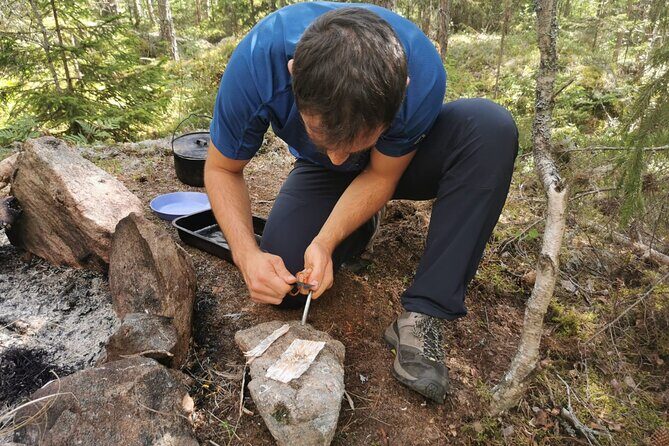
One detail I really appreciate: survival in group and leadership are included. Many people think survival is purely individual. In real emergencies, you have others around you. Skills have to work in a team setting.
Leadership in survival is usually not about authority. It’s about clarity:
- Who does what?
- Who checks what?
- How do you keep morale from collapsing?
- How do you share tasks so nobody freezes or overworks?
With a small group, you can practice these dynamics naturally. And because the group size is capped at 8, the instructor can keep the experience supportive instead of chaotic.
Price and value: what $480.71 gets you (and what it doesn’t)
The price is $480.71 per person for the 2-day course, with lunch, breakfast, and dinner included, plus private transportation and all needed gears. For a short survival course that teaches fire, shelter, food, water, plant basics, tracking, and navigation, it is not just paying for “some outdoors time.” You’re paying for guided instruction, equipment support, and the logistics that would otherwise take you hours to piece together.
What you are not getting is the kind of expense creep that sometimes happens on outdoor tours. Alcohol is not included, and there’s no mention of travel insurance being included. There are optional rentals for camping gear (450 kr/pers) and backpack rental (100 kr/pers), but since the course says all needed gears are included, you’re likely only looking at these options if you personally want something specific.
Value also comes from group size. A cap of 8 people means the instructor can stay close while you practice. That’s where your money turns into skill, not just a story.
Who this course suits best
This is a strong fit if:
- You want basic survival skills in a structured, step-by-step way
- You’re a beginner and want to feel comfortable learning outdoors
- You want to practice survival fundamentals like fire and shelter rather than only watching demos
- You care about navigation basics like compass use and map reading
- You like the idea of learning about plants with guidance on edible/toxic/medicinal categories
It’s also a good choice if you like learning in a social setting. The reviews mention a mix of participants, including people who sounded pleasantly surprised that it wasn’t built like a macho challenge. That matters for comfort and confidence.
What to bring into your head before you go
You don’t need to arrive “tough.” The course is built for beginners. But you should bring:
- A willingness to get hands-on with fire and shelter tasks
- Patience for plant basics, since identification takes time and caution
- A practical mindset: focus on priorities and repeat skills
If you mentally expect to learn the fundamentals and not become a one-week survival expert, you’ll enjoy it more.
Should you book the 2-day survival course in Södermanland?
Book it if you want a real skills reset: fire, shelter, water, food, plants, orientation, and tracking, all taught in the wilderness over a short weekend. The strong reviews pattern around William’s patience, step-by-step teaching, and how much people felt they learned quickly.
Skip it (or choose another option) if you hate outdoor discomfort. This experience is outdoors the entire time, and you should treat cold and rough conditions as part of the learning.
If you’re ready to learn fundamentals that actually translate into confidence, this is one of the better ways to do it near Stockholm.
FAQ
Where does the 2-day course start?
The start point is True Nature Sweden AB, Tideliusgatan 62, 118 69 Stockholm, Sweden.
What time does the course begin?
The start time is 9:00am.
How big is the group?
The maximum group size is 8 travelers.
What’s included with the ticket?
The ticket includes lunch, breakfast, dinner, private transportation, and all needed gears.
Is any camping or backpack gear included?
All needed gears are included. Camping gear rental is optional for 450 kr per person, and backpack rental is optional for 100 kr per person.
What survival topics are covered?
You’ll learn fire building, shelter building, finding what to eat and how to prepare it, finding and collecting water, an introduction to plants (edible, toxic, medicinal), wildlife tracking and dangers, trapping, fishing, orientation (map reading), encampment tricks, and survival in a group.
What happens if the minimum number of participants is not met?
This activity requires at least 3 participants from early October to late April, and at least 5 participants from early May to late September. If the minimum isn’t met, you’ll be offered a different date/experience or a full refund.
What is the cancellation policy?
You can cancel up to 24 hours in advance for a full refund. If you cancel less than 24 hours before the start time, the amount paid is not refunded.