REVIEW · STOCKHOLM
Private Half Day Tour: Viking History Trip from Stockholm Including Sigtuna
Book on Viator →Operated by Sweden History Tours · Bookable on Viator
Vikings are easier to understand with context. This private half-day outing strings together major runestone sites and Viking-era landscapes near Stockholm, then finishes in the charming historic town of Sigtuna. I especially like the hotel/port pickup and the chance to ask questions one-on-one in a private vehicle. My one caution: if you’re sensitive to accents or lower audio, you may want to mention it early, since clear communication can make or break the experience.
You also get a thoughtful pace for a 5-hour day: a couple of focused stops for runes and graves, then enough time walking the main historic areas in Sigtuna without feeling rushed. The itinerary is designed so you don’t just see stones and ruins—you understand what they meant and how people lived around them. One consideration: you’ll pay for lunch on your own, and some parts are short by design, so if you want long breaks or extra food time, plan ahead.
In This Review
- Key highlights to look forward to
- Private pickup that actually gets you out of Stockholm
- Broby Bro: runestones, a grave field, and Estrid’s story
- Täby’s Jarlabanke Runestones: power, leadership, and movement
- Arkils tingstad: the best-preserved Thing-site in Europe feel
- Sigtuna: Sweden’s early capital, wooden streets, and church ruins
- Timing and group size: how the half-day really works
- Price and value: what you’re paying for at $532.19 per person
- Practical tips for a smoother day
- Should you book this Viking History Trip from Stockholm with Sigtuna?
- FAQ
- FAQ
- What time does the tour start?
- How long is the tour?
- Is lunch included?
- Do you get hotel pickup?
- What’s the maximum group size on a private tour?
- Is the tour offered in English, and can I cancel for free?
Key highlights to look forward to
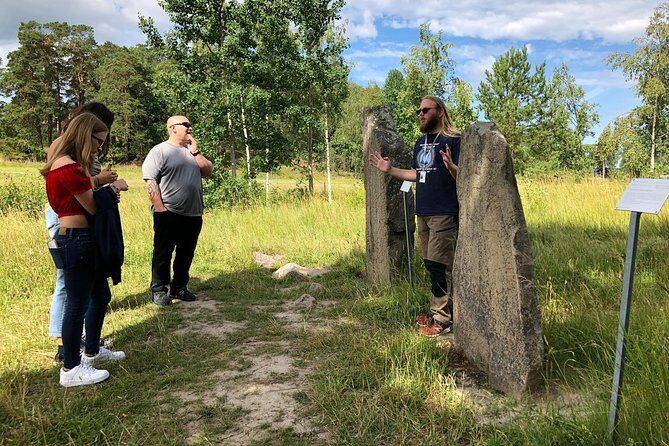
- Private pickup and round-trip transit so you don’t fight traffic or schedules outside the city
- Broby Bro runestones and a Viking grave field, including stories tied to Estrid
- Jarlabanke Runestones in Täby, with a clear look at leadership and movement/trade networks
- Arkils tingstad Thing-site, one of Europe’s best-preserved assembly places
- Sigtuna’s wooden streets and church ruins, including a visit to Mariakyrkan if open
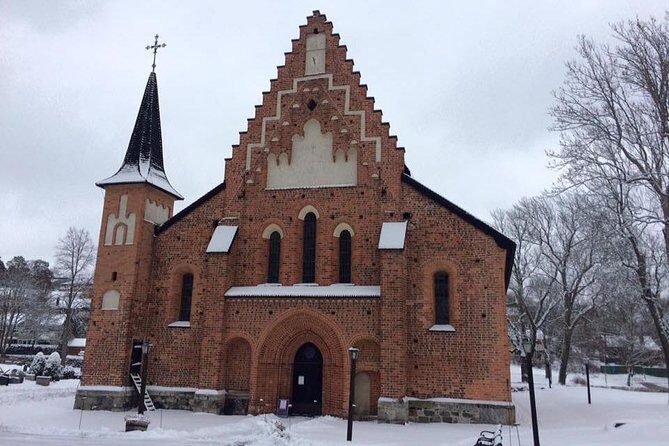
- St Olof’s Church Ruins, dated to the early 1100s era around a holy well
Private pickup that actually gets you out of Stockholm
This tour is built for people who want the Viking story without spending your morning figuring out routes. You’ll start around 9:30 am, with pickup offered from central hotels (and certain ports/meeting points), then ride by private vehicle to the sites outside town. That matters because the best Viking remnants aren’t inside Stockholm’s center. With a dedicated driver, you get scenery outside the city and a steady, uninterrupted flow from one stop to the next.
A big practical win: it’s a private, small-group experience with a maximum of 16 people. In other words, you’re not packed into a bus with strangers asking unrelated questions. The guide can tailor explanations on the spot. In past tours, guides like Olof and Jakob have been praised for bringing the runestones and church remains to life and staying open to questions, and that is exactly the kind of interaction that makes small archaeological sites feel meaningful.
If you’re traveling with someone who needs extra clarity, I’d treat communication like a “feature.” One review noted that hearing difficulties plus a strong accent made parts hard to follow. You can reduce that risk by arriving ready to listen, sitting where you can hear well, and asking your guide to repeat or slow down if needed.
You can also read our reviews of more private tours in Stockholm



Broby Bro: runestones, a grave field, and Estrid’s story
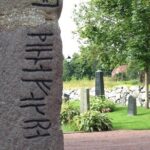
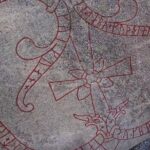
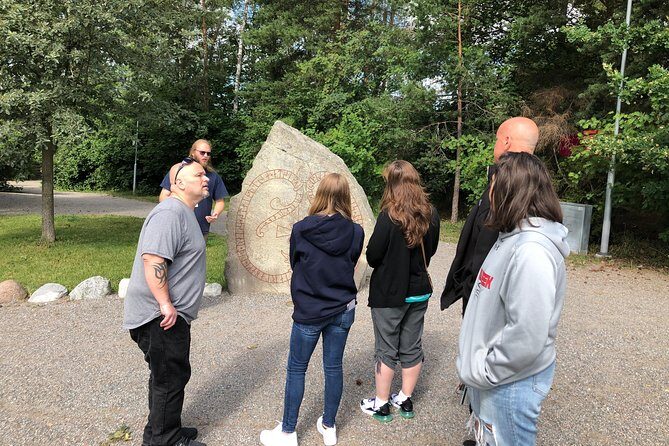
The first stop is Broby Bro, where you’ll spend about 55 minutes. This is not just a quick photo stop. You’ll visit three Viking runestones and a Viking grave field, with context about daily life in the Viking Age in Scandinavia.
What makes Broby Bro special is the way the stones connect language to real people. One of the runestones is associated with Jerusalem (mentioned as Jesuralem), and the tour links it to the women connected to the story of Estrid, one of the most well-known Viking women in the region. That combination is powerful: it’s not only about “Vikings did raids.” It’s also about travel, beliefs, family power, and how communities remembered individuals long after they were gone.
You also get a short, guided introduction to how the Viking Age got its reputation, and why the word Vikings means different things depending on who is telling the story. If you’ve ever wondered why runestones look so serious and why they were placed where they were, this is the kind of stop that gives you a baseline. At sites like these, the difference between understanding and not understanding is often just having someone explain the symbols and the social purpose behind them.
Admission is listed as free here, so you’re not doing math mid-day—just showing up and learning.
Täby’s Jarlabanke Runestones: power, leadership, and movement
Next up is Jarlabanke Runestones in Täby, around 20 minutes. It’s shorter than Broby Bro, but the focus tightens. You walk over and admire the runestones at a reconstructed Viking causeway, which helps you picture the setting instead of viewing stones as floating objects.
The key theme is the man behind the name: Jarlabanke, a major Viking lord. The tour explanation connects leadership to how lords ruled, and it also links the area to roads and trading networks. That angle matters because Viking-era Scandinavian power wasn’t only about fighting. It was also about controlling routes, collecting influence, and managing the people moving through an area.
If you like history that feels practical—who had authority, why certain places mattered—this stop gives a quick but useful lesson. If you’re hoping for museum-style displays, keep expectations realistic: this is an outdoor stop built around stones and place.
Arkils tingstad: the best-preserved Thing-site in Europe feel
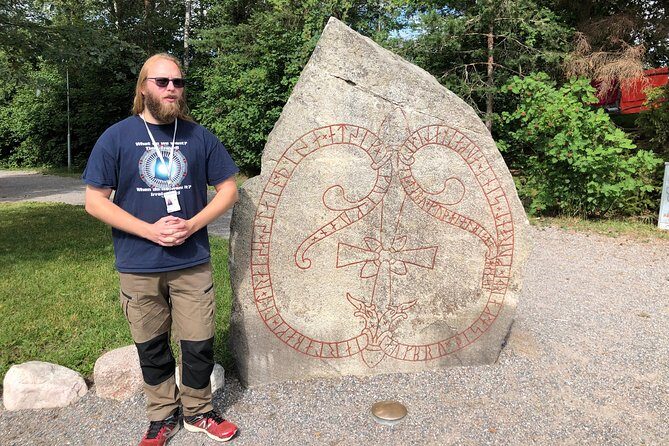
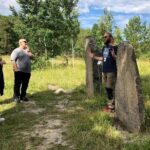
About 55 minutes later, you reach Arkils tingstad, one of the best-preserved assembly places (Thing-sites) in Europe. This is a different kind of Viking site. Instead of focusing only on commemoration (runestones and graves), it centers on governance and community decision-making.
You’ll see runestones here too, and the guide connects the place to family lines—like the Skålhamra family—and to the broader idea that creating a Thing-site brought power with it. It’s the kind of information that helps you see Vikings as builders of institutions, not just warriors.
The tour also touches Viking-era laws and social customs, including references to kingrop society (as described on this route). Even if some of the terms are new, the goal is to help you grasp the logic: where people gathered, what was decided, and how culture and law were tied together.
One note for your expectations: Thing-sites aren’t dramatic ruins. They can feel quiet. That’s exactly why a good guide matters. Without interpretation, you may just see grass and stones. With it, you understand what “a meeting place” meant in a Viking community.
Admission is listed as free here as well.
Sigtuna: Sweden’s early capital, wooden streets, and church ruins
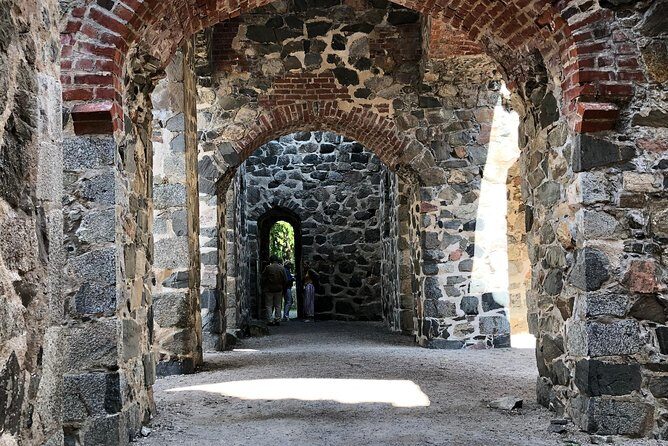
Then comes Sigtuna, the town stop that most people remember most. The day gives you two Sigtuna blocks. First is a lunch break (own expense) with about 40 minutes. After that, you get another 40-minute walking visit that focuses on the historic center.
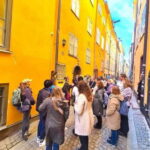
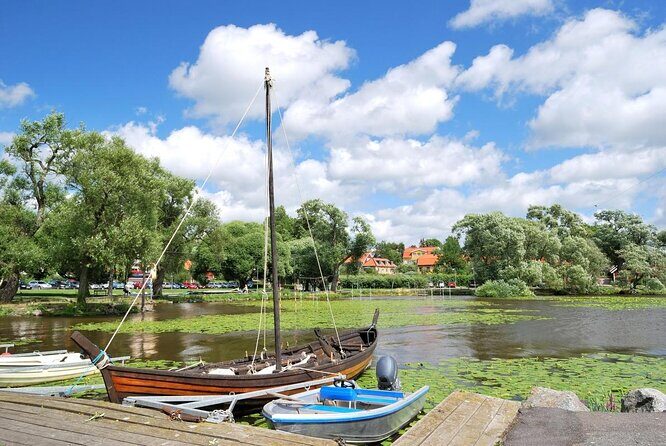
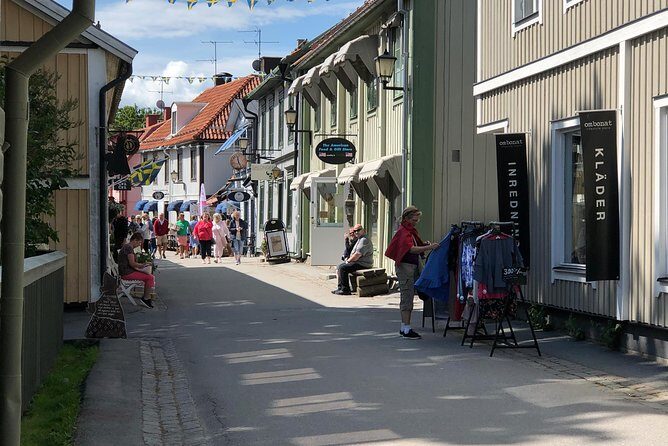
Sigtuna is described as a cute wooden town, and the tour route follows the main street where a Viking street curve can still be traced. That matters because you’re not just visiting buildings; you’re walking a layout shaped by earlier centuries.
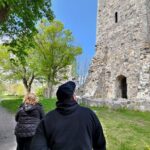
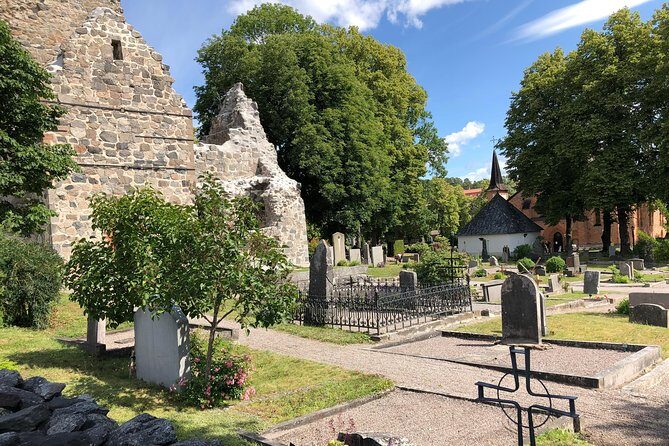
During the second Sigtuna visit, you’ll explore church ruins and other historic highlights. If you time it right with the site hours, you’ll also visit Mariakyrkan if it’s open. The tour frames Mariakyrkan as the only remembrance connected to a powerful monastery outside the city itself. That gives the ruins extra weight—these aren’t random foundations. They connect to the shift from older beliefs toward Christianity and the institutions that came with it.
The tour also includes a quick St Olof’s Church Ruins stop at the end, about 10 minutes. This is presented as the largest and most well-preserved church ruin among the three around Sigtuna, and it’s linked to construction around 1080–1120 near a holy well. Even if your time here is short, it’s a strong close to the story: Viking-era power fades from the daily stage as new religious and political structures take hold.
A couple of useful real-world tips based on how people have experienced this route:
- Bring cash or a card you trust for lunch. The tour doesn’t include it.
- If your guide suggests a quick snack shop stop in Sigtuna, take it. One tour on this route included a candy/chocolate shop stop that made a good souvenir moment without eating into the core history time.
You can also read our reviews of more historical tours in Stockholm


Timing and group size: how the half-day really works
This is a 5-hour outing, starting at 9:30 am and returning you to your hotel in the early afternoon. That schedule is a feature, not a bug. You get enough time to connect the dots—graves and runes at Broby Bro, leadership at Jarlabanke, assembly culture at Arkils tingstad, then the early-town walk at Sigtuna—without turning your day into a travel marathon.
It also explains why some stops are shorter. Jarlabanke is only about 20 minutes; St Olof’s ruins are about 10 minutes. If your priority is to linger, sketch, or take lots of slow photos, you may feel a pinch. On the other hand, the itinerary is paced to keep you moving while still giving real time at the most information-heavy places.
Group size helps here. A private tour means you’re not competing for the guide’s attention. In some cases, the guide has been described as adaptable and willing to customize based on interest, which is a big deal when you want more time on runes, or more time walking in Sigtuna.
Price and value: what you’re paying for at $532.19 per person
At about $532.19 per person for a private half-day, this isn’t a bargain-basement excursion. The value comes from three things you can’t easily copy on your own:
1) Door-to-door pickup and drop-off from central Stockholm (within the described radius), plus a driver/vehicle for the countryside leg.
2) Interpretation at multiple outdoor heritage stops where context really matters. Runestones and ruins can look similar until someone explains what you’re looking at.
3) Private pacing. You can ask questions, pause, or re-focus without the pressure of keeping a large bus moving.
For solo travelers, one more reality check: the tour has a minimum of 2 people per booking. If you’re traveling alone, you may need to join someone or choose a different option.
If you’re a Viking history fan—especially if you want more than the usual battle-and-boat version of the story—this tour is a strong match. If you only want a couple of quick photos and don’t care about meaning, you might feel the price more than the content.
Practical tips for a smoother day
A few small things that can make your half-day feel easier:
- Plan for lunch on your own in Sigtuna. The itinerary includes time, but it’s not an included meal.
- Wear good walking shoes. You’ll be outdoors and walking through uneven historic ground.
- Bring a light layer. Even in good weather, outdoor stops can turn cool faster than you expect.
- Use the mobile ticket and keep it handy on pickup day.
- If you’re on a cruise, you’ll have specific meeting instructions by pier (and you should look for a guide holding a sign that says Viking Tours on A4 paper). If you don’t know your pier, confirm with your cruise line early.
Also, do yourself a favor and show up on time. With a tight schedule, your guide can’t “catch you up” easily at each stop.
Should you book this Viking History Trip from Stockholm with Sigtuna?
Book it if you want a structured Viking day with transportation handled and enough interpretation to make the runestones and ruins feel alive. I’d especially recommend it if:
- You care about meaning behind stones and sites, not just seeing them.
- You want the day to feel personal, since it’s private and question-friendly.
- You’re pairing a Stockholm visit with a historically important early town like Sigtuna.
I’d think twice if:
- You need very detailed time for browsing or long stops at each location.
- You’re on a tight budget and prefer to self-guide with transit, because this is priced like a guided private excursion.
- You have difficulty hearing accents; in that case, ask for the clearest communication possible at the start.
If you match that first group, this half-day route is one of the better ways to get out of Stockholm and understand how Viking life, memory, and early religious change played out on the ground.
FAQ
FAQ
What time does the tour start?
The tour starts at 9:30 am.
How long is the tour?
It lasts about 5 hours (approx.).
Is lunch included?
No. There is a lunch stop in Sigtuna where lunch is at your own expense.
Do you get hotel pickup?
Pickup is offered from central hotels within the specified distance from Stockholm central station. It’s also available from some ports/meeting points listed for cruise arrivals.
What’s the maximum group size on a private tour?
The private tour has a maximum of 16 persons.
Is the tour offered in English, and can I cancel for free?
The tour is offered in English. You can cancel for a full refund if you cancel up to 24 hours in advance of the experience start time.