REVIEW · STOCKHOLM
Stockholm Must See – Old Town, boat + Vasa Museum 3h small group
Book on Viator →Operated by Sweden History Tours · Bookable on Viator
Stockholm can feel like a lot at once, so this tour is built for speed. You get a guided Old Town circuit with real stories baked in, then you finish with Vasa Museum skip-the-line so your time goes where it matters. The only real catch is that the Vasa portion is time-boxed, so you may not get a slow, personal stroll through every exhibit.
I especially like how many stops you hit in 3 hours without it turning into a hectic stampede. The group stays small (up to 15), and the guide-led pacing is the whole point—turning street corners like Prästgatan and Marten Trotzigs grand into mini-history lessons you can’t easily spot on your own.
One possible drawback: if you’re going later in the day, museum closing hours can squeeze the time you spend inside Vasa, so plan to add extra time on your own if you’re a ship-history fanatic.
In This Review
- Key things you’ll like about this Stockholm Old Town + Vasa tour
- Why 3 hours feels like a cheat code in Stockholm
- Starting at Slottsbacken: the Gustav III assassination link
- Royal Palace to Stortorget: monarchy, power, and the Bloodbath of Stockholm
- Alley of Hell, runestones, and the maze of Gamla Stan
- From Riddarholmen to Järntorget: monks, fires, trades, and medieval battles
- The ferry to Djurgården: harbor life and the move from Old Town
- WWII museum hints, Viking runestones, and the Vasa lead-in
- Vasa Museum skip-the-line: what you can realistically expect in 40 minutes
- Price and value: what $135.69 buys you (and what it doesn’t)
- Who should book this Stockholm Old Town + Vasa tour
- Should you book it?
- FAQ
- How long is the Stockholm Old Town, boat + Vasa Museum tour?
- What language is the tour offered in?
- How many people are in the group?
- Where does the tour start?
- Where does the tour end?
- Is the ferry included?
- Is Vasa Museum admission included?
- Does the tour run in bad weather?
- What fitness level do I need?
- Can I cancel for a full refund?
Key things you’ll like about this Stockholm Old Town + Vasa tour
- A concentrated Gamla Stan route that connects major landmarks into one story-driven walk
- Skip-the-line Vasa Museum access, so you start seeing the ship faster
- A one-way ferry ride to Djurgården, with harbor-and-trade context along the way
- Tight Old Town details, like rune stones, executioner streets, and medieval squares
- A guide who uses named history moments (Gustav III, the Bloodbath of Stockholm) to make stops click
- Small-group feel with room to ask questions as you go
Why 3 hours feels like a cheat code in Stockholm
This is the kind of tour that helps you get bearings fast. Stockholm’s Old Town (Gamla Stan) is dense, hilly, and full of “wait, what is that?” moments, and you don’t really want to figure everything out while you’re also trying to see Vasa.
The format is simple: meet in a central Old Town spot, walk through the core sights with a local guide, take a one-way ferry toward Djurgården, then end at the Vasa Museum. At about 3 hours total, it’s ideal if you’re only in Stockholm for a short stay or you’re trying to fit the big hits around other plans.
The guide approach matters here. Rather than reading facts off a sign, you’re guided through the stories behind what you see—why the streets look the way they do, what power groups were doing, and how events from centuries ago shaped today’s layout.
And yes, you’ll be walking. You’re told to have a moderate fitness level, so bring walking shoes and expect cobbles and hills in Gamla Stan. If weather is wet (and it often is in Northern Europe), the tour runs anyway—so a rain layer is a smart move.
You can also read our reviews of more boat tours in Stockholm


Starting at Slottsbacken: the Gustav III assassination link
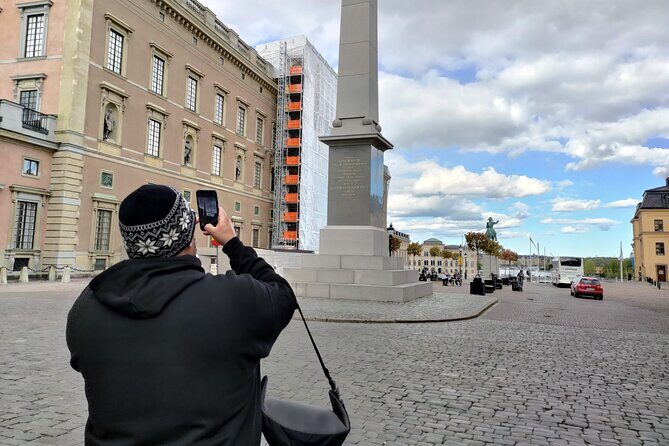
The tour’s morning-style meeting point is Gustav III:s Obelisk at Slottsbacken. The guide starts by setting the day’s map—then immediately pulls you into one of Stockholm’s dramatic episodes tied to this exact area.
This obelisk is connected to the killing of King Gustav III at the Royal Opera. The nice trick is that you don’t just hear a distant “there was an assassination.” You get the geographic link: why this monument sits here, and how a major event ties into the city’s center of gravity.
You’ll also get a quick orientation moment before the main walking begins. That’s helpful because Gamla Stan can overwhelm you with angles and narrow lanes—having the “why” early makes the rest of the route feel more logical.
If you’re on the later departure, the meet point shifts. The tour notes that a 16:00 start meets at the anchor outside the Vasa Museum area. Same idea—different starting spot—so you can still structure your day around other sightseeing.
Royal Palace to Stortorget: monarchy, power, and the Bloodbath of Stockholm
Once you move through the Old Town core, the route keeps snapping you from one power center to the next.
First up is the Royal Palace area. You get the palace and monarchy overview at a quick stop, with context for how rule, authority, and ceremony have played out in Stockholm over time. It’s not a long palace tour, but it sets the stage.
Then comes Stortorget, Stockholm’s main square. This is where the stories get darker. You hear about the Bloodbath of Stockholm—one of those events that shows how quickly politics turned into violence. The square also lets you appreciate the architecture: you can see the 17th-century façades and decorations that still frame daily life today.
Right after Stortorget, the Nobel Prize Museum is passed by. You don’t get a long museum visit here, but you do hear the Alfred Nobel thread and how Stortorget itself fits into the broader history of the area. The best part is that the Nobel connection doesn’t feel random. It lands because you’ve already been talking about power and public space.
Small stops along the way help keep your brain engaged. You’ll get rune-stone history at Runsten, plus short but pointed explanations that tell you what to look for when you’re standing right in front of it.
Alley of Hell, runestones, and the maze of Gamla Stan
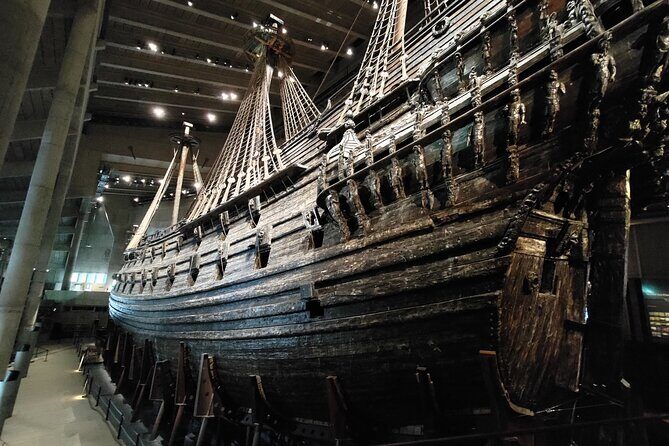
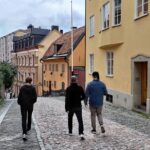
Gamla Stan isn’t just pretty. It’s weird in the best way—narrow streets, uneven lanes, and places named for what happened there.
You’ll spend time at Prästgatan, famous for its executioner history, often described as the Ally of Hell. The guide explains who worked here and why this street had a reputation. Even if you’ve read about execution and punishment somewhere else, it lands differently when you’re standing in the physical space.
Next is the Runsten stop (a short one), where you’re introduced to the old runestone and why it matters. These are the moments where a guide turns a small object into a big timeline clue.
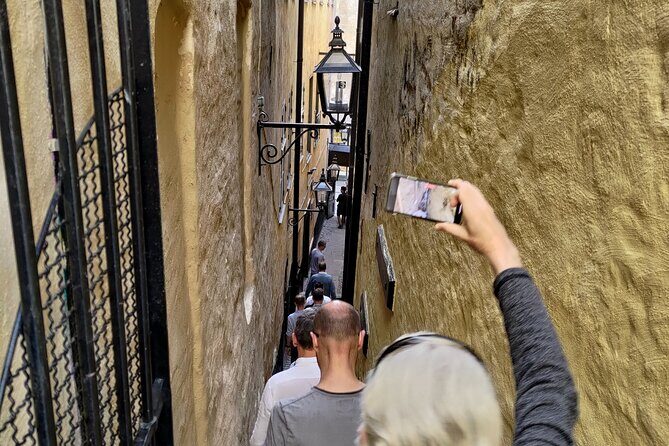
Another standout is Marten Trotzigs grand, one of the city’s smallest alleys. You’ll walk through it and hear the tragic fate connected to the alley’s namesake. The alley is physically tight, so the story has a built-in stage effect—you’re literally moving through a slice of old Stockholm.
Then you briefly connect to Storkyrkan, Stockholm’s main church. The stop is short, but it includes mention of archaeological excavations that have shaped what we understand about life in ancient Stockholm. It’s a reminder that cities don’t stay still—sometimes the past is still being uncovered underfoot.
If you like tours where the guide uses street-level details (rather than just big monuments), this portion is the heart of the experience.
From Riddarholmen to Järntorget: monks, fires, trades, and medieval battles
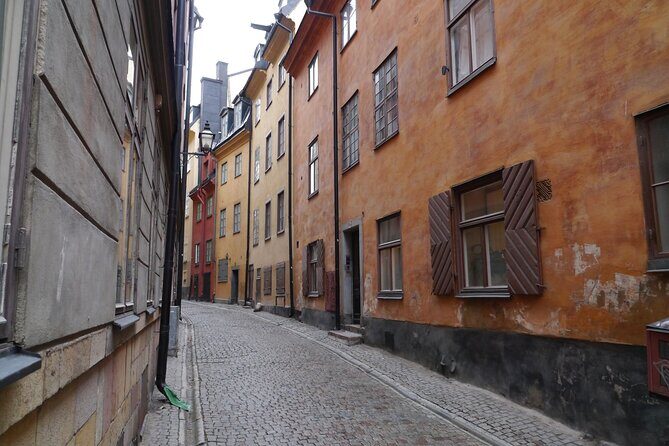
The route continues to Riddarholmen—often described as the isle of the Nobels because of how the area is associated with Nobel-related meanings today, while older stories sit under it all.
Here you hear tales involving monks, death, and fires. It’s the kind of mix you don’t get from a typical photo stop, and it gives the island an emotional layer: you’re not just looking at stone, you’re hearing how places like this have been reshaped by crisis.
You also get time near the House of Knights. Again, this is not a long interior visit, but the guide ties it to the social structures that mattered to Stockholm over centuries.
Then comes Järntorget (the Iron square). You learn about trade networks and the German part of Old Town. This is a smart inclusion because it keeps the story from being only royal and violent. You hear about commerce, communities, and the larger European connections that shaped how Stockholm grew.
The tour also includes time near the Statue of St. George, with stories about famous medieval battles connected to it. These quick stops are short on purpose; they give you enough to understand what you’re looking at so you can recognize the significance later when you walk the area on your own.
You can also read our reviews of more museum experiences in Stockholm




The ferry to Djurgården: harbor life and the move from Old Town
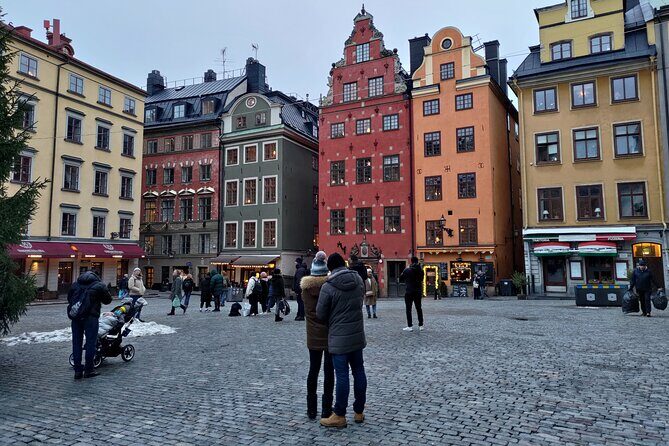
Here’s a key value point: you don’t just walk in circles. You take a one-way ferry ticket toward Djurgården.
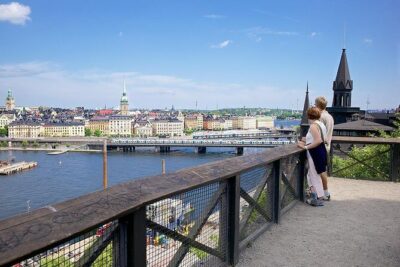
The route walks you to Skeppsbrokajen Promenade while waiting for the ferry. This section slows down the day in a good way. You get explanations about the old harbor and Stockholm’s trade and waterways—so the river and bay stop feeling like scenery and start feeling like infrastructure.
Then the ferry ride changes the mood. Even if it’s just a short crossing, it’s a break from cobbles and tight lanes. When you arrive, you switch to city-walk mode on Djurgården.
Djurgården is where history gets layered with nature. You hear that it was once royal hunting grounds and a military navy area, later transformed into a park-and-museum isle. In other words, it’s not only about old buildings. It’s also about how the city used land for power.
WWII museum hints, Viking runestones, and the Vasa lead-in
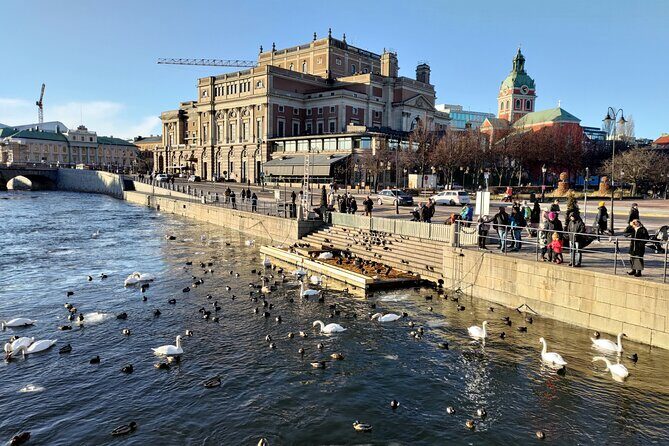
Djurgården has a few brief history stops that work like a warm-up before Vasa.
One part of the tour references Vrak and Viking museums, hosted in WWII shelters built to withstand airplane bombs. You’re not told it as a random fact—you’re given the idea that conflict shaped even museum spaces later. It helps explain why Djurgården’s history isn’t only medieval or royal.
The guide also points out modern runestones at the entrance and talks about the Viking age. This is a quick but clever bridge: from Old Town runestones (older, historic markers) to a later interpretation of Viking identity.
Then you head toward Galarvarvet. The tour includes the history and remains of an old naval base moved from there in the 1970s. That date matters because it shows Stockholm’s shoreline isn’t frozen in time; it’s been redesigned.
Nordiska Museet is passed by with a short mention of its collection focus (Nordic history from the 1800s, with objects related to Sweden and the Nordic). Since admission isn’t included, think of this as a teaser: you’ll know what it is when you see it from the outside and can decide later if you want more time.
Vasa Museum skip-the-line: what you can realistically expect in 40 minutes
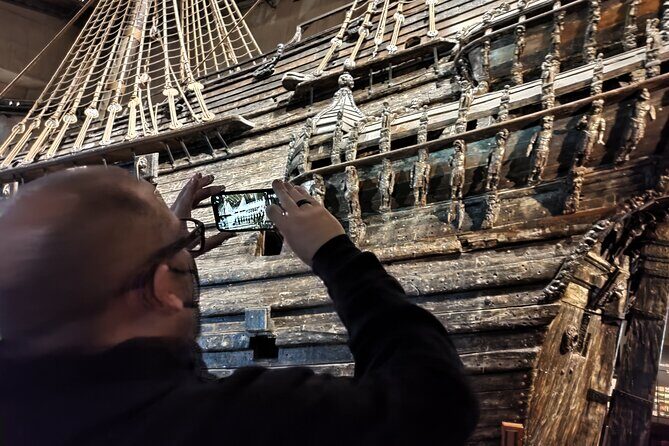
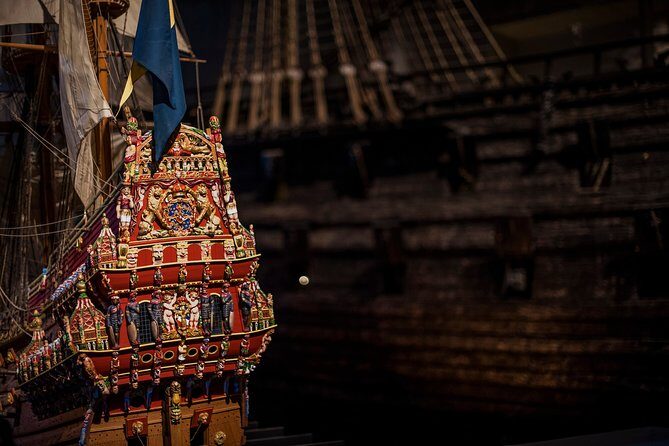
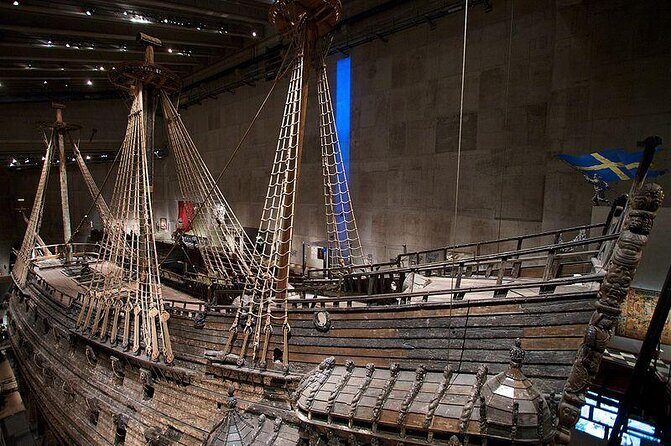
The Vasa Museum portion is the reason many people book this tour. The ship itself is famous for being one of history’s biggest surprises: it sank on its maiden voyage, and the museum now lets you experience the wooden wreck in a way that’s rare anywhere.
Your guide explores the mighty Vasa ship with you for about 40 minutes. The tour notes it as almost 40 meters long and around 98% complete original wood from the 17th century. That is the kind of detail that makes the ship feel less like a story and more like an object with weight and texture.
The biggest practical advantage is the skip-the-line access. When you’re on a tight schedule, standing in queue is the easiest way to waste money. Here, you’re designed to get into the museum experience without losing your whole afternoon.
That said, the time is still limited. If your goal is a careful, slow read of every exhibit panel, you’ll want to plan extra time in the museum after the guided portion. The tour is built to give you an informed overview, not to replace a full museum day.
Also pay attention to timing. The tour operates year-round, and museum closing hours can affect how much time you get inside—especially on later departures. The tour approach for later starts is to manage the schedule so you still get meaningful time on the ship, but you should expect a tighter museum window than for a morning start.
If you’re traveling with kids, this is still a solid choice because the ship is visually dramatic, and the guide can keep it moving. Bring patience if you’re expecting a deep museum self-tour; this is a guided highlight session that sets you up to enjoy the rest at your own pace.
Price and value: what $135.69 buys you (and what it doesn’t)
At $135.69 per person, you’re paying for three things: a local guide through a dense Old Town route, a one-way ferry ticket, and skip-the-line entry into the Vasa Museum experience.
The Vasa Museum admission tickets themselves are not included. That means your final spend is going to depend on the museum ticket price you pay directly. Still, skipping the line can be a big deal at peak times, and it’s one of the clearest “this is worth it” parts of the package.
Is it a bargain compared with doing everything solo? Often, yes—because the guide compresses hours of research into stories you can use immediately while you’re standing there. Also, a small-group limit of 15 keeps the pacing from turning into a herd.
Where you might feel less satisfied is if you want more time inside the museum. A few people prefer a longer Vasa deep-dive, and this tour’s schedule is designed to keep you on track through Old Town and Djurgården.
In plain terms: you’re buying focus and efficiency. If that matches your travel style, it’s good value.
Who should book this Stockholm Old Town + Vasa tour
This works especially well if you’re:
- A first-time visitor who wants major sights without building a full custom day
- Short on time and still want Gamla Stan context (squares, churches, alley names, and power stories)
- The type who likes guided interpretation more than reading alone
- Visiting during busy seasons and want skip-the-line insurance at Vasa
It’s less ideal if you:
- Want to spend a long, uninterrupted day at Vasa reading every exhibit panel
- Prefer to wander without stopping at multiple short points throughout Old Town
- Have very limited walking tolerance, since the route is still a concentrated walking tour with stops
For most people, the sweet spot is exactly what the tour promises: a guided sampler that gives you enough meaning to enjoy the rest of your Stockholm time.
Should you book it?
I’d book this if you want a first pass through Stockholm’s biggest layers—Old Town power stories, street-level oddities like Prästgatan and Marten Trotzigs grand, and then the Vasa ship as the centerpiece. The guide-led structure plus skip-the-line entry makes it a practical way to avoid wasted time.
If Vasa is your top priority and you hate time limits, consider booking this for the guided overview and then scheduling extra independent time at the museum afterward. That’s the easiest way to get both: the context from the tour and the slow satisfaction that only a full museum hour-and-a-half can bring.
FAQ
How long is the Stockholm Old Town, boat + Vasa Museum tour?
It lasts about 3 hours.
What language is the tour offered in?
The tour is offered in English.
How many people are in the group?
The tour has a maximum of 15 travelers.
Where does the tour start?
The meeting point is Gustav III:s Obelisk, Slottsbacken 1, 111 30 Stockholm.
Where does the tour end?
The tour ends at Vasa Museum, Galärvarvsvägen 14, 115 21 Stockholm.
Is the ferry included?
Yes. A one-way ferry ticket is included, and you use it to reach Djurgården.
Is Vasa Museum admission included?
No. Vasa Museum tickets are not included.
Does the tour run in bad weather?
Yes. It operates in all weather conditions, so dress appropriately.
What fitness level do I need?
You should have a moderate physical fitness level, since it’s a walking-focused tour.
Can I cancel for a full refund?
Yes, free cancellation is available if you cancel up to 24 hours in advance of the experience start time.