REVIEW · STOCKHOLM
Entrance ticket to The Viking Museum
Book on Viator →Operated by The Viking Museum · Bookable on Viator
A Viking saga plays on a museum floor. The Viking Museum in Stockholm is built like a story: movies, projections, sound effects, and real archaeological objects work together so you can make sense of raids, shipbuilding, farms, and Norse myth without needing a textbook. The highlight is the guided, staged journey of Ragnfrid’s saga, which strings together the Viking Age in a way that’s easy to follow.
I love how the museum gives you a multilingual audio guide so you’re not stuck reading your way through everything. I also like the chance to ask questions during the visit, with guides in Viking gear who help connect what you see to what life may have been like.
One caution: some parts lean on reading-heavy panels and a short ride with a more “story” tone than hard archaeology. If you’re traveling with teens who want action and gadgets only, they may rate it lower than you do.
In This Review
- Key points worth knowing before you go
- The Viking Museum in 1–2 hours: how the visit flows
- Ragnfrid’s saga ride: the 11-minute thread that ties it all together
- Exhibits and artifacts: what you’re really seeing (and what you might want to bring)
- Guides in Viking gear: how to use them for better learning
- Movies, projections, and sound effects: why the museum feels different
- Cafe and gift shop: where to refuel without wasting time
- Is the $22.68 ticket worth it?
- Who should book this Viking Museum ticket?
- Should you book the Viking Museum ticket?
- FAQ
- What’s the approximate duration of The Viking Museum ticket?
- Is the experience available in English?
- Do I receive a mobile ticket?
- When do I get booking confirmation?
- Is the museum near public transportation?
- Can I get a full refund if I cancel?
Key points worth knowing before you go
- Ragnfrid’s saga is the showpiece: an 11-minute, staged journey starting at Frösala Farm with Ragnfrid and her husband Harald.
- English-friendly visit: the experience is offered in English, plus you can use a multilingual audio guide.
- Ask questions in the galleries: guides in Viking gear are there for your curiosity, not just for passing by.
- A lot fits in 1 to 2 hours: plan for a focused visit rather than an all-day museum marathon.
- Small museum, big presentation: you’ll get artifacts and panels, plus films and projections to connect the dots.
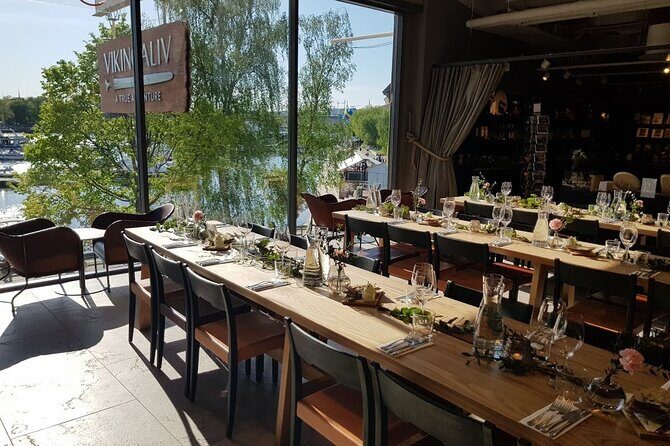
- Cafe break is part of the win: Swedish food is on offer, including reindeer meatballs, plus time to reset.
The Viking Museum in 1–2 hours: how the visit flows

This ticket is a straightforward way to squeeze in Viking history while you’re still moving through Stockholm. Your visit is timed more like a museum program than a self-guided wander: you start in the exhibits, then you hit the main staged journey, and you finish with more on-screen storytelling and galleries that tie it together.
The big practical win is focus. At about 1 to 2 hours, you’re not committing an entire day. That makes it smart if you already have a heavy hit list—say you also plan for a maritime museum—because you can still come away with a clear understanding of Vikings instead of just scattered facts.
You also get a mobile ticket, and confirmation comes at booking time. The museum is near public transportation, and service animals are allowed, so your planning stays simple.
A few more Stockholm tours and experiences worth a look



Ragnfrid’s saga ride: the 11-minute thread that ties it all together
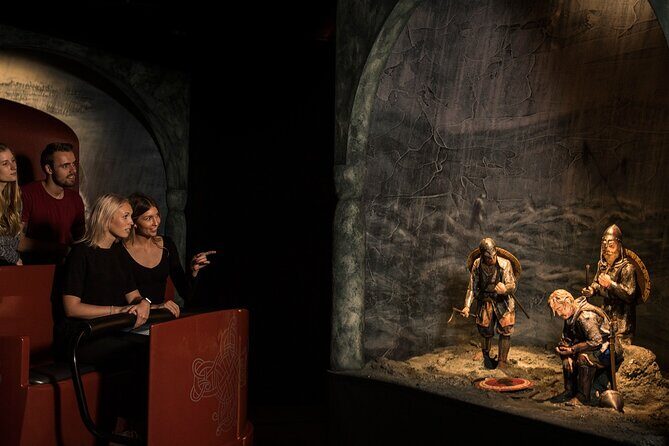
If you only remember one part of the visit, make it Ragnfrid’s saga. The museum builds this as a guided story told by Ragnfrid herself, and it uses sound, light, and atmosphere to move you through the Viking Age.
The journey begins at Frösala Farm with Ragnfrid and her husband Harald. From there, the storyline takes you west to plundering and east to the slave trade. That east/west shift is useful because it stops the Viking story from being one-note. Vikings weren’t only raiders in the popular imagination; they were also travelers, traders, and farmers with complicated lives.
This is also where the museum’s “myth meets truth” theme shows up in a real, physical way. Norse mythology feels present throughout the museum, and the saga ride is one of the clearest places where the cultural story and the historical context meet.
One more detail I appreciate: at the end of the tour, there’s a visual about King Harald. It helps close the loop so you leave with names and timelines instead of just mood and armor.
Exhibits and artifacts: what you’re really seeing (and what you might want to bring)
After the staged journey, you’ll spend time with the museum’s artifacts and objects. The overall format is classic museum style: you’ll see archaeological finds paired with information panels and displays, plus replicas that help you imagine day-to-day life.
In plain terms, the museum does two jobs at once:
- It gives you physical reference points (artifacts, relics, objects you can actually look at).
- It explains them using storytelling tools—movies, projections, and guide-led interpretation.
That mix is the value. If you only wanted objects, you’d be happier in a pure collection. If you only wanted action, you might prefer a theme attraction. The Viking Museum tries to connect both, so you get a more complete picture of raids, journeys, shipbuilding mastery, and farm life.
That said, there’s a valid trade-off. Some sections involve a fair amount of reading, and the more “story” elements (including the ride format) may feel a little cheesy to visitors who are expecting a heavier lecture. If you know your group hates text, pick up the rhythm early: use the audio guide, ask questions, and keep moving.
Guides in Viking gear: how to use them for better learning
One of the best parts of this museum is simple: the guides are there for questions. You’re not trapped behind a rope watching someone talk and then moving on. You can ask freely while you explore, and you’ll get answers that connect the exhibits to Viking life—what mattered, how people lived, and what might be legend versus what has evidence behind it.
This matters because Viking culture is one of those topics where it’s easy to get stuck in pop-myth. By asking direct questions, you can steer your visit toward what you actually want: shipbuilding, daily routines, the way Norse belief influenced stories, or how raids and travel fit together.
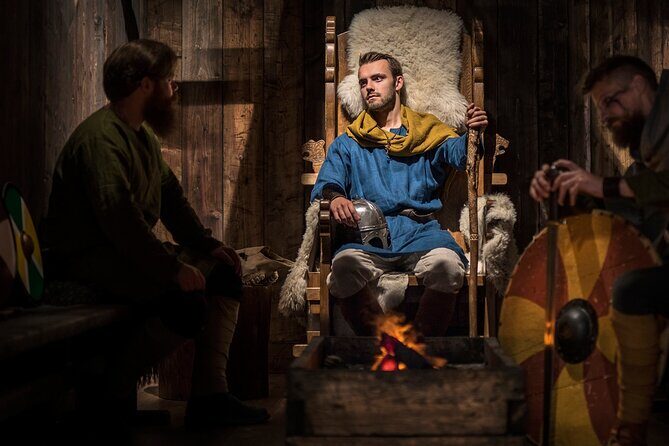
Also, these guides are in costume, which makes the whole thing more playful. You’ll get better value if you lean into that. Ask for examples. Ask what’s myth and what’s more likely historical. It’s the fastest way to turn a one-hour museum visit into a memory that sticks.
Movies, projections, and sound effects: why the museum feels different
The Viking Museum isn’t just a room of labels. It uses film, projections, scenery, and sound effects to place you in the Viking world. That’s a real benefit if you’re the type who learns better when you can see how things connect.
The museum’s presentation style works especially well for people who have limited time. In one compact visit, you get:
- a narrative framework (Ragnfrid’s saga),
- context for why Vikings traveled and fought,
- and a stronger sense of culture than you would get from artifacts alone.
The result is practical: you can walk away with a storyline you understand, not just disconnected facts.
And yes, there are photo moments. The way the museum stages scenes gives you backgrounds that actually look Viking-world, not just a generic exhibit hall. If you like taking photos without staging them for 20 minutes, you’ll likely enjoy this part.
You can also read our reviews of more museum experiences in Stockholm






Cafe and gift shop: where to refuel without wasting time
Don’t treat the cafe as an afterthought. The museum’s cafe is a good place to pause in the middle or at the end of your visit, especially if you’re touring with kids or you want something warm before your next Stockholm stop.
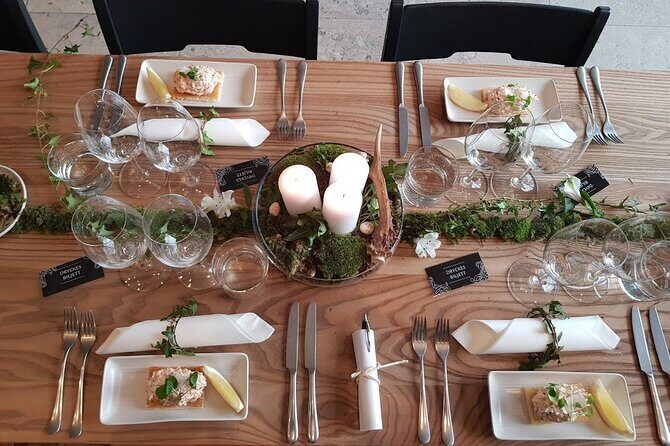
You can count on Swedish cuisine, and there’s at least one menu favorite worth planning for: reindeer meatballs. It’s the kind of snack that fits the theme without turning the visit into a long sit-down meal.
The gift shop is also worth a quick look. It tends to have Viking-themed items that make decent small souvenirs—easy to carry, easy to gift, and fun even if you’re picky about “museum stuff.”
Is the $22.68 ticket worth it?
At $22.68 per person, you’re paying for a compact mix of exhibits, guided interpretation, and staged audio-visual storytelling. That price is fair when you want more than just a walk-through of artifacts.
Here’s how I’d judge value for your day:
- If you’re short on time and want a clear Viking overview in 1 to 2 hours, this is a strong option.
- If you enjoy museum presentations—films, projections, and guided story elements—the experience is likely worth it because it’s doing more than storing objects.
- If you only want serious, quiet archaeology facts with minimal theatrics, the ticket may feel steep for the amount of deep specimen time you get.
I’d also note a timing angle. This museum is popular enough that many people book in advance (on average about a month ahead). Even if you sometimes can find walk-up options, booking ahead is still a low-effort way to keep your Stockholm schedule smooth.
With an overall rating around 4.2 out of 5 from 301 ratings, it’s clearly landing well with a lot of visitors who want the Vikings story told in a memorable way.
Who should book this Viking Museum ticket?
This is best for you if:
- you want an English-friendly introduction to the Viking Age without heavy planning,
- you like museums that use film and sound to teach,
- you enjoy asking questions and learning through guided explanation,
- you’re traveling with a range of ages who can handle some reading and will enjoy the staged ride.
It may be less satisfying if:
- your group hates story-style rides and prefers straight-up exhibits,
- your teenagers want high-energy entertainment only,
- you’re expecting a huge museum with lots of separate rooms and extensive artifact displays.
If you’re deciding between museum priorities in Stockholm, consider your group’s interests. The Viking Museum gives you a fast, organized Viking narrative plus artifacts. If you’d rather spend your limited time on one massive collection, another museum might win on pure depth. But if you want the Vikings topic to click, this place is built for that.
Should you book the Viking Museum ticket?
I’d book it if you want a clean, time-friendly way to understand Vikings in Stockholm—especially if you like films, stories, and guided help. The Ragnfrid’s saga ride is the engine of the experience, and the guides turn the artifacts into something you can actually interpret.
I’d skip or rethink if you’re hoping for a very text-light, purely interactive museum. There are interactive touches, but you do still encounter the classic museum format. For many people, that’s fine. For others, it turns into a slower read than they want.
FAQ
What’s the approximate duration of The Viking Museum ticket?
Plan for about 1 to 2 hours for the visit.
Is the experience available in English?
Yes, the experience is offered in English.
Do I receive a mobile ticket?
Yes, the ticket is a mobile ticket.
When do I get booking confirmation?
You receive confirmation at the time of booking.
Is the museum near public transportation?
Yes, it’s near public transportation.
Can I get a full refund if I cancel?
You can cancel for a full refund if you cancel up to 24 hours in advance of the experience start time.