REVIEW · STOCKHOLM
Stockholm Syndrome Private Walking Tour
Book on Viator →Operated by OURWAY Tours - Stockholm · Bookable on Viator
Stockholm has a talent for mixing big stories with small streets. This 3-hour private walking tour strings the city together on foot, from Norrmalmstorg’s infamous episode to Södermalm’s lived-in corners.
I like that it’s built for first-timers: you get a clear walking route that hits major landmarks without feeling like a stamp-collecting exercise. I also love the fika pause built into the flow, so the tour doesn’t run like a school field trip.
One thing to consider: you’ll be walking for most of the experience, including cobblestones, and the tour can run in all weather—so comfy shoes and a rain layer matter.
In This Review
- Key highlights you’ll feel right away
- Where the story starts: Norrmalmstorg and the Stockholm syndrome origin
- A quick turn through cultural Stockholm: Nybroplan, Kungsträdgården, and meeting the city
- Parliament and royalty: Riksdagshuset and the Royal Palace exterior
- Storkyrkan and St. George: a statue story you can see without a ticket
- Gamla Stan’s spine: Stortorget, the Nobel connection, and the Stockholm Bloodbath
- Iron Boy and St. George symbolism: two statues, two kinds of storytelling
- Mårten Trotzigs grand: the narrow alley moment (and a useful reality check)
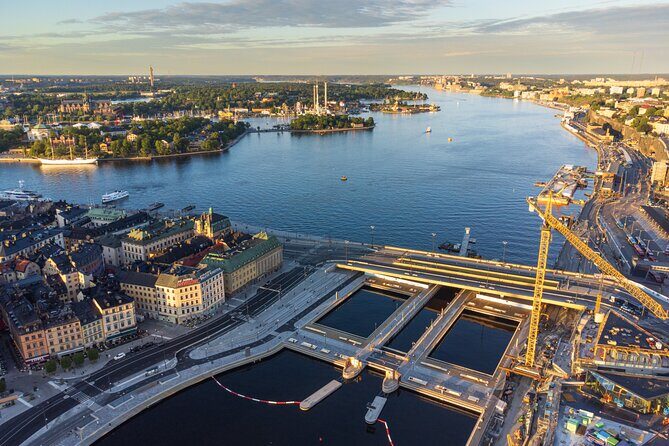
- Slussen and the water-level logic: why the city feels built on bridges
- Södermalm on foot: Götgatsbacken, Katarinahissen, and viewpoint energy
- Mosebacke Torg and the Sisters: the softer side of Södermalm
- Literature and local memory: Fiskargatan and places tied to Stieg Larsson
- Katarina Kyrka: a cemetery stop with names you’ll recognize
- Master Mikaels gata and AB Stadsholmen: old wooden houses and heritage care
- Cornelisparken finish: a viewpoint ending in the heart of Södermalm
- How long is enough? Using a 3-hour private walk wisely
- Price and value: what $418.80 buys you (and what it doesn’t)
- Who should book this Stockholm walk, and who might skip it
- Should you book this tour?
- FAQ
- How long is the Stockholm walking tour?
- Where does the tour start and where does it end?
- Is this a private tour?
- What’s included in the tour price?
- Is the tour in English?
- Are there admission fees for the Royal Palace or Stockholm Cathedral?
- What about the rest of the stops—are they free to see?
- Does the tour run in bad weather?
- What is the cancellation deadline for a full refund?
Key highlights you’ll feel right away
- Norrmalmstorg origin story tied to the term Stockholm syndrome, plus context around what happened there in the 1970s
- Old Town on foot with Stortorget, St. George symbols, and Mårten Trotzigs grand (a narrow-alley moment you’ll actually remember)
- Royal sights without the full ticket hunt, with the Royal Palace and Stockholm Cathedral handled as exterior vs paid entry
- Södermalm’s alternative side, including viewpoint stops like Katarinahissen and a stroll through local streets
- Fika included (coffee or tea plus pastry), making the tour feel like a real Stockholm day
Where the story starts: Norrmalmstorg and the Stockholm syndrome origin
Most Stockholm tours either race through the center or stick to the postcard layer. This one starts at Norrmalmstorg, in the central town-square area, because it’s where the term Stockholm syndrome became attached to a real 1970s robbery and hostage situation.
Here’s why that start works so well for you: you’re not just learning a strange phrase. You’re getting the location and the timeline, plus enough surrounding context to understand how people talk about fear, power, and survival in everyday language. The guide’s commentary is the glue. It turns a city landmark you’d normally walk past into a story you can place on a map.
Practical tip: if you’re the type who gets restless during long explanations, tell your guide early. This tour is private, so you can steer the pacing—especially at the start where the narrative is doing the heavy lifting.
You can also read our reviews of more walking tours in Stockholm

A quick turn through cultural Stockholm: Nybroplan, Kungsträdgården, and meeting the city
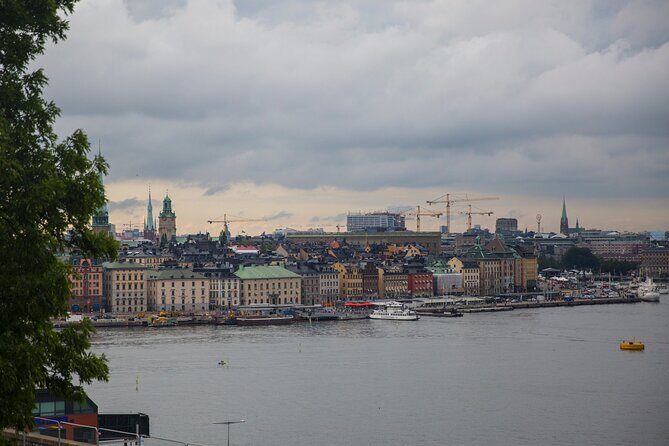
After Norrmalmstorg, you head toward Nybroplan and the Royal Dramatic Theatre (Kungliga Dramatiska Teatern). It’s Sweden’s national stage for spoken drama, and it’s the kind of stop you’ll appreciate even if you don’t plan to see a show that day. The scale and atmosphere of the building help you feel how Stockholm treats the arts as part of normal life.
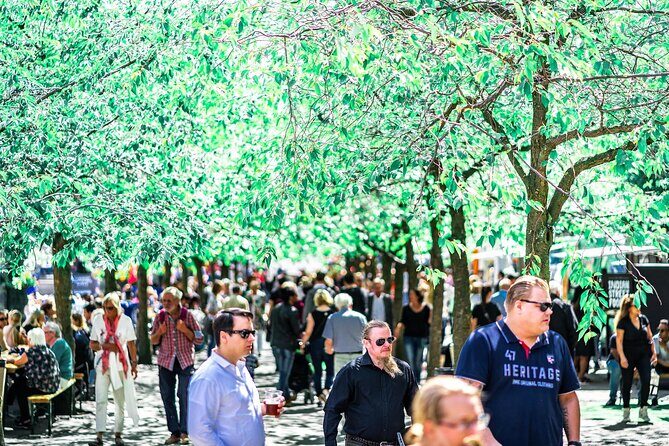
Next comes Kungsträdgården (Kungsan)—the King’s Garden, one of the city’s main meeting points. What I like here is the way history shows up in how the park behaves today. It began as the king’s kitchen garden way back in the 1400s, then was handed to the people in the 1700s. That shift matters. It’s one of the reasons this stop feels less like a museum and more like a place locals still use.
Seasonal notes make this park worth slowing down for:
- concerts and festivals in summer
- ice skating in winter
- cherry blossoms in spring, plus fall color when the leaves change
If your trip timing is off, don’t stress. Even in plain weather, this is a good “reset” stop. It breaks up the more serious tones of the day with a normal, human pace.
Parliament and royalty: Riksdagshuset and the Royal Palace exterior
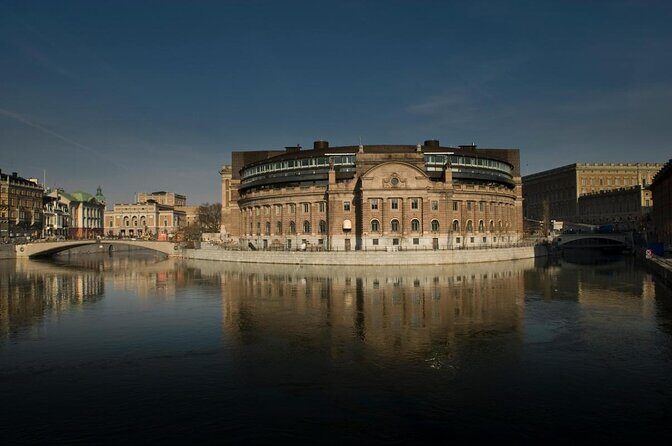
You’ll then cross into the political heart: the Swedish Parliament, Riksdagshuset, sitting on its own island, Helgeandsholmen. The key detail is simple but useful: since 1971, it has one chamber, with 349 members elected every four years. A lot of tours mention the building. This one tells you what kind of government structure you’re looking at.
From there, the walk continues to the Royal Palace area. You’ll see the palace as a major exterior stop—this is one of the places where your experience depends on your expectations. The Royal Palace is described as one of Europe’s largest and a key official residence for the king. It also plays a representation role, which makes the architecture and setting feel more intentional than just decorative.
Important value note: Royal Palace entry isn’t included. If you want interior rooms, you’ll need to plan that separately. But even without tickets, the outside views help you understand why Stockholm’s power centers are so tightly packed around the waterways and historic cores.
Storkyrkan and St. George: a statue story you can see without a ticket
Then the route brings you to Stockholm Cathedral (Storkyrkan). Even though entrance isn’t included, the tour points you toward what you can experience there without buying anything immediately. The cathedral is open to visitors year-round, and services are free, but there is a small entrance fee for visiting.
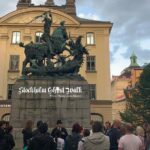
What makes this stop special is the wooden statue of St. George and the Dragon, dating to the 1470s. The tour frames it in a specific historical moment: made after the first battle between Denmark and Sweden during the Kalmar Union.
If you’re a visual learner, you’ll love this. Instead of only learning symbolism in abstract terms, you get a concrete example tied to a physical object you can locate in the cathedral.
Gamla Stan’s spine: Stortorget, the Nobel connection, and the Stockholm Bloodbath
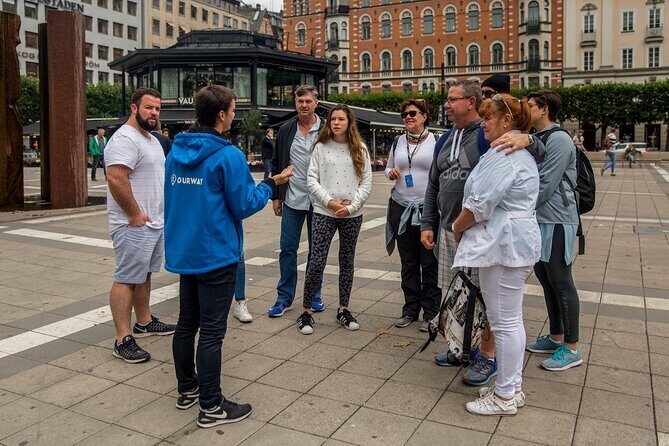
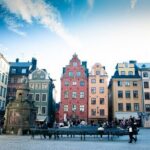
Now you’re in Old Town, with Stortorget as the anchor. This is Stockholm’s main Old Town square, and it’s a great place to start your own exploring after the tour because it’s central and easy to navigate.
This stop is heavy on specific history:
- the first Town Hall was built here
- the Nobel Museum sits here today (with a planned move noted for the future)
- and it’s tied to the Stockholm Bloodbath
Even if you’ve heard the names before, seeing how the square is laid out helps the stories stick. Squares create memory. The guide’s job is to connect the names to the space, and that’s exactly what you’re paying for.
You can also read our reviews of more private tours in Stockholm






Iron Boy and St. George symbolism: two statues, two kinds of storytelling
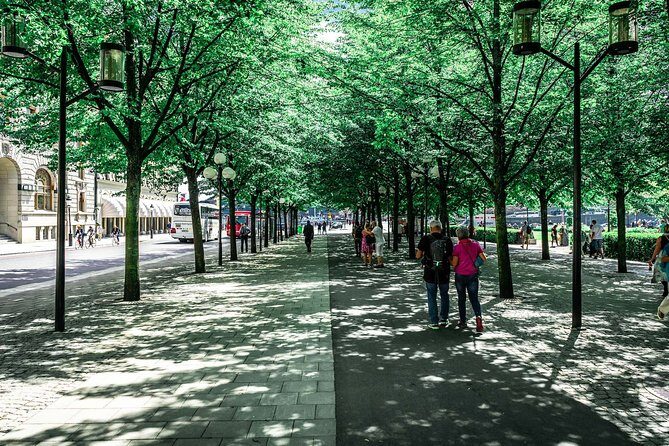
Old Town is full of statues, but not all statue stops work the same way. This tour chooses two that do.
First is Iron Boy (Jarnpojken), also known as the Boy looking at the Moon. It’s partly based on sculptor Liss Eriksson, who, as a child, couldn’t sleep and would look out at the moon from bed through the window. That’s the kind of detail that turns a public artwork into a relatable moment.
Then you’ll see the Statue of St. George, linked to the symbolism between Sweden (St. George) and Denmark (the Dragon). The tour also ties it to figures from the Kalmar Union period, including King Kristian I and Sten Sture the elder.
Why I think this pairing works for you: it gives you both ends of statue storytelling. One is intimate and personal (childhood insomnia). The other is political and historical. Together, they make the Old Town feel alive instead of sealed behind facts.
Mårten Trotzigs grand: the narrow alley moment (and a useful reality check)
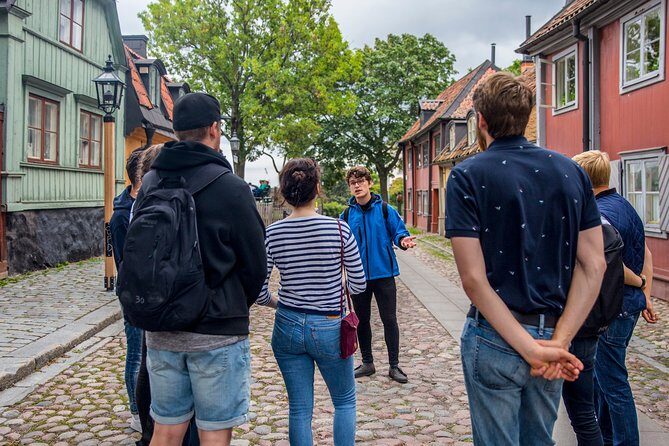
Next comes Mårten Trotzigs grand, often mentioned as an extreme narrow alley. Here you’ll learn the standout measurement: at its narrowest point it’s about 90 cm wide.
You’ll also hear a reality check that I appreciate. Some guidebooks claim it’s the narrowest alley in Europe, but the tour notes that there’s at least one alley in Prague that’s narrower (around 60 cm). That honesty helps you trust the rest of the guide’s facts.
This stop is short, but it’s a good example of how the tour balances big history with small, fun details. It gives you something you can laugh about later while the bigger stories are still fresh.
Slussen and the water-level logic: why the city feels built on bridges
Then you reach Slussen, a spot that can feel confusing on your own because it’s about systems—water, movement, and engineering—more than monuments.
Here’s the key info you’ll get: Slussen translates to the lock, because Lake Mälaren sits about 70 cm higher than the Baltic Sea. That difference is the reason for the lock concept in this area.
If you’re the type who likes to understand how a city actually functions, this stop is a quiet win. Stockholm isn’t just pretty; it’s engineered around waterways. A simple fact like the 70 cm difference helps you start seeing the city’s “why” behind its “what.”
Södermalm on foot: Götgatsbacken, Katarinahissen, and viewpoint energy
After Slussen, the walk shifts into the Södermalm side of Stockholm—the part many people prefer for its character. You’ll pass through Götgatsbacken, a pedestrian-friendly street area with modern shopping like H&M, Filippa K, and Cheap Monday, plus opportunities for vintage and secondhand browsing.
This is where you’ll likely notice the tone change: more casual, more street-level, with bars and pubs offering a laid-back nightlife vibe. The guide doesn’t push you into anything. Instead, the storytelling gives you a sense of where to aim your free time later.
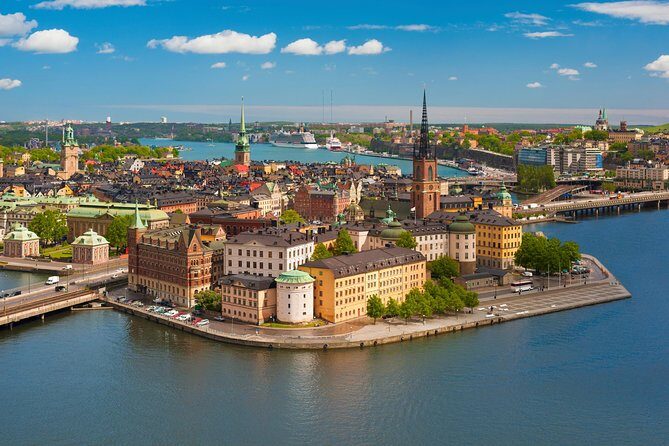
Then it’s time for one of the photo stops: Katarinahissen. It’s called a picture-perfect viewpoint stop today, but it was once used as a substitute for climbing the cliff side of Södermalm by foot. You’ll get views that help you understand Stockholm’s shape—water, bridges, and the way neighborhoods stack.
Practical tip: bring your camera, but also take a few quiet moments and look up. A viewpoint only works if you actually pause.
Mosebacke Torg and the Sisters: the softer side of Södermalm
You’ll also pass Mosebacke Torg, a quiet square near Södra Teatern. In summer, this is where a popular biergarten appears, but the square itself still works as a calm pause during a walking day.
The tour points out the sculpture The Sisters here. These “small art” moments are often what make a guided walk feel more personal than just walking landmark-to-landmark.
Literature and local memory: Fiskargatan and places tied to Stieg Larsson
If you’re into books, this part will land. Fiskargatan is connected to Stieg Larsson, and the tour shares how the author pictured Lisbeth Salander living there—tied to the second Millennium series book.
Even if you haven’t read the series, you might find this stop useful because it shows how Stockholm leaks into pop culture. You’re not just seeing old buildings; you’re seeing the city re-used as a story tool.
Katarina Kyrka: a cemetery stop with names you’ll recognize
Next is Katarina Kyrka, a church with a cemetery around it where several notable Swedes are buried.
The tour highlights:
- Anna Lindh, the assassinated foreign minister
- Per Anders Fogelström, author of City of My Dreams
- Cornelis Vreeswijk, a troubadour
This stop can feel unexpectedly moving. It’s not a performance or a museum; it’s a place of real remembrance. Even if you only spend a few minutes, the guide’s context helps the names mean something beyond recognition.
Master Mikaels gata and AB Stadsholmen: old wooden houses and heritage care
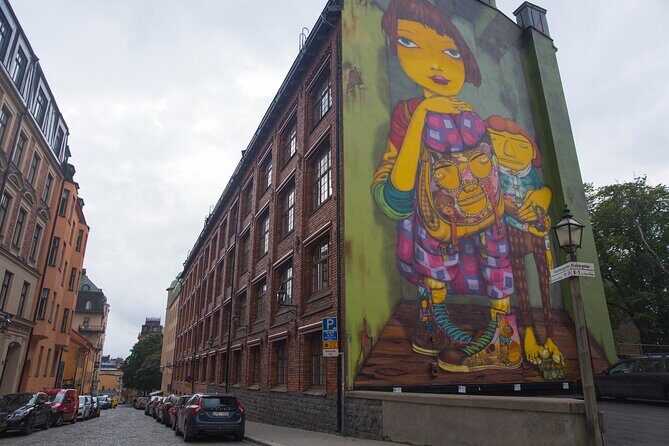
Södermalm’s charm often comes from wooden houses, and you’ll see that character on Master Mikaels gata. The street was named in 1939 after Mikael Reissuer, executor of Stockholm for 15 years in the 1600s.
Today, many of the wooden houses are owned by AB Stadsholmen, a real estate company owned by the government with a mission to care for buildings of cultural heritage. This is one of those details that changes how you look at architecture. It’s not just cute scenery—it’s managed preservation.
Cornelisparken finish: a viewpoint ending in the heart of Södermalm
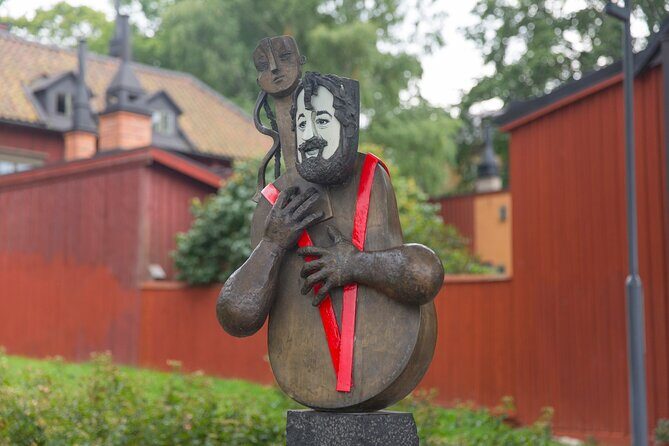
The tour finishes at Cornelisparken, dedicated to troubadour Cornelis Vreeswijk, inaugurated in 2000. The tour describes it as offering breathtaking views of Stockholm.
This ending point is practical for you: once you’re done, you’re dropped in a neighborhood where you can keep walking on your own without needing a transit plan right away. And because it’s private, you can also ask your guide to adjust how much distance you cover before you wrap up, depending on weather and energy.
How long is enough? Using a 3-hour private walk wisely
Three hours sounds short until you do it with a good guide. The trick is knowing what you’re buying: you’re not buying a full day of sightseeing. You’re buying direction, context, and a path that makes independent exploring easier afterward.
This tour is especially strong as:
- an early-day orientation so you can decide what’s worth ticketing later
- a low-stress first visit when you want the big landmarks plus the side streets
- a customizable private experience, where you can tell the guide what matters most to you before you set off
The guide will ask what you’re interested in. If you want more history, ask for more. If you care about architecture, steer that way. Private tours work best when you actively communicate.
Price and value: what $418.80 buys you (and what it doesn’t)
At $418.80 per person, you’re paying for a private guide and a focused route that covers many famous points in a single morning or afternoon window. For many people, that price feels high compared with group tours—but it can make sense when you factor in what you actually avoid:
- time wasted figuring out a route
- the hassle of jumping between sites with no context
- and the stress of trying to make sense of Old Town alone on your first day
You also get coffee or tea plus pastry, which is a real cost saver in a city where a café stop adds up fast.
What’s not included is also important:
- Royal Palace entrance isn’t included
- Stockholm Cathedral entrance isn’t included
So the best value happens if you’re happy with exteriors on this day and treat ticketed interiors as optional extras.
Who should book this Stockholm walk, and who might skip it
Book this if you:
- want a first-timer route that still shows personality
- like learning the story behind places, not just where they are
- appreciate a break for fika rather than nonstop walking
- want private pacing, with the ability to end early if you need to
Consider a different plan if you:
- want a fully indoor, ticket-heavy day with minimal walking
- dislike cobblestones or have limited mobility for a steady walking pace
- prefer a purely museum-style experience over neighborhoods and streets
Should you book this tour?
If you’re visiting Stockholm for the first time and want your day to make sense quickly, I’d book it. The Norrmalmstorg-to-Södermalm route gives you both the landmark layer and the local texture, with a guide who can explain why the city tells certain stories the way it does. Add the included fika and the private format, and it’s a solid way to get oriented without feeling rushed.
FAQ
How long is the Stockholm walking tour?
The tour runs for about 3 hours.
Where does the tour start and where does it end?
You meet in Norrmalmstorg, Stockholm, and the tour ends at Cornelisparken (Cornelis park 116 20, Stockholm).
Is this a private tour?
Yes. It’s a private tour/activity, and only your group participates.
What’s included in the tour price?
You get a professional guide plus coffee and/or tea fika (coffee or tea with a pastry).
Is the tour in English?
Yes, it’s offered in English.
Are there admission fees for the Royal Palace or Stockholm Cathedral?
Yes. The Royal Palace is listed as not included for admission, and Stockholm Cathedral also has an admission fee not included.
What about the rest of the stops—are they free to see?
Most stops listed are marked free, including areas like Norrmalmstorg, Stortorget, and the public outdoor statue stops. Some paid entrances are specifically noted for the Royal Palace and Stockholm Cathedral.
Does the tour run in bad weather?
It operates in all weather conditions, so dress comfortably and appropriately.
What is the cancellation deadline for a full refund?
You can cancel for a full refund up to 24 hours in advance of the experience’s start time.