REVIEW · STOCKHOLM
Classic Stockholm Small Group Walking Tour | 3 Hours
Book on Viator →Operated by Adding:tours · Bookable on Viator
Old Stockholm feels like a real-time story. This 3-hour small-group walk turns Södermalm to the Old Town and up to Stockholm City Hall into one clear route of people, power, and place, guided in English by locals such as Kenneth or Rachel. I especially like how the guide stitches together big events and small details, so you understand what you’re standing on, not just what it looks like.
I also love the practical way the tour covers contrasts: cobbled lanes and tiny staircases (yes, including Mårten Trotzig’s 36 steps) alongside major institutions and modern government buildings. A third thing I like is that you get real help for your day—café and lunch suggestions that make it easy to keep exploring right after the walk.
One consideration: you’ll do plenty of walking on uneven surfaces, and the route includes a steep stair climb, so comfortable shoes matter and moderate fitness helps.
In This Review
- Key Highlights
- A 3-hour Stockholm route that links Old Town corners to today’s power
- Price and value: what $66.52 buys in real-world sightseeing
- Meeting at Götgatan 1 and getting set up smoothly
- Södermalmstorg and Slussen: why Stockholm keeps reinventing itself
- Järntorget and Mårten Trotzigs Gränd: square legends and 36 steps
- A quick Viking connection at Runsten (U 53)
- Churches with foreign roots: S:ta Gertrud and Tyska kyrkan
- Stortorget, the Stock Exchange area, and Nobel Prize building context
- Stockholm Cathedral’s Saint George: medieval politics in bronze and stone
- The Iron Boy: a tiny statue with a big daily ritual
- The Royal Palace area: architecture, statues, and how to watch for guards
- Riddarholmen and the House of Nobility: where monasteries became courts
- Bonde Palace and Riksdagshuset: Sweden’s judicial and legislative centers
- Rosenbad to Stockholm City Hall: finishing at the big stage
- What you’ll remember: the guide’s style matters as much as the stops
- Who should book this tour (and who might want a different option)
- Should you book this Classic Stockholm Small Group Walking Tour?
- FAQ
- How long is the Classic Stockholm Small Group Walking Tour
- How much does the tour cost
- Is the tour in English
- Where do I meet the guide
- Does the tour include museum or attraction entry fees
- Is there a mobile ticket
- What fitness level is needed
- Is it a small group
- What is the cancellation policy
Key Highlights
- Kenneth and Rachel-style guiding: friendly, chatty, and question-friendly during the walk
- Past meets present: Slussen projects, Nobel-era buildings, and today’s Swedish politics
- Photo stops that make sense: statue legends, fountains, and palace-area moments
- Walkable viewpoints, not museum marathons: most sights are seen from the street
- Local food advice included: the guide helps you pick where to eat after
A 3-hour Stockholm route that links Old Town corners to today’s power

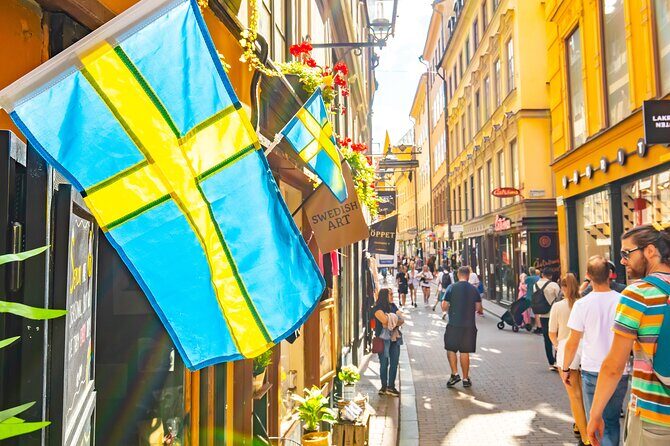
This tour works like a fast but thoughtful orientation to Stockholm. You start near Södermalm, then move through the Old Town side of the city, finishing at a place that feels like the final chapter: Stockholm City Hall. Along the way, you get the kind of context that makes the rest of your trip click.
What makes it feel good is the way the guide paces the walk. Several people loved how the tour stayed flexible—slow enough to ask questions and notice details, but quick enough that the full experience fits into a short visit.
You’ll also see how Stockholm layers its identity. Viking-era clues sit next to German church history. Medieval sculpture sits near modern civic spaces. The city doesn’t switch eras; it stacks them.
You can also read our reviews of more walking tours in Stockholm

Price and value: what $66.52 buys in real-world sightseeing
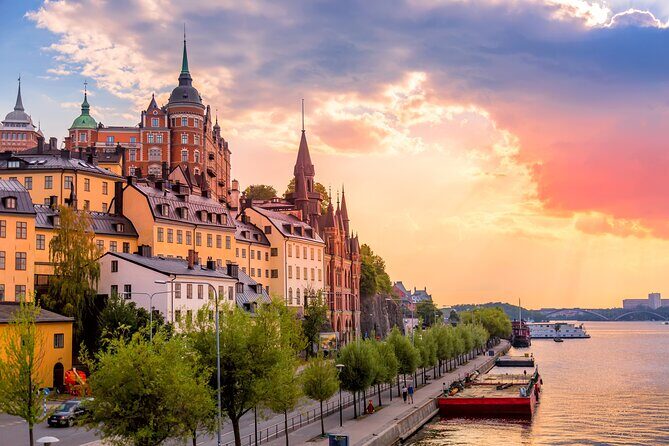
At $66.52 per person for about 3 hours, the value is less about ticket costs (most stops are viewed outside) and more about what you gain from the guide. You’re paying for an organized route, local storytelling, and help you can use immediately—like where to eat and what to prioritize next.
This is also the kind of tour where a small group can change the experience. Reviews describe it feeling like a walk with an educated friend, and in some cases it even turned into a more private setup when booking patterns allowed it. That matters because you’ll actually use the time instead of just hearing facts pass by.
If you like making smart choices on day one—so you don’t waste time guessing what matters—this price is easier to justify.
Meeting at Götgatan 1 and getting set up smoothly
You meet at Götgatan 1, Stockholm, at the east entrance area of the Stockholm City Museum (Stockholms Stadsmuseum). You should receive a message before the tour with specific directions on how to reach the meeting point, plus a phone number for help if you’re lost.
That extra support helps because you’re walking through parts of the city where it’s easy to take a wrong turn in the first minutes. And if you’re coming by rideshare or taxi, double-check the exact pickup area—one review mentioned an Uber drop-off at the wrong spot, and the guide handled it by meeting the group where they ended up.
You’ll have a mobile ticket, and the tour runs in English. It’s also close to public transportation, which is handy if you’re splitting your day between neighborhoods.
Södermalmstorg and Slussen: why Stockholm keeps reinventing itself
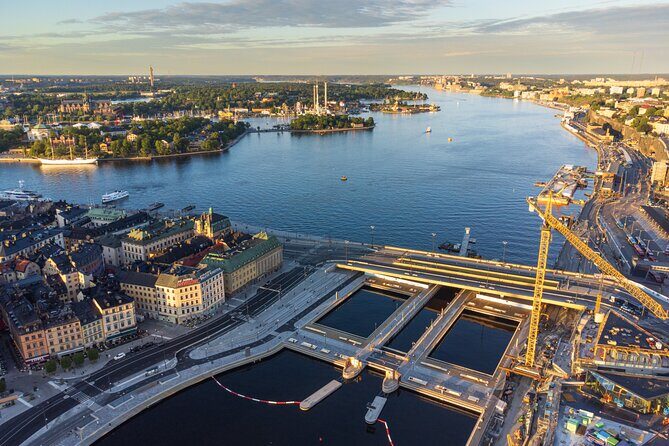
Your first stretch sets the tone: the city as a work in progress. You start around Södermalmstorg, then head toward Slussen, an area tied to both early development and current planning.
Slussen gets special attention here for a reason. It’s not just a transportation spot; it’s a hub for major change. The guide covers the area’s historical role and connects it to the Slussen project (2016–2025), so you understand why the city keeps reshaping this particular knot of streets and water routes.
If you like urban planning and want to see how Stockholm thinks about the future while respecting the past, Slussen is one of the best “anchor” stops in the route.
Järntorget and Mårten Trotzigs Gränd: square legends and 36 steps
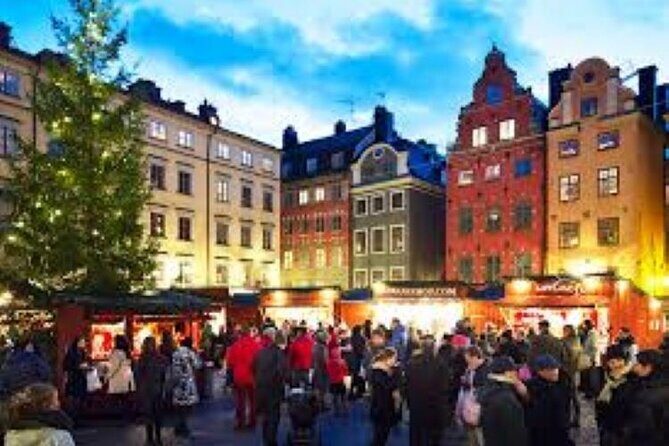
Next comes Järntorget, the Iron Square. The name alone tells you what to listen for, and the guide ties it to older industry and civic life. You’ll also get introduced to an important Swedish poet connected to the route’s later stops—so the story keeps echoing as you move.
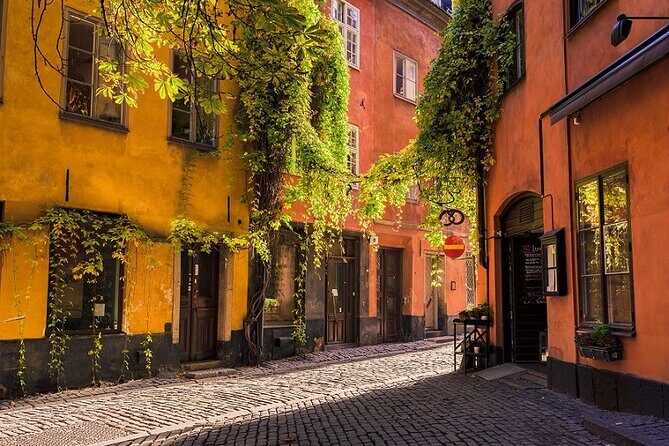
Then you hit Mårten Trotzigs Gränd, one of the most memorable parts of central Stockholm. This narrow alley comes with architecture that feels intimate and old, plus a physical reminder of how the city is built on layers: 36 steps up into the view.
Practical note: these steps and cobbles mean your shoes should be up to the job. One review specifically warned about cobblestones, and I’d treat that as a friendly heads-up rather than a complaint.
The payoff is that you feel transported without needing a museum ticket.
A few more Stockholm tours and experiences worth a look


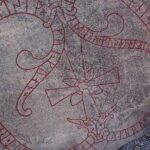

A quick Viking connection at Runsten (U 53)
After the alleyway experience, you get a sharp historical contrast at Runsten (Rune Stone U 53). This isn’t a “look and move on” stop; the guide explains why preserved rune stones matter and how they connect modern Stockholm to its Viking roots.
It’s a small stop in time—just a short moment—but it helps you read the city differently. You start seeing the street names, symbols, and monuments as a long conversation across centuries.
Churches with foreign roots: S:ta Gertrud and Tyska kyrkan
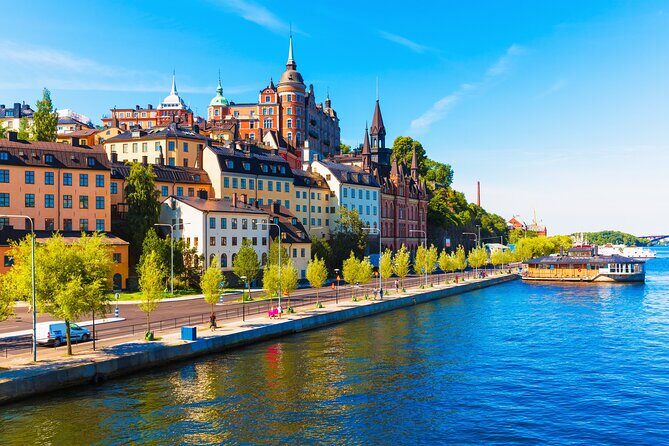
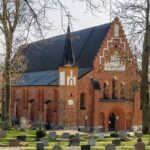
Stockholm’s Old Town isn’t just Swedish. You also get the story of the German church, S:ta Gertrud (Tyska kyrkan). The guide explains that this parish became one of the oldest German-speaking communities outside Germany, dating back to the 1500s.
Key details you’ll hear include the rights granted in 1571 by King Johan III, letting Germans form their own congregation. Later, in 1607, Germans received exclusive rights to an original church cottage, after it had previously been shared with the Finnish-speaking parish.
This stop helps you understand something easy to miss on your own: immigration and local identity in Stockholm were shaped by rulers, permissions, and community building—not just by later centuries.
Stortorget, the Stock Exchange area, and Nobel Prize building context
As you reach the area around Stortorget, you get Stockholm’s “old center” energy. Stortorget is the oldest square in the city, and the guide connects it to major events—most famously the Stockholm Bloodbath in November 1520.
You also move through the architectural orbit around the Stock Exchange building, where the Nobel Prize Museum is located (the museum opened in 2001). Even when you’re not going inside, it’s helpful to understand what the building is and why it matters now.
A few other details make the square memorable:
- The guide points out landmark houses around Stortorget’s perimeter.
- You’ll hear about Stortorgs Källaren and its cannonball story.
- You may also get pointed to the Stortorgsbrunnen area, where a famous ABBA photo was taken in 1976.
If you plan to visit ABBA-related sites later, this stop gives you an easy mental map of where to look.
Stockholm Cathedral’s Saint George: medieval politics in bronze and stone
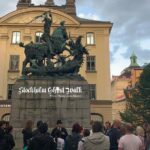
One of the art-history moments is the Saint George and the Dragon sculpture at Stockholm Cathedral (Storkyrkan). The guide explains the legend and, more importantly, the political story behind it.
You’ll hear that the original wooden sculpture arrived in the cathedral in 1489, and art historians connect it to a commission by Sten Sture the Elder after his victory over Union King Christian I at the Battle of Brunkeberg (1471).
That’s the trick with Stockholm art: it’s rarely only decorative. It often doubles as a statement about power, courage, and who won.
The Iron Boy: a tiny statue with a big daily ritual
Then there’s Jarnpojken, the Iron Boy. This stop is brief but charming, and it’s exactly the sort of local tradition you won’t invent on your own.
You’ll hear what people do here—leaving coins, patting the head, and even knitting little garments in winter. That kind of interaction turns the sculpture into a living custom rather than a static landmark.
It’s also a good “reset” stop: history before and after, then a human-scale moment that makes the city feel friendly.
The Royal Palace area: architecture, statues, and how to watch for guards
The route reaches the Royal Palace district, with an architectural overview that starts in the late 1200s and moves through the Tre Kronor castle era. The guide also calls out interior features you can look up later—things like the Hall of State and Royal Chapel—even though the tour itself does not include entrance to these spaces.
You’ll also hear about the significance of statues and figures connected to Swedish history. One detail that often sticks: the current royal family moved to Drottningholm Palace as their private residence in 1981.
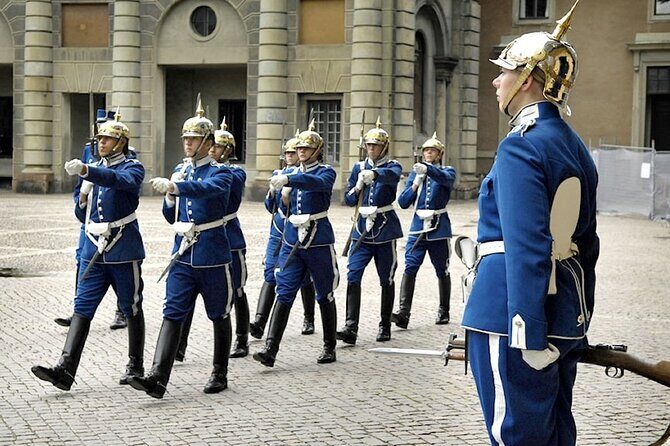
If timing works, you might catch the changing of the guards moment mentioned in a review. Even if you don’t, the guide helps you see what to watch for in the palace area so it doesn’t feel like just another big building.
Riddarholmen and the House of Nobility: where monasteries became courts
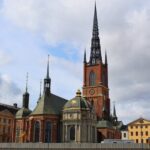
Next you move to Riddarholmen, a key island district with a story that changes direction after major disasters. The guide explains that the Grey Friars Monastery dates to the 1200s, and after the Tre Kronor castle fire in 1697, legal and state agencies began taking over the island.
This is where the tour turns political in a literal way. You see and hear about the island’s landmarks as “living museum” spaces—places still used in some form, not only preserved for aesthetics.
From there, you look at the House of Nobility (Riddarhuset), built between 1641 and 1674, and tied to Sweden’s knighthood and nobility.
Bonde Palace and Riksdagshuset: Sweden’s judicial and legislative centers
The tour doesn’t stop at old stones. It reaches forward into how modern Sweden governs.
You’ll pass Bondeska Palace, connected to Sweden’s Supreme Court, and then continue to Riksdagshuset, the Swedish Parliament building at Riksgatan 1. The guide covers dates and functions: construction between 1895 and 1904, the earlier Riksbank component in the complex, and how in 1971 Sweden shifted from a bicameral system to a unicameral one.
There’s also a cultural stop-within-a-stop detail: the statue titled The Homeless Fox on the premises, plus the note that Greta Tunberg is associated with the building.
If you care about modern Europe beyond museums, this segment is the one that keeps the tour from feeling like only a postcard walk.
Rosenbad to Stockholm City Hall: finishing at the big stage
You close at Stockholm City Hall, and it’s a strong finish. The guide explains the building’s mix of Italian Renaissance, Nordic Gothic, and National Romantic style. You’ll also hear about the Blue Hall and Golden Hall, and that these spaces host events like the Nobel Banquet.
Before the finale, you pass Rosenbad, the Swedish government’s seat. The tour frames it less like a random office block and more like a symbol of governance and the rule of law. That framing helps you connect the dots between the earlier legislative stop (Riksdagshuset) and the civic landmark at the end.
By the time you reach City Hall, the tour’s theme makes sense: Stockholm’s identity isn’t just medieval romance. It’s history, law, and ceremony—stacked in the same neighborhoods.
What you’ll remember: the guide’s style matters as much as the stops
Across the reviews, a consistent praise shows up: guides who answer questions right away, not only at the end. People loved Kenneth and Rachel specifically for being welcoming, flexible, and fun, with personal stories that add texture to the official facts.
You also get a strong practical payoff at the end. The guide shares local advice for good cafes and restaurants, and multiple reviews mention recommendations that helped people choose what to do next without second-guessing.
If you’re a first-time visitor, this kind of guidance can save you hours of wandering on your own.
Who should book this tour (and who might want a different option)
This tour is ideal if you want:
- a fast first-day route through the Old Town-adjacent highlights
- clear context for landmarks you’ll likely pass again later
- a guide who handles questions in real time
- a finished anchor point at Stockholm City Hall so your day has a clean endpoint
It may be less ideal if you:
- struggle with uneven surfaces or stairs, since Mårten Trotzigs Gränd includes 36 steps
- want museum entrances and indoor exhibits, since attractions aren’t entered and entry fees aren’t included
Should you book this Classic Stockholm Small Group Walking Tour?
Yes—if you want a well-paced orientation that blends medieval charm, Viking-era clues, and real modern governance, this is a smart use of a half-day. The small-group feel and the guides like Kenneth or Rachel make it easier to ask what you actually care about, whether that’s politics, architecture, or where to eat when you’re done walking.
Book early if you can, since this tour is commonly reserved about a month ahead. And do yourself a favor: plan for cobblestones, bring comfortable shoes, and show up ready to look closely. Stockholm rewards that.
FAQ
How long is the Classic Stockholm Small Group Walking Tour
It’s about 3 hours.
How much does the tour cost
The price is $66.52 per person.
Is the tour in English
Yes, it’s offered in English.
Where do I meet the guide
The meeting point is Götgatan 1, 116 46 Stockholm, Sweden.
Does the tour include museum or attraction entry fees
No. Entry fees are not included, and attractions are not being entered.
Is there a mobile ticket
Yes, the tour includes a mobile ticket.
What fitness level is needed
You should have a moderate physical fitness level.
Is it a small group
Yes. The maximum group size is listed as 100 travelers.
What is the cancellation policy
Free cancellation is available up to 24 hours in advance for a full refund.