REVIEW · UPPSALA
Uppsala Must See 2h city walk – 2h tour of all big attractions!
Book on Viator →Operated by Sweden History Tours · Bookable on Viator
If you want Uppsala’s big story in two hours, this guided city walk does it in a very practical way, starting near the cathedral and then moving through Viking-era clues, university life, botanic gardens, and the castle’s darker legends. Two things I really like: the pacing stays brisk without turning into a blur, and the guide’s approach feels personal, including adjusting to your pace and helping if you get turned around. One thing to keep in mind is that several stops depend on whether buildings are open, so you may sometimes see the sites from the outside rather than inside.
In This Review
- A tight route with strong guide energy
- What makes this tour feel efficient
- Key things I’d put on your must-do list
- Why this Uppsala walk is good value for $110.15
- Meeting at Riddartorget and what the 5:30 pm timing means
- Uppsala Cathedral exterior and Viking runestones that set the timeline
- Uppsala University Main Building: inside if open, otherwise outside
- Dekanhuset and the darker university-era story (1920–1958)
- Carolina Rediviva Library and the Silver Bible in gothic language
- Botaniska Tradgarden: the short nature break that resets your brain
- Uppsala Castle courtyard murders: the story you still get, even when closed
- Old main square, dombron, river/merchant Uppsala, and quick passing views
- St Erik’s Spring: Saint Erik’s story in a 3-minute stop
- What you get from the guide: pacing plus real-world problem solving
- Who should book this tour, and who should look elsewhere
- Should you book Uppsala Must See 2h city walk?
- FAQ
- What is the duration of the Uppsala Must See city walk?
- What time and where does the tour start?
- Is the tour in English and do I get a mobile ticket?
- What’s included in the price, and what isn’t?
- Do we always go inside each building?
- How large is the group?
- Can I cancel for free?
A tight route with strong guide energy
I also love that you get both the “famous postcard” view and the story behind it, especially around Uppsala Cathedral and the nearby Viking runestones. The route also gives you contrast: quiet nature time in the botanic gardens, then a hard turn toward Uppsala Castle’s murders and the harder history tied to university buildings. The only potential drawback is that the castle is closed to visitors, so you get the courtyard and the tale, not the full interior experience.
What makes this tour feel efficient
This walk is built for people who want the essentials now and the option to come back later. With a max group size of 20 and a 5:30 pm start at Riddartorget, it’s a nice way to spend an evening without planning every detail yourself. Just note that it’s a moderate walking experience and some stops are brief, so if you crave long museum time, you’ll want to pair this with a follow-up visit.
You can also read our reviews of more walking tours in Uppsala



Key things I’d put on your must-do list
- Uppsala Cathedral exterior first, so you get instant orientation before the stories start
- Viking runestones nearby, giving you a timeline anchor without extra fuss
- University stops with inside-or-outside flexibility, based on opening hours
- Carolina Rediviva Library and the Silver Bible when the site allows entry
- Botaniska Tradgarden for a quick reset with local flora and fauna
- Uppsala Castle courtyard only, with the murders story delivered even though interiors are closed
Why this Uppsala walk is good value for $110.15
At $110.15 per person for about 2 hours, you’re paying mainly for two things: a tight route through the center and a guide who connects sites into one clear story. The good news is that many of the stops are set up with admission ticket free, so your money doesn’t disappear into entry fees every ten minutes. Also, all fees and taxes are included, which keeps it simple.
The price also makes sense because you’re covering a lot of major landmarks in one outing. You’re not just seeing a cathedral and calling it done; you’re also getting university buildings, a botanic garden, and multiple historical layers tied to place. The only site that’s explicitly marked as not included for admission is Uppsala Castle, so you’ll want to plan on that limitation if you were hoping for full access.
Meeting at Riddartorget and what the 5:30 pm timing means
The tour starts at Riddartorget (Knights’ Square) on Biskopsgatan (753 10 Uppsala), with the walk ending back at the same meeting point. The 5:30 pm start time can be a sweet spot, especially when you want daylight for the cathedral area and still have energy left for an evening stroll.
It’s also a smart choice because the meeting point is near public transportation, so you’re not dependent on taxis or complicated connections. The group is capped at 20 people, which helps the guide keep track of the pace and questions. You should have at least moderate physical fitness since it’s a walking city route with multiple stops close together.
Uppsala Cathedral exterior and Viking runestones that set the timeline
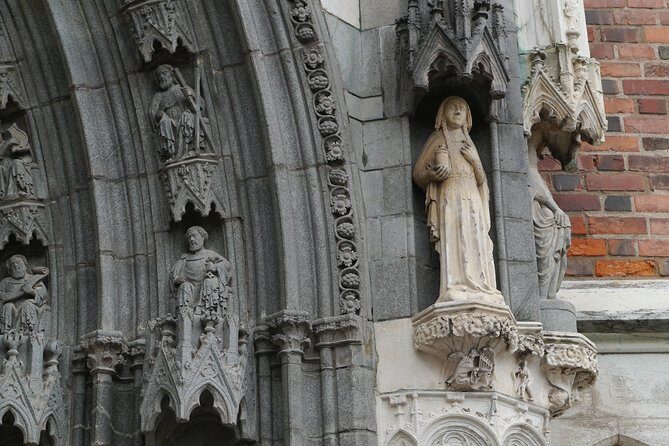
You begin with the biggest cathedral in Uppsala, seen from the outside. Starting this way is actually helpful. From ground level, you get the scale and location, then you can understand why the next stop matters.
Right near the cathedral, you’ll meet Viking age runestones and experience the Viking age right in the area where the city’s story gathers momentum. The tour keeps this part focused and time-efficient (around 20 minutes here), and because admission is ticket free, there’s no extra logjam about entry times. If you’re new to Uppsala, this is one of the best ways to avoid feeling like you’re wandering without a guide’s thread.
Practical tip: bring your camera expectations down a notch. You’ll be taking in façades and stones, not spending hours inside. For best photos, look for angles that capture both the cathedral area and the stone details as you move.


Uppsala University Main Building: inside if open, otherwise outside
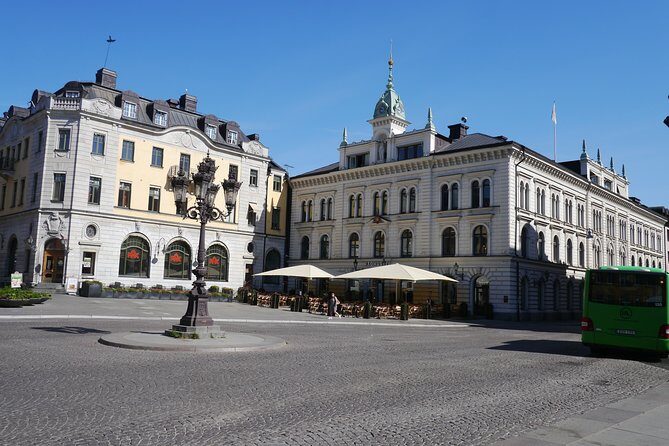
Next comes Uppsala University Main Building, with a simple rule: if it’s open, you’ll visit the main building from the inside; if not, you’ll see the place from the outside. That flexibility matters because it keeps your two hours from getting eaten up by closed doors.
This stop is brief (about 10 minutes), so it’s less about “museum browsing” and more about orientation and historical context. Even if you don’t get inside, you still get a better sense of how the university fits into Uppsala’s identity, especially when paired with the other stops you’ll see later.
If you’re the type who likes reading what a place is saying through architecture alone, this is a good section. Keep expectations realistic: you won’t have time for a deep architectural lecture, but you’ll leave with a clearer mental map.
Dekanhuset and the darker university-era story (1920–1958)
Then you head to Dekanhuset, where the tour covers a darker chapter tied to the Swedish race biology institute and its history from 1920 to 1958. The word “dark” is not used lightly here, because this is where the tour shifts from Viking-era and civic life into the kind of historical context that you don’t always see on a quick city brochure.
This stop runs about 10 minutes and is free of additional admission. That means you’ll get the key points without the expectation that you’ll walk out with every detail memorized. The value here is direction: you learn what the building represents, so if you later want to research further on your own, you’ll know what to look for.
A small practical consideration: because the topic is heavy, a short stop can feel emotionally quick. If you prefer slower pacing for difficult subjects, ask your guide to spend one extra minute on the most relevant parts rather than trying to rush through every sentence.
Carolina Rediviva Library and the Silver Bible in gothic language
One of the most memorable stops is Carolina Rediviva University Library. If the library is open, you’ll enter and see the historical museum and the world-famous silver bible in gothic language. If it’s not open, you’ll still get the tour’s context, just from outside.
This part is given about 20 minutes, which is enough time to absorb what you’re seeing without feeling like you’re racing through. The key value is that this is a site-specific experience: you don’t just hear about history in the abstract. You see an object tied to language, craftsmanship, and religious culture.
Practical tip: if the interior is open, keep your phone settings ready. Museums and display areas often have dimmer lighting, and you’ll want to capture quickly and respectfully. Also, allow a moment to read any labels or guidance the guide points out, since the tour time is limited.
Botaniska Tradgarden: the short nature break that resets your brain
After heavier history stops, you’ll get a breather at Botaniska Tradgarden. It’s described as one of the world’s oldest botanical gardens, and you’ll explore it with your guide if the garden is open.
This stop is short (about 10 minutes), so you’re not going to tour every path. Instead, think of it as a palate cleanser. The tour explicitly focuses on local flora and fauna, and that mix of science and place helps your earlier stops land better. When you move from runestones and institutional buildings into living plants, the city feels more complete.
If you’re traveling in summer or shoulder seasons, this is also the part where you can slow down for a minute, notice what’s blooming or growing, and take a few photos before you jump back into the built environment.
Uppsala Castle courtyard murders: the story you still get, even when closed
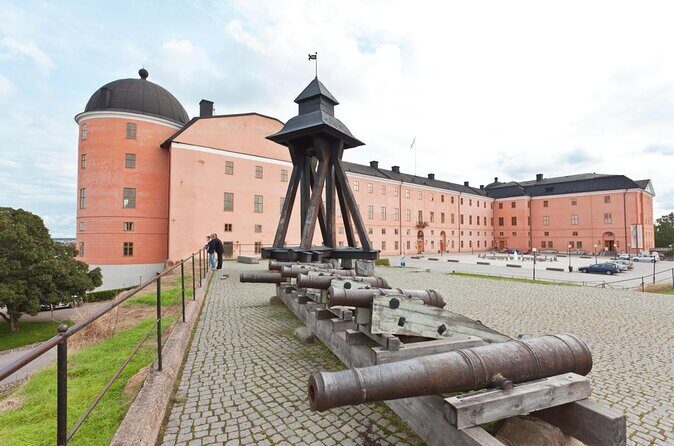
At Uppsala Castle (Uppsala Slott), the tour gives you access to the courtyard, but the castle itself is closed for visitors. You’ll still hear about murders tied to the castle, delivered as a guided story rather than a self-paced interior walkthrough.
This is a big trade-off to understand before you go. If you want walls, rooms, and long indoor viewing, this won’t satisfy that craving. What it does do is give you the mood and the narrative center that people usually come for when they later do a fuller castle visit on their own.
Admission for the castle is noted as not included, which also signals that you shouldn’t expect a full ticketed interior. Still, the courtyard stop is about context. It helps you connect the castle’s reputation to the people and eras the guide has already been discussing.
Old main square, dombron, river/merchant Uppsala, and quick passing views
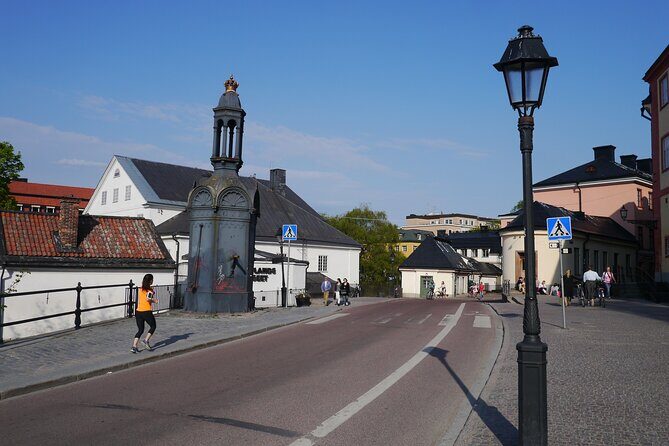
After the castle, you move into the heart of historic city life with a short stop for Uppsala’s old main square and dombron. You’ll also hear about the history of the river and merchant Uppsala, which is a practical addition because it explains how the city functioned, not just what it looked like.
There are also a couple of “walk-by” moments that work well for a 2-hour overview:
- You’ll see the old mill that Upplandsmuseet stands inside.
- You’ll walk past the anatomical theatre at Museum Gustavianum from the outside.
These are quick, but they add variety. You’re not stuck repeating the same type of sight. The tour keeps it moving, so you get more locations without needing long entry times.
One warning for expectations: because these are brief views, you shouldn’t plan on reading every sign or studying details for long. If something catches your eye, jot it down mentally so you can return later.
St Erik’s Spring: Saint Erik’s story in a 3-minute stop
The final storytelling stop is Sankt Eriks Kalla, where you walk past the spring connected to Saint Erik. You’ll hear about the battle and his sainthood, and the stop is very short (around 3 minutes).
This tiny segment is easy to overlook if you expect your tour to end with a big “finale.” But it works because it gives the evening a closing theme: the city’s history isn’t only Viking era or university era. It’s also tied to religious legend and local identity.
If you’re the type who enjoys fast, memorable closing facts, this end works well. If you prefer quiet, reflective pacing, you might want to ask the guide for one extra sentence here so it doesn’t feel like an afterthought.
What you get from the guide: pacing plus real-world problem solving
The strongest endorsement for this tour isn’t just the list of sites. It’s how the guide handles the route when real life happens. I like that the guide adjusts pacing and meets people where they are, which matters when you’re trying to hit many stops without making anyone sprint.
One example that stands out is that the guide can find you if you get lost, and that keeps the experience from turning stressful. In a city center with similar-looking streets and multiple entrances to university buildings, that kind of competence is quietly valuable.
Because the group is limited to 20 people, you’re not a number in the crowd. That size makes it easier for the guide to keep control of timing while still giving enough attention to questions.
Who should book this tour, and who should look elsewhere
This walk is ideal for you if:
- You have limited time in Uppsala and want a solid overview.
- You care about Viking connections and want them explained where they appear.
- You like the mix of cathedral views, university context, a botanic garden pause, and a castle story.
It’s less ideal if:
- You want deep museum time or long interior visits at each site.
- You’re hoping for a full Uppsala Castle interior experience, since the tour is courtyard-only and notes closure.
- You dislike walking routes with multiple short stops.
Should you book Uppsala Must See 2h city walk?
I think you should book this if you want a high-efficiency introduction to Uppsala and a guide who can keep things on track. The value comes from combining several major sites into one coherent story, while many stops are ticket-free and the route stays tight.
On the other hand, if your top priority is full entry access to every landmark, this tour will feel capped by opening hours and closure at Uppsala Castle. For most first-time visitors, that limitation is also the point: you get oriented quickly, then you return later for the deeper experiences that match your interests.
FAQ
What is the duration of the Uppsala Must See city walk?
The tour is about 2 hours.
What time and where does the tour start?
It starts at 5:30 pm at Riddartorget (Knights’ Square), Biskopsgatan, 753 10 Uppsala, Sweden, and ends back at the meeting point.
Is the tour in English and do I get a mobile ticket?
Yes, it is offered in English, and you receive a mobile ticket.
What’s included in the price, and what isn’t?
All fees and taxes are included. Gratuities are not included, and Uppsala Castle admission is not included.
Do we always go inside each building?
No. Some stops say inside access is only if the building is open; otherwise you’ll see the site from the outside. Botaniska Tradgarden and the university/library interiors depend on whether they are open.
How large is the group?
The tour has a maximum of 20 travelers.
Can I cancel for free?
Yes. You can cancel up to 24 hours in advance for a full refund. If you cancel less than 24 hours before the start time, the amount you paid will not be refunded.