REVIEW · UPPSALA
Cube of Art Uppsala Museum of Interactive Art
Book on Viator →Operated by Cube Of Art · Bookable on Viator
That black cube in Uppsala is not normal museum stuff. It’s a 7-meter-tall, laser-and-lidar setup where digital artworks respond to your steps and touch, turning a simple visit into a hands-on light-and-sound performance.
What makes it extra fun is the blend of digital art and interactive tech—you’re not just watching, you’re affecting what happens.
I especially like two parts: the way the art reacts in real time to movement and the room-scale setup that makes the whole space feel like the artwork. It’s built for people of different ages, and it works well whether you’re there with kids, as a couple, or as a small group.
One consideration: the interaction is powerful, but it can feel a bit tight when more people are in the cube, and some of the tech’s reactions may feel limited depending on what you try to do.
In This Review
- Key things to know before you go
- Entering the Black Cube: What Makes This Museum Different
- Your Hour Inside: How the Experience Usually Plays Out
- The Tech-Art Magic: How Lidar Changes What You Think You’re Seeing
- What You Can Do in the Cube (and Why It Works for Kids)
- Color, Sound, and the AI Factor: What to Expect From the Visuals
- Practical Info That Affects Your Day
- Where it is and how to get there
- When it’s open
- Ticket style and timing
- Pick-up
- Price and Value: Is 21.68 USD Worth It?
- Who This Experience Is Best For (and Who Might Want Something Else)
- Best Booking Strategy and Timing for a Smoother Visit
- Should You Book Cube of Art in Uppsala?
- FAQ
- How long does Cube of Art take?
- How much does the ticket cost?
- Is admission included in the experience price?
- What are the opening hours?
- Do I get a mobile ticket?
- Is hotel pick-up and drop-off included?
- Will I receive confirmation after booking?
- Is the experience near public transportation?
- Can most people participate?
- What is the cancellation/refund window?
- What happens if the minimum number of travelers isn’t met?
Key things to know before you go

- 7-meter black cube: a dramatic, room-filling space designed for big visuals and full-body interaction.
- Laser and lidar tech: the system tracks your movement so the art can change shapes, colors, and sounds.
- Hands-on without art skills: you can draw and influence what you see, even if you’re not the creative type.
- Good for families and team time: it’s intuitive enough that people start interacting quickly.
- Plan for the room’s size: it can feel cozy with a few people, but tight if the group is larger.
Entering the Black Cube: What Makes This Museum Different

Cube of Art is built around a single idea: art should react to you. The space is a specially designed black cube with a ceiling height of 7 meters, and it’s equipped with laser and lidar technology that tracks what you do in the room.
Here’s the practical payoff: instead of standing still and reading labels, you’ll be moving. Every step and touch can shift what you see—shapes may develop, colors can shift, and sounds can change as the system responds to your position and actions. That makes the museum feel less like a gallery visit and more like stepping into a digital instrument.
You also get a clear theme: art meets science. The museum focuses on innovative artworks by both established and emerging artists experimenting with digital art and interactive tech. So even when you’re just playing around (which you will), you’re still watching creative people test what’s possible.
You can also read our reviews of more tours and experiences in Uppsala.



Your Hour Inside: How the Experience Usually Plays Out

The experience runs about 1 hour. That time window matters, because it sets expectations. You’re not looking at a half-day exhibition with dozens of rooms. Instead, you’re getting a concentrated session in one high-impact environment.
The interaction is structured around the cube’s technology. You move, the sensors read your movement, and the art reacts. Then you’ll likely want to test things—stand closer, change your pace, try a different gesture, or draw on the interactive surfaces if that option is part of your session.
A useful mindset: treat it like a performance you help create. You’re not trying to “solve” the system. You’re exploring cause and effect. The more you move and experiment, the more the cube feels alive.
One thing to keep in mind: the session can feel best when the room isn’t packed. Some people find it cozy with just a few participants, while larger groups can start to feel uncomfortable simply because the cube is a single space and there isn’t much room to spread out.
The Tech-Art Magic: How Lidar Changes What You Think You’re Seeing
Lidar isn’t just a fancy acronym here. It’s what helps the cube adapt to your movement in real time. In a normal museum, the artwork stays put. In this cube, the artwork is more like a living system that notices where you are and what you’re doing.
So what does that look like? You can expect the art to change based on your presence. As you move or touch interactive elements, the system can shift shapes and colors and trigger sound changes. In other words, your body becomes part of the artwork.
You’ll also see the “digital art” side in how the visuals behave. Some of the interactions are based on recognition—like responding to what you draw. When the system locks onto your input, it feels like a creative win. When it doesn’t fully understand what you tried, you still get motion and reaction, but the outcome may feel less impressive than you hoped.
That’s the balanced takeaway: the tech is genuinely fun, but it’s not magic. Some people wish the recognition was more advanced or that the visuals felt more chaotic and intense. If you go expecting a perfect AI partner, you might be slightly disappointed. If you go expecting a playful machine that reacts, you’ll likely have a better time.
What You Can Do in the Cube (and Why It Works for Kids)
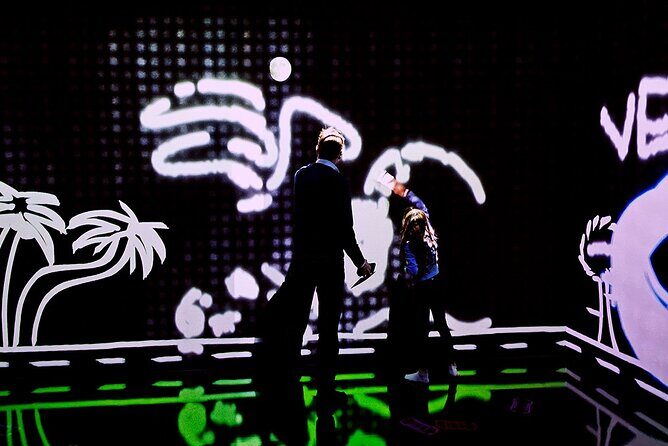
This is the kind of activity where kids don’t need instructions to have fun. The interactive setup is intuitive enough that people often start exploring right away, which is a big deal when you’re traveling with little ones and you don’t want a long “stand here and wait” experience.
The cube supports that hands-on learning in a low-pressure way. You’re not graded. You’re not being tested on drawing skills or art knowledge. You just act, and the room responds. That brings out the childlike joy in adults too, because the cause-and-effect is immediate.
It’s also a solid option for teens and adults who want something creative but not overly serious. The novelty factor is real. Even after you get the basics, you’ll likely keep testing new movements because the system keeps changing what it displays and plays.
If you’re traveling as a group, it can work for team energy as well. The interactive nature makes it natural for people to take turns, compare results, and react to what the cube does next.
The main limitation is the room size. If you’re with a lot of people, you may feel squeezed. And if you have a small group, the cube can feel more comfortable—like you can actually enjoy the interaction without constantly stepping around someone else.
Color, Sound, and the AI Factor: What to Expect From the Visuals

This cube is designed to make art feel physical. Even though it’s digital, the system is linked to movement and touch, so the experience reads as more immersive than a screen-based attraction.
Still, people have different expectations for what they want from the visuals. Some sessions feel wonderfully magical to the eyes, and the art can feel like it’s bursting into motion. But others point out that the color chaos and intensity could be stronger, and that the range of what the AI recognizes from drawings may feel limited to certain shapes, animals, or objects.
Here’s how you can use that info to plan your own experience. If your goal is experimenting with drawing-based input, go in with flexible expectations. Think of your drawings more like prompts than guaranteed “perfect results.”
If your goal is just to have fun with movement and sensory feedback—watching light and sound shift as you walk and touch—then you’re likely to be happy with the experience even if some parts of the recognition system are inconsistent.




Practical Info That Affects Your Day

Where it is and how to get there
Cube of Art is in Uppsala, Sweden, and it’s near public transportation. That matters in Sweden because the transit system can be a lifesaver when weather changes, and Uppsala is manageable on foot once you’re in the right area.
When it’s open
The cube runs Wednesday through Sunday, 10:00 AM to 6:00 PM for the listed operating period. If you’re visiting outside those days, you’ll need a backup plan.
Ticket style and timing
You get a mobile ticket, and the experience runs about one hour. Book it with enough buffer around it. When you’re in a place like this, you’ll lose track of time faster than you think.
Pick-up
No hotel pick-up or drop-off is included. So plan to arrive under your own steam with local transit, taxi, or walking.
Price and Value: Is 21.68 USD Worth It?

At $21.68 per person, this isn’t a cheap activity, but it’s not outlandish for a technology-driven, one-hour, high-impact experience. The value comes from what you’re paying for: not a guided lecture, not a long walking tour, but a full-body, interactive environment with lidar and laser tech.
Think of it like paying for a performance you participate in. You’re spending about an hour in a carefully designed digital space that reacts to you. That’s very different from paying for a traditional exhibition where you mostly observe.
The best “value match” is when you’ll actually use the interaction. If you’re going with kids, this type of activity can be worth every krona because it keeps attention and makes everyone involved. If you’re going solo or as a couple, you’ll still enjoy it, but you should plan to actively try different actions instead of just watching from the sidelines.
Also, booking a bit ahead can help—this experience is commonly booked around 17 days in advance on average. If your schedule is tight, early booking gives you more room to choose a time.
Who This Experience Is Best For (and Who Might Want Something Else)

This is a strong fit for families. The interactive wall and floor (plus the room-scale tracking) make it easy for very young kids up through teenagers to participate. Rainy-day travel plans also benefit, because it’s an indoor activity.
It’s also a good pick for adults who like tech and creativity, especially if you want something different from another museum room of quiet displays. The experience can feel fun and intuitive fast, which is rare for hands-on attractions.
If you’re the kind of traveler who hates feeling crowded in small spaces, be mindful of group size. The cube can be cozy with a few people, but it can feel uncomfortable when more participants are inside. If you’re sensitive to that, consider going when you expect fewer people, or go earlier in the day when possible.
Finally, if you’re mainly interested in detailed art history or long explanations, this probably won’t be your top priority. This is about interaction and what the tech makes possible in that one focused hour.
Best Booking Strategy and Timing for a Smoother Visit
Since the hours are limited to Wednesday through Sunday, try to line it up with a day when you can spare the full session without rushing. Arriving with a little extra time helps because you’ll want a moment to get oriented inside the cube before you start experimenting.
Plan for a small learning curve. You’ll figure it out quickly, but give yourself time to try a few approaches so you don’t spend the best moments simply figuring out where to stand.
If you’re going with kids, treat it as an activity you’ll build around. With younger children, having a session length of about an hour is often perfect—long enough for excitement, short enough to prevent melt-downs.
Should You Book Cube of Art in Uppsala?
I’d book this if you want a hands-on, tech-forward experience that feels like play as much as art. For families, it’s especially strong because the interaction is intuitive, and the setting turns a normal museum visit into something memorable for kids and calming for parents (no long lecture, no constant “hurry up”).
You should think twice if you expect a huge variety of rooms or if you get uncomfortable when spaces feel crowded. Also, if you’re hoping for ultra-precise AI recognition of your drawings, go in with lower expectations. The fun is still there, but the system’s responses may be more hit-and-miss than you’d like.
Overall, for a one-hour stop in Uppsala, Cube of Art offers solid value, a clear theme, and a real sense of novelty—exactly the kind of evening activity you can be excited about even when your sightseeing list feels long.
FAQ
How long does Cube of Art take?
The experience lasts about 1 hour.
How much does the ticket cost?
The price is $21.68 per person.
Is admission included in the experience price?
Yes, the admission ticket is included.
What are the opening hours?
Cube of Art is open Wednesday through Sunday, 10:00 AM to 6:00 PM.
Do I get a mobile ticket?
Yes, it’s a mobile ticket.
Is hotel pick-up and drop-off included?
No, pick-up and drop-off are not included.
Will I receive confirmation after booking?
You’ll receive confirmation at the time of booking.
Is the experience near public transportation?
Yes, it’s near public transportation.
Can most people participate?
Most travelers can participate.
What is the cancellation/refund window?
Free cancellation is available up to 24 hours in advance for a full refund.
What happens if the minimum number of travelers isn’t met?
If it’s canceled because the minimum isn’t met, you’ll be offered a different date/experience or a full refund.