REVIEW · STOCKHOLM
Stockholm Troll Hunt: Self-Guided Old Town Adventure
Book on Viator →Operated by Questo · Bookable on Viator
Stockholm can be serious. This one is playful. A self-guided troll hunt turns Gamla Stan into an outdoor classroom, and I like that it’s private—just your group, not a shared shuffle.
You get the content in a fully virtual way, so you can pause and resume without worrying about matching a live guide’s pace. That’s a big deal when you’re also stopping for photos, snacks, or just getting turned around in the old lanes.
One thing to watch: setup and translation clarity can make or break the experience. In at least one case, installation took about an hour and some questions were hard to understand, so test your phone before you rely on it.
In This Review
- Key things to know before you go
- From Royal Swedish Opera to Stortorget: your Troll Hunt route
- A fully virtual quest with 12 interactive puzzles
- Flexibility you’ll actually use
- Private doesn’t just mean quieter
- The one drawback: you rely on your phone
- Stop-by-stop: what you’ll learn and where the clues hide
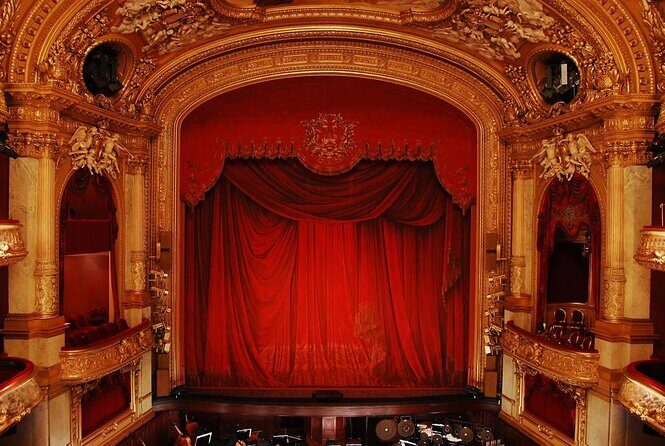
- 1) Royal Swedish Opera: the birth of a Swedish ensemble
- 2) The parliament story: the Four Estates idea
- 3) The 18th-century palace and Baroque swagger
- 4) The Royal Armoury: royal weapons and a grim little legend
- 5) Storkyrkan (Stockholm Cathedral): Birger Jarl’s oldest church connection
- 6) The sculpture behind the Finnish Church: Liss Eriksson’s long timeline
- 7) Saint George and Sten Sture: after Brunkeberg
- 8) Den Gyldene Freden: a “Golden Peace” that never moved
- 9) Järntorget: the trade square where goods moved by ship and by attic
- 10) The elongated space with the public library and Storkyrkoskolan
- 11) Sankta Gertrud: a German-dominated neighborhood turned church dedication
- 12) The Palace of the Purse: Erik Palmsted’s rococo and the Nobel Museum seat
- Timing in Gamla Stan: when 50 to 75 minutes really works
- Price and value check: why $7.21 can be a smart use of time
- Who should book this troll hunt (and who should skip it)
- Common hiccups to plan for before you start
- Should you book Stockholm Troll Hunt?
- FAQ
- How long is the Stockholm Troll Hunt?
- Is this a private tour or shared experience?
- Do I need a physical tour guide?
- Is it self-guided or virtual?
- What’s included in the mobile quest?
- What language is the tour available in?
- Where do I start and finish?
- How far in advance should I book?
- Can I cancel for a full refund?
- Are service animals allowed?
Key things to know before you go
- Private group, self-paced: only your friends take part, and you control the timing.
- 12 interactive challenges: each step ties into legends and real Old Town facts.
- Mobile access code: you’ll use your phone to access the quest content during the walk.
- Pause and resume anytime: helpful if you get delayed or want to break it up.
- Anchored route: you start at Royal Swedish Opera and finish near Stortorget.
- Family-friendly style: puzzle format works well beyond adults.
From Royal Swedish Opera to Stortorget: your Troll Hunt route

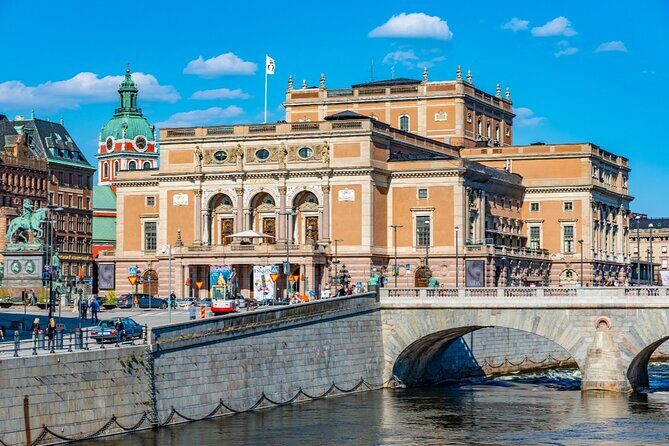
This quest is built around a classic Stockholm walk through Gamla Stan, with a clear start and finish. You begin at the Royal Swedish Opera (Kungliga Operan, Gustav Adolfs torg 2), then work your way toward Stortorget (Stortorget 7). That matters, because you’re not guessing where to go next—you’re moving through the city with a story in your pocket.
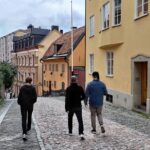
What I like about this kind of route is that Stockholm’s Old Town can feel like a maze at first. Here, each stop gives you a reason to look up, look closer, and keep going. You don’t need a guide to tell you what you’re seeing—you need the phone quest to tell you what to find.
Also, the tour window runs daily from 5:00 AM to 9:00 PM, which gives you flexibility. You’re not locked into a single evening slot, and you can match the walk to your energy level (or daylight).
You can also read our reviews of more guided tours in Stockholm


A fully virtual quest with 12 interactive puzzles
This isn’t a live walking tour. It’s a self-guided experience you complete using your mobile access code. You’re given 12 interactive puzzle challenges and storyline content inspired by Stockholm’s legends and history.
Each time you reach a stop, the challenge is designed so you’ll need to look around to answer. That turns the old buildings and statues into clues, not just scenery. Practically speaking, it’s a better fit for real sightseeing than “stand here and listen” tours, because you’re always doing something with your attention.
Flexibility you’ll actually use
The biggest advantage is that you can pause and resume anytime. So if you stop for coffee at Den Gyldene Freden, or you drift toward the water for a minute, you’re not going to “fail” the schedule. You can resume later and keep the quest going.
Private doesn’t just mean quieter
Because it’s private (your group only), you avoid the slow-motion bottleneck of waiting for strangers. That can cut down frustration, especially when you’re trying to solve puzzles at a place where you need a decent look at details.
The one drawback: you rely on your phone
Since the experience is mobile-based, any phone hiccup affects you. If your battery is low, your signal is weak, or you haven’t tested the quest on-site, it can slow everything down. I’d treat this like a mini “tech assignment,” not a casual stroll.
A few more Stockholm tours and experiences worth a look






Stop-by-stop: what you’ll learn and where the clues hide
Below is the order you’ll encounter as the quest moves from one Old Town landmark to the next. Expect a pattern: you arrive, you’re asked to find something that advances the storyline, and you’ll learn a real historical thread while you hunt for the answer.
1) Royal Swedish Opera: the birth of a Swedish ensemble
Your first major stop is the Royal Swedish Opera. The story here connects to King Gustav III’s big cultural shift. He fired the French opera troupe that had been performing for about 20 years, because he wanted a Swedish ensemble that could stage Swedish operas. The first performance in the opera’s national theatre role is tied to January 18, 1773, and the company later moved into the new opera house when it was completed in 1782.
For the puzzle, you’ll be searching the area for the clue that gets you moving on. This is a strong starting point because you’re grounding the quest in a “how Stockholm got its institutions” story right away.
2) The parliament story: the Four Estates idea
Next you’ll tackle a political origin point often linked to Arboga in 1435. The lesson is simple but useful: Sweden’s government changed over time, and parliament became represented through the Four Estates—nobility, clergy, burghers, and peasants.
This stop is a good reminder that old cities weren’t just built for kings and churches. They were built for systems: who had power, who had voice, and how decisions got made. Expect the puzzle answer to come from careful observing around the site.
3) The 18th-century palace and Baroque swagger
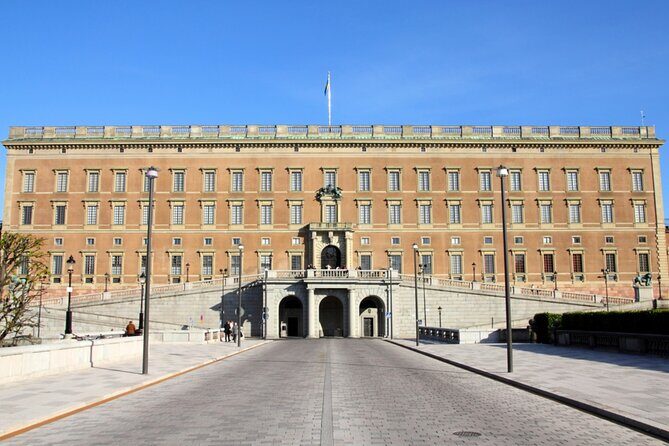
Then the quest points you to a palace described as first built in the 18th century, a project that created a stir across Europe and is today seen as emblematic of Baroque architecture.
This is one of those stops where the “find the answer” mechanic nudges you to look past the obvious. Instead of just appreciating the style, you’re being trained to connect the building’s details to the story being told.
4) The Royal Armoury: royal weapons and a grim little legend
At the Royal Armoury, the focus turns to some of its oldest objects: royal state and ceremonial weapons stored in the old Three Crowns Palace during the 16th century. The story gets darker with Gustavus Adolphus in the 1620s, who supposedly wanted blood-spattered clothes saved as a perpetual memoria.
This stop is a reminder that Stockholm’s grandeur often runs beside raw history. For the puzzle, you’ll likely be hunting for a detail connected to the armoury’s historical identity—something you can only catch if you slow down.
5) Storkyrkan (Stockholm Cathedral): Birger Jarl’s oldest church connection
Now you reach Storkyrkan, officially Church of St. Nicholas. It’s described as the oldest church in Gamla Stan, first mentioned in 1279, and linked by tradition to Birger Jarl, the founder of the city.
This is a great learning stop because it anchors the quest in the earliest layer of the city. It’s also one of the more “pause and look” locations, where the act of searching for the puzzle clue makes you pay attention to how church history shapes the neighborhood.
6) The sculpture behind the Finnish Church: Liss Eriksson’s long timeline
The quest then sends you to a sculpture created in 1954 by Swedish artist Liss Eriksson, but inaugurated in 1967. The key practical detail: it’s located behind the Finnish Church, only a few meters off the Stockholm Palace, and it can be hard to spot because of its secluded location.
This is one of the stops where the puzzle approach really helps. The location detail gives you a clear hunting strategy—don’t expect a postcard view. Look for the quieter, tucked-away position.
7) Saint George and Sten Sture: after Brunkeberg
Next comes a statue commissioned by Sten Sture the Elder after his victory over the Danish army in the Battle of Brunkeberg in 1471. During the battle, Sten Sture put his army under the protection of Saint George. The sculpture isn’t signed by him, but it’s widely attributed to the workshop of Bernt Notke.
This stop adds action to the history. You’re not just reading dates—you’re connecting religion, war, and public memory through a statue. For the puzzle, the clue is likely tied to the statue’s subject or the story behind it.
8) Den Gyldene Freden: a “Golden Peace” that never moved
At Den Gyldene Freden (translated as The Golden Peace), the tale focuses on staying power. It opened in 1722, has delighted Stockholmers for nearly 300 years, and has even counted members of the Royal Academy among its regulars. The best part for lovers of continuity: it hasn’t moved from its original location.
If you like your city history served with a side of atmosphere, this is where the quest lands. It’s also a convenient mental break in the route, since you’ll likely want to stop, taste something, and then return to the next puzzle with clear focus.
9) Järntorget: the trade square where goods moved by ship and by attic
Then you reach Järntorget, described as Stockholm’s second oldest square, slightly younger than Stortorget. It dates back around 1300 and served as the city’s most important trade centre for centuries. The description even paints the sensory picture—crowds, scents, noise—and how goods moved from shore to shore and up and down the attics of surrounding buildings.
This is a smart stop for puzzles because squares are full of “stuff” to notice. You’ll get better value if you take a few minutes to observe the edges of the square before rushing to the next clue.
10) The elongated space with the public library and Storkyrkoskolan
After the market square energy, the quest moves to an elongated open space described near the public library and the major school Storkyrkoskolan (“School of the Great Church”). It’s called a square, but the text suggests it may be more like a street depending on your definition.
This stop works well if you enjoy the everyday side of Old Town life—education, public services, and how the neighborhood functions beyond landmarks. The puzzle answer will be tied to the setting, so don’t just walk through.
11) Sankta Gertrud: a German-dominated neighborhood turned church dedication
Next is Sankta Gertrud, located between several streets: Tyska Brinken, Kindstugatan, Svartmangatan, and Prästgatan. The area’s medieval identity mattered: the neighborhood was dominated by Germans. The church is officially dedicated to Saint Gertrude (626–659), abbess of the Benedictine monastery of Nivelles in present-day Belgium, and patron saint of travellers.
This is one of the most “human” stops because it connects movement—travel—with a specific saint story. It also helps you understand why Old Town neighborhoods had ethnic identities tied to trade and community.
12) The Palace of the Purse: Erik Palmsted’s rococo and the Nobel Museum seat
Your final big educational stop brings you to a building with deep civic and cultural weight: the palace of the purse, built between 1773 and 1776 by Erik Palmsted in French rococo style. Today it’s the seat of the Swedish Academy and the Nobel Museum. The fountain in the square was also built by Palmsted.
This landing point is a strong finale because it links art style (rococo), institutions (Swedish Academy), and global fame (Nobel Museum) right as you finish near Stortorget.
Timing in Gamla Stan: when 50 to 75 minutes really works
The quest duration is listed as 50 minutes to 1 hour 15 minutes. In real life, your completion time will depend on how many times you pause for photos or snacks, and how quickly you spot the details needed for the puzzle answers.
Because the experience is flexible, I recommend you plan for it like this: give yourself at least an extra 15 minutes buffer. Gamla Stan streets can slow you down, and puzzles can require more staring than you expect.
Also, note the tour runs from 5:00 AM to 9:00 PM. If you start early, you’ll get calmer streets and better light for pictures. Start later and you may find more people, more noise, and a more lively atmosphere—both can be fun.
Finally, there’s the booking rhythm to consider: it’s typically booked around 19 days in advance. If your dates are tight, don’t wait until the last minute.
Price and value check: why $7.21 can be a smart use of time
At $7.21 per person, this is priced like an inexpensive activity, but it isn’t “just a worksheet.” You’re getting:
- A private format (no shared group logistics)
- 12 puzzle challenges (so you’re not just walking from stop to stop)
- A storyline inspired by real legends and history
- Mobile access with pause/resume flexibility
The value works best if you like self-directed sightseeing. If you’re the type who enjoys reading a plaque for 30 seconds longer than necessary, puzzles can turn that instinct into an efficient, fun route.
Where value can slip: if your phone setup goes poorly or translation questions are unclear, you lose time. That’s not a cost problem—it’s a “make sure it runs smoothly” problem.
Who should book this troll hunt (and who should skip it)
This is a good fit for:
- Families who want a fun, interactive way to experience Old Town history
- Friend groups who enjoy solving small mysteries while walking
- Travelers who prefer self-guided exploring over scheduled group pacing
- Anyone who wants a structured route from the Opera to Stortorget without hiring a guide
It may be a mismatch if you:
- Want a live expert who explains everything out loud
- Don’t want to rely on a mobile device during sightseeing
- Are sensitive to any translation awkwardness and prefer perfectly clear instructions
And there’s a practical note: the experience is offered in English, and service animals are allowed. It’s also marked as something most people can participate in, but you’ll still want to consider whether you’re comfortable doing a walk through multiple historic stops.
Common hiccups to plan for before you start

Here’s the main “do this right” list I’d follow with any self-guided mobile quest, and it matters even more here because the game depends on clear instructions.
1) Test your setup before your walk. If installation or access takes too long, you’ll run out of time before you finish the 12 challenges.
2) Bring a charger or power bank. Old Town sightseeing eats battery fast, especially with maps and scanning.
3) Expect to look closely at details. The storyline requires you to find answers by looking around, not just reading a single view.
4) If English clarity worries you, double-check the prompt language on your screen before you commit time. At least one participant reported that some translation phrasing made questions harder to understand, so I’d rather be proactive than stuck guessing.
That’s not to scare you off. It’s just how you protect the fun.
Should you book Stockholm Troll Hunt?
If you want an easy-to-follow route through Gamla Stan that mixes legends with real Old Town facts, this is a strong buy—especially at $7.21. The private, puzzle-based format gives you a reason to slow down and actually notice the details that make Stockholm feel like Stockholm.
I’d book it if you’re comfortable using your phone while walking and you’re open to learning as you go. I’d think twice if you hate troubleshooting apps on vacation or if you’re hoping for a traditional guide-led experience.
FAQ
How long is the Stockholm Troll Hunt?
It’s designed to take about 50 minutes to 1 hour 15 minutes.
Is this a private tour or shared experience?
It’s private. Only your group participates.
Do I need a physical tour guide?
No. There’s no physical tour guide included; you use the mobile quest.
Is it self-guided or virtual?
It’s fully virtual / self-guided, and you can complete it at your own pace.
What’s included in the mobile quest?
You get a mobile access code for the quest, 12 interactive puzzle challenges, storyline content inspired by Stockholm legends and history, and the ability to pause and resume anytime.
What language is the tour available in?
The experience is offered in English.
Where do I start and finish?
You start at the Royal Swedish Opera (Gustav Adolfs torg 2) and end at Stortorget 7.
How far in advance should I book?
On average, it’s booked about 19 days in advance, so if your dates are firm, plan ahead.
Can I cancel for a full refund?
Yes. You can cancel up to 24 hours in advance for a full refund.
Are service animals allowed?
Yes, service animals are allowed.