REVIEW · STOCKHOLM
4-Day Stockholm Archipelago Self-Guided Kayak and Wild Camp
Book on Viator →Operated by The Kayak Trail · Bookable on Viator
Kayaking from Stockholm without crowds is a gift. This self-guided Stockholm Archipelago trip gives you a real wilderness briefing, then puts you in charge of your daily route using a guidebook, phone GPS, and a 24/7 phone guide line if you get stuck. You’ll leave downtown with the sense that someone actually thought through what you need, from kayak handling to how to camp responsibly.
I love the balance of independence and smart support. You get a thorough start-of-trip talk (with Swedish fika), time to ask questions, and help getting everything packed correctly before you paddle off. I also love the rhythm of the days: long water time when you’re energized, plus earned breaks—swims, outdoor cooking, and a public sauna at Bullerö. The one consideration: this is wild travel, so you’ll need to stay weather-aware and keep a calm head with navigation and traceless camping habits.
In This Review
- Key points to know before you go
- Stockholm Archipelago by kayak: why “self-guided” feels right here
- Launch morning at Downtown Camper: briefing, fika, and route planning
- Stavsnäs Vinterhamn to your first wild campsite: the day you paddle out of the city
- Bullerö Nature Reserve and the sauna stop you’ll be thinking about
- Långviksskärs, Nämdö, and the freedom to go slow on purpose
- Day four: long lunch, coffee after swimming, and back to Stockholm with clean kit
- Gear, food, and traceless travel: what you’re really buying
- Navigation, weather, and safety: calling the shots without taking big risks
- Price and value check: what $555.48 really covers
- Who should book this Stockholm kayak and wild camp?
- Should you book this self-guided kayak and wild camp?
- FAQ
- FAQ
- How long is the Stockholm Archipelago self-guided kayak and wild camp?
- Where do we meet at the start?
- What time does the experience start?
- Is this self-guided or fully guided?
- Is food included in the price?
- What gear is provided?
- Is there support while you’re on the route?
- Do I need to be an experienced kayaker?
- What if the weather is bad?
- Is the tour private?
Key points to know before you go
- Pro briefing, then real freedom: You choose your route depending on weather and your comfort level.
- High-quality gear you actually use: Kayaking and camping equipment is part of the package, and it’s kept in good condition.
- A guidebook + GPS + phone backup: You’re not guessing alone. If you hit a snag, there’s a support line.
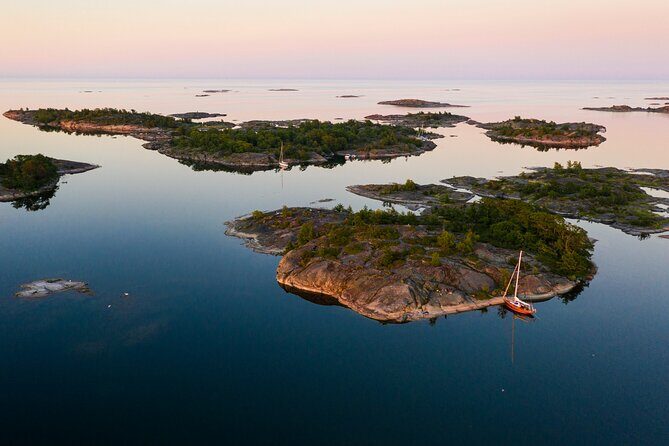
- Wild camping with outdoor cooking: You’ll set up a tent among islands and cook your dinner on an outdoor stove.
- Sauna time is built into the adventure: Bullerö includes a cosy public sauna stop.
- Flexible days, including a slow option: There’s room to linger on islands instead of racing from one point to another.
Stockholm Archipelago by kayak: why “self-guided” feels right here
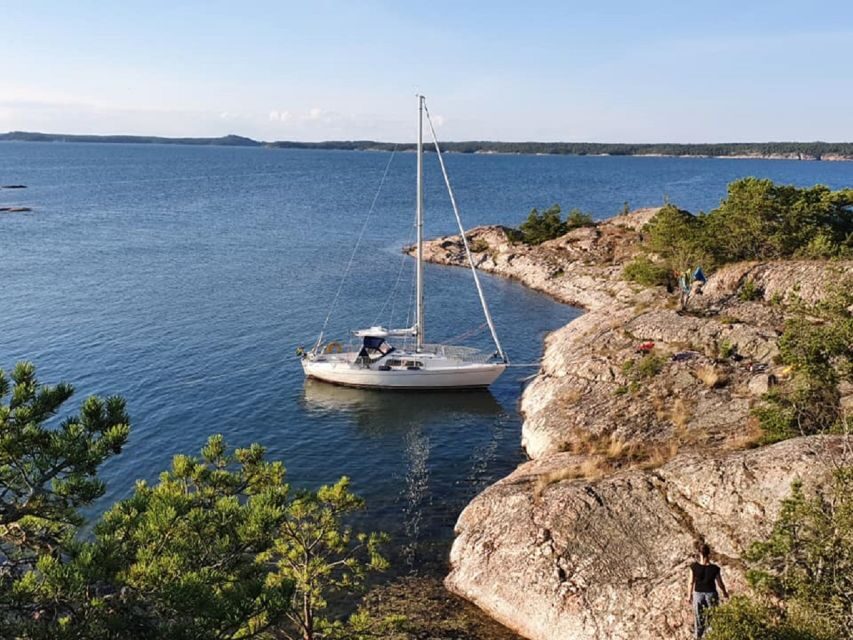
The Stockholm Archipelago has a special quality for kayaking. It’s close enough to feel like a day-trip fantasy, but remote enough that you can still hear seabirds and wind once you’re out on the water. The best part of doing it “self-guided” is that the archipelago itself sets the pace. If the day is glassy and you feel strong, you can go farther. If it’s windy or you just want peace, you can pick a calmer stretch and stay put.
What you’re really paying for is not just time on the water. It’s the removal of friction. You arrive with a plan framework, safety guidance, equipment that’s ready to work, and backup help. That means your trip feels like adventure—not like a scavenger hunt.
If you’ve got moderate fitness, enjoy being outside, and want scenery you can paddle right into, this fits beautifully. If you’re expecting a luxury hotel-style itinerary with fixed stops, that’s not what this is.
You can also read our reviews of more guided tours in Stockholm
Launch morning at Downtown Camper: briefing, fika, and route planning
Your day starts at Downtown Camper by Scandic in central Stockholm, with a pickup and a transfer out to the kayak center. Before you paddle, you get the kind of briefing that makes the rest of the trip simpler. You’ll talk about kayak safety, navigation, weather reading, and traceless travel. Then you sit down with Swedish fika—small, but it helps turn “logistics anxiety” into “okay, I get it.”
After the talk, you actually decide on a route with the guides. That matters because archipelago conditions can change fast, and your best day depends on wind and visibility. You’ll use the map, kayak trail routes, and GPS on your phone to keep your route decisions practical instead of stressful.
People often mention the team’s support here, including guide names like Jakob and Adam from the operating crew, with others such as Ellen, Jonathan, and Frederick appearing in different trip experiences. The consistent theme: they’re patient, and they help you get your setup right—especially if you’re newer to kayaking.
Stavsnäs Vinterhamn to your first wild campsite: the day you paddle out of the city
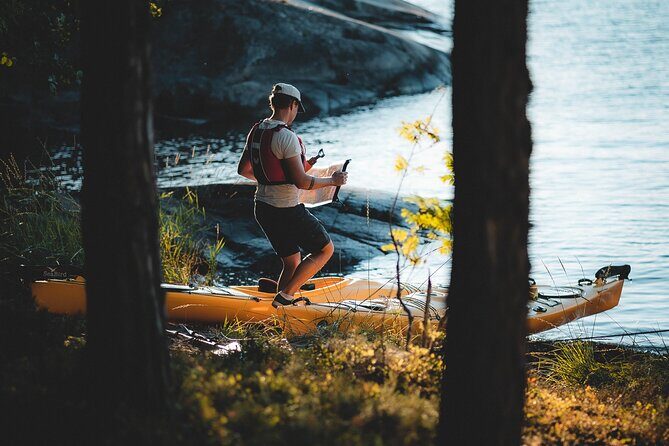
Once you reach Stavsnäs vinterhamn, it’s time to launch in stable two-person kayaks. This is your first real step into the archipelago world: wind on your face, seabirds overhead, and less and less sound from the mainland as you paddle east toward smaller islands.
A nice detail here is how the route ties into place. You pass Runmarö, historically known for limestone mining. Parts of older buildings in Stockholm—including elements of Riddarholm Church—were made from Runmarö limestone. Even if history isn’t your main interest, it adds meaning to the scenery: you’re paddling through landscapes shaped by how people lived here.
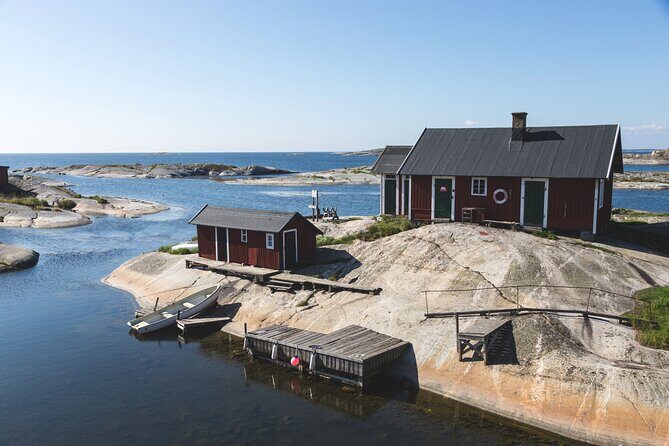
By afternoon, you’re searching for a campsite among the small islets. You’ll set up tent and camp gear without complications, then have time for a refreshing swim. Dinner is cooked on an outdoor stove using pre-set food menus and the camping kit provided. The whole point is to make “camp” feel doable, not like a challenge mode.
Practical note: your first night sets the tone. Keep it simple—prioritize a comfortable campsite location and a relaxed routine for cooking and setup.
Bullerö Nature Reserve and the sauna stop you’ll be thinking about
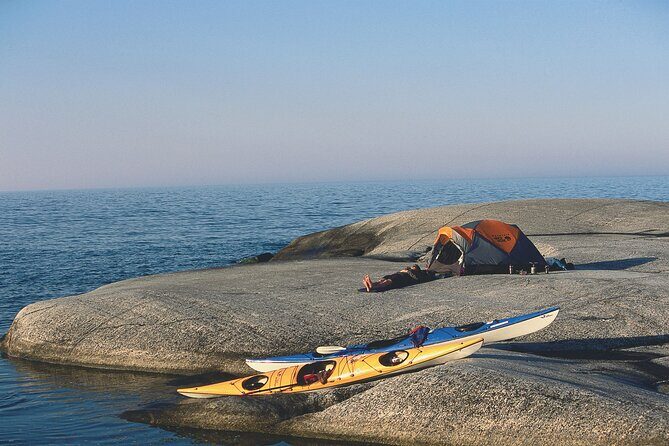
Day two is about settling into the archipelago rhythm. After breakfast—and possibly a morning swim, because yes, you’ll probably want one—you plan your route depending on the forecast. Then you head to Bullerö Nature Reserve, which is a classic archipelago destination with strong bird life, typical island nature, and human history tied to how people lived off local resources.
There’s flexibility once you’re there. You can linger for half a day or more, take a short discovery hike, or visit the hunting lodge of Bruno Liljefors. Art from Anders Zorn, Axel Sjöberg, and Albert Engström (early 1900s) is displayed there. Even if you’re not an art person, it’s a good way to break up the “only water and tent” feeling.
One of the most memorable elements—because you can almost plan your day around it—is the public sauna session. After hours of paddling (and maybe a cold swim), sauna is one of those Swedish customs that turns soreness into comfort and turns the whole day warmer in more than one way.
The drawback here is simple: if weather is rough, you might not feel like exploring much. That’s where the self-guided freedom is valuable—you can adjust your plan without the pressure of missing a timed group activity.
Långviksskärs, Nämdö, and the freedom to go slow on purpose
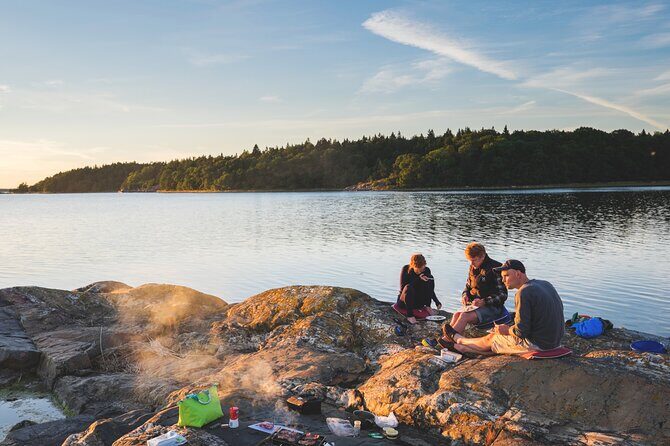
Day three offers variety without forcing you into a strict checklist. You can go farther east to Långviksskärs Nature Reserve, described as a maze of hundreds of islands where the horizon can feel like the only neighbor. In the right conditions, you might even reach Tärnskär, known for a lagoon and a “well-kept secret” vibe.
If you prefer a slightly more active island feel, Nämdö is a good choice. It’s larger than some of the other islands and tends to have more summer activity. There are spots for snacks and Swedish fika, including the restaurant in Solvik and a café. You can also visit a watch tower in the northern part of Nämdö and enjoy a public sauna at Långvik.
And then there’s my favorite option built into this trip style: the lazy day. It sounds almost too simple, but it’s actually smart. Your body needs downtime after multiple days of paddling and hiking between islands. On a slow day, you can sleep in, wander, read on cliffs, or just do nothing at all while the archipelago does its quiet thing.
If you’re the type who gets restless when the day isn’t “planned,” you’ll still benefit from at least a partial slow block. It’s where the trip stops feeling like an activity and starts feeling like a place.
A few more Stockholm tours and experiences worth a look




Day four: long lunch, coffee after swimming, and back to Stockholm with clean kit
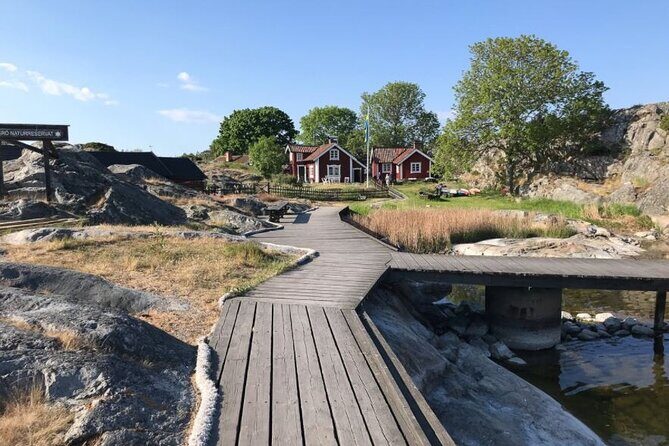
By day four, you’ll probably feel the change in your body. Your mind tends to get calmer after you’ve spent a few days listening to water and moving at a steady pace. The trip on this day includes kayaking, a long lunch stop on an island, and an afternoon swim plus coffee—small details, but they make the day feel like a finish worth remembering.
In the late afternoon, you return to the kayak center. This is a good moment to swap “adventure gear” for “human comfort.” Staff handle equipment at the center, so you can focus on rinsing off, grabbing snacks, and using shower time. A debrief with the guide wraps up your experience so you leave with clarity, not mystery.
Then comes the transfer back to Stockholm city, timed so you still have energy for dinner and a bit of city wandering. For me, this matters: you don’t want to book a major flight-or-rail connection stress after a wild camp trip. This gives you breathing room to land in the real world gently.
Gear, food, and traceless travel: what you’re really buying
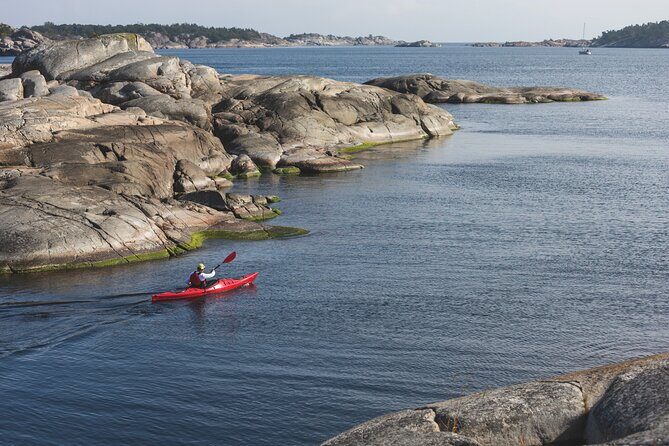
The package includes top quality kayaking and camping gear, plus cooking equipment. That’s one of the best values here: you’re not trying to rent random pieces in Sweden or bring bulky kit from home. You’ll have what you need to camp and cook outdoors, including stoves and sleeping setup.
Food is the one piece that’s not included by default. The tour notes that food isn’t included, though a food package can be added at cost price. Alcohol isn’t included either. In practice, you’ll be cooking meals outdoors using pre-set menu options when you do take the provided food setup.
What you should take seriously is the “traceless travel” element. Wild camping only works if everyone leaves minimal impact. The trip briefing covers this, and your phone/GPS navigation helps keep you from improvising campsite logistics in a way that would create extra damage.
From the reviews, the quality of gear is a standout theme. People specifically mention how clean and well maintained equipment feels—so you don’t waste time worrying that your sleeping system is gross or your kayak fit is wrong.
Navigation, weather, and safety: calling the shots without taking big risks
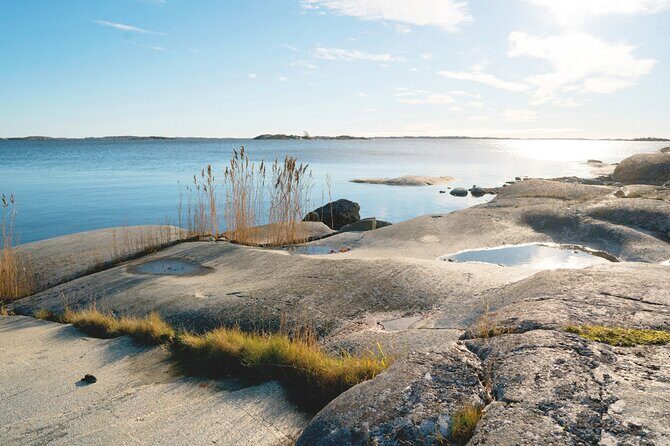
This is self-guided, so your decisions matter. The good news is that the trip isn’t “here’s a map, good luck.” You’re taught safety and navigation at the start. You’re also given tools that reduce uncertainty: map + kayak trail routes + GPS on your phone.
The 24/7 Kayak Trail Guide Phone is your backup. That’s important in a place where weather can shift and routes can change. If you get unsure about a crossing or the safest place to land for the night, you have a real line to ask questions instead of guessing.
Do remember the trip requires good weather. If conditions aren’t suitable, the experience can be canceled and you’ll be offered another date or a full refund. That’s not a flaw—it’s part of keeping this wild-camping style safe and enjoyable.
If you’re new to kayaking, you’ll still have a chance. The trip emphasizes introduction and equipment support, and first-timers are specifically mentioned as getting the basics sorted quickly. You should still be honest about your comfort level in open water and your willingness to follow safety guidance.
Price and value check: what $555.48 really covers
At $555.48 per person, this isn’t a budget-only adventure. But it is a solid value when you look at what’s included.
You’re paying for:
- a transfer from central Stockholm to the kayak start,
- a professional intro on safety and navigation,
- high-quality kayaking and wild camping gear,
- a guidebook,
- and 24/7 phone support,
- plus the return transfer at the end.
You’re not paying for food by default, but the setup is designed so camping meals are part of the plan rather than an afterthought. When gear and logistics are handled for you, you spend your time on the water and camping instead of chasing rentals, last-minute supplies, and route confusion.
The private-group style also tends to make the experience feel more personal in practice—especially during the start briefing when you can ask questions and get your setup checked.
If you price out a similar setup separately—gear rental, transportation, and a safety intro—the package starts to look less expensive. It’s mostly about convenience plus confidence.
Who should book this Stockholm kayak and wild camp?
This trip is ideal if you want to explore the archipelago under your own steam. You like the idea of planning your day using forecast and GPS, then rewarding yourself with swimming breaks, outdoor dinners, and a sauna when the day offers one.
It also works well for couples and small groups because you’ll use stable two-person kayaks and share the experience without big-group dynamics.
You should have moderate physical fitness. This isn’t a “lay on the beach” program. You’ll paddle, you’ll walk a bit on islands, and you’ll set up camp. But it’s not described as extreme; it’s more about endurance and comfort in moving steadily.
If your dream Sweden trip includes silence, water, and sleeping under the sky with waves nearby, this fits. If you want lots of fixed attractions, big nightlife, or guided group activities, you’ll probably feel better choosing something more structured.
Should you book this self-guided kayak and wild camp?
If you want freedom with real support, I’d book it—especially if you’re the type who likes earning your day rather than following a schedule. The start briefing, the gear quality, and the 24/7 guide phone create confidence, while the self-guided route planning keeps the days feeling personal.
I’d hesitate only if you know you struggle with planning under changing conditions, or if you hate the idea that weather can affect your dates. This trip leans into the outdoors. When the weather behaves, it’s a memorable way to experience Stockholm’s watery edge.
FAQ
FAQ
How long is the Stockholm Archipelago self-guided kayak and wild camp?
It’s listed as 4 days (approximately).
Where do we meet at the start?
You meet at Downtown Camper by Scandic, Brunkebergstorg 9, 111 51 Stockholm, Sweden.
What time does the experience start?
The start time is 9:00 am.
Is this self-guided or fully guided?
It’s self-guided. You get an introduction by a professional guide, plus a guidebook and phone support for navigation and safety.
Is food included in the price?
Food is not included. A food package can be added at cost price. Alcoholic beverages are not included.
What gear is provided?
Top quality kayaking, camping, and cooking gear is included, along with what you need for meals outdoors.
Is there support while you’re on the route?
Yes. There is a 24/7 Kayak Trail Guide Phone available throughout your journey.
Do I need to be an experienced kayaker?
You don’t need to be a pro. The trip provides an introduction and equipment support, and first-time experiences are included in the provided accounts.
What if the weather is bad?
The experience requires good weather. If it’s canceled due to poor weather, you’ll be offered a different date or a full refund.
Is the tour private?
Yes. It’s private, meaning only your group participates.