REVIEW · STOCKHOLM
Stockholm Walking Tour with Audioguide on Your Smartphone
Book on Viator →Operated by TouringBee · Bookable on Viator
Stockholm feels like it has two gears: power and poetry. This smartphone audio walk strings together City Hall, Gamla Stan landmarks, Nobel sites, and modern squares with 25 recordings narrated by a professional historian.
What I like most is how clearly it spotlights the big-ticket architecture and the small details you’d otherwise miss. You get quick context for places like Stockholm City Hall’s Golden Hall and Blue Hall, plus the “wait, what is that?” moments like Iron Boy.
The second big win is convenience for the price: offline map navigation and landmark illustrations help you keep moving without a live guide. The one real catch is your phone setup—bring your own headphones, and plan for battery drain and app downloading before you start.
In This Review
- Key highlights you’ll care about
- A Stockholm smartphone walk that actually makes sense
- Price and value: $6.73 for a historian-led route
- Getting your phone ready: offline audio, headphones, and battery
- City Hall to Riddarholmen: power, mosaics, and medieval edges
- Stockholm City Hall (look up, then look closer)
- Norstedt Publishers on Riddarholmen: where Swedish stories get made
- Birger Jarl’s Tower: medieval defenses and waterfront views
- Wrangel Palace: Baroque grace meets official business
- Monument to Birger Jarl: the founder, in stone (1854)
- Riddarholmen Church: a Gothic spire and royal tombs
- Gamla Stan streets to Nobel Prize Museum: stories behind the postcards
- Västerlånggatan Street: the medieval spine of Old Town
- Aifur Restaurant: Viking-themed dining, period style
- Iron Boy: a tiny statue with big local ritual
- Stortorget Square: oldest square, oldest story
- Nobel Prize Museum: interactive exhibits and Alfred Nobel’s vision
- Royal Palace, Riksdag, and Royal Opera: where Sweden stages its identity
- Royal Palace: rooms, chapel, treasury, and guard changes
- Riksdag: a walk into Swedish democracy
- Royal Opera House: Gustav III era to 1898 rebuild
- From Kungsträdgården to Hötorget: museums, markets, and modern Stockholm
- Kungsträdgården Park: cherry trees and seasonal life
- Hallwyl Museum: aristocratic rooms preserved as they were
- Kreditbanken: the robbery that shaped a term
- Sergel’s Square, Drottninggatan, Hötorget: city rhythm in motion
- How long should you plan?
- Should you book this Stockholm smartphone audio tour?
- FAQ
- How long is the Stockholm walking tour with smartphone audio?
- How much does it cost?
- Is this tour guided by a human?
- What do I need to use the audio guide?
- Does the tour work offline?
- Are entrance fees included?
Key highlights you’ll care about
- Historian narration (25 recordings) that explains what you’re looking at, not just what it’s called
- Offline map + route so you’re not stuck hunting streets
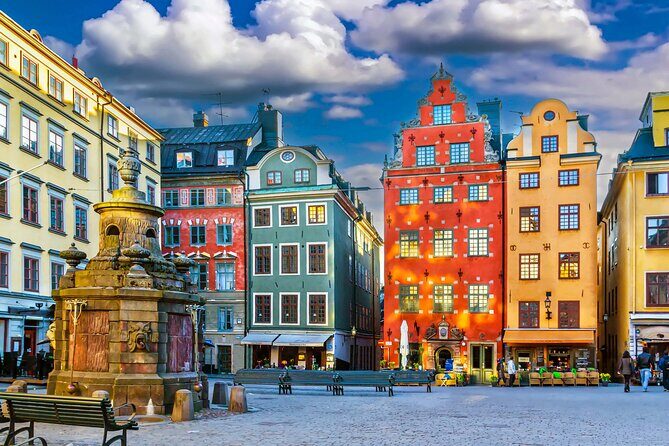
- Lots of Gamla Stan texture, from Västerlånggatan Street to Stortorget Square
- Icon stops that shape the city: City Hall, Nobel Prize Museum, Royal Palace, Riksdag
- Small detours with payoff, like Birger Jarl’s Tower views and the tiny Iron Boy statue
A Stockholm smartphone walk that actually makes sense
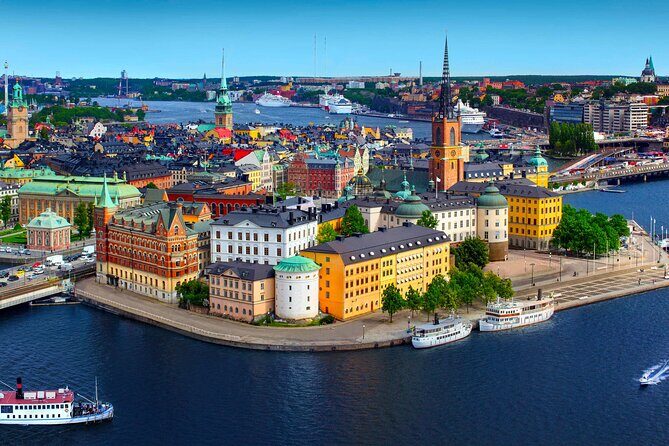
This is a self-guided route that starts and ends at Klara Mälarstrand. The format is simple: download the TouringBee audio guide app, activate your purchase, then follow the route on the phone map while the recordings play. With a maximum group size of 20, it’s designed as an orderly walking circuit, not a chaotic meet-at-a-bus-stop thing.
The big advantage is pacing control. You’re not tied to a human guide’s timing, so you can linger at a viewpoint, step into a church if it’s open, or take a coffee break when Stortorget calls. The route is also built for an easy “walk and learn” rhythm in central Stockholm—lots of stops are short on paper, which keeps you from spending your whole day waiting.
You can also read our reviews of more walking tours in Stockholm


Price and value: $6.73 for a historian-led route
At $6.73 per person, this is priced like a budget sightseeing add-on—yet it covers a lot of ground. You’re getting 25 historian-narrated recordings, a year of access in your chosen language, an offline map with GPS-style guidance, and illustrations to help identify what you see.
What you should understand about value: it’s not paying for building entry. The tour lists several stops with free-access notes, but the overall terms say entrance fees/tickets aren’t included. In other words, you’re paying for the audio experience and navigation support, not for paid museum tickets. That’s still a great deal if you’re happy with outside viewing and selective inside stops.
Getting your phone ready: offline audio, headphones, and battery
This tour lives on your device. You’ll need:
- The TouringBee app for iOS and Android
- Your own headphones (required)
- Time to download content when you have a connection, since the guide is designed to work offline once loaded
One common problem is simple: people start without getting everything loaded first. If you hit a circuit-loading issue, the fix is usually making sure the offline content is downloaded before you’re standing on the route.
Then there’s battery. GPS + audio playback can drain your phone faster than you expect on a long walk. If you don’t want the “bars dropping” stress, bring a small power bank and start the day with a fully charged phone.
City Hall to Riddarholmen: power, mosaics, and medieval edges
This first stretch sets the tone: Stockholm’s civic pride and its medieval roots, side by side. City Hall is the headline, and the audio does a smart job turning a landmark into a story you can read in details.
Stockholm City Hall (look up, then look closer)
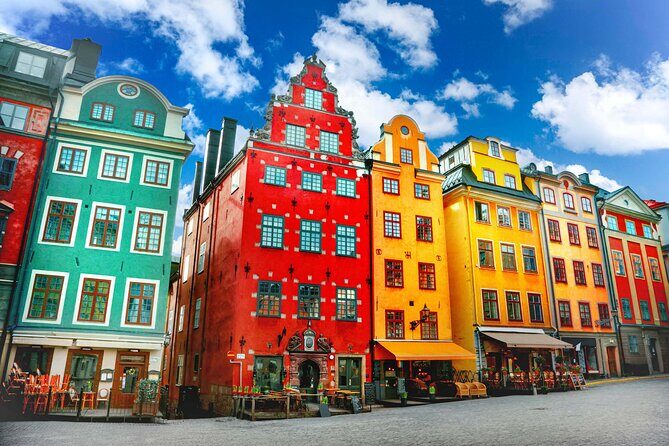
Stockholm City Hall was completed in 1923, and the recording guides you toward what makes it visually unforgettable: the brick façade and the tall tower. Expect panoramic views of the city and the archipelago if you’re able to access viewpoints while you’re there.
The audio also spotlights two standout interiors: the Golden Hall, decorated with 18 million mosaic pieces, and the Blue Hall, known for hosting the annual Nobel Prize Banquet. Even if you can’t spend long inside, these notes help you understand why this building matters beyond architecture.
Practical caution: the experience mentions stepping inside, but tickets/entrance fees aren’t included overall. If you want full access to specific rooms, check what’s open and what costs separately.
A few more Stockholm tours and experiences worth a look






Norstedt Publishers on Riddarholmen: where Swedish stories get made
Next comes Norstedt Publishers, founded in 1823 and described as Sweden’s oldest publishing house. You’re on Riddarholmen island, which helps the stop feel calmer than the main Old Town rush.
The audio’s angle here is practical: how publishing shapes literature and how the building’s age fits that mission. If you like books more than selfies, this stop is a satisfying change of pace.
Birger Jarl’s Tower: medieval defenses and waterfront views
A short walk brings you to Birger Jarl’s Tower, dating to the 16th century. The recording links the name to Birger Jarl, credited with founding the city, and it points out the tower’s sturdy, defensive feel—thick stone walls and a no-nonsense shape.
This is also one of the best “look up, then look out” moments: you can get panoramic waterfront views from higher up. Even a brief climb (if available) turns into a quick orientation lesson for how Stockholm sits on water.
Wrangel Palace: Baroque grace meets official business
Then you’ll reach Wrangel Palace, originally built in the 1500s and expanded later. The palace served as a royal residence in the 17th century, and the recording frames what you’re seeing as Baroque architecture with interiors tied to power.
Today, it houses the Svea Court of Appeal. That means the building isn’t purely museum-like, so the experience is more about reading architectural cues than wandering forever.
Monument to Birger Jarl: the founder, in stone (1854)
The Monument to Birger Jarl dates to 1854 and was made by sculptor Bengt Erland Fogelberg. The statue shows Birger Jarl in medieval attire holding a sword and shield—and the audio connects the figure to the city’s origin story.
This is a quick stop, but it matters. Once you’ve heard the name tied to multiple locations, you start seeing “Stockholm’s map” as one connected theme.
Riddarholmen Church: a Gothic spire and royal tombs
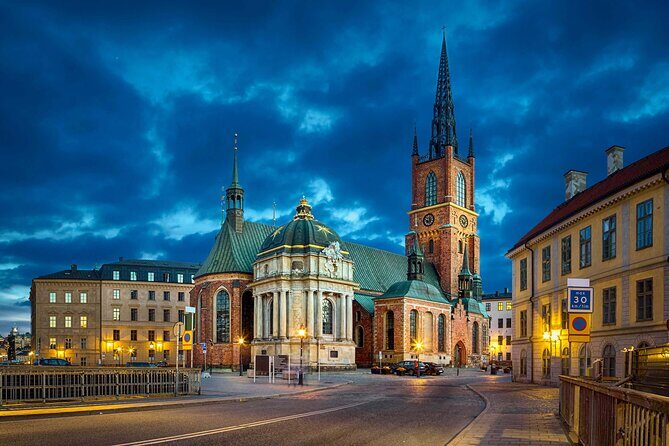
Rounding out this island block is Riddarholmen Church, dating to the late 1300s. The recording notes the cast iron spire, which is a very Stockholm detail—industrial meets historic in a way that feels almost designed.
This church is described as the final resting place of Swedish monarchs, and the audio points you toward what to look for inside: royal tombs and coats-of-arms. It’s also a quieter kind of stop, a break from street-level hustle.
Gamla Stan streets to Nobel Prize Museum: stories behind the postcards
After Riddarholmen, the route leans into Old Town energy—narrow lanes, historic squares, and landmarks that tell you how Stockholm became part of world culture.
Västerlånggatan Street: the medieval spine of Old Town
You’ll walk Västerlånggatan Street, a narrow, medieval route packed with old buildings, shops, cafés, and boutiques. The audio doesn’t just say it’s charming; it helps you notice how the street layout carries history into everyday life.
This is one of those “slow down on purpose” segments. If you rush here, you’ll miss the way the street bends and frames views.
Aifur Restaurant: Viking-themed dining, period style
The route includes a stop at Aifur Restaurant in Gamla Stan, named after a legendary Viking longship. The description emphasizes the atmosphere: period décor, candles, and medieval music, with hosts in costume and traditional dishes like mead, roast meats, and hearty stews.
You’re not required to eat, but if you want one meal that matches the theme you’re hearing, this is the place. Even if you only peek inside, the audio context makes it feel less like a gimmick and more like a living interpretation of Viking-era inspiration.
Iron Boy: a tiny statue with big local ritual
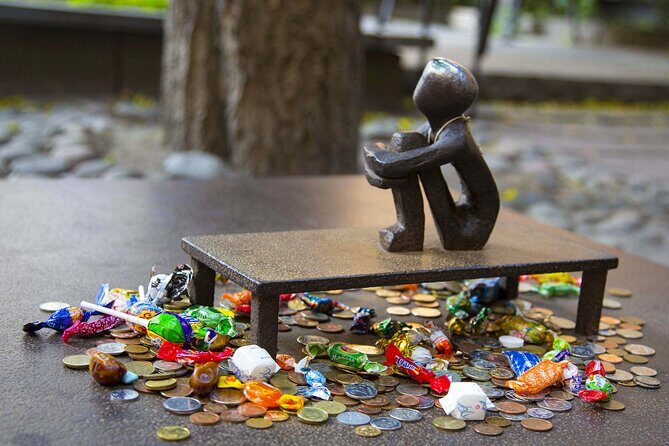
Then comes Iron Boy (Järnpojke)—a 15-centimeter statue created by artist Liss Eriksson in 1967. You’ll find him in a courtyard of the Finnish Church in Gamla Stan, sitting and gazing at the moon.
What makes this stop special is the human-scale detail: locals reportedly dress him in tiny hats and scarves in winter and leave coins for good luck. This is exactly the kind of stop that makes an audio walk worthwhile because it guides your attention to something most people miss.
Stortorget Square: oldest square, oldest story
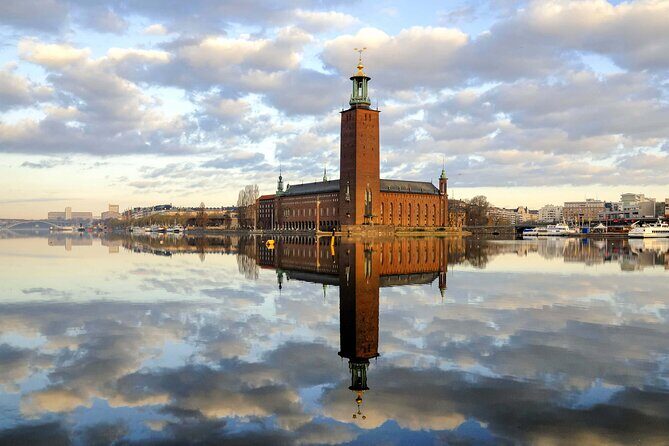
At Stortorget, the audio sets up the square as Stockholm’s oldest public square. The recording ties it to key moments, including the Stockholm Bloodbath of 1520, and it notes that the Nobel Museum and the annual Christmas Market are part of the area’s rhythm.
This is an easy place to take a pause—coffee, a quick look at shop windows, or just people-watching while your next recording loads.
Nobel Prize Museum: interactive exhibits and Alfred Nobel’s vision
The route then moves you into the world of the Nobel Prize Museum in Gamla Stan. The audio framing is broad but focused: Nobel laureates across disciplines like peace, literature, and science, plus interactive exhibits, personal stories, and artifacts tied to the laureates’ work.
Alfred Nobel’s vision and legacy are also part of the narration, which helps you connect this museum to the City Hall’s Nobel-related interior mention later. If you care about how Stockholm links itself to world ideas, this stop earns its place.
Royal Palace, Riksdag, and Royal Opera: where Sweden stages its identity

This part of the route turns from “old streets” to “national institutions.” You’ll see buildings that are meant to communicate authority, culture, and civic order.
Royal Palace: rooms, chapel, treasury, and guard changes
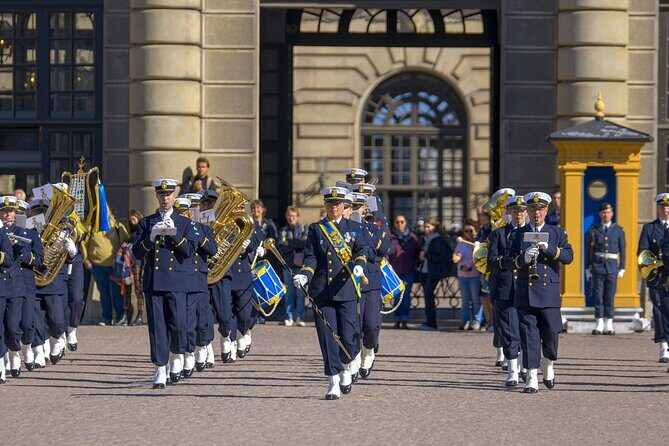
The Royal Palace is described as one of Europe’s largest palaces and the Swedish monarch’s official residence. The audio points you to highlights like the State Apartments, the Royal Chapel, and the Treasury housing the crown jewels.
The route also notes the daily changing of the guard ceremony. If timing lines up, it’s a natural moment for a photo and a short pause. If it doesn’t, the narration still gives you a framework for what you’re looking at.
Practical caution: again, inside access can mean tickets. The tour’s value is the story you get for free; paid rooms are a separate choice.
Riksdag: a walk into Swedish democracy
Next is the Riksdag on Helgeandsholmen island, completed in 1905. The recording highlights the building’s mix of neoclassical and baroque revival styles and brings you into what matters: the legislative chambers and how Sweden’s political system works.
This stop is a nice counterweight to the royal theme. Instead of only monarchy, you get the “how the country governs” storyline.
Royal Opera House: Gustav III era to 1898 rebuild
Then comes the Royal Opera House, established in 1773 by King Gustav III and reconstructed in 1898. The audio frames it as opulent and art-focused: exquisite architecture, sumptuous interiors, and performances ranging from opera to ballet and concerts.
Even if you’re not catching a show, the recording helps you see the building as an ongoing cultural machine, not a statue on a corner.
From Kungsträdgården to Hötorget: museums, markets, and modern Stockholm
The last stretch shifts your view from “major monuments” to day-to-day Stockholm. This is where the walk becomes less ceremonial and more lived-in.
Kungsträdgården Park: cherry trees and seasonal life
At Kungsträdgården Park, the recording calls it “King’s Garden” and dates it to the 15th century. You’ll hear about cherry trees, fountains, and seasonal events like summer concerts and winter ice skating.
If you’re tired from all the stone and staircases, this stop helps reset your legs. It also gives you a breather before the final city-center blocks.
Hallwyl Museum: aristocratic rooms preserved as they were
The route includes the Hallwyl Museum, housed in a late 19th-century palace. The audio emphasizes the Countess Wilhelmina von Hallwyl and her family, and it notes that you can see over 50 rooms with art, antique furnishings, and rare collectibles preserved in their original setting.
This is the kind of museum that rewards people who like how everyday objects reveal social life. Even if you don’t go inside, the narration makes it feel like a real place with a specific character.
Kreditbanken: the robbery that shaped a term
At Kreditbanken in Norrmalmstorg square, the audio tells the story behind the 1973 Norrmalmstorg robbery—an incident that helped shape the term “Stockholm Syndrome.”
You should expect this to be more of an exterior storytelling stop than a full museum visit. Still, the context makes a normal-looking building feel suddenly important in a psychological and criminology sense.
Sergel’s Square, Drottninggatan, Hötorget: city rhythm in motion
Then you reach the modern pulse:
- Sergel’s Square: named after sculptor Johan Tobias Sergel, with an obelisk and patterned floor, near Kulturhuset and shopping districts
- Drottninggatan: a pedestrian street linking Old Town to the city center, packed with shopping, dining, and culture, including a statue of King Charles XII noted along the way
- Hötorget: a market square next to the blue Concert Hall, with open-air market weekdays and a flea market on Sundays
This ending stretch is good for winding down. You’re no longer hunting “the one iconic landmark,” and you can just walk, look, and decide what to do next.
How long should you plan?
The tour is listed at about 2 hours. In practice, it’s also a lot of walking because you’re moving between many distinct stops, most under 10 minutes.
If you want photos, short pauses, and time to actually read what the audio is pointing out, plan closer to 3–4 hours. That buffer also protects you if a church or palace area has limited access.
Should you book this Stockholm smartphone audio tour?
Book it if:
- You want a budget-friendly Stockholm overview that hits major sights plus small stories
- You’re comfortable navigating with your phone and bringing your own headphones
- You like a flexible pace—stop for views, skip a museum, return when you’re ready
Skip it (or at least reconsider) if:
- Your phone battery is always low and you don’t want to manage charging
- You hate app-based navigation, especially in older street layouts
- You’re hoping the ticket includes all indoor entries and guided access everywhere
If you match that first group, this is a strong way to get a coherent Stockholm story—City Hall’s symbolism to Gamla Stan’s tiny rituals—without paying for a live guide.
FAQ
How long is the Stockholm walking tour with smartphone audio?
The tour is listed at about 2 hours.
How much does it cost?
It costs $6.73 per person.
Is this tour guided by a human?
No. It’s a self-guided experience using the audio guide app. There’s no human guide included.
What do I need to use the audio guide?
You’ll need a smartphone with the TouringBee app (iOS or Android) and your own headphones. The app provides the audio, route map, and illustrations.
Does the tour work offline?
Yes. The tour includes an offline map, and the audio guide is designed to work offline if you have downloaded the content.
Are entrance fees included?
Not necessarily. The experience says entrance fees/tickets are not included, though some stops are described as having free admission time.