REVIEW · STOCKHOLM
Stockholm’s Old Town & Vasa Museum Private Walking Tour
Book on Viator →Operated by OURWAY Tours - Stockholm · Bookable on Viator
Old Town plus the Vasa, in one tight loop. This private 3-hour walking tour links the medieval streets of Gamla Stan with the unforgettable story of the Vasa warship. You get a clear sense of how Stockholm grew, then you head across the water to Djurgården and one of the city’s can’t-miss museums.
What I like most is that the visit feels efficient without feeling rushed. You’ll hit major photo-and-history stops (Stortorget, Storkyrkan, the Royal Palace area) and still spend real time at the Vasa Museum. I also love the private format, which is exactly what people praised in the real world with guides like Elva, Joel, and David tailoring the pace and focusing on what mattered to their group.
One consideration: plan for lots of cobblestones and a short ferry ride, plus standing and walking during the museum intro. If you’re expecting a light stroll with minimal steps, this probably won’t match that mood.
In This Review
- Key Points You’ll Care About
- How This Old Town + Vasa Combo Fits Stockholm Perfectly
- Meeting at Stortorget: The Square Where Stockholm’s Story Starts
- Old Town Walking Between Old Streets: Prästgatan and the Story Behind Hell’s Alley
- Storkyrkan Cathedral: Guards, Weddings, and the St. George Story
- The Iron Boy and Mårten Trotzig: Small Stops That Make the Old Town Feel Real
- Skeppsbron Ferry Ride: A Short Trip That Resets Your Perspective
- Entering the Vasa Museum: The Warship That Should Not Still Be Here
- Walking Comfort and Timing: What to Expect From the Physical Side
- Price and Value: Is $472.01 Worth It?
- Should You Book This Tour? My Practical Verdict
- FAQ
- How long is the Stockholm Old Town & Vasa Museum private walking tour?
- Is this tour offered in English?
- Where does the tour start and end?
- What is included in the price?
- Do I need to buy a ticket for the Vasa Museum?
- Is there walking on cobblestones?
- Does the tour run in bad weather?
- Can I cancel for a full refund?
Key Points You’ll Care About

- Skip-the-line entry at the Vasa Museum so you can spend your time looking, not waiting
- Old Town hits in a single outing from Stortorget to Storkyrkan and the Royal Palace area
- Ferry ride included in the route as part of local transport, with great water views
- Private guide, your group’s pace (several guides earned praise for humor and flexibility)
- Standout small sights like Järnpojken and Mårten Trotzig’s 90 cm alley
- Runs in all weather so you’ll want comfortable shoes and sensible layers
How This Old Town + Vasa Combo Fits Stockholm Perfectly

Stockholm’s layout is what makes this tour smart. Gamla Stan (Old Town) is walkable and concentrated, but Djurgården is a separate pocket across the water. Trying to connect those two areas on your own can mean ticket lines, timing headaches, and wasted time figuring out transit.
This route solves that. You start in the oldest center at Stortorget, move through the medieval streets and landmark churches, then cross the water by ferry to Djurgården. The whole day is built around one simple goal: get your bearings fast and leave you with a deep anchor story for your remaining time in Stockholm.
The biggest value is the structure. If you’re first-timing Stockholm or you’re on a cruise schedule, you want orientation plus one “wow” stop. Old Town gives you the setting; the Vasa Museum gives you the plot twist.
You can also read our reviews of more walking tours in Stockholm



Meeting at Stortorget: The Square Where Stockholm’s Story Starts
You meet at Stortorget 2 in Gamla Stan, right by the old heart of the city. Stortorget is repeatedly described as the center of Stockholm, and it’s easy to see why: you’re in the oldest street grid, among the medieval-feeling architecture, with lots of sightlines for your guide to point out how the city took shape.
One detail I appreciate here is that the guide ties place to people, like Birger Jarl and the founding of Stockholm in 1250. That’s the kind of context that makes later stops click. Without it, the Old Town can look like a postcard. With it, you start noticing why certain streets exist and what power sat where.
A nice bonus: Stortorget is also home to the Nobel Museum. Even if you’re not going inside during the tour, it’s a reminder that Stockholm layers eras. You’re not only seeing the past; you’re seeing how the city keeps building on itself.
Old Town Walking Between Old Streets: Prästgatan and the Story Behind Hell’s Alley
From Stortorget, you head toward Prästgatan, and your guide doesn’t just “show sights” like a checklist. This section is where Stockholm’s street history feels human.
Prästgatan’s northern end was once called Helvetsgränd, meaning Hell’s Alley. During the Middle Ages, people believed the northwest part of the street was a desecrated resting place for the dead. That’s a grim story, but the point is useful: your guide is giving you the medieval worldview, not only the modern names.
At street level, it also helps you slow down and pay attention. When your guide points out why a narrow stretch got a dark reputation, the alleyway and corners stop feeling random. They feel like survival, religion, and rumor all at once.
Storkyrkan Cathedral: Guards, Weddings, and the St. George Story
Next comes the Royal Palace area and then Storkyrkan, Stockholm Cathedral. You’ll stand where power lives (Royal Palace) and where it has long been represented through ceremony (cathedral).
For the Royal Palace segment, the key is what makes it different from many other royal sites in Europe: it’s described as the King’s official residence, and essential parts of monarchy representation happen there. It’s also noted as the everyday workplace for the King and Queen. Even if you can’t go deep into interior rooms on this walking format, you still get the scale and the sense of a living institution around the palace guards.
Then you get to Storkyrkan, one of Stockholm’s oldest church buildings. The tour connects it to real royal moments, including Carl XVI Gustav and Queen Silvia saying I do there, and later the wedding of Crown Princess Victoria and Prince Daniel in 2010. That gives you a way to interpret the cathedral as a stage for Swedish public life, not just a historic building.
Inside Storkyrkan there’s also the original St. George and the Dragon sculpture, made of wood. The tour also includes an outside stop with a bronze copy, which works well because you can compare what you see from the outside with what the cathedral holds.
The Iron Boy and Mårten Trotzig: Small Stops That Make the Old Town Feel Real
These are the two stops that often surprise people because they’re small and oddly memorable.
First: Järnpojken, the Iron Boy statue. It’s described as the smallest statue in Sweden and also known as the Boy looking at the Moon. This is the kind of object that gets overlooked if you rush. With a guide, it becomes a fun break in the history heavy sections, and it’s a perfect pause point for photos without feeling like you’re stopping every 30 seconds.
Second: Mårten Trotzigs grand, including the alley that gets talked about for being incredibly narrow. At its tightest, it’s about 90 cm wide. Some guidebooks claim it’s the narrowest alley in Europe, but you’re told it’s not true because there’s an even narrower one in Prague at 60 cm. I like that honesty because it keeps the story grounded. Either way, the physical experience is what lands: you see a passage that feels designed for foot traffic and horses, not modern life.
Practical note: in narrow areas, it can get crowded quickly, and cobblestones can be slippery. Keep your pace controlled and give the alley space to breathe.
You can also read our reviews of more private tours in Stockholm






Skeppsbron Ferry Ride: A Short Trip That Resets Your Perspective
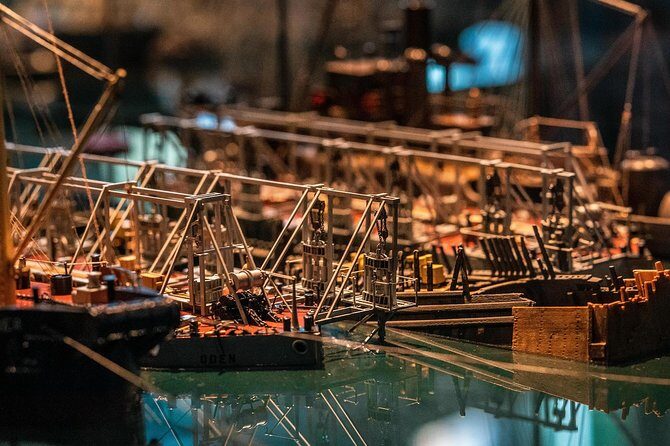
At Skeppsbron 26, you take a scenic public ferry ride. This is one of those “minor” parts of a tour that turns into a highlight because it changes the rhythm.
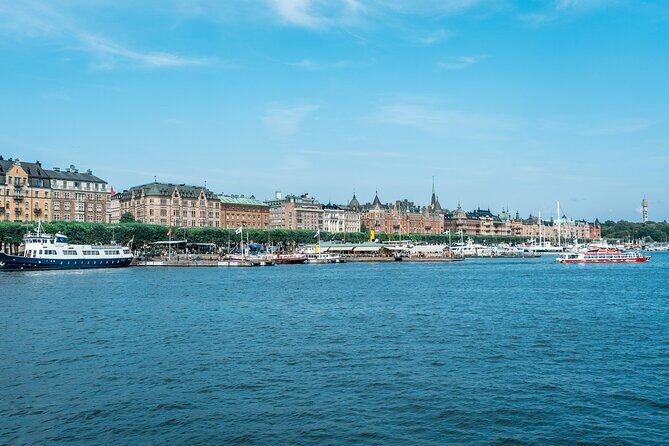
The ferry segment is described as about a 10-minute ride, and it’s framed as both a practical transport option and a photo-friendly water moment. You also get a visual bridge between the two halves of Stockholm: medieval stone and the museum-focused island of Djurgården.
This matters more than it sounds. If you’ve been walking on cobblestones for the morning, the water view and the short transit break lets your body reset. Then you arrive at the museum ready to focus, not just ready to survive.
Entering the Vasa Museum: The Warship That Should Not Still Be Here
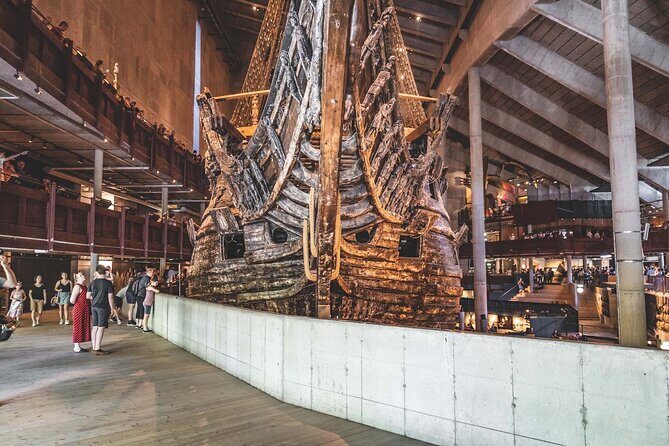
The tour ends at the Vasa Museum at Galärvarvsvägen 14, and the museum stop is where the story becomes unforgettable.
Your admission is included, and the tour includes a way to skip the line. That’s a huge practical win. Even if you’re fast, museum queues can erase the best part of a visit. Instead, you get guided context right as you enter.
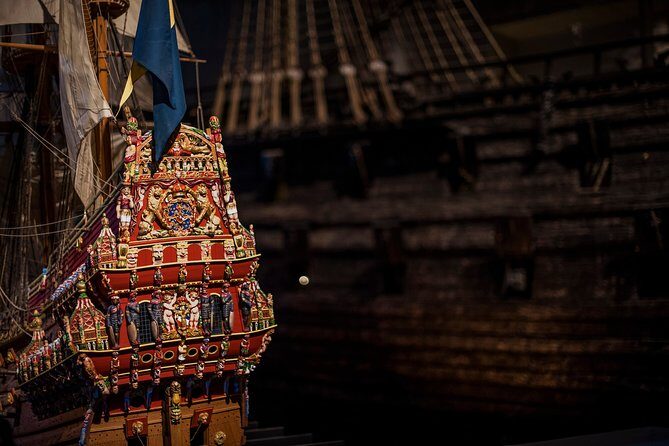
Now the core facts your guide will bring forward: the Vasa is the world’s only preserved ship from the 1600s. It was described as Sweden’s most expensive and richly ornamented naval vessel during the 1600s. On its maiden voyage in 1628, it capsized and sank inside Stockholm harbour, and today it’s preserved at about 98% intact.
That 98% number is the kind of detail that changes how you look at the ship. You don’t treat it like an artifact behind glass. You treat it like a preserved disaster scene that still holds its shape. Your guide-led introduction helps you understand what you’re looking at and why the story mattered to Stockholm at the time, including the idea that people along the shore witnessed the disaster.
The experience also benefits from the private format. In real tours, the guide introductions to Vasa often get praised as especially worth it. Guides like Joel and David were singled out for giving an enriching start that made the open-time exploration afterward feel purposeful, not aimless.
When your guided portion ends, you can keep exploring on your own. That’s valuable because the Vasa Museum is a place where you’ll naturally linger if something catches your eye. You don’t want to spend the whole visit being herded. This format gives you just enough structure to make your independent time better.
Walking Comfort and Timing: What to Expect From the Physical Side
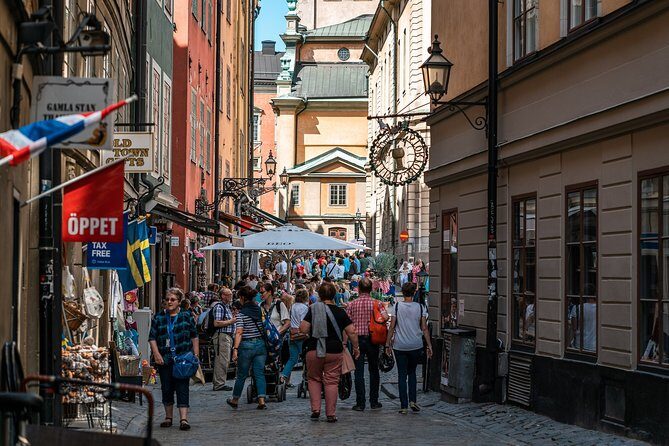
This tour is for people with moderate physical fitness. Most of the walking is on cobblestones, and the route includes narrow streets and multiple short stops. You should assume you’ll be on your feet for a good portion of the day.
Also, the tour runs in all weather conditions, so dress for rain, cold, or wind. Stockholm can be sharp even when you’re not expecting it. Bring layers you can adjust, and wear shoes with grip. If you slip on wet cobbles, your day becomes less about history and more about not falling.
One detail I appreciate from firsthand-style experiences is that guides often keep you moving while still allowing brief pauses. A cold day tour can feel long if you’re never given a breather. The best guiding style here keeps the momentum but doesn’t ignore comfort.
Price and Value: Is $472.01 Worth It?
At $472.01 per person, this is not a budget stroll. The value comes from what’s included and how the private format changes the experience.
Here’s what you’re paying for in practical terms:
- A professional guide for the full route through Old Town and into context for the Vasa
- Vasa Museum admission included, which saves you the cost and the planning
- A public transport ticket to the Vasa Museum, plus the ferry ride as part of getting there
- A private experience, meaning only your group participates, so the guide can match your pace
If you’re solo, the price can feel steep, and one review note specifically flagged cost. If you’re splitting the cost with a group of friends or family, it can feel much more reasonable because you’re not paying for a big shared bus tour experience.
The other value factor is time. At about 3 hours total, it’s designed to give you a tight “greatest hits” introduction without turning into a half-day scavenger hunt. You’re leaving with both place-based history (Gamla Stan) and the museum anchor (the Vasa), which is exactly what many people want when time is limited.
Also keep your eye on the meeting setup. Since the tour begins at Stortorget 2, don’t count on hotel pickup unless you confirm it during booking. Plan to arrive at the meeting point yourself.
Should You Book This Tour? My Practical Verdict
Book this tour if:
- You’re arriving for the first time and want a fast, guided Stockholm Old Town orientation
- You want the Vasa Museum but would rather have an intro that explains what you’re looking at
- You value private pacing and want a guide to match your group’s interests
- You care about efficiency: major sights on foot plus the ferry connection to Djurgården
Skip it (or consider another option) if:
- You hate walking on cobblestones or you’re dealing with mobility limits
- You want a fully self-guided museum day with no structure at all
- You’re traveling on a tight budget and would rather pay only for museum entry
For most people, the decision is straightforward: this is a solid pick when you want Old Town context plus the Vasa Museum payoff in one planned morning, without waiting around.
FAQ
How long is the Stockholm Old Town & Vasa Museum private walking tour?
It lasts about 3 hours.
Is this tour offered in English?
Yes, it is offered in English.
Where does the tour start and end?
It starts at Stortorget 2, Stockholm, and ends at the Vasa Museum at Galärvarvsvägen 14, Stockholm.
What is included in the price?
The tour includes a professional guide, Vasa Museum entrance, and a public transport ticket to the Vasa Museum.
Do I need to buy a ticket for the Vasa Museum?
No. Vasa Museum admission is included in the tour cost, and you’ll skip the line to enter.
Is there walking on cobblestones?
Yes. Most of the tour is on areas with cobblestones, so comfortable shoes help.
Does the tour run in bad weather?
It operates in all weather conditions, so you should dress comfortably and appropriately.
Can I cancel for a full refund?
Yes. You can cancel up to 24 hours in advance for a full refund. If you cancel less than 24 hours before the start time, the amount paid is not refunded.