REVIEW · STOCKHOLM
Unique walking tour Stockholm
Book on Viator →Operated by Stockholm By Me - Unique Walking Tours · Bookable on Viator
Stockholm can feel huge. This tour keeps it walkable and packed with street-level facts. You’ll get an insider perspective on the city’s landmarks, neighborhoods, and Swedish culture, with a guide who ties the stops together with stories you won’t pick up from a quick photo spree.
I especially like the way it balances “big sign” sights with off-the-beaten-path corners, so you see Stockholm’s famous places and also the texture of everyday city life. Another strong point for me is the pacing: short stops, frequent context, and just enough transit to keep the day efficient.
One thing to consider: most major stops are viewed from the outside, so if you’re hoping to walk inside big-ticket buildings, you may feel a bit limited.
In This Review
- Key highlights you’ll feel right away
- Why This Stockholm Walking Tour Works in 2–3 Hours
- Café Opera Start: Kungsträdgården and the Stockholm You Miss Otherwise
- Berzelii Park and Kungstornen: Small Stops, Big Urban Clues
- Outside the Concert Hall: Art, Public Life, and Olof Palme’s Memory
- Gallerian and Mosebacke Torg: The City’s Everyday Side
- Södermalm, Skeppsholmen, and Riddarholmen: Islands, Neighborhood Shifts, and Views
- Royal Palace Area Finish: When Flags Signal More Than Weather
- Metro and Public Transport: Seeing Art on the Way, Not Just at the Stops
- What You’ll Likely Notice After the Tour Ends
- Price and Value: Is $65.69 Worth It
- Who This Tour Is Best For
- Should You Book This Unique Walking Tour of Stockholm?
- FAQ
- How long is the Unique walking tour Stockholm?
- What group size is this tour?
- What language is the tour offered in?
- Where do I meet, and where does it end?
- Do you enter the landmarks or view them outside?
- Does it include public transportation?
- What is the cancellation policy?
Key highlights you’ll feel right away

- Maximum 15 people keeps the tour personal and easy to ask questions on the move
- Landmarks plus local neighborhoods (Södermalm, Skeppsholmen, Riddarholmen) without the usual tourist-only route
- Metro included so you also see Swedish everyday art, not just street monuments
- Outside-only viewing at several iconic sites means fewer queues and more story time
- A guide with real Stockholm pride that turns facts into everyday meaning
Why This Stockholm Walking Tour Works in 2–3 Hours
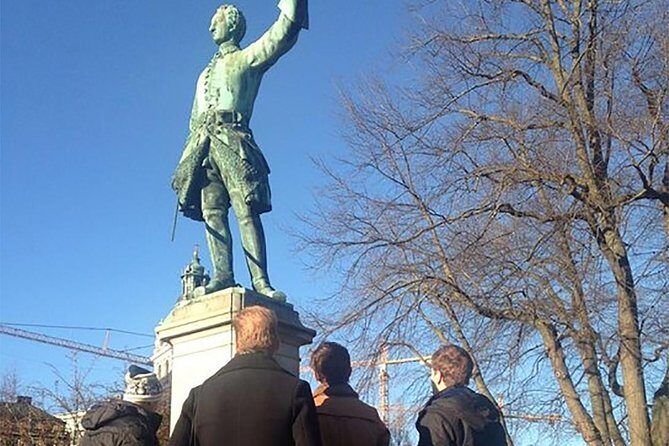
For $65.69, you’re buying time and context. In a short window, you cover a lot of ground: major points of interest, neighborhood shifts, and multiple moments where Stockholm’s culture shows up in small details.
The magic here is structure. You don’t get dumped in a long list of monuments. Instead, you get compact stops—often 10 to 20 minutes—where the guide adds trivia, meaning, and cultural background, then moves you along at a pace that keeps your legs and attention from burning out.
This is also a good fit for first-timers and repeat visitors. If it’s your first trip, you’ll get a map in your head fast. If you’ve been before, you’ll likely notice how the tour threads the city’s story through places you might otherwise pass without paying attention.
You can also read our reviews of more walking tours in Stockholm



Café Opera Start: Kungsträdgården and the Stockholm You Miss Otherwise
You meet at Café Opera on Karl XII:s torg. From there, the tour begins at Kungsträdgården, a central park that works like a shortcut into the city’s public life.
This stop is short, about 15 minutes, and that’s on purpose. It’s enough time to pick up the key background the guide uses later: how Stockholm thinks about public space, monuments, and civic identity. You also get a taste of the trivia style used throughout the walk—small facts that make the next corners easier to read.
If you like your tours to feel like a conversation, this opening matters. The guide sets expectations early: you’re not just walking; you’re learning how to look.
Berzelii Park and Kungstornen: Small Stops, Big Urban Clues

Next come Berzelii Park and Kungstornen (with about 10 minutes at each). These are not just convenient points on a route. They’re useful for understanding how Stockholm blends elegance with practicality.
In this section, the guide’s storytelling turns architecture into meaning. You’ll learn the kind of details that explain why certain streets and viewpoints feel the way they do—what people valued, what the city prioritized, and how the urban layout shaped daily life.
Kungstornen is also a reminder that Stockholm is a city of heights and angles. Even if you don’t go inside anything, you’ll start seeing skyline logic: where views matter, where major building clusters shift, and how the city’s form affects your walk.
Outside the Concert Hall: Art, Public Life, and Olof Palme’s Memory
Then you hit the Stockholm Concert Hall area. You stay outside for about 10 minutes, which keeps the tour moving and avoids long interruptions. Outside-only viewing works well here because the point is interpretation: what the building represents and how it fits into public culture.
Shortly after, you reach the Olof Palme Memorial Plaque. This is another about 10 minutes, but it carries more weight. The guide connects the plaque to Sweden’s public memory and national identity, so it feels less like a marker and more like a story about how a society remembers its leaders and debates its future.
If you’re the type who likes history that isn’t stuck behind ropes, these stops are a strong match. They give you meaning without requiring entry tickets or long waits.
Gallerian and Mosebacke Torg: The City’s Everyday Side
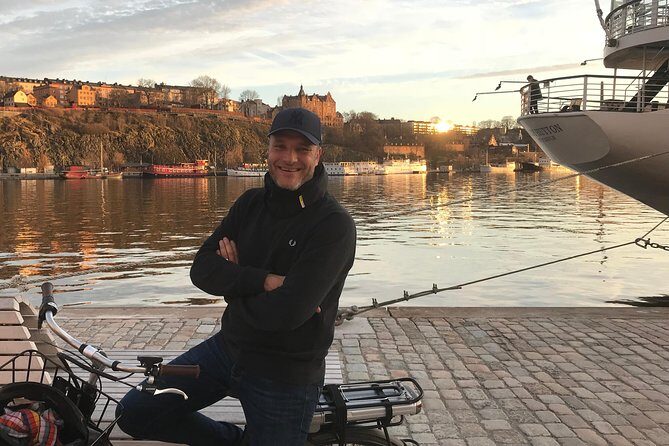
Now the tour pivots toward a different Stockholm mood. First you reach Gallerian (10 minutes), viewed from the outside. Even without entering, the guide treats this area like a window into how Stockholm shops, socializes, and designs everyday flow.
Then it’s Mosebacke Torg (about 10 minutes). This is where the city starts to feel more lived-in and less purely ceremonial. Expect more local color: how neighborhoods develop their personality, and how you can sense the change in the air as you move through different parts of town.
These stops work because they balance the earlier “headline” moments. After a plaque and a concert hall, Mosebacke Torg helps the tour feel grounded.






Södermalm, Skeppsholmen, and Riddarholmen: Islands, Neighborhood Shifts, and Views
Södermalm is where many people start to picture Stockholm as islands and character. You spend about 20 minutes here, long enough for the guide to explain what makes the neighborhood feel distinct.
Then you head toward Skeppsholmen (about 10 minutes). This area is all about the sense of place—water, space, and the way the city opens up. Even if you’re not stopping for a long walk around the island, you’ll get the cultural and geographic reasons it’s such a magnet for art and public life.
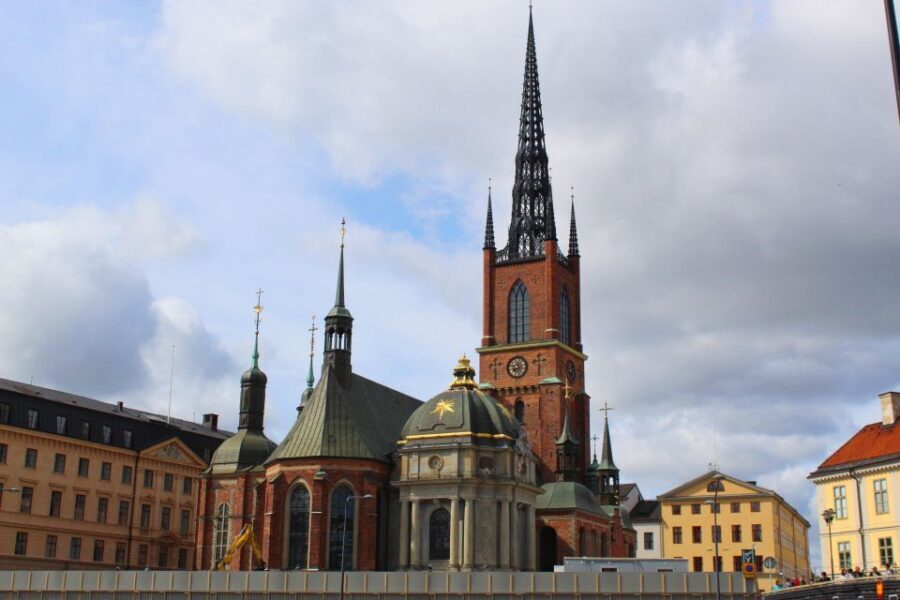
Riddarholmen follows (about 10 minutes). Again, you’re outside for this stop. But the guide uses it to talk about how Stockholm built its identity around power, faith, and monuments—while still living right next to them.
This trio of stops is one of the most useful parts of the whole tour. It helps you understand Stockholm as something more than buildings: it’s a mix of neighborhoods and water routes that shape daily behavior.
Royal Palace Area Finish: When Flags Signal More Than Weather

You finish near the Castle, at Slottsbacken 8. The Royal Palace stop is about 10 minutes and stays outside, which keeps it efficient and lets you end with a big visual moment instead of time-consuming entry.
This is also a spot where the guide’s attention to detail really shows. One specific kind of clue you’ll hear about is Swedish flag display—what it can mean when the King is in the office, and how the full flag versus pennant-style flags communicates that.
If you’ve ever wondered why locals pay attention to flag signals, this is your answer moment. It turns a visual tradition into cultural literacy.
Metro and Public Transport: Seeing Art on the Way, Not Just at the Stops
One reason this tour feels efficient is that it uses public transportation during the loop. In particular, you’ll also see metro art on the blue line stops, which is exactly the kind of Stockholm detail that changes how you experience the city.
This matters for two reasons. First, it saves your feet for the walking parts that matter. Second, Stockholm’s transit art isn’t a side show—it’s part of the city’s public culture, and the guide uses it to connect themes across neighborhoods.
Bring the right expectations: you’re not riding in silence. You’re moving through the city with story cues, so even the transit segments feel like part of the tour, not a break from it.
What You’ll Likely Notice After the Tour Ends
By the time you reach the Castle area, you usually leave with three upgrades.
First, you learn how to read Stockholm. That means understanding why certain places are placed where they are, and what the city seems to value in public spaces.
Second, you pick up practical “how to look” habits. You’ll start noticing details like flag behavior, the way public memory is marked, and how architecture fits the mood of each district.
Third, you’ll have a better sense of neighborhoods. Södermalm won’t feel like a name on a map; Skeppsholmen won’t feel like just an island you passed; Riddarholmen won’t feel like only a photo spot. Instead, each place connects to a theme you can remember.
Price and Value: Is $65.69 Worth It
At $65.69 per person, this tour sits in the mid-range for a guided walking experience. The value comes from how much you actually get for your time.
You’re in a small group of up to 15, which you can feel in the way questions get answered and the route stays flexible enough to keep interest high. You also get a mobile ticket and a guide-led format where major landmarks are paired with interpretation instead of just locations.
The outside-only approach at places like the concert hall and Royal Palace area is a trade-off. You don’t get the benefit of paid entry to add attractions. But you do get less friction, fewer queues, and more minutes dedicated to storytelling and getting your bearings.
If you enjoy tours that mix culture, trivia, and neighborhood personality over ticketed museum time, you’ll likely feel the price quickly.
Who This Tour Is Best For
This is a great match if you want:
- a first trip to Stockholm with orientation that doesn’t feel rushed
- an easy way to get across key areas without planning multiple days
- local context, especially around public space and cultural references
- a small-group feel with active storytelling
It may be less ideal if your top goal is entering iconic interiors, since several stops are outside viewing only and admission is free at the listed points.
Should You Book This Unique Walking Tour of Stockholm?
Yes, I’d book it if you’re aiming to understand Stockholm, not just collect photos. The combination of a small-group cap, short guided stops, and the mix of landmarks plus neighborhood texture makes it a strong use of a limited schedule.
I’d skip it only if you strongly prefer inside-the-building experiences and dislike transit segments where you move between viewpoints. Otherwise, this tour is a smart way to get Stockholm’s rhythm in a single outing, ending right where you want the story to land: near the Castle.
FAQ
How long is the Unique walking tour Stockholm?
It runs about 2 to 3 hours.
What group size is this tour?
The tour has a maximum of 15 travelers.
What language is the tour offered in?
The tour is offered in English.
Where do I meet, and where does it end?
You start at Café Opera, Karl XII:s torg 5, 111 47 Stockholm, Sweden. It ends near The Castle at Slottsbacken 8, 111 30 Stockholm, Sweden.
Do you enter the landmarks or view them outside?
Most stops are viewed outside, including the Stockholm Concert Hall area, Gallerian, Riddarholmen, and the Royal Palace area.
Does it include public transportation?
Yes. The tour is designed around getting around efficiently and includes public transportation segments.
What is the cancellation policy?
You can cancel up to 24 hours in advance for a full refund. If you cancel less than 24 hours before the start time, the amount paid is not refunded.