REVIEW · STOCKHOLM
Private Tour: 3h Viking History from Stockholm to Runic Kingdom
Book on Viator →Operated by Sweden History Tours · Bookable on Viator
Runes, bridges, and laws in the Swedish countryside. This private 3-hour Viking history outing takes you out of the city to real rune-stone locations instead of museum replicas, with a guide who keeps the story moving. Two things I especially like are the fact it’s truly private and the way the stops connect Viking lives to the objects you’re looking at.
You’ll also like the pacing. You get a mix of gravefield, a long causeway bridge, a lakeside assembly place, and a 13th-century church—so it never feels like you’re just reading names on rocks. In particular, the way the tour ties famous Viking figures like Estrid and Jarlabanke to what still exists today is the whole point.
One consideration: it’s a countryside walk-and-look tour with four main stops, so if you want nonstop variety or lots of additional sights, this format may feel narrow. Also, the price is per person, and it’s best value when there are at least two of you for the private setup.
In This Review
- Key things I’d bank on before you go
- The real value: rune stones where Vikings actually stood
- Price and who this private setup really suits
- Getting to the countryside: pickup that saves your morning
- Stop 1 in Täby: Estrid, gravefields, and rune stones with family memory
- Stop 2 at Jarlabanke’s runestones and bridge: the 150-meter causeway (c. 1030)
- Stop 3: Arkils tingstad and the Viking parliament by the lake
- Stop 4: Vallentuna church and the story behind Sweden’s ending rhyme
- The guide is the difference maker (and the reviews back that up)
- What to expect on the ground: walking, weather, and timing
- Should you book this Viking History from Stockholm to the Runic Kingdom?
- FAQ
- What time does the tour start, and how long does it run?
- Where do you pick up in Stockholm?
- Does the tour include pickup from Nynäshamn Harbour?
- How do you meet the guide if you arrive by cruise ship?
- What stops are included on this 3-hour Viking history tour?
- Are entrance tickets included for the sites?
- Is the tour guided in English?
- Is this a private tour?
- What is the minimum group size to book?
- How does cancellation work?
Key things I’d bank on before you go
- Private guide + round-trip private transport for a smooth, no-stress day out of Stockholm
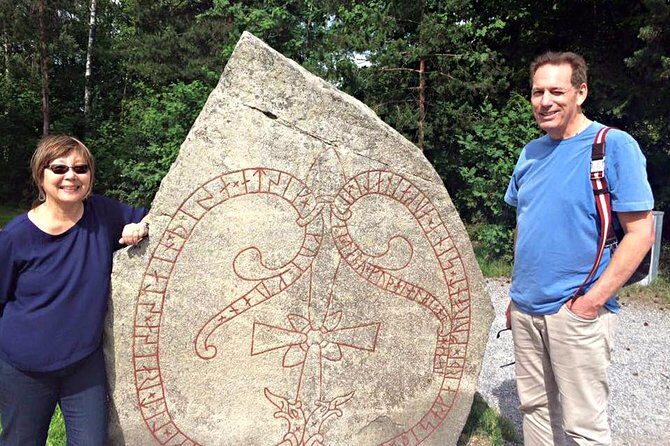
- Estrid’s story in Täby, with rune stones tied to family memory and a gravefield setting
- Jarlabanke’s causeway bridge (about 1030) and the rune-stone messages you can actually stand near
- Arkils tingstad, a preserved Viking assembly place where law and social rules come to life
- Vallentuna church (13th c.), including the claim of Sweden’s earliest written ending rhyme tradition
- English-language, Q&A-friendly guiding, with guides like Olof, Charlotte, Karl, Erik, and Quentin singled out for answering questions clearly
The real value: rune stones where Vikings actually stood
This tour works because it treats the countryside as a living document. In Stockholm, it’s easy to see Viking-era artifacts in glass cases. Here, you stand near the kind of stones and sites that shaped local memory—gravefields, assembly places, and named monuments—so the stories land faster.
And since it’s private, your questions don’t get pushed to the end. If you want the “why” behind runes, how Viking society organized itself, or how Christianity showed up in daily life, your guide can aim the conversation right where you’re curious.
You can also read our reviews of more private tours in Stockholm



Price and who this private setup really suits
At $431.94 per person, you’re paying for a private guide and private transport, not just an entry-ticket “walk around.” That price can feel high if you’re traveling solo, because the tour’s private format is built around at least two people.
I think it’s strongest for:
- Two travelers who want an out-of-town experience without juggling trains or buses
- Families with older kids who can handle a couple of short walks and a lot of discussion
- Anyone who would rather spend 3 hours doing a focused circuit than spending a full day planning transport between sites
If you’re the type who prefers the story broken down clearly, with time to ask follow-ups, the format is usually worth it.
Getting to the countryside: pickup that saves your morning
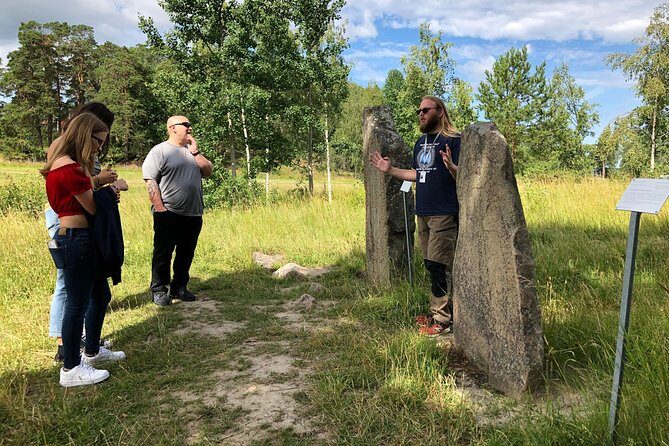
You start at 9:30 a.m., with pickup from central Stockholm hotels and other accommodations within 5 km of Stockholm Central Station. It’s also offered from many cruise piers, where the guide meets you with a sign reading Viking Tours.
One small but helpful detail: if your hotel is farther out, you should expect a reconfirmed pickup time and a simpler meeting point. Transfer times are approximate, since Stockholm traffic can stretch the schedule a bit.
Plan for a comfortable drive first, then a steady rhythm of walking and short exploring. One helpful review note that stuck with me: the drive out and back can each feel around 30 minutes, while the majority of your time is spent at the Viking-linked sites.
Stop 1 in Täby: Estrid, gravefields, and rune stones with family memory
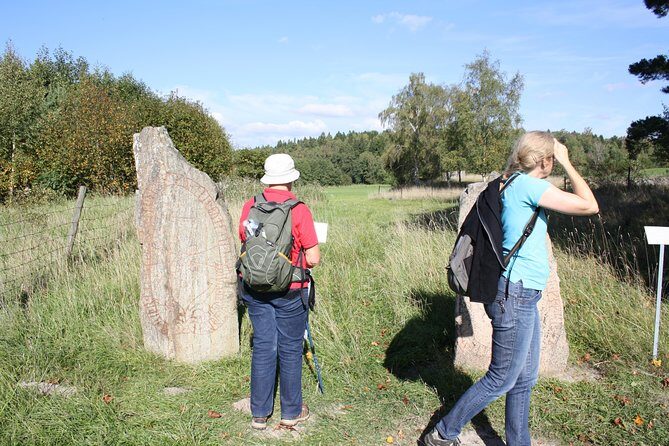
Your first stop takes you to Täby, a part of the Stockholm area with Viking Age rune stones and a gravefield setting. This is where the tour shifts from legends to local names and local places.
The highlight here is the focus on Estrid, a famous Viking woman tied to runes raised in remembrance of her dead family. You’re not just told she mattered—you learn how stones can act like a public family record, marking grief, status, and identity in the landscape.
You’ll also see:
- A gravefield and Viking monuments and rune stones in their original area
- A local early Viking Age Christian gravefield with over 20 skeletons
- How daily life may have looked, including what people wore (and what that suggests about status and routine)
A possible “watch your expectations” note: this stop is partly about seeing the stones and absorbing the story in place. If you’re expecting a fully built visitor attraction, it’s more of a site-and-story experience.
Stop 2 at Jarlabanke’s runestones and bridge: the 150-meter causeway (c. 1030)
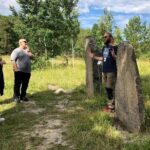
Next comes one of the most dramatic pieces of Viking-era construction in the area: Jarlabanke’s bridge, dated to around 1030. The causeway runs about 150 meters, which means you get more than a quick glance. You can actually walk along the approach and feel how built infrastructure shaped movement and power.
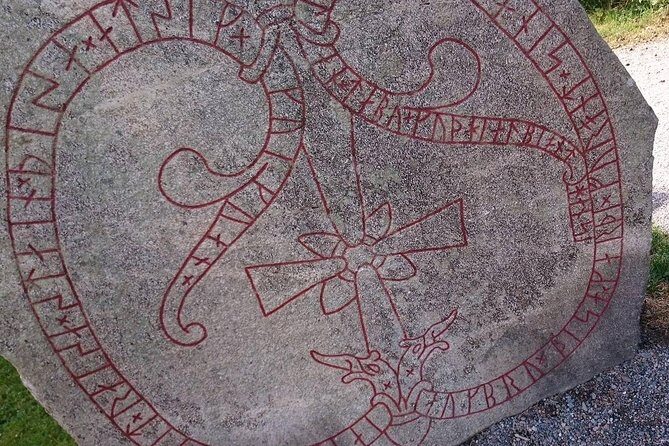
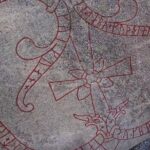
This is also where you get the tour’s “runes as messages” angle. The guide points out how the rune stones function as monuments to dead Vikings and how their wording connects to whoever Jarlabanke was—this is where stories of leadership and self-confidence get explained in concrete terms.
What I like about this stop for visitors: it’s visual. You can connect the length of the bridge with the message it likely carried to people using that route. Even if you don’t read runes, the guide’s explanation helps the stones feel less like random carvings and more like political communication.
You can also read our reviews of more historical tours in Stockholm


Stop 3: Arkils tingstad and the Viking parliament by the lake
Then you shift from named monuments to social structure. Arkils tingstad is a well-preserved Viking assembly place—an “in the open air” reminder that Vikings weren’t just warriors in sagas. They had systems for discussion, enforcement, and community order.
This stop is where your guide can explain law in a grounded way, including rules around:
- Divorce
- Killing someone due to insults
- How their tribal system worked in everyday decision-making
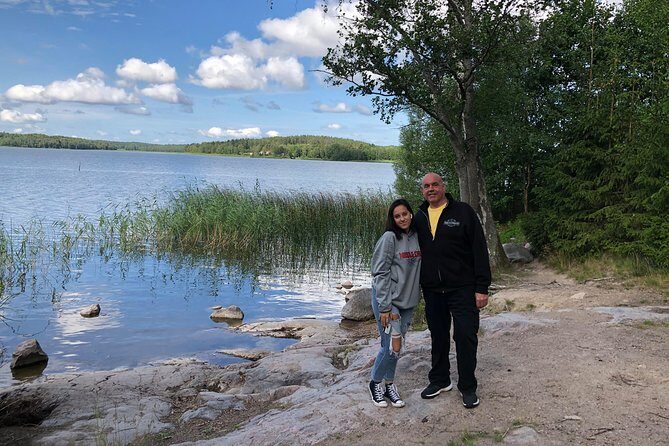
The lakeside setting matters here. It helps you understand why these places were built where they were: the view, the open space, the sense that the community gathered to decide real matters.
If you prefer history told through human behavior—conflict, rules, consequences—this is likely the stop that clicks fastest.
Stop 4: Vallentuna church and the story behind Sweden’s ending rhyme
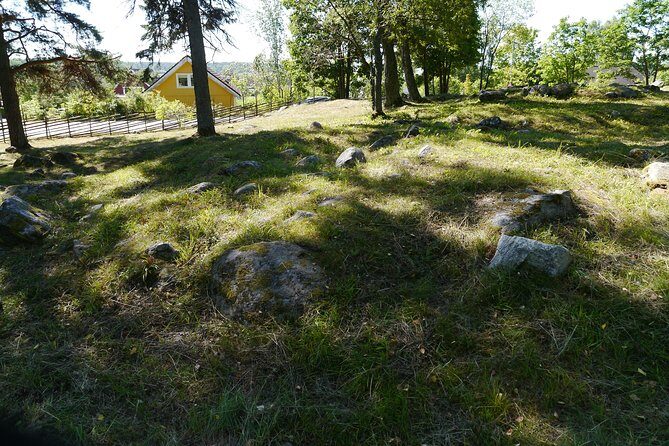
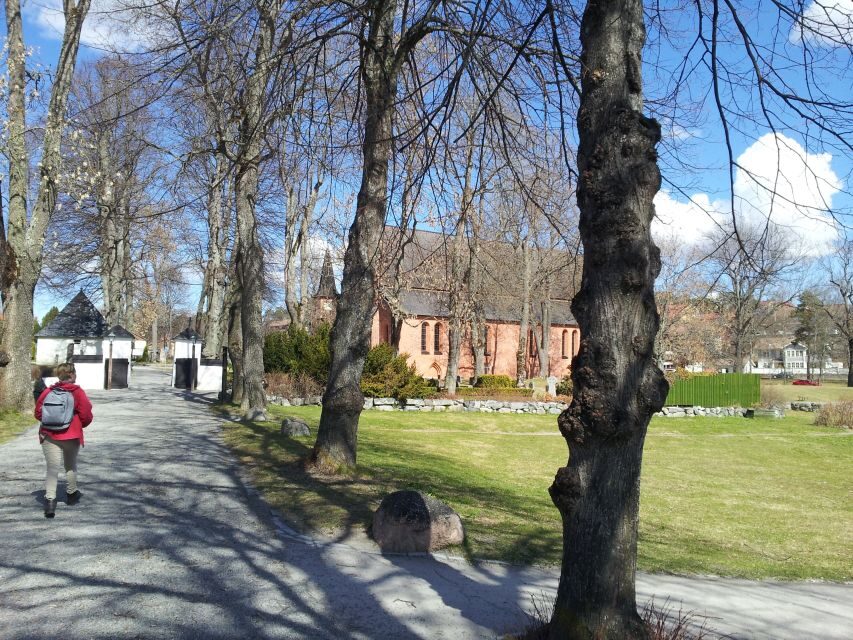
The tour closes with Vallentuna church, a 13th-century church. The shift from Viking-era material to medieval Christianity could feel like a hard jump, but the tour uses the contrast well.
You’ll see a more Reform-era space—reformatic and bare—compared with the earlier Catholic style that included vivid painted rooms. It’s a useful reminder that European religion didn’t simply replace everything. It changed the look, the message, and the tone.
This stop also ties back to Viking-era names and monuments, with mention of the Jarlabanke rune stone presence nearby. Inside, you can explore stone-master signatures connected to when the church was built.
One of the most intriguing claims you’ll hear here: the first known written down Swedish ending rhyme is said to be found in this church. Even if you only half-believe these attribution claims (and many people will, depending on how they like their history presented), it’s still a fascinating way to connect language, religion, and culture across centuries.
The guide is the difference maker (and the reviews back that up)
With a private tour, the guide isn’t optional. Your experience rises or falls on how well someone can explain what you’re seeing without turning it into a lecture.
From what I’ve seen on this route, guides often set the tone with an easy preface during the drive and then keep it interactive at each site. Names that came up again and again include Olof, Charlotte, Karl, Erik, and Quentin.
A couple examples of how that shows up in practice:
- Some guides are praised for being punctual and for giving context before you step into each site, helping you understand why runestones and structures were placed where they were
- Others are highlighted for answering all kinds of questions, including details about daily life and how to interpret what you’re looking at
- One guide even recommended a follow-up stop in Stockholm afterward, like the Stockholm History Museum or the Stockholm City Hall area, which is a smart move if you want your afternoon to connect directly to what you just learned
Balanced note: not every day will match your exact needs. One experience described a guide who was quieter and didn’t feel as informative, while a different comment said there weren’t enough Viking sites or variety for their taste. That’s the risk with any guided product, especially when the format is tightly time-boxed to four core stops.
What to expect on the ground: walking, weather, and timing
This is a walk-and-talk day. You’ll move around at each location, and one stop involves walking over toward and on a long causeway bridge. Because the sites are outdoors for much of the time, Swedish weather matters.
My practical advice:
- Dress in layers and plan for wind. Even when it’s bright, it can feel sharp by water.
- Wear comfortable shoes that handle uneven ground near rune stones and gravefield areas.
- Bring a small bottle of water. Three hours passes fast when you’re listening and looking.
Time-wise, your schedule is built around short visits at each stop (roughly 20 to 40 minutes each). That structure is part of why it works: you get focused stories, not a half-day slog.
Should you book this Viking History from Stockholm to the Runic Kingdom?
Book it if you want:
- Real rune-stone and assembly-place settings instead of a museum-only Viking day
- A private guide who can answer questions and tailor the pace
- A well-defined 3-hour outing that gets you into the countryside without logistics stress
Skip it (or consider another option) if:
- You’re not into Viking history or runes at all. This tour is story-heavy and site-specific.
- You expect lots of extra stops beyond four core locations. The format is focused by design.
- You’re traveling solo and the per-person private price feels hard to justify.
For most people who love Viking-era culture, this is a strong value use of a morning in Stockholm: you trade time for meaning, and you leave with names and places that stick.
FAQ
What time does the tour start, and how long does it run?
The tour starts at 9:30 a.m. and runs for about 3 hours total, including pickup and drop-off timing.
Where do you pick up in Stockholm?
Pickup is offered from central hotels, ports, and other accommodations within 5 km of Stockholm Central Station. The tour does not include pickup from Nynäshamn Harbour.
Does the tour include pickup from Nynäshamn Harbour?
No. Pickup is not included from Nynäshamn Harbour because it’s about 50 km away. The guidance is to contact the operator for a meeting place in central Stockholm, using train or cruise bus directions.
How do you meet the guide if you arrive by cruise ship?
The guide meets you with an A4-paper sign saying Viking Tours near the right area for your specific pier. For example, if arriving at S165 or S167 (STADSGÅRDEN), you walk a few hundred meters past fences and guards; if arriving at F638 (FRIHAMNEN), the guide meets you just outside the sliding doors in the terminal area.
What stops are included on this 3-hour Viking history tour?
The tour includes stops in Täby (rune stones and a gravefield), Jarlabanke runestones and Jarlabanke’s bridge, Arkils tingstad, and Vallentuna church.
Are entrance tickets included for the sites?
The sites listed for each stop indicate admission ticket free, and the tour includes taxes and surcharges as part of the overall package.
Is the tour guided in English?
Yes, the tour is offered in English with a local guide.
Is this a private tour?
Yes. It’s a private tour/activity, with only your group participating.
What is the minimum group size to book?
There is a minimum of 2 people to book the tour.
How does cancellation work?
You can cancel for free up to 24 hours in advance of the experience for a full refund.
If you tell me your travel dates and whether you’re coming from a cruise pier or a hotel, I can help you sanity-check the pickup plan and timing.